Linker and Loader#
Execution of a Program#
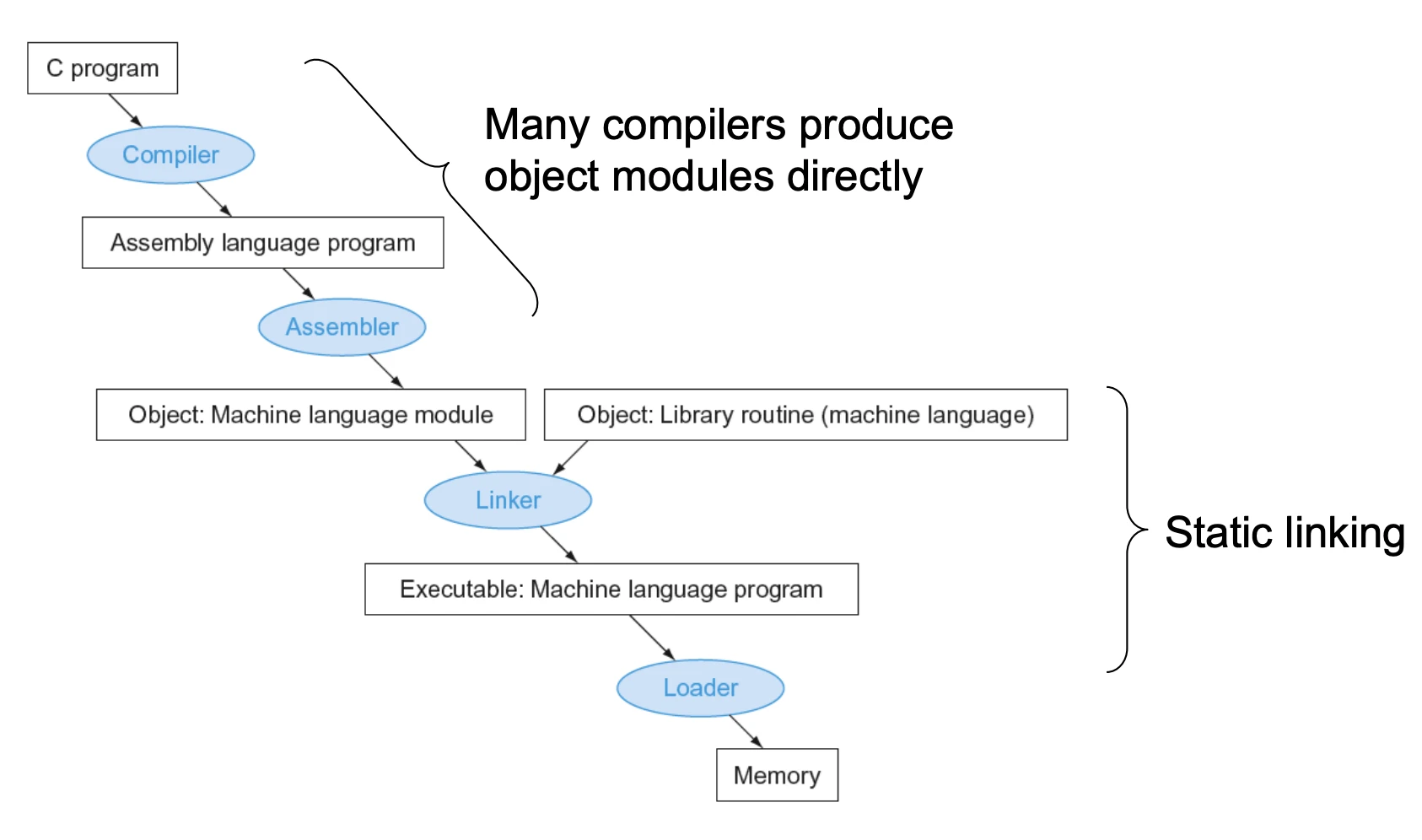
我們要運行一個 C language 的時候需要經過以下的幾個地方
- Compiler,生成 assembly code 進行 optimization
- Assembler,把 assembly code 轉換成 machine code(object file)
- Linker,把不同的 procedure 會寫成不同的 object file,把它們合併
- Loader,把合併後的 code 塞進 memory 裡面
Assembler#
要維護一個 symbol table(compiler 課程會提到)
下面是一個 object file 的 layout
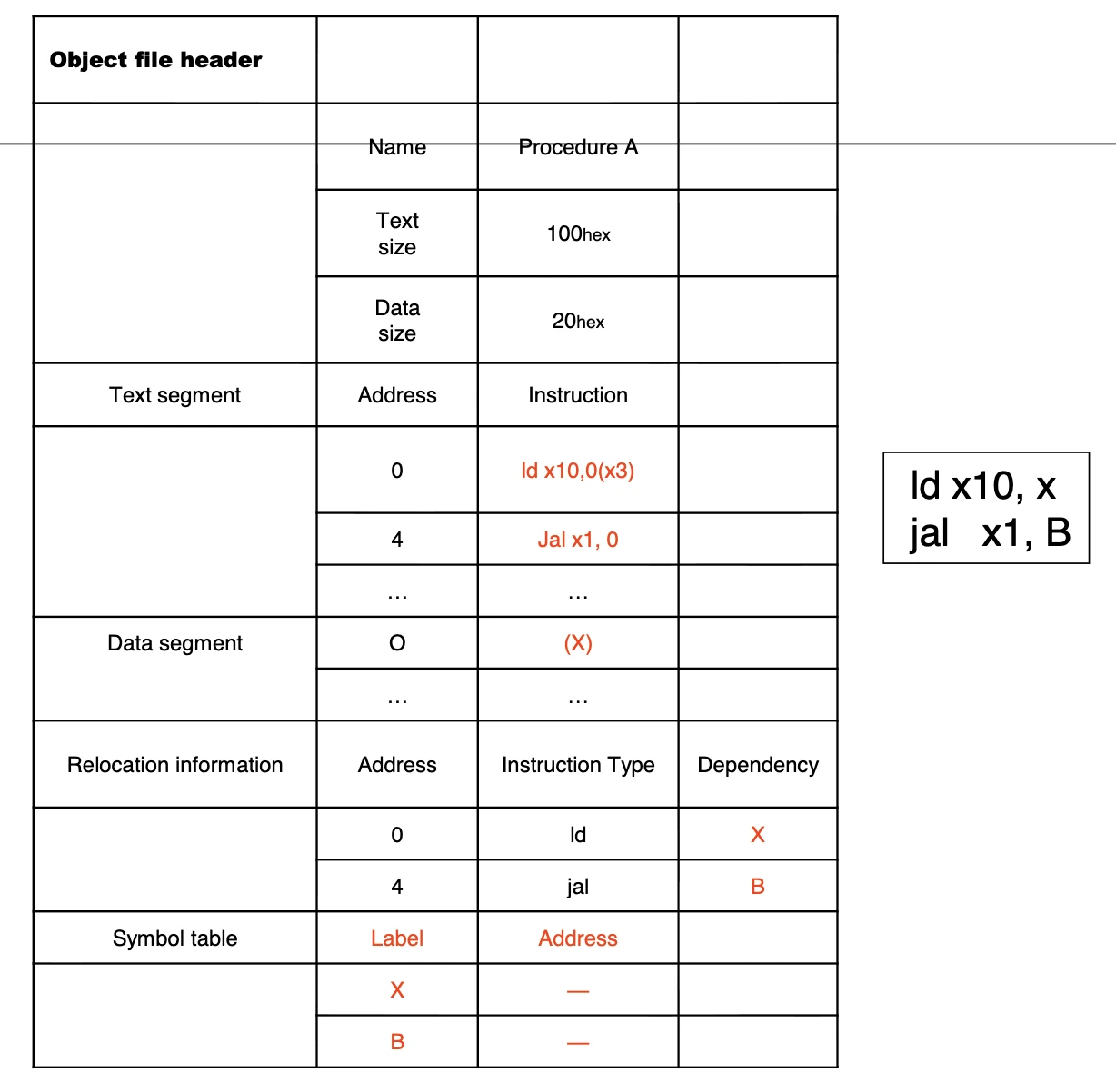
我們可以看到有分成很多 section,有一些直得注意的地方
- 當我們有一個 label 出現的時候,我們就先在 symbol table 裡面留下一個 entry,留下 address 等到後面再填進去,在上面的
B的位置先填0 x3是 global variable register- 我們會留下一個 relocation information,讓後面的流程可以更順利,我們會在裡面留下 dependency 來給 linker 做 check
Assembler 還會把我們先前提到的 pseudo instruction 轉換成 RISC-V 真正支援的 instruction,這種東西出現的理由是因為 RISC 的設計宗旨是讓 implementation 變簡單,但這樣可能會讓 programmer 的工作變困難(一種 trade-off),所以我們才需要 pseudo instruction
比如說
li x9, 123原生 RISC-V 不支援,因為他只支援 3 個 operand 的操作,但這個 pseudo instruction 會被轉換成
addi x9, x0, 123Linker (Editor)#
因為 Linker 的工作是要讓 relocation information 補齊(做 edit),所以才叫做 editor,他的工作是把 independently 的 assembly code link 在一起,主要的工作有以下幾項
- 把 code 跟 data 的 symbol 都放進 memory
- 決定 data 和 instruction label 的 address
- 把 internal 跟 external 的 reference 都修正好
最後生成出來的 file 我們稱它為 executable image
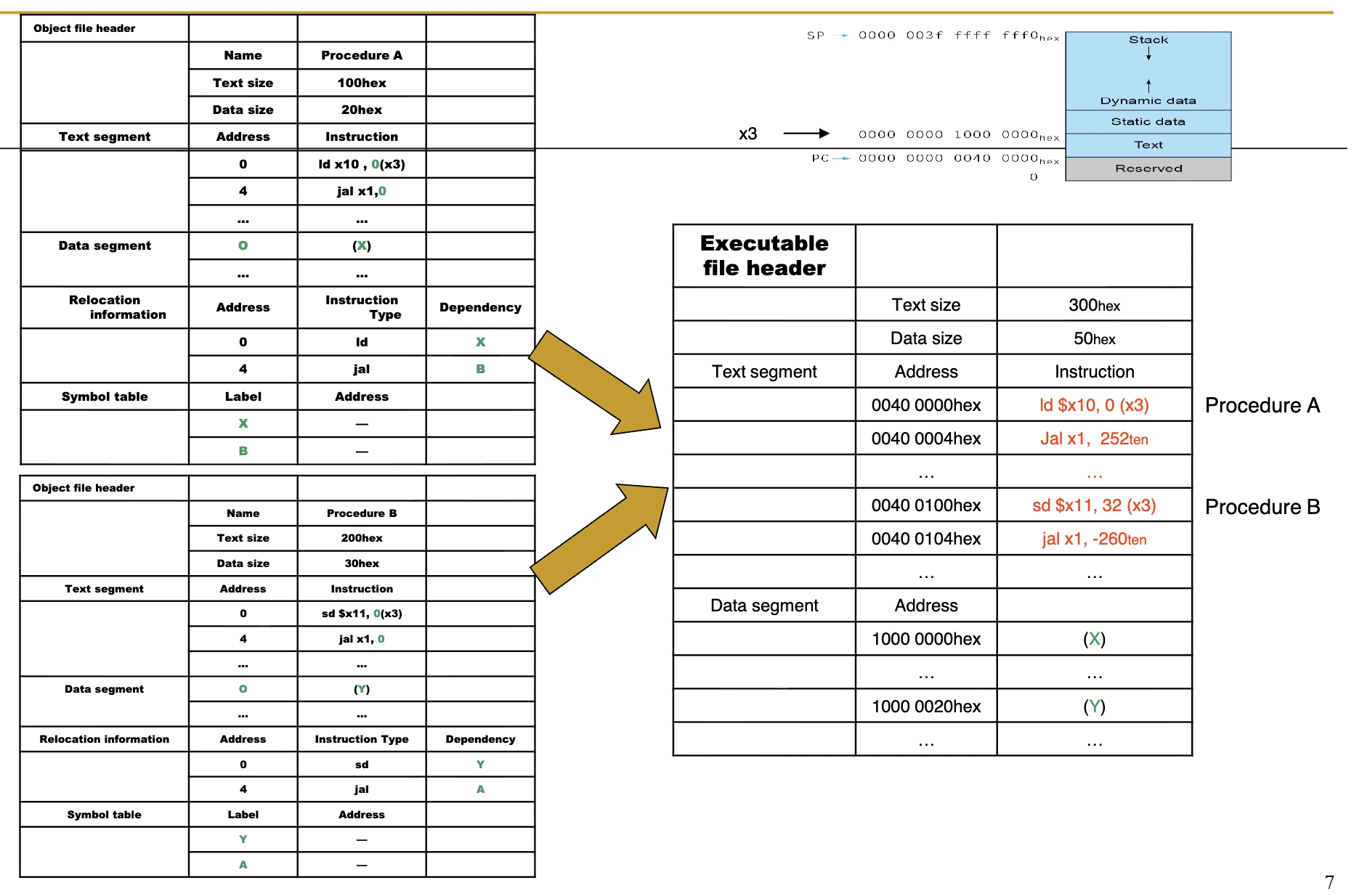
在這個例子裡面 A, B 是互相 call 的,當 linker 要把這兩個 object file link 成一個 executable file 的時候,我們會先把 procedure A, B 的 text, data segment 先合併,並且填寫真實的 address (Virtual memory address),每個 instruction 都是 4 bytes,所以我們可以這樣填寫
當我們知道了真實的 address 後我們就可以從 relocation information 裡面把資料填起來,也就是根據 dependency 把 text segment 裡面有關 address 的 instruction 填好
在這個步驟我們還會額外紀錄 data, text segment 的 size
Loader#
當我們有一個 executable file 之後,我們就可以把它 load 進 memory 裡面,流程如下
- 讀取 header 來決定每個 segment 的 size
- 建立 virtual memory 的 address space
- 把 text 跟 initialized data 放進 memory
- 如果會有 page fault (太滿了) 的話,我們就要先把 page table set up
- 把 argument 放進 stack
- 把相對應的 register 設定好
sp,fp,gp - Jump 到 startup routine,通常會長下面這樣
_start_up:
    lw x10, offset($sp);
    jal x1, main;
exit;Dynamic Linking#
Dynamic 是一個很重要的概念 static 是預先準備好的意思,Dynamic 是一種因地制宜的意思,通常我們有些 code 其實不一定會 branch 到,而且 executable file 太大了,要整個 load 進 memory 就太大了,所以 dynamic link (lazy procedure linkage) 就被發明出來了
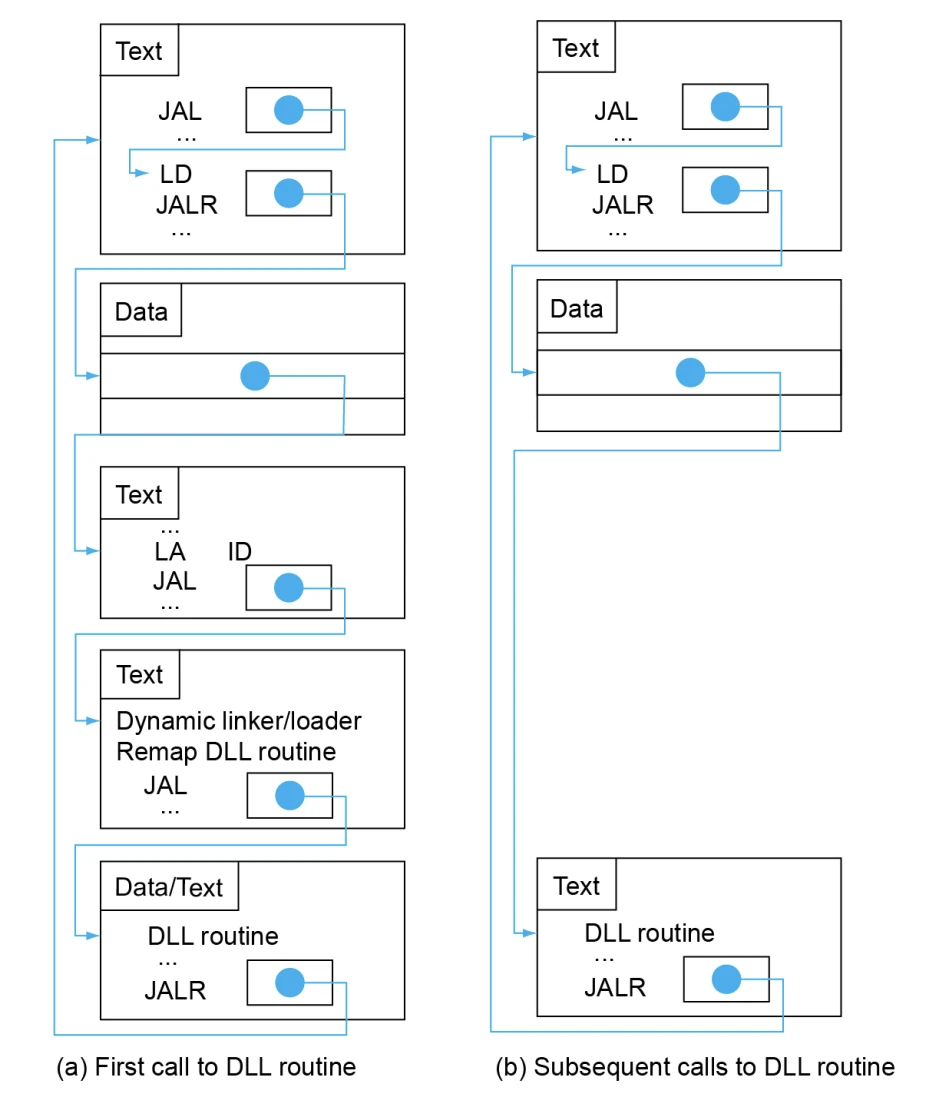
第一次造去 call 某個 routine 的時候,我們需要呼叫 dynamic loader 把那個 code Link 進來,但當後面要執行之後我們就可以像 static link 一樣直接找到他的位置
通常經過很多層 library call 才能找到真正的 Linking Library,但你載入後,就可以夠過 indirection table,遇到不存在會先在 runtime 呼叫 stub 然後請 Dynamic Linker 去做 Linking
以下這個例子,我們原始的 printf function 裡面做的不是真正的 printf,而是去 load 一段 address,那段 address 是一個 linker,他的工作室把真正的 printf load 到 memory 裡面,並且把 L1 的 label 換成真正的 printf 也就是 0x400000
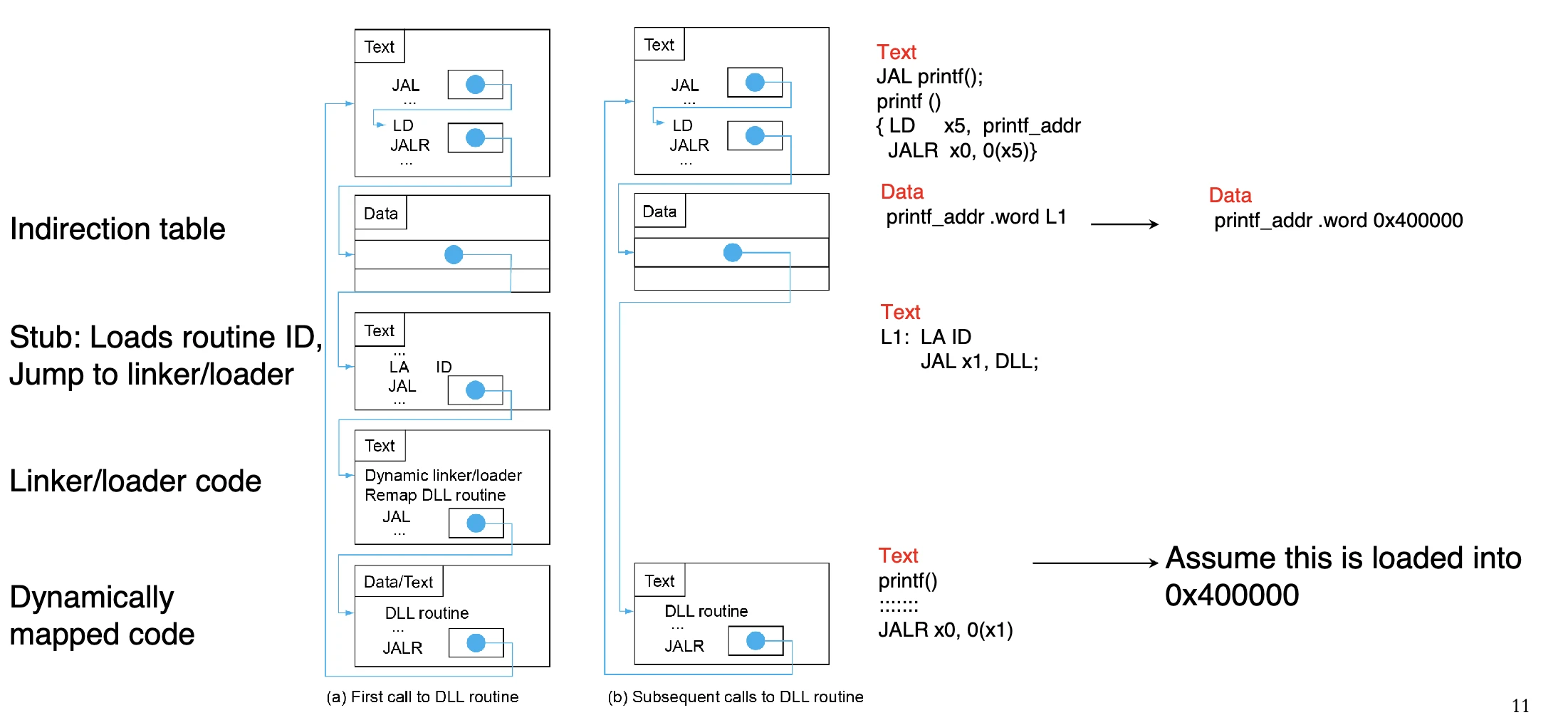
但畢竟還是要經過一個 Indirection table 會需要一點 overhead,比 static 多
Java Linking#
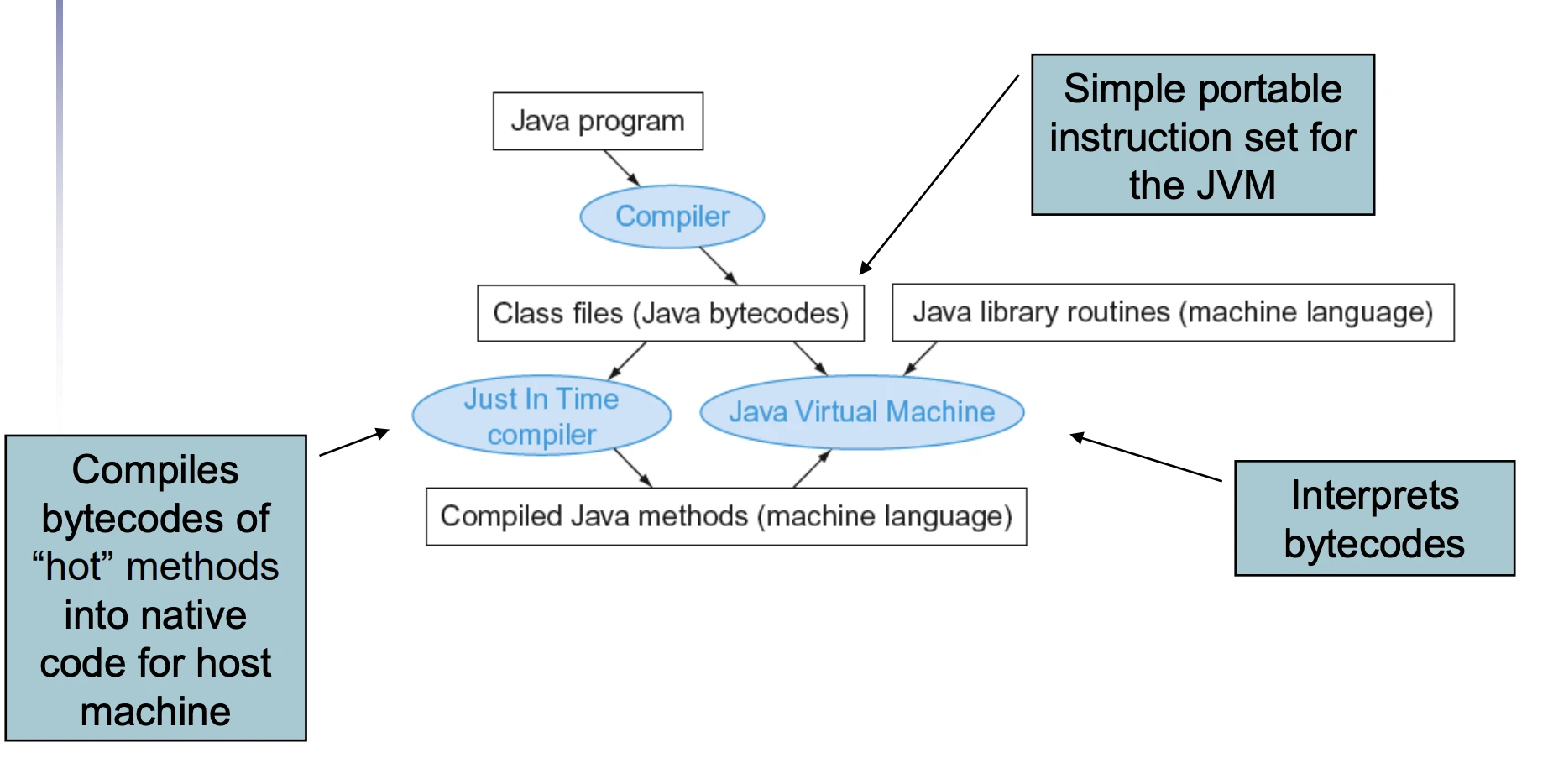
Java 採取的方法是先 compile 成 bytecode,然後再用 JVM 做即時的 interpretation,但這樣一定會產生 overhead,因為 JVM 即時翻譯無法優化,所以我們又產生 Just In Time Compiler,在不干擾 program 進行的情況下優化,如果一個 section 一直被執行,JIT 就會去優化,然後通知 JVM 使用這段 machine code
C example in Sorting#
假設我們有一個 sort function,我們會需要 call 一個 leaf procedure swap()
void swap(long long int v[],
          long long int k)
{
    long long int temp;
    temp = v[k];
    v[k] = v[k+1];
    v[k+1] = temp;
}翻譯後長這樣
swap:
    slli x6,x11,3      // reg x6 = k * 8
    add  x6,x10,x6     // reg x6 = v + (k * 8)
    ld   x5,0(x6)      // reg x5 (temp) = v[k]
    ld   x7,8(x6)      // reg x7 = v[k + 1]
    sd   x7,0(x6)      // v[k] = reg x7
    sd   x5,8(x6)      // v[k+1] = reg x5 (temp)
jalr x0,0(x1) // return to calling routine而這個 Sort 會使用這段 procedure
void sort (long long int v[], size_t n) {
    size_t i, j;
    for (i = 0; i < n; i += 1) {
        for (j = i - 1;
             j >= 0 && v[j] > v[j + 1];
             j -= 1) {
            swap(v,j);
        }
    }
}(這裡可能有無窮迴圈 有一個小小的 bug 並且外圈會有 underflow,因為 size_t 是 unsigned)
這段是 outer loop 的 body
    li   x19,0          // i = 0
for1tst:
    bge  x19,x11,exit1  // go to exit1 if x19 ≥ x11 (i≥n)

    (body of outer for-loop)

    addi x19,x19,1      // i += 1
    j    for1tst        // branch to test of outer loop
exit1:inner loop 的 code 長這樣
    addi x20,x19,-1     // j = i -1
for2tst:
    blt  x20,x0,exit2   // go to exit2 if x20 < 0 (j < 0)
    slli x5,x20,3       // reg x5 = j * 8
    add  x5,x10,x5      // reg x5 = v + (j * 8)
    ld   x6,0(x5)       // reg x6 = v[j]
    ld   x7,8(x5)       // reg x7 = v[j + 1]
    ble  x6,x7,exit2    // go to exit2 if x6 ≤ x7
    mv   x21,x10        // copy parameter x10 into x21
    mv   x22,x11        // copy parameter x11 into x22
    mv   x10,x21        // first swap parameter is v
    mv   x11,x20        // second swap parameter is j
    jal  x1,swap        // call swap
    addi x20,x20,-1     // j -= 1
    j    for2tst        // branch to test of inner loop
exit2:我們在這裡看 code 都理所當然的會 work,但其實所有 I/O 的部分都可能會出問題(業界問題)
前面講的的 convention 也要遵守
Preserve saved registers:
addi sp,sp,-40      // make room on stack for 5 regs
sd   x1,32(sp)      // save x1 on stack
sd   x22,24(sp)     // save x22 on stack
sd   x21,16(sp)     // save x21 on stack
sd   x20,8(sp)      // save x20 on stack
sd x19,0(sp) // save x19 on stackRestore saved registers:
exit1:
    sd   x19,0(sp)      // restore x19 from stack
    sd   x20,8(sp)      // restore x20 from stack
    sd   x21,16(sp)     // restore x21 from stack
    sd   x22,24(sp)     // restore x22 from stack
    sd   x1,32(sp)      // restore x1 from stack
    addi sp,sp,40       // restore stack pointer
jalr x0,0(x1)Compiler#
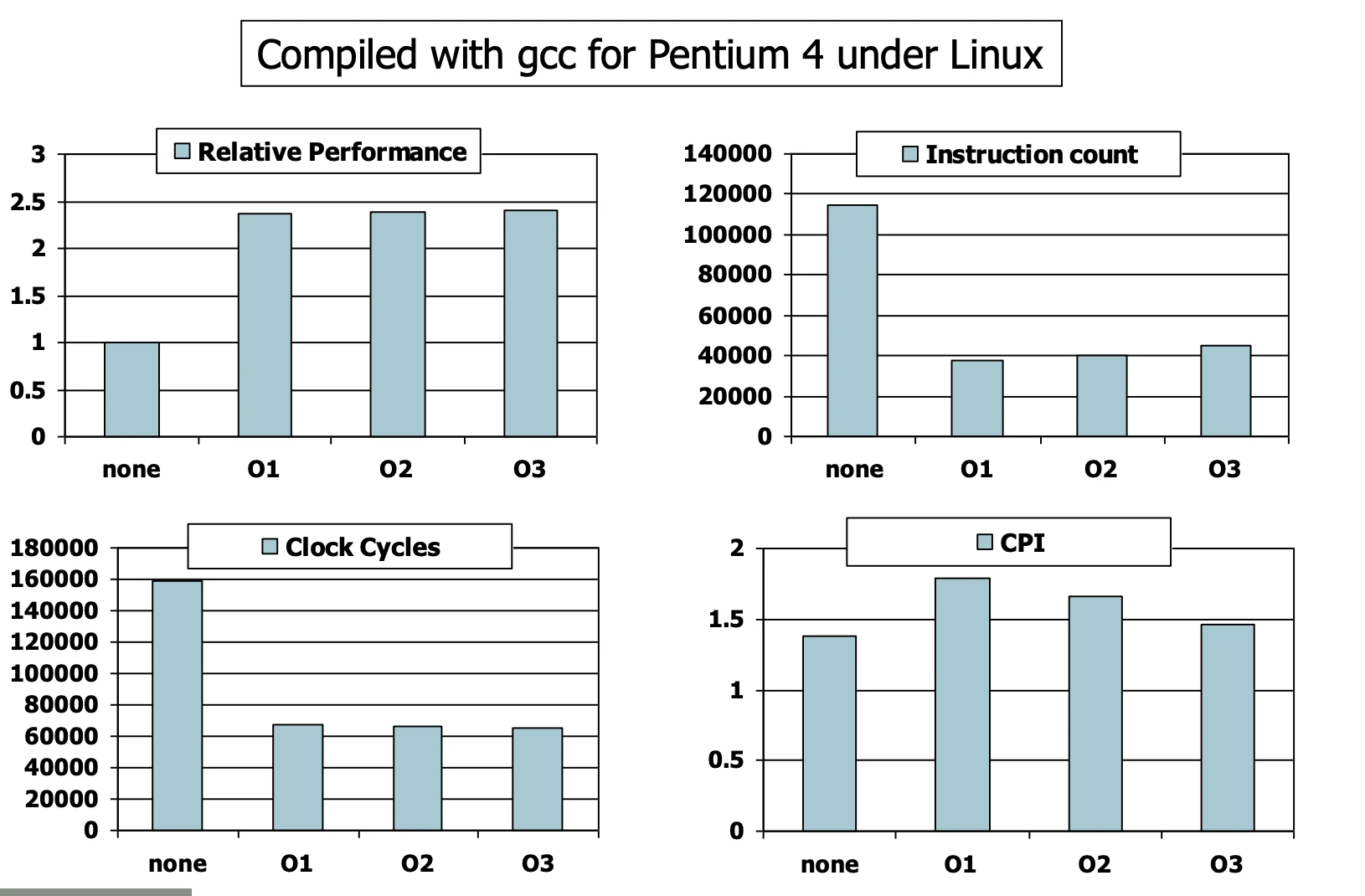
-O3 不一定是最優解,但時間一定是花最多的,要計算 Performance 我們就需要看其他的 metric,Instruction count, Clock Cycle, CPI 都會不一樣
Compiler 分為前端跟後端
- 前端就是各種 language 接成 Intermediate representation
- 後端是要把各種 IR 轉換成 target machine language
這些 Optimization 都是在 backend 做的
-O1, O2, O3 都會減少 Instruction Count,但 -O3 call 的 instruction 的 CPI 會比較低,所以效能好
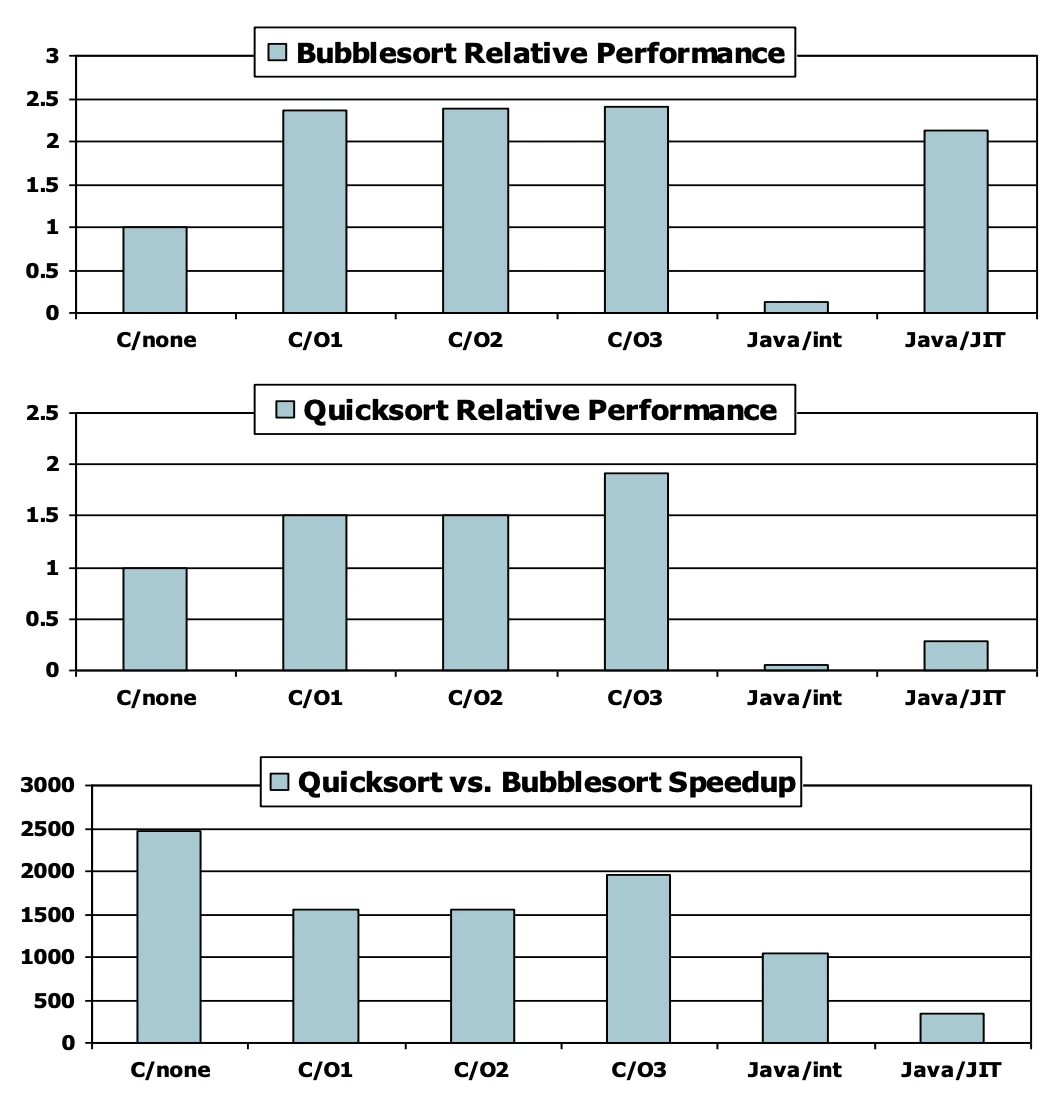
這裡就能看出 Interpreter 跟 Compiler 的 Performance 區別,但因為 sorting problem 都有重複執行的 code,所以 JIT 會做優化
Compiler 的優化真的很難預測到底誰好,因為 Compiler optimizations 對你的 program 裡面的 Algorithm 有非常大的關聯性
JIT 對 Java 會有很大的優化,但一樣跟 Algorithm 很 sensitive
Array v.s. Pointer#
這是一個爭論很久的問題,一樣是有 Trade-off
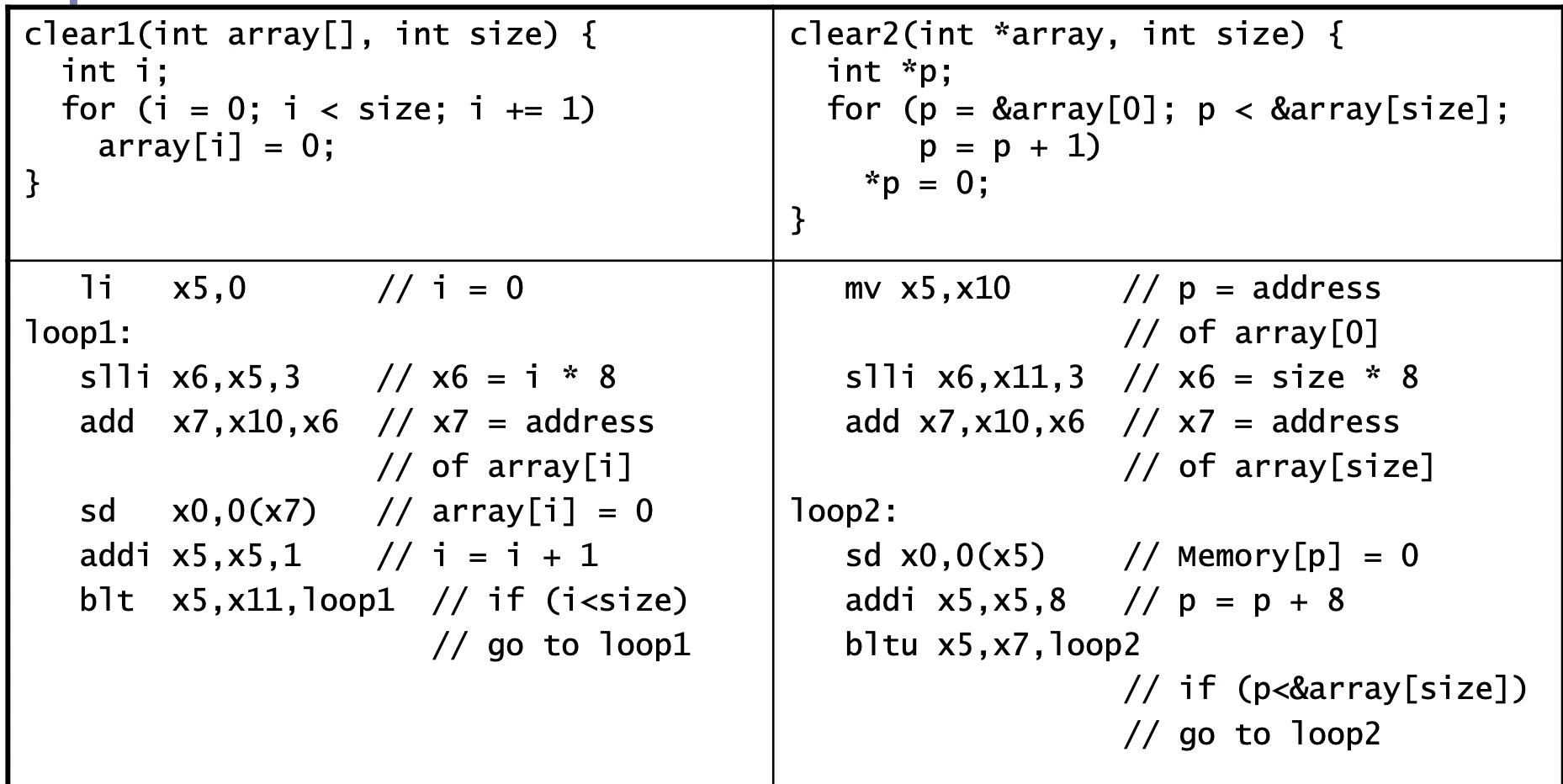
這裡就有一個例子,我們可以看看在完全沒優化的情況下會發生這件事,pointer 裡面只需要 3 個 instruction,但 array 要 5 個
pointer 裡面的 +1 是 +一個 element 的大小
在效能上就可以做分析,某些行為應該要很快,但沒成功,我們就可以看 Compiler 的 code
MIPS instruction#
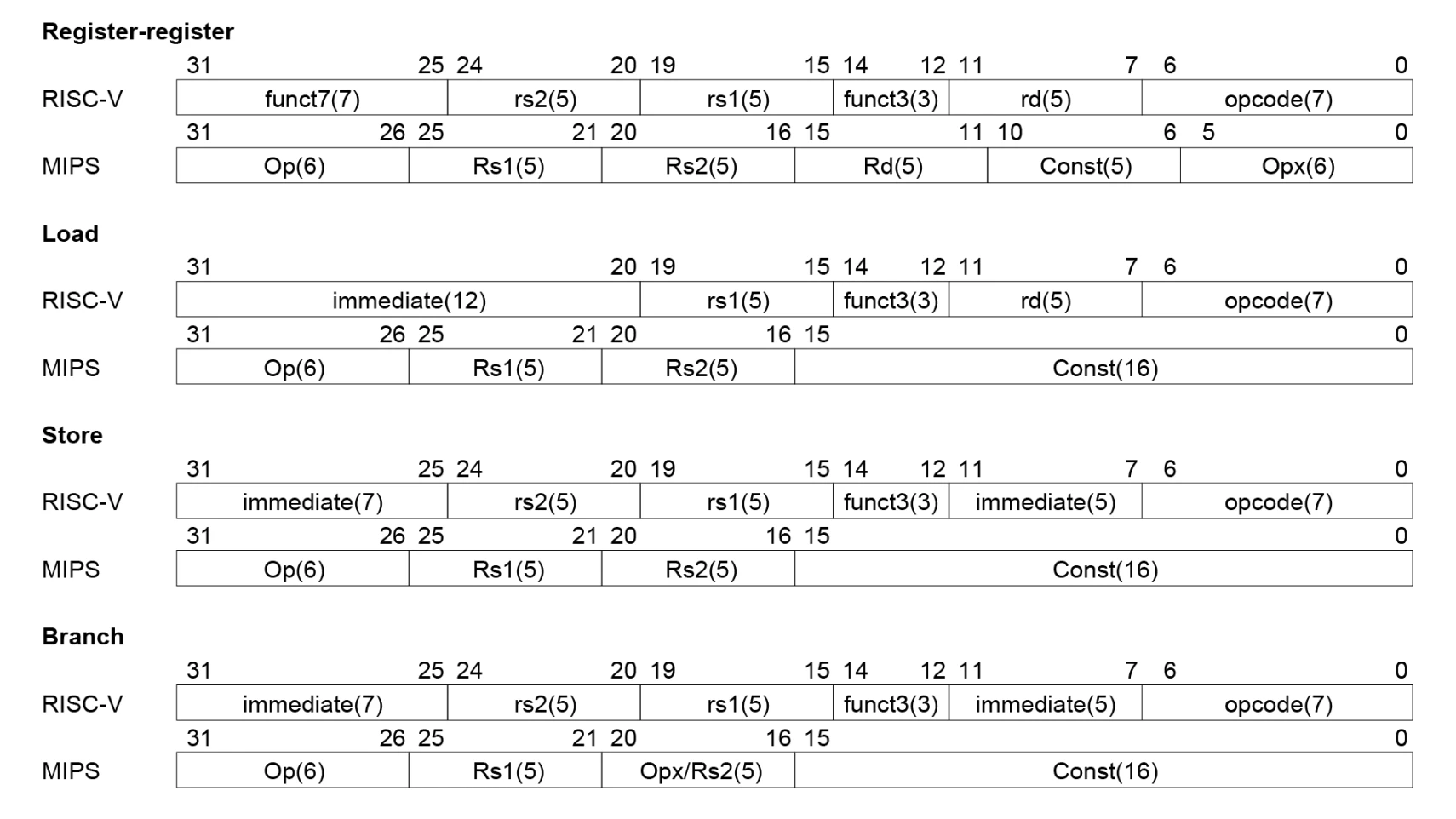
也是 RISC 家族的一員,只有三種 format
x86 instruction#
是一種 CISC instruction set 所以會差很多,是一個比較古老的 ISA,Intel 的設計邏輯就是一直增加 ISA,一直做 evolution,增加各種 processor,這樣雖然功能多,可能以現代的觀點會很糟糕,但是改不太動,因為要繼承前面的功能
AMD 也能做 Intel 處理器,因為有授權,在 x86 第一款 Pentium 的時候出了一個 bug,是 fp 的 error 最後 Intel 收回了
現代的 architecture 可以轉換的很快是因為有 dynamic translation
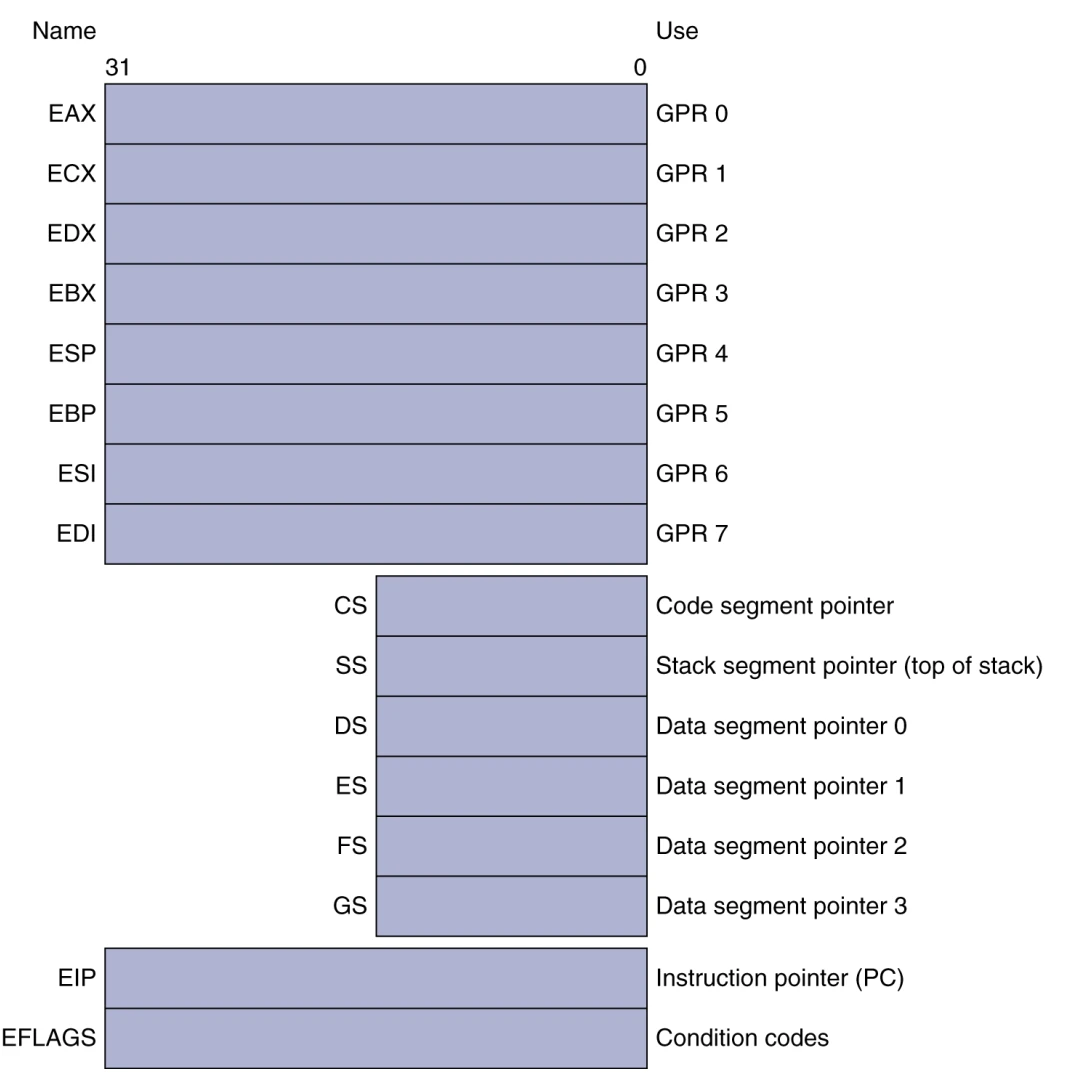
x86 的指令非常複雜,因為他希望一個指令可以直接做到一件事,所以他的規則非常複雜
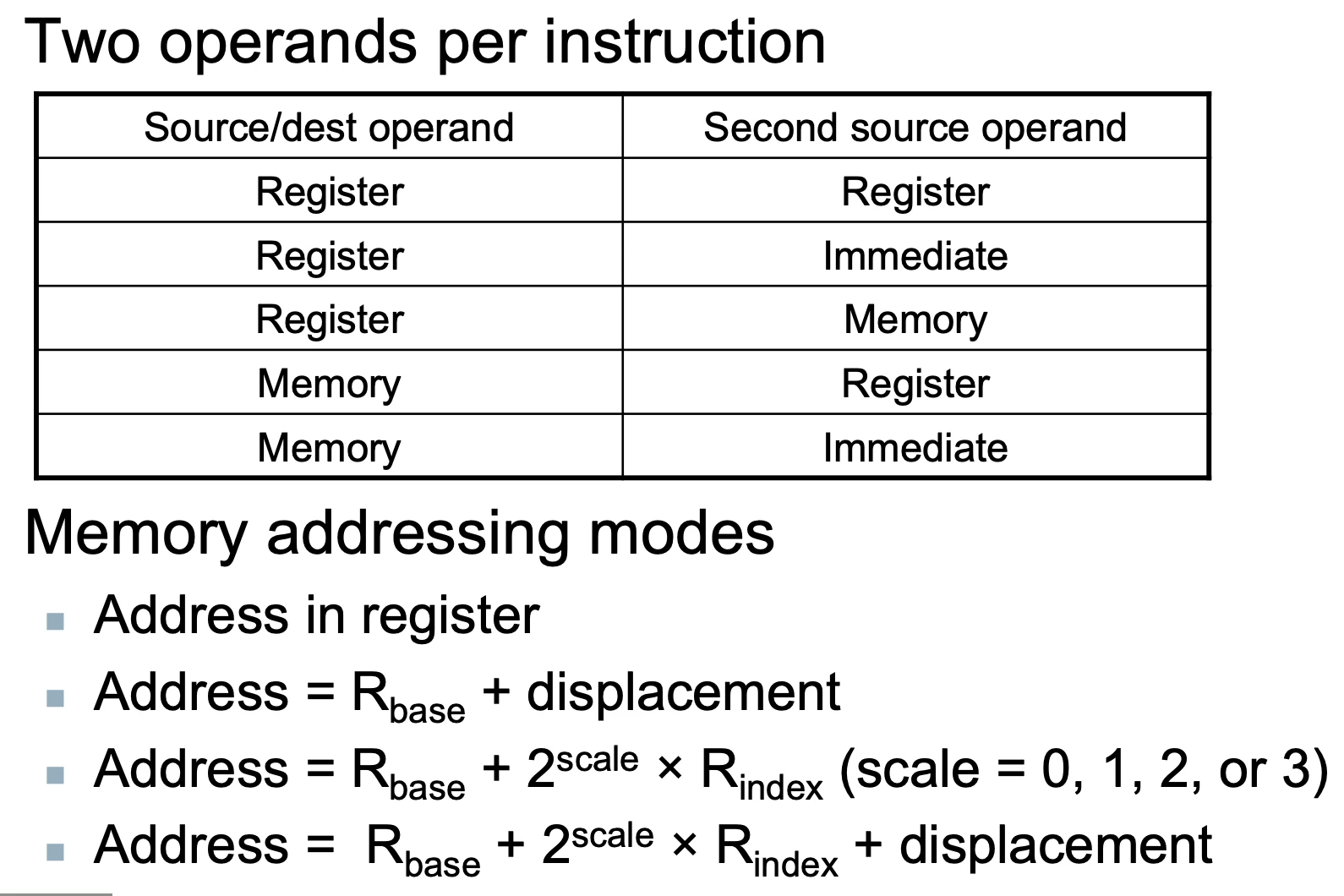
不僅計算方法不一樣,連長度都不一樣
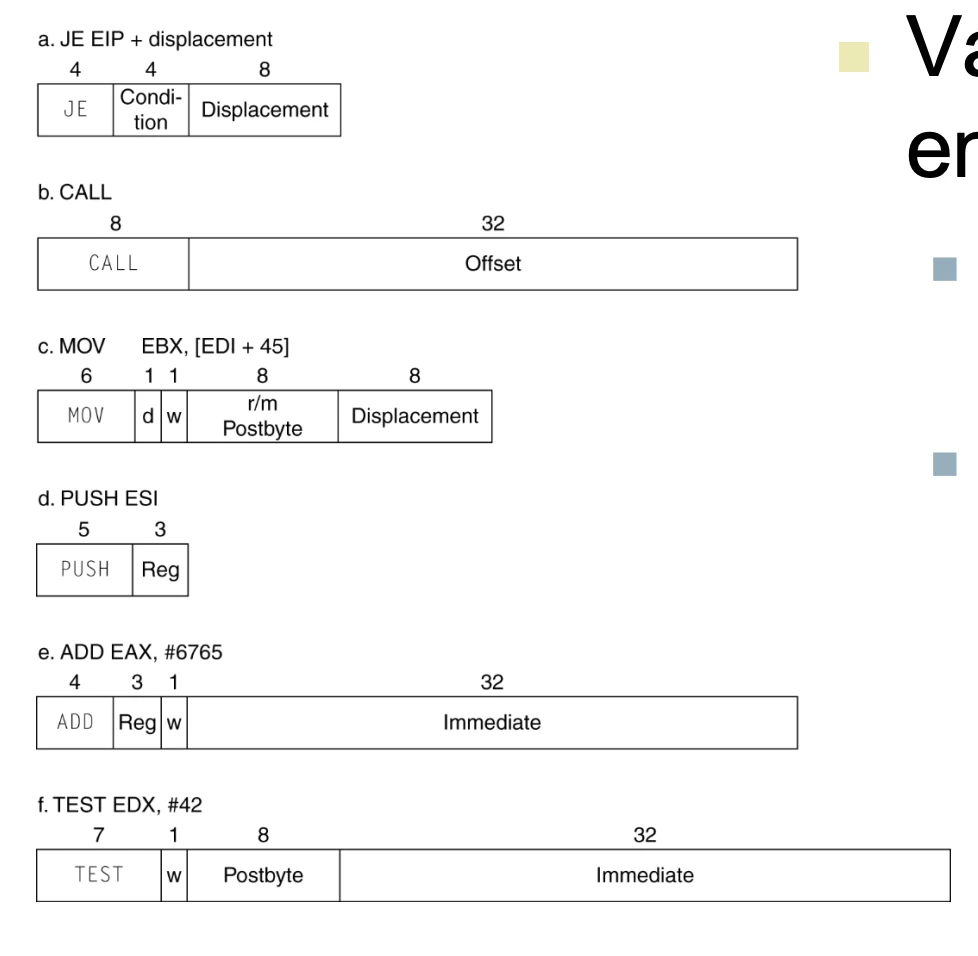
我們在 CISC 跟 RISC 都一樣有 Microengine 但 CSIC 多了一個 overhead
把 ISA instruction 拆成更底層 micro-operations(µops),然後用 microengine 去跑,所以其實 CISC, RISC 執行的方法都差不多,都會有很多小指令,但 CISC 還需要更複雜的 front end 來做 µops translation
Other RISC-V Instructions#
- RV64I:64-bit 的 Base Integer ISA
auipc:rd = pc + (imm << 12),常搭配jalr做 long jumpslt / sltu / slti / sltiu:比較大小,成立設為1addw / subw / addiw:32-bit add/subsllw / srlw / sraw ...:32-bit shift
- RV32I:register 與基本運算皆為 32-bit
Instruction Set Extensions#
- M:integer multiply / divide / remainder
- A:atomic memory operations
- F:single-precision floating point
- D:double-precision floating point
- C:compressed instructions
- 常用 instruction 用 16-bit encoding
- 目的主要是減少 code size
例如:RV64IMAFDC = RV64I + M + A + F + D + C