Pipeline Implementation#
Data Hazard and Forwarding#
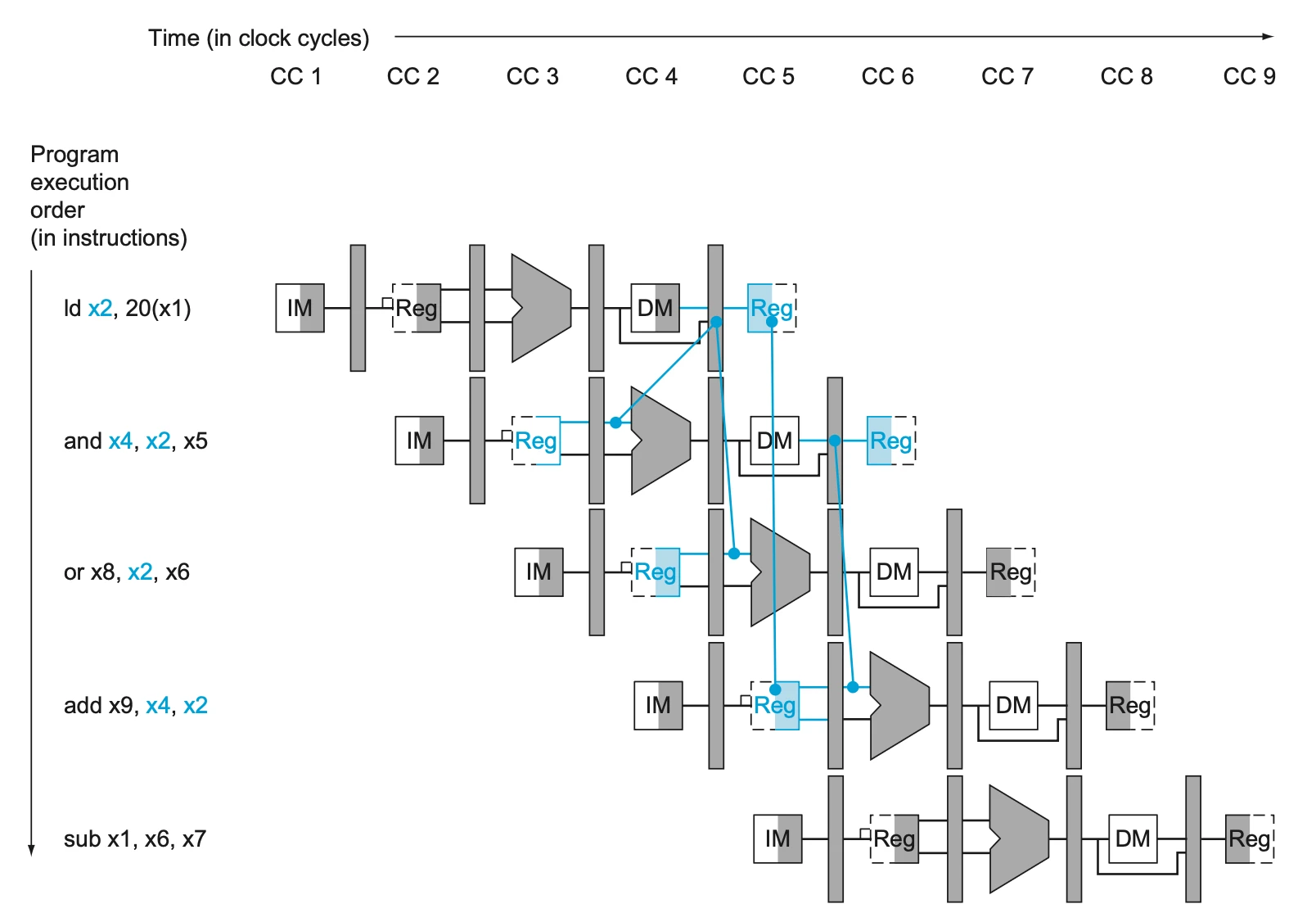
複習一下 Data Hazard 跟 Forwarding,以下這張圖,我們會發現,在第四個 tic 的時候,and 就需要用到 x2 的計算過後的值,在那個 tic 雖然 x2 的 new value 還沒被寫到 register 裡面,但他其實已經被 ALU 計算出來了,所以我們只需要把 ALU 計算結果直接接給下一個 instruction 的 ALU 作 operand 就好
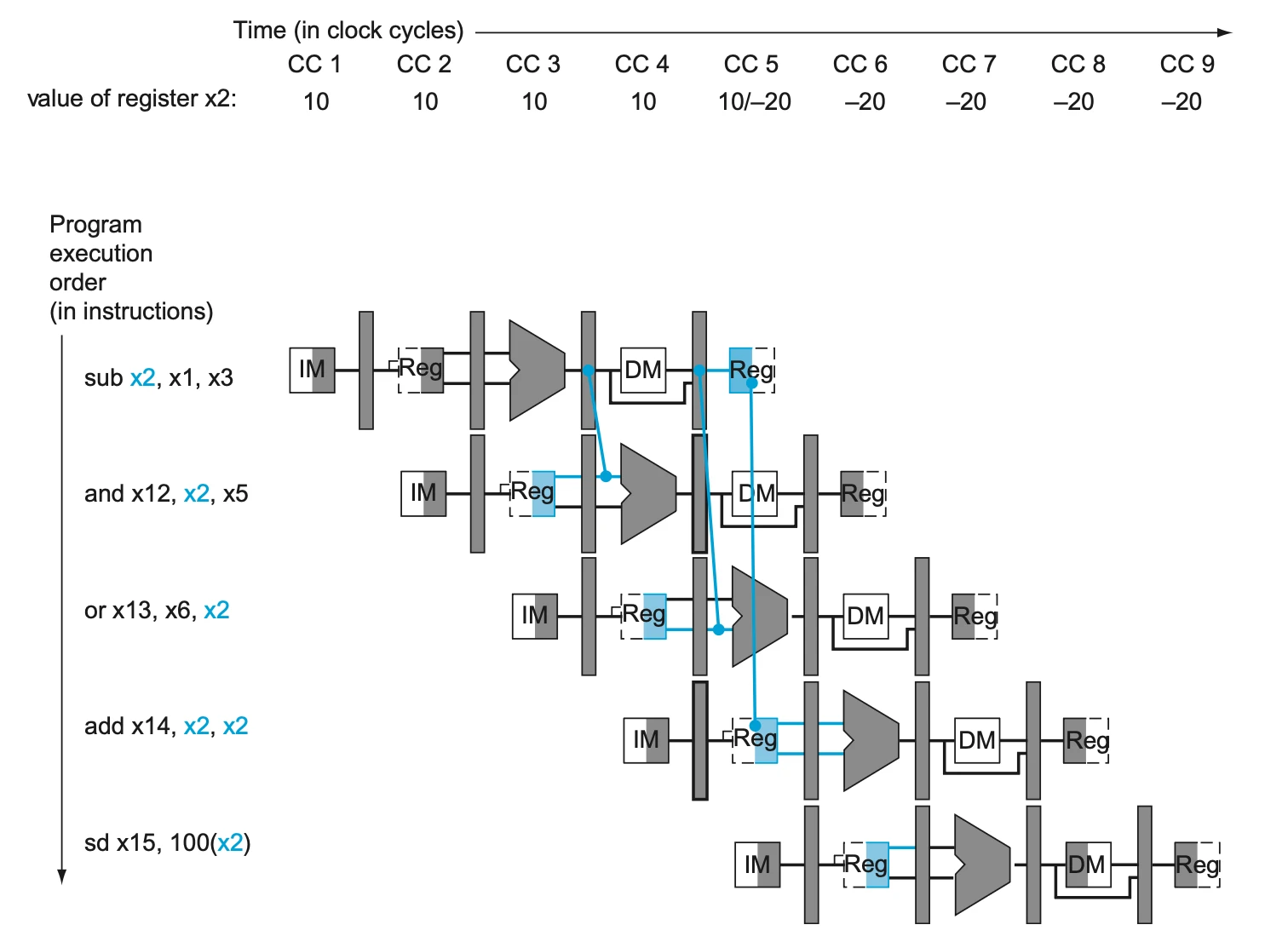
我們仔細觀察一下這個圖,我們會知道 sub, and 兩個指令有 dependency 是因為他們共用了一個 register x2,只要上一個 stage 的 rd 是下一個 stage 的 rs 我們就需要做 forwarding,我們得出以下條件
EX/MEM.RegisterRd == ID/EX.RegisterR1
EX/MEM.RegisterRd == ID/EX.RegisterR2再看一下 sub, or 兩個 instruction,同樣有 dependency,但這次差了兩個 cycle,所以條件變成 倒數第二個 stage 的 rd 是這個 stage 的 rs,我們就可以 forwarding
MEM/WB.RegisterRd == ID/EX.RegisterR1
MEM/WB.RegisterRd == ID/EX.RegisterR2這兩個條件我們分別稱為 EX Hazard 跟 MEM Hazard,除了這兩項我們還需要一些條件
EX/MEM.RegisterRd != $0
MEM/WB.RegisterRd != $0因為 x0 永遠都存 0 這個值,他不應該被改變,另外我們也需要檢查 EX/MEM.RegWrite, MEM/WB.RegWrite 開啟我們才能確認這個 stage 裡面的 instruction 有要寫入 register,rd 才應該生效
再次看一下上面那張圖,Forwarding 時應該使用 MEM/WB, EX/MEM 裡面的 data,而不應該使用 register 裡面的
Forwarding Logic Unit#
有了條件,我們就可以建立一個新的 component 來 implement forwarding 這個機制
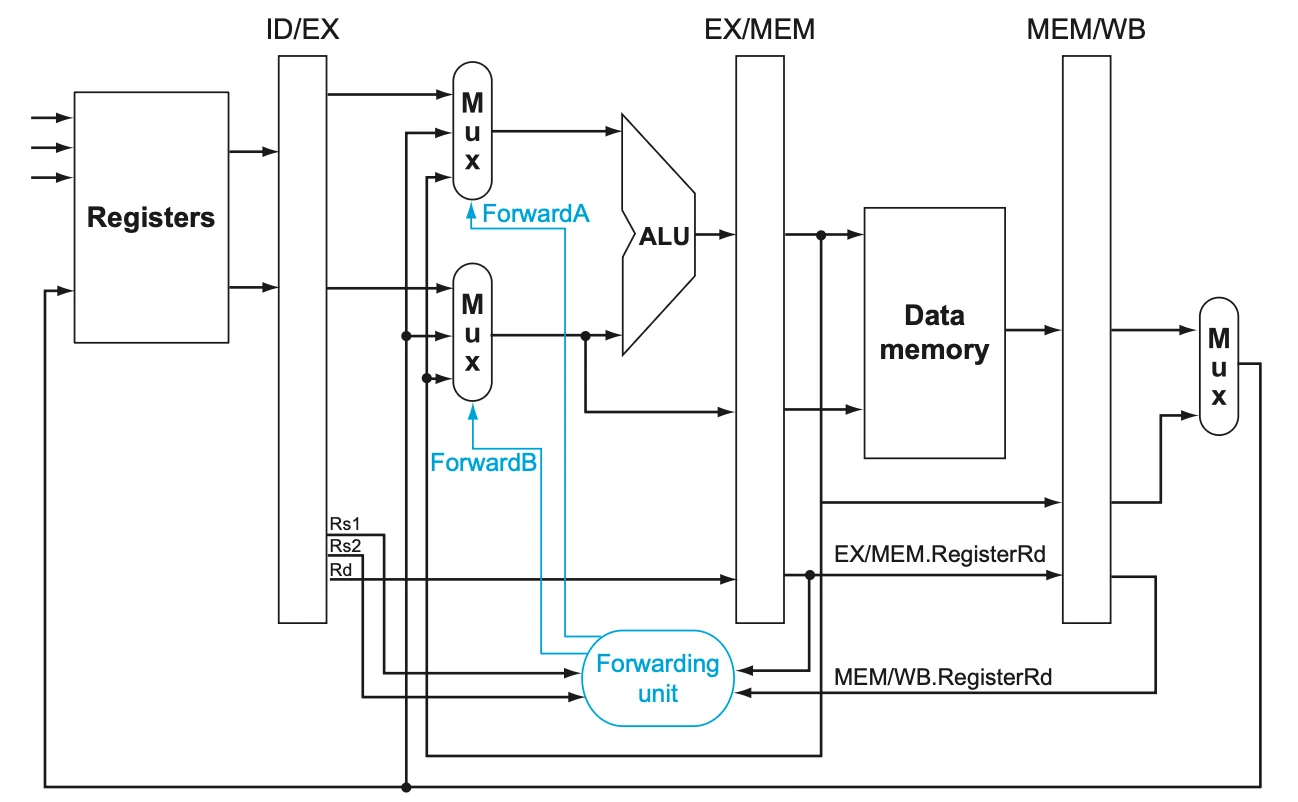
原始的 Datapath 只需要 handle 一種 operand source,而現在有三個 source,只有在 Execution stage 的時候才會觸發 forwarding,而我們需要 handle 從 EX/MEM 跟 MEM/WB 來的 data 來解決 EX, MEM Hazard
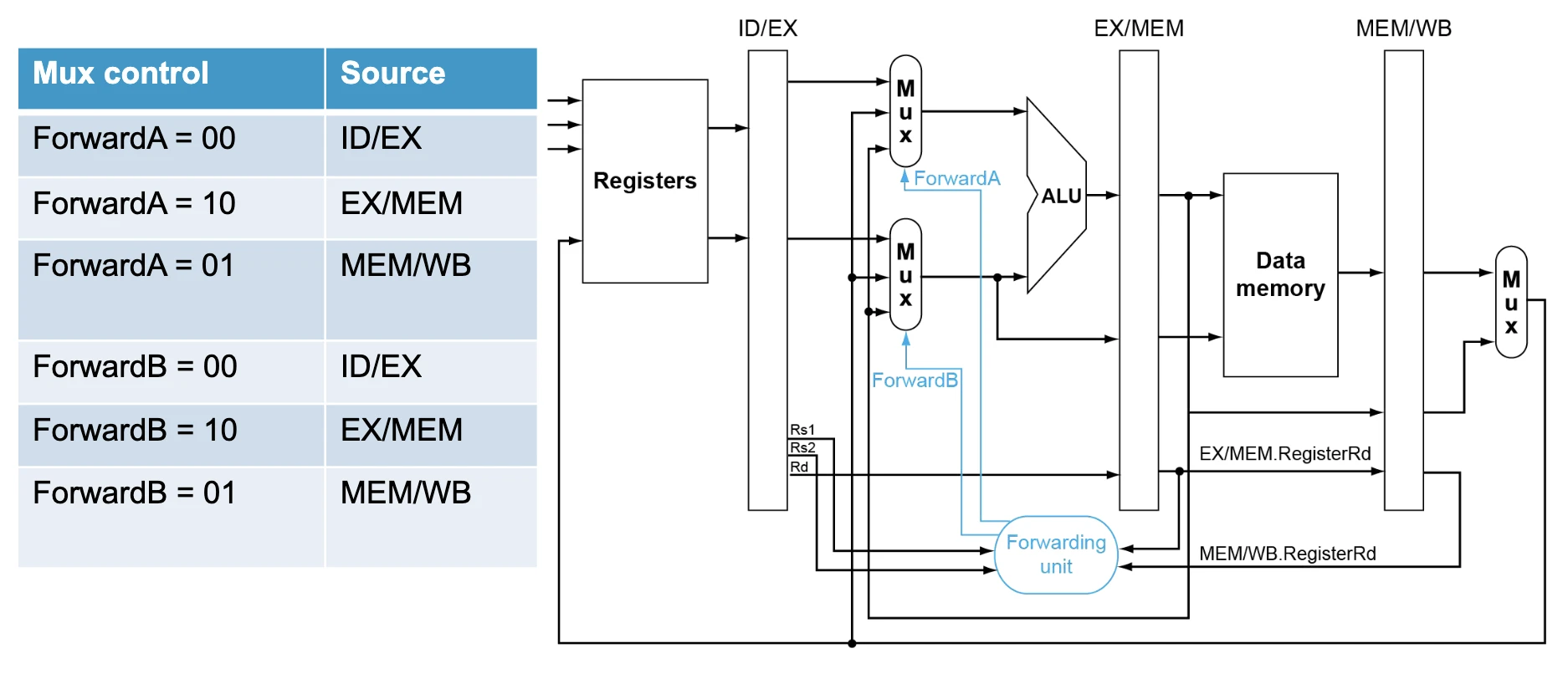
我們可以總結出 Forward Unit 的 implementation
- EX hazard
if (EX/MEM.RegWrite
    && (EX/MEM.RegisterRd != 0)
    && (EX/MEM.RegisterRd = ID/EX.RegisterR1))
    ForwardA = 10

if (EX/MEM.RegWrite
    && (EX/MEM.RegisterRd != 0)
    && (EX/MEM.RegisterRd = ID/EX.RegisterR2))
ForwardB = 10- MEM hazard:有些情況下,情況會同時符合 MEM hazard 並且符合 EX hazard,這時候我們肯定要讓比較晚產生的 data 做 forwarding,也就是說 EX hazard 的 precedence 比較高
if (MEM/WB.RegWrite
    && (MEM/WB.RegisterRd != 0)
    && (MEM/WB.RegisterRd = ID/EX.RegisterR1))
    && !(EX/MEM.RegWrite
         && (EX/MEM.RegisterRd != 0)
         && (EX/MEM.RegisterRd = ID/EX.RegisterR1))
    ForwardA = 01

if (MEM/WB.RegWrite
    && (MEM/WB.RegisterRd != 0)
    && (MEM/WB.RegisterRd = ID/EX.RegisterR2))
    && !(EX/MEM.RegWrite
         && (EX/MEM.RegisterRd != 0)
         && (EX/MEM.RegisterRd = ID/EX.RegisterR2))
    ForwardB = 01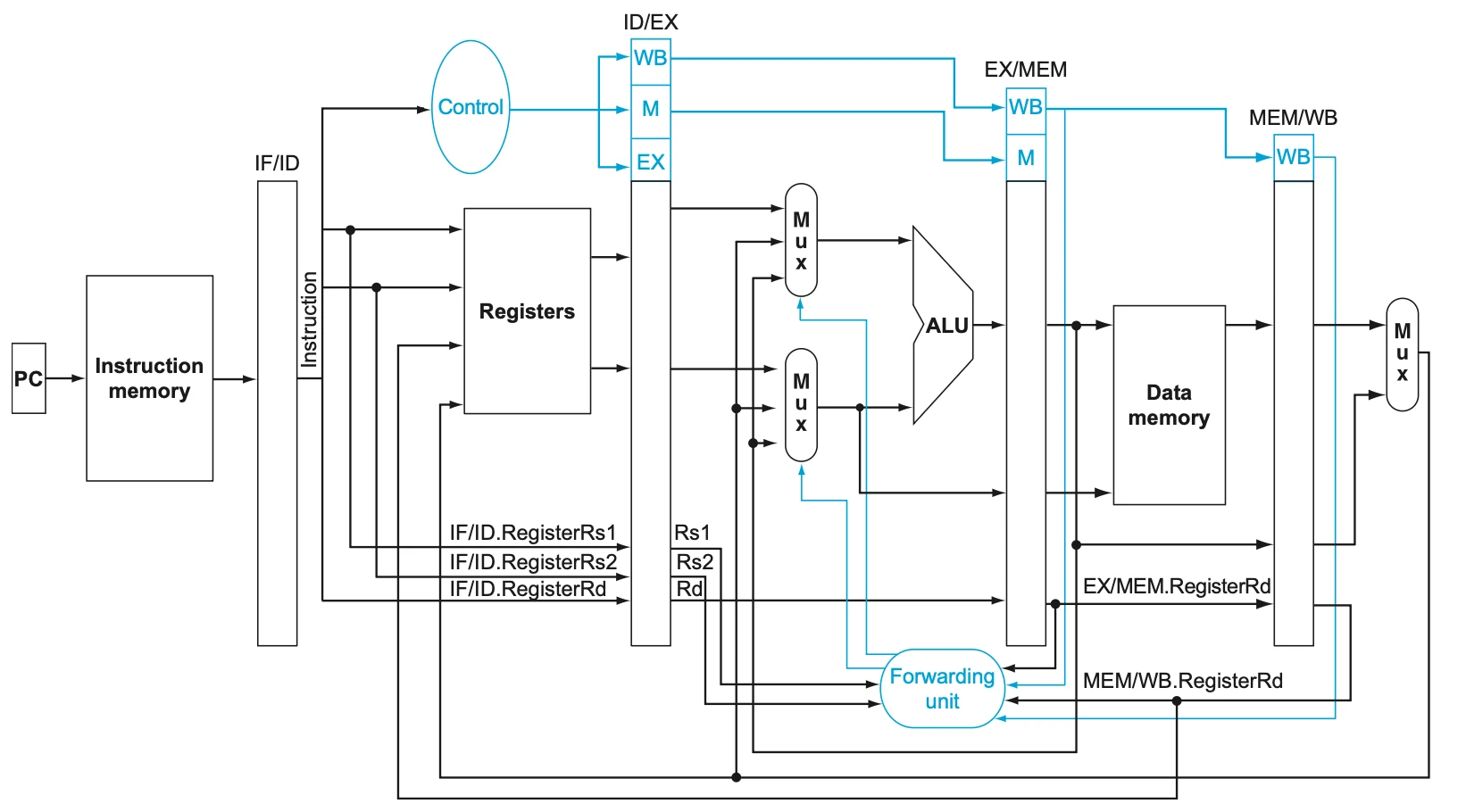
Hazard Detection Unit#
上一章有提到在 load-use 的情況下,我們還是必須得 stall 一個 cycle,以下是他的判斷條件
當我們發現
MemRead開啟,也就是 Decode 出了 load instruction- Fetch 到的 instruction 需要用到剛剛 load 的東西
我們就需要 stall 一個 cycle 或是說把現在這個 instruction flush 掉,變成 nop (no operation)
if (ID/EX.MemRead
    && ((ID/EX.RegisterRd = IF/ID.RegisterRs1)
         || (ID/EX.RegisterRd = IF/ID.RegisterRs2)))
    stall the pipeline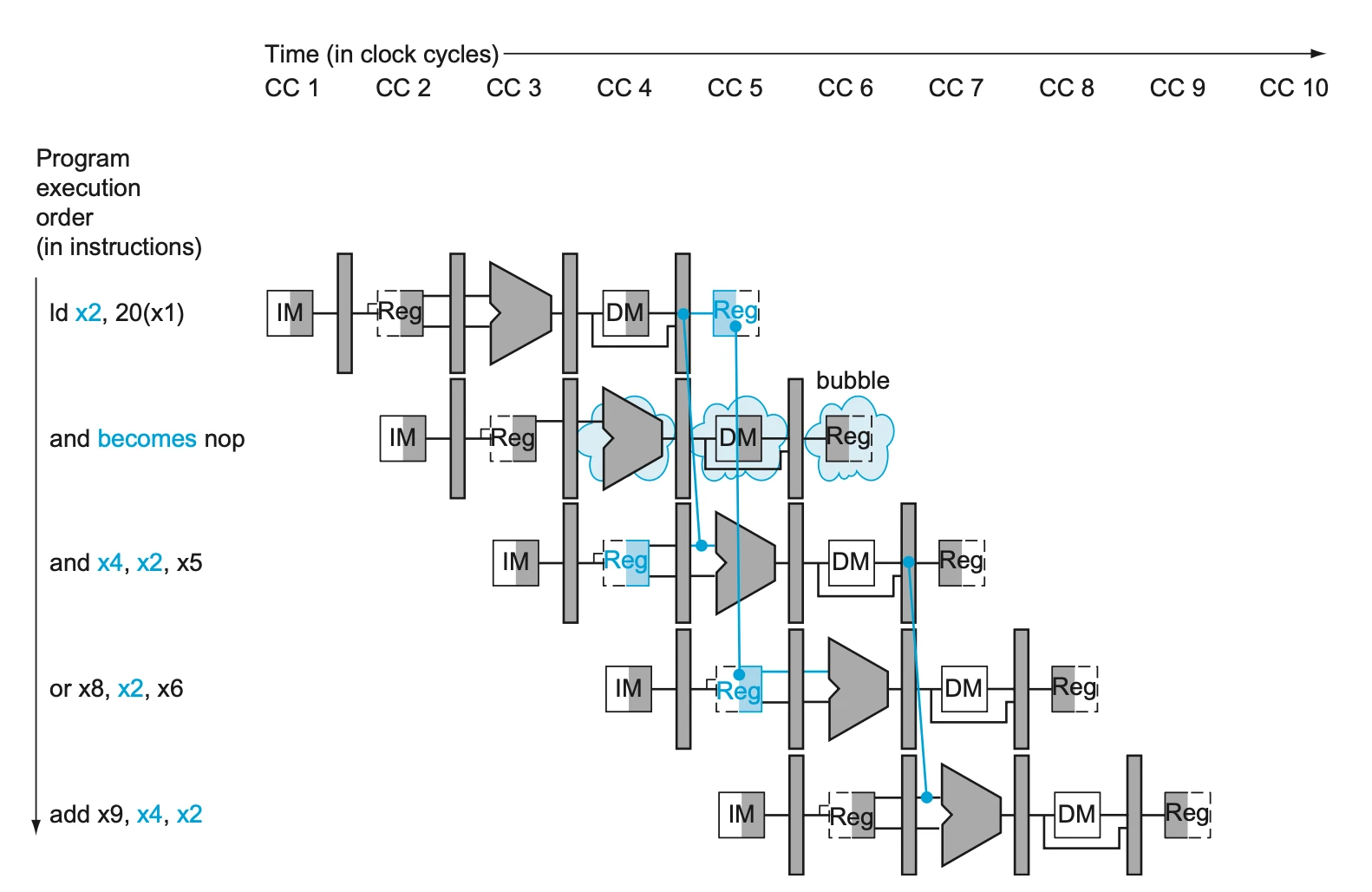
在 implementation 上我們還需要注意幾件事
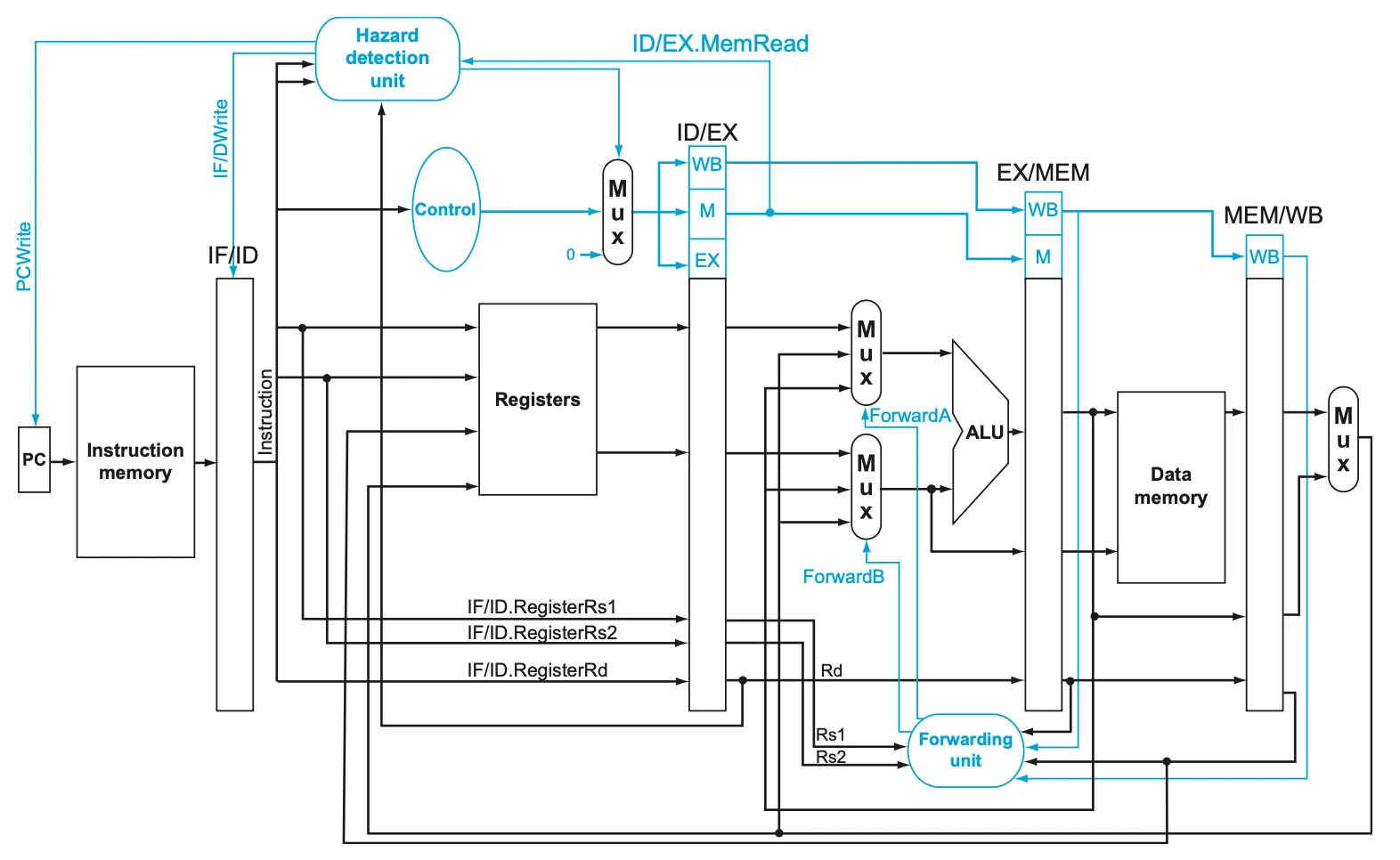
- 讓 IF, ID stage 不要繼續前進,也就是保護
PC和IF/ID - 讓 nop 的 instruction 在 EX, MEM, WB 都空轉
由此,我們可以引出 hazard detection unit
Control Hazard#
Branch Prediction#
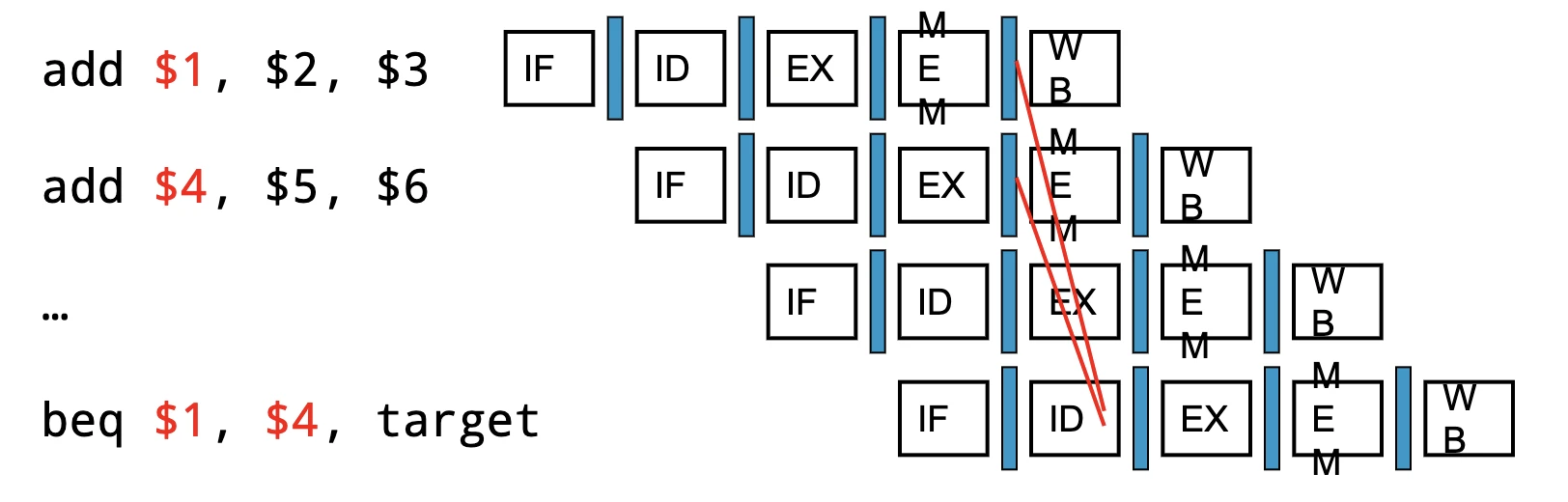
這裡不討論純 stall 的 case,回憶一下上章節我們提到,Branch 的結果可以在 ID stage 就提前出來,知道前提後,我們分 case 討論
- 若是像這樣 comparison 的 register 來自 2~3 個 instruction 前,那這個問題就回歸到 EX/MEM Hazard
- 若 comparison register 是 branch 前一個 instruction 的 destination,又或是
load在 branch 的前兩格,我們需要 stall 一個輪次
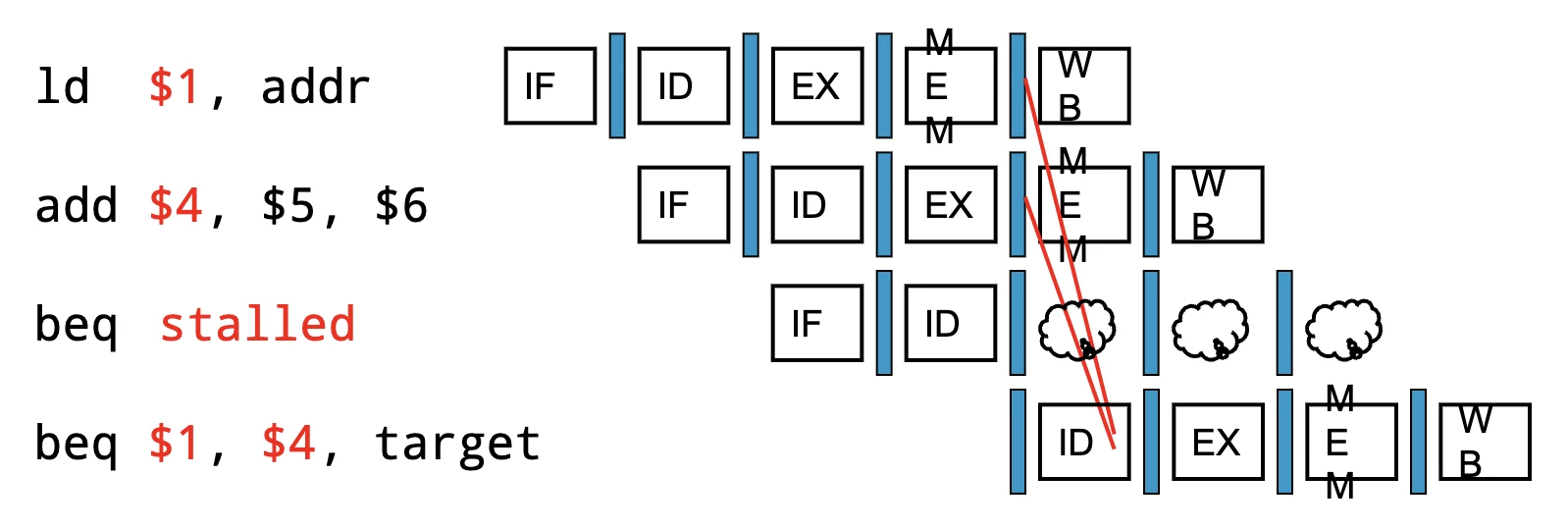
- 若 comparison register 是 load 的 rd 的話,那需要兩個輪次的 stall
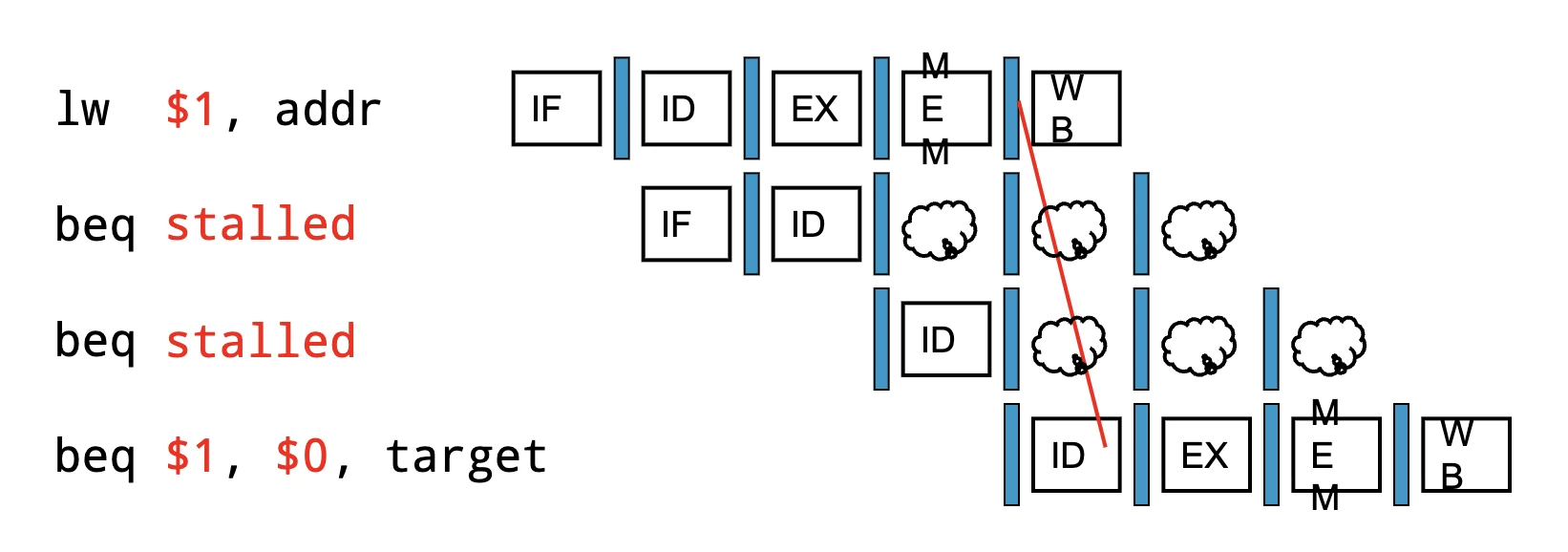
前面都簡單的這是一個 stall 操作,但其實在真正的 implementation 有一些難度,首先最簡單的想法,直接塞一個 stall instruction 進去,但這樣一定會變慢,因為每塞一個 stall 我們就要晚一個 cycle,累積起來非常可怕
因此我們 Prefer 的是第二種 Predict Non-taken,前面我們討論過,Predict Non-taken 會讓每個 branch instruction 正確的話 take 1 cycle,不正確的話 take 2 cycle
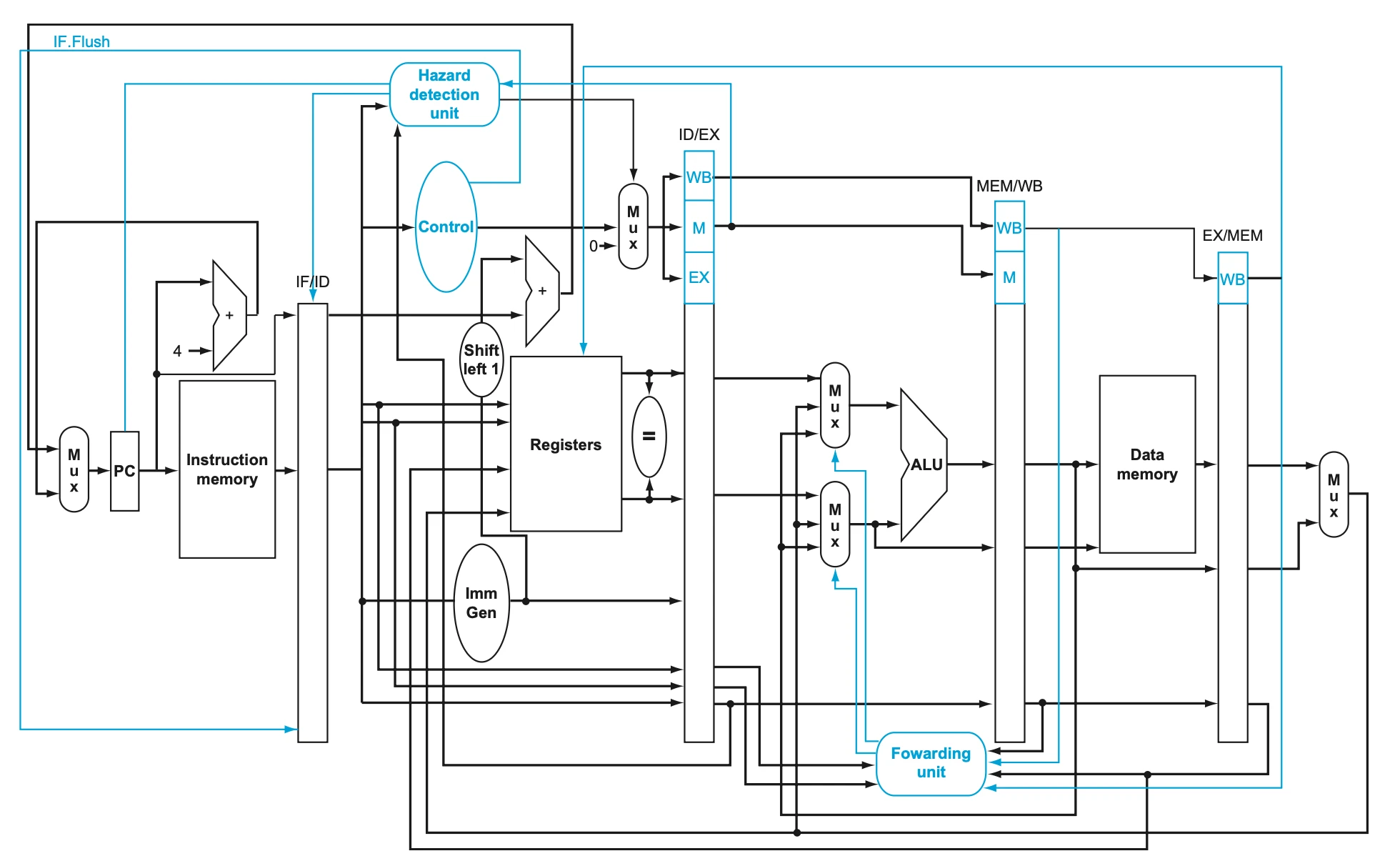
關於 implementation 的話,我們需要有一個 flush 的機制,也就是我們需要讓某幾個 instruction stall 的話,他做的操作是把 IF/ID Pipeline Register 裡面的 Instruction Field 設成 0,這個操作等同於把 Instruction 變成 nop,也就是左上角那條 IF.flush
Dynamic Branch Prediction#
剛剛講完了 Static Branch Prediction,也就是我們在 Compile 就已經決定了執行順序,但其實我們也可以在 runtime dynamically 去 predict branch
One Bit Prediction#
看看我們設計的 table 有多少個 entry,取 instruction 的最末 個 bit 當作 index,Predict 上一輪擁有同樣後綴的 instruction 的行為(taken or untaken)
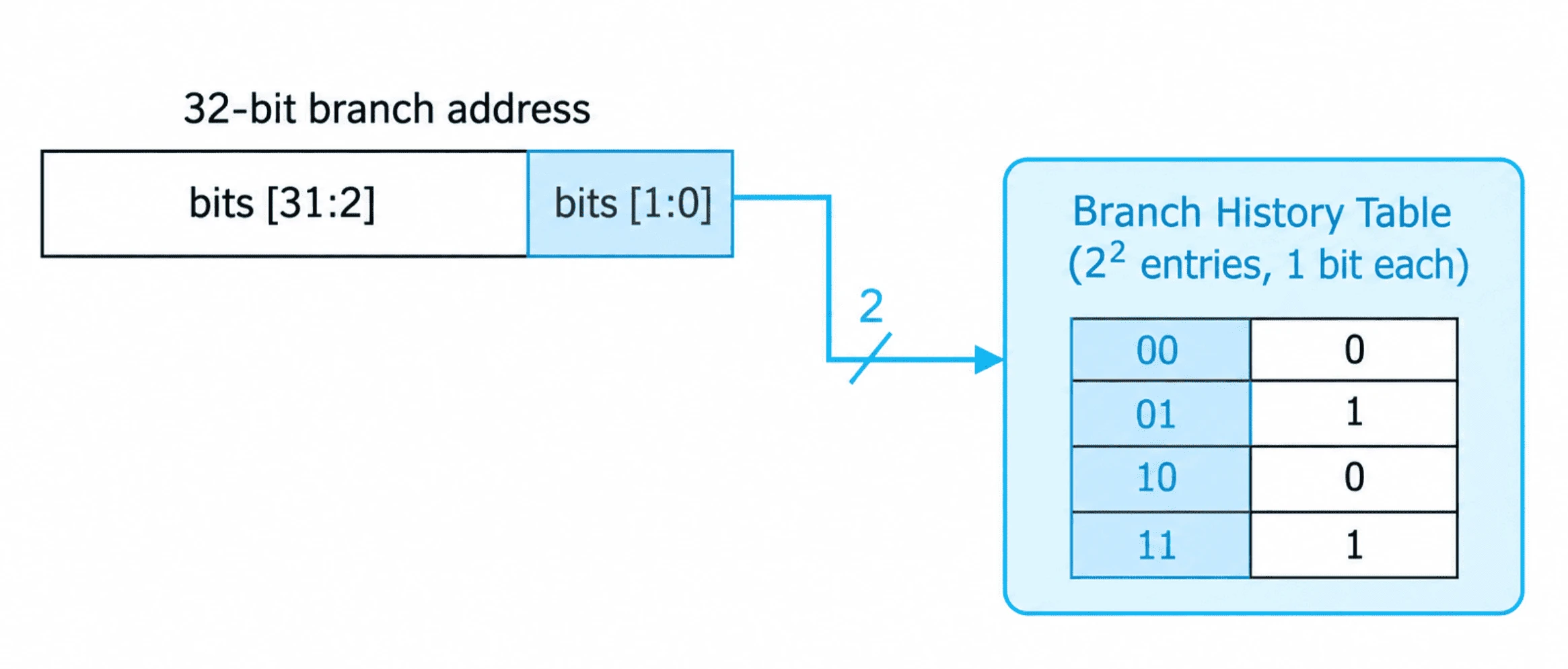
但這種方法會有大問題,我們來做效能分析,假設我們有以下 RISC-V code
outer:
    ...
inner:
    ...
    beq ..., ..., inner   # Inner Loop
    ...
beq ..., ..., outer # Outer Loop假設 inner loop 一輪 run 十次,那我們在第二次開始到第九次都要跳回 inner,所以 predict 正確,entry 內會是 1 就是 taken,接下來一次應該要 Not taken,所以就發生一次 misprediction,entry 被改成 0 not taken,然後繼續跑到 outer loop 跳回來,第一次執行 inner loop 又產生一次 misprediction,分析一下會發現
是一個非常高的數字
Two Bit Prediction#
上面發現我們的 prediction 太過簡化,效能大大降低,所以我們設計一些 “buffer” 的概念,有一點緩衝空間,因此設計出這個 two bit prediction
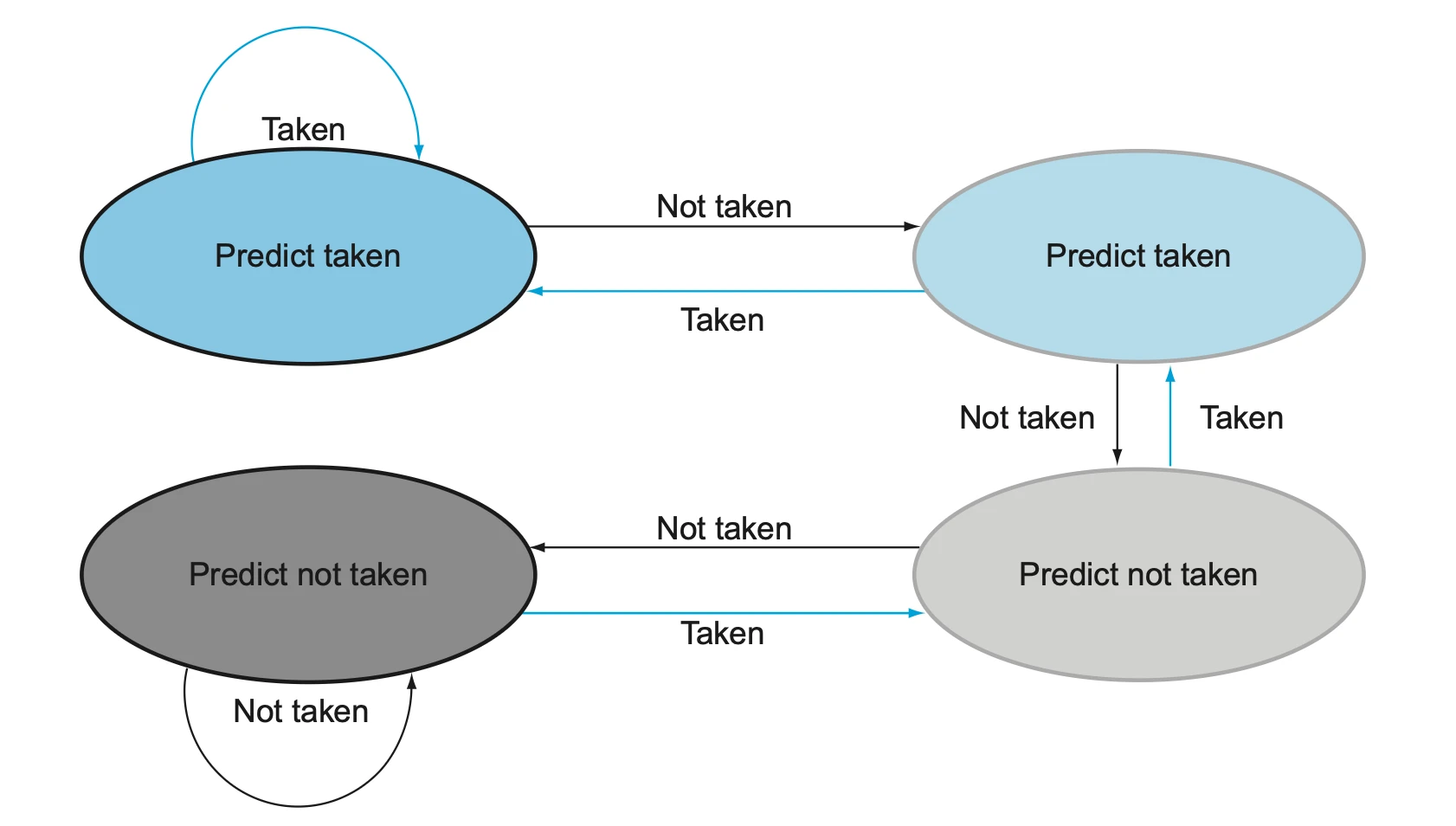
More on Prediction#
這裡額外討論幾個問題,首先,如果 prediction taken 的話,我們就會需要計算我們的 target address,因此我們需要一個 branch target buffer
有些時候,branch prediction 會需要考慮到更多資訊,在 link file 之後可能會讓 branch 們有更多的 dependency,需要同時考慮 local, global information,是至今都還在討論的問題
Tournament Branch Predictor:不同的 predictor 在不同的 scenario 下,效果不一定會都一樣好,所以我們可以多用幾個 predictor,最終用一個 Selector 去決定我要採用哪個 prediction 結果,通常會按照歷史紀錄決定要採取哪個 prediction
Exceptions and Interrupts#
當 CPU 執行 instruction 時遇到 Exception 或 Interrupt,就需要改變原本的 Control Flow,跳到 Exception Handler 處理問題
- Exception:由 instruction 引起,例如 Illegal Instruction、Page Fault、System Call
- Interrupt:通常由外部裝置產生,例如 I/O Interrupt
Handling Exceptions#
當 Exception 發生時,CPU 需要記錄以下資訊:
- SEPC (Supervisor Exception Program Counter):記錄發生 Exception 的 Instruction PC
- SCAUSE (Supervisor Cause Register):記錄 Exception 的原因,例如 Illegal Instruction 的 Cause Code 是
2
接著 CPU 會跳到 Handler
- Direct Mode:所有 Exception / Interrupt 都跳到 BASE 後做跳轉
- Vectored Mode:不同 Interrupt Cause 對應不同的 Handler Entry,位址為
在 RISC-V 中,Vectored Mode 只有對 Asynchronous Interrupt 生效,Synchronous Exception 無論在哪種 Mode 下,都直接跳到 BASE
Handler Actions#
Handler 會讀取 SCAUSE,決定如何處理 Exception
- Restartable:修復問題後,使用
SEPC返回原本的 Instruction,重新執行 - Non-restartable / Unrecoverable:可能需要強制結束,並回報錯誤
例如 Page Fault,OS 可以先修復 Memory Mapping,再透過 sret 返回原本程式
Exceptions in a Pipeline#
Exception 也是一種 Control Hazard,處理方式和 Branch Misprediction 很像,都需要 Flush Pipeline 並修改 PC,因此就是在原始的 data path 基礎上加上幾個跟 control hazard 很像的 component
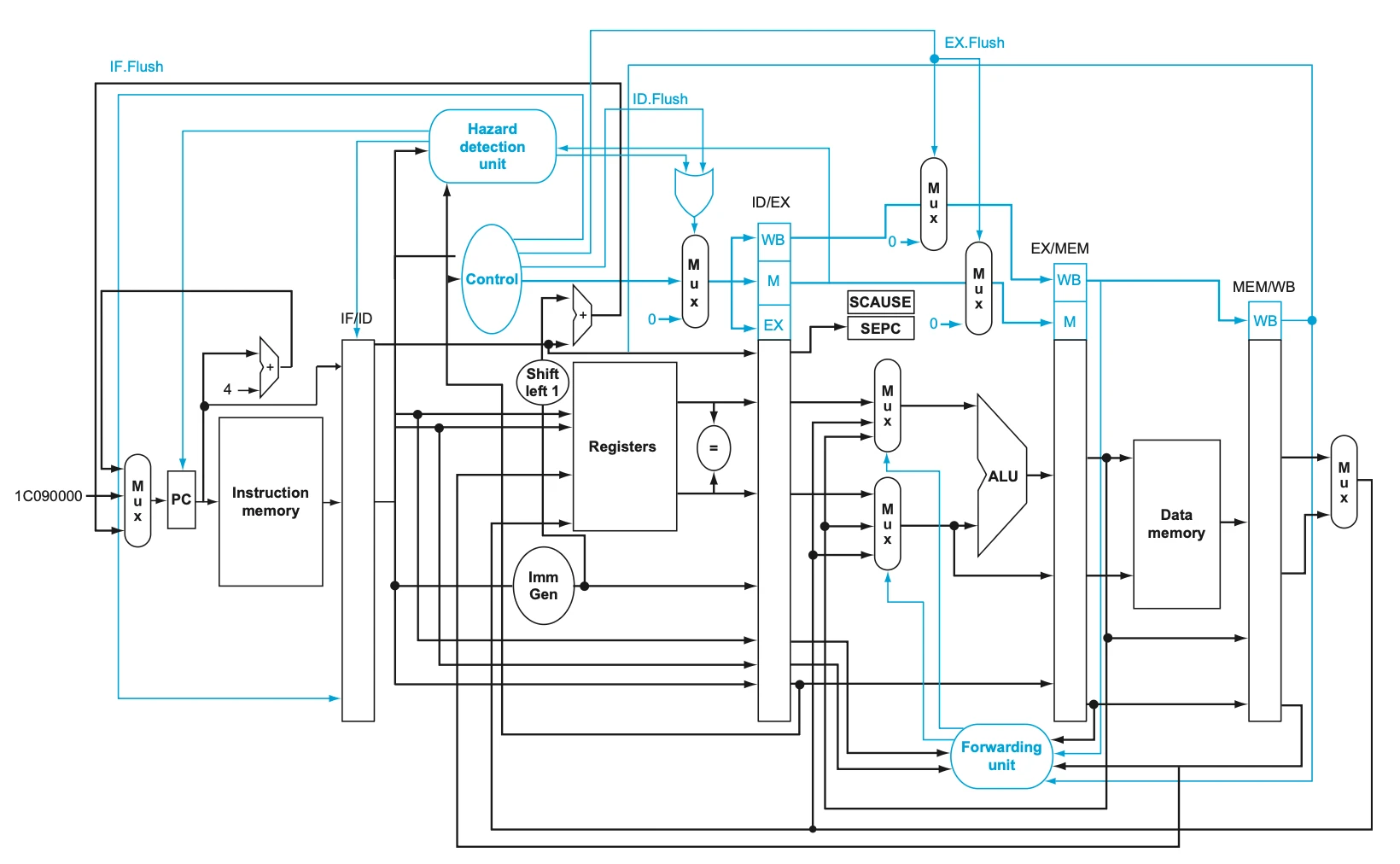
假設 add 在 EX Stage 發生 Exception:
0x40  sub x11, x2, x4
0x44  and x12, x2, x5
0x48  or  x13, x2, x6
0x4C  add x1, x2, x1  # Exception!
0x50  sub x15, x6, x7
0x54 ld x16, 100(x7)CPU 需要進行以下操作:
- Complete previous instructions:確保
add之前的 Instructions 完成 - Flush add and subsequent instructions:清除
add與後續 Instructions,避免修改 Register 或 Memory - Set SEPC and SCAUSE:保存出錯的 PC (
0x4C) 和 Cause - Transfer control to Handler:將 PC 設定為 Handler Address
這個性質稱為 Precise Exception,也就是發生 Exception 時,Architectural State 必須看起來像是剛好停在出錯的 Instruction 之前
Restartable Exceptions#
如果 Exception 可以恢復,Handler 修復問題後,就可以透過 sret 返回 SEPC,讓 CPU 重新 Fetch 並執行出錯的 Instruction,例如:
SEPC = 0x4C
PC = 0x1C090000 # HandlerHandler 會先保存可能需要修改的 Registers,處理完後再恢復原本的 State,最後返回 0x4C 重新執行 add
Multiple Issue Processor#
剛剛介紹的 Pipeline 是一種 Instruction-Level Parallelism (ILP) 這一定有一個上限,想要增進他的 performance 有以下方法
- Deeper Pipeline:讓每個 stage 跑的東西變少,就可以讓 Frequency 增加,但更深的 Pipeline 也可能增加 branch misprediction penalty 與 hazard 所造成的 stall
- Multiple issue:讓 CPU 在同一個 Clock Cycle 中 issue 多個 instructions,使理想情況下的 IPC > 1,也就是增加 IPC
我們主要探討 multiple issue 的 processor,這又能分成兩種
Static multiple issue#
static 就是在 compilation 階段做完所有 group 的動作,首先 compiler 會藉由某些 component 是否被佔用,來決定要把哪些 RISC-V 指令包成 “issue packet”,而每次執行就是一個 packet (slot) 一起執行,我們可以把 packet 想成 Very Long Instruction Word (VLIW)
Compiler 在這個階段必須把 detect 到的 hazard 用 Reorder 的方法解決,並且我們需要確保
- 同個 issue packet 裡面的 instruction 沒有 dependency
- 跨 Packet 的 dependency 要考慮到 latency
- 必要的空位填入
nop
比如說當我們設計一個 two issue packet 的時候我們通常會讓一個 packet 裡面都是
- One ALU/branch instruction
- One load/store instruction
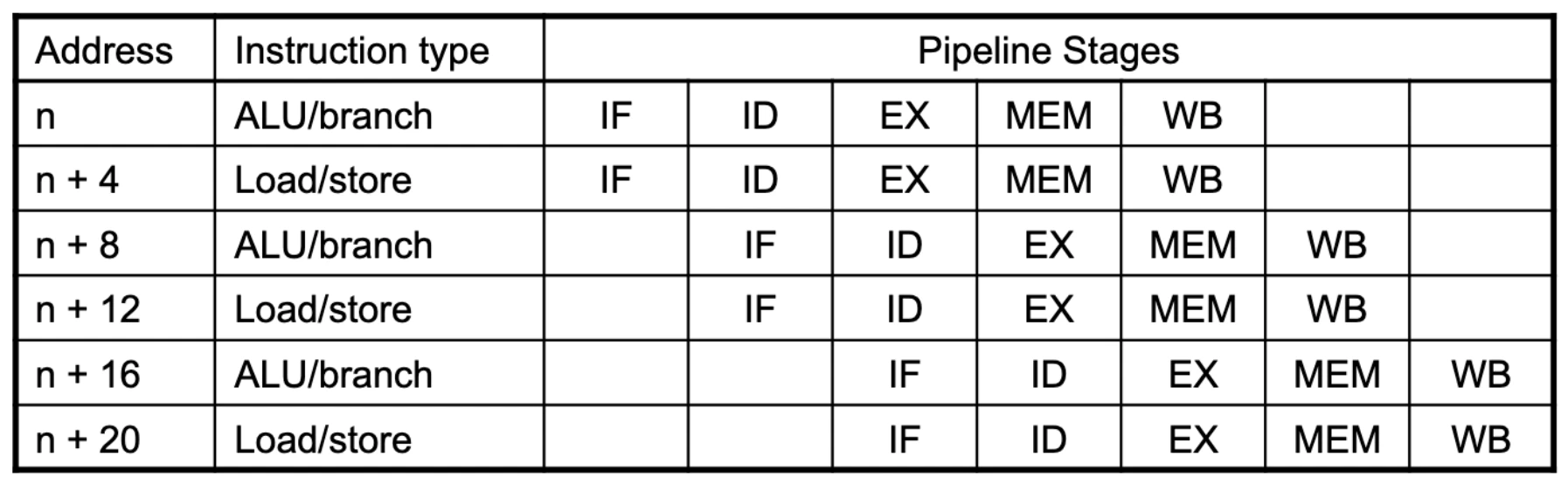
設計這樣的 pipeline 很簡單,我們只需要多加一組 bus 跟 ALU 就好
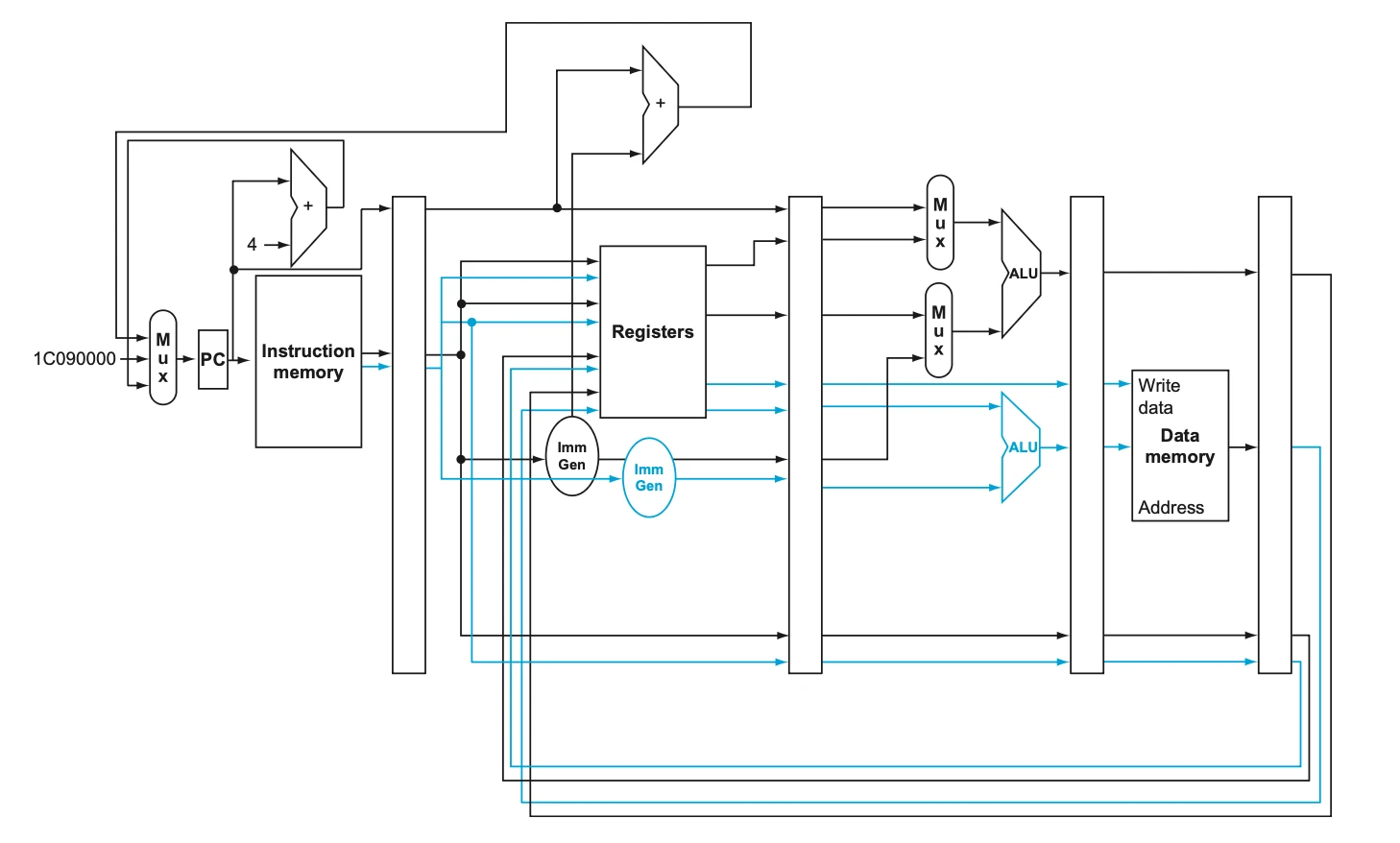
Hazard in Dual-issue#
在 multiple issue processor 的情況下依然有 hazard 的問題
- EX hazard:同一個 packet 的 ALU result 不能被用在 load/store operation 裡面,而
- Load Use hazard:依然需要一個 Cycle 的 stall,只是這次有兩個
那我們需要一些更激進的 Scheduling,例如下面有一段 code
Loop:
    ld   x31, 0(x20)    # x31=array element
    add  x31, x31, x21  # add scalar in x21
    sd   x31, 0(x20)    # store result
    addi x20, x20, -8   # decrement pointer
blt x22, x20, Loop # branch if x22 < x20首先我們先建立一個空的 issue table
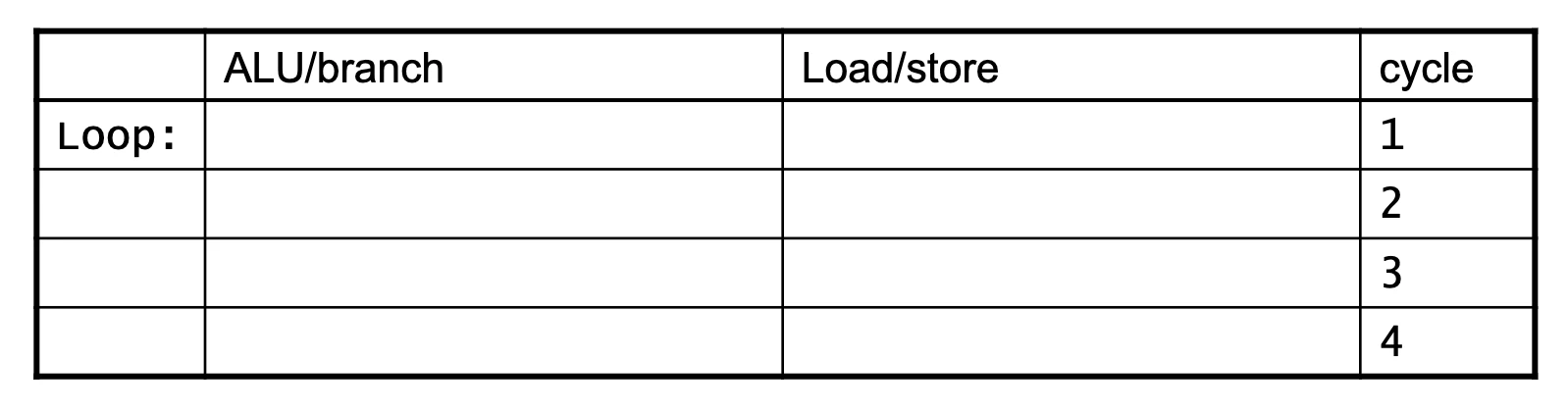
經過 code reorder 之後我們可以把沒有 dependency 的 code 排進同一個 packet,並且可以確保 packet 之間也沒有 hazard,在必要的地方填入 nop
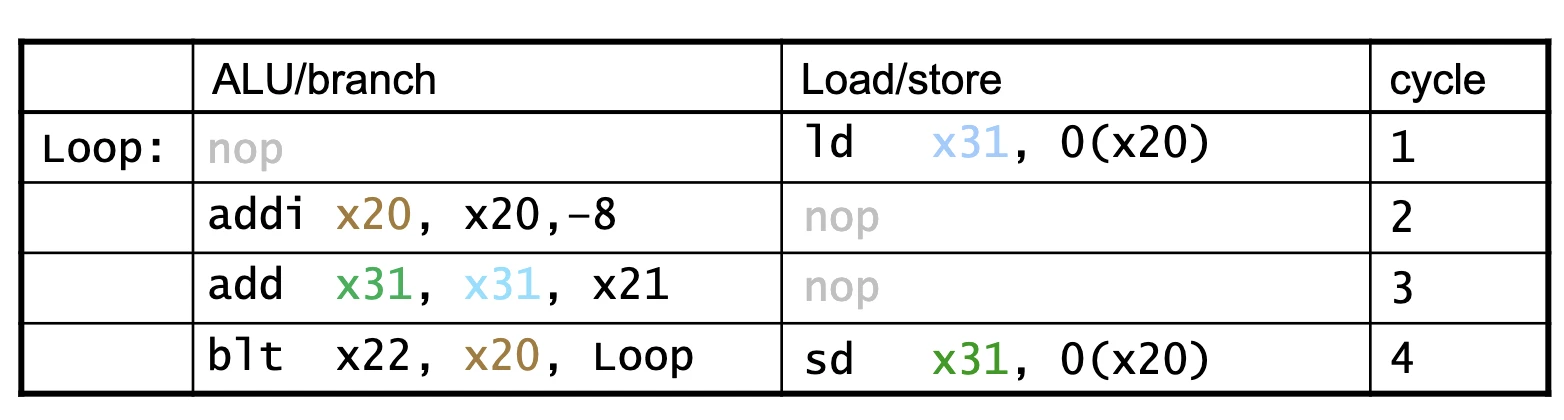
做完後我們進行 IPC 運算
Loop Unrolling#
考慮下面這個 code
Loop:
    ld   x31, 0(x20)
    add  x31, x31, x21
    sd   x31, 0(x20)
    addi x20, x20, –32
blt x22, x20, Loop我們把 code 展開之後發現他真正執行的是
Loop:
    ld   x31, 0(x20)
    add  x31, x31, x21
    sd   x31, 0(x20)

    ld   x31, -8(x20)
    add  x31, x31, x21
    sd   x31, -8(x20)

    ld   x31, -16(x20)
    add  x31, x31, x21
    sd   x31, -16(x20)

    ld   x31, -24(x20)
    add  x31, x31, x21
    sd   x31, -24(x20)

    addi x20, x20, –32
blt x22, x20, Loop因為 x31 一直被重複使用,所以會有很多的 load use hazard,但我們其實可以把它改成使用不同的 register,這個步驟就叫做 Loop Unrolling
Loop:
    ld   x31, 0(x20)
    add  x31, x31, x21
    sd   x31, 0(x20)

    ld   x30, -8(x20)
    add  x30, x30, x21
    sd   x30, -8(x20)

    ld   x29, -16(x20)
    add  x29, x29, x21
    sd   x29, -16(x20)

    ld   x28, -24(x20)
    add  x28, x28, x21
    sd   x28, -24(x20)

    addi x20, x20, –32
blt x22, x20, Loop我們就可以把原始的 code 排成以下的樣子
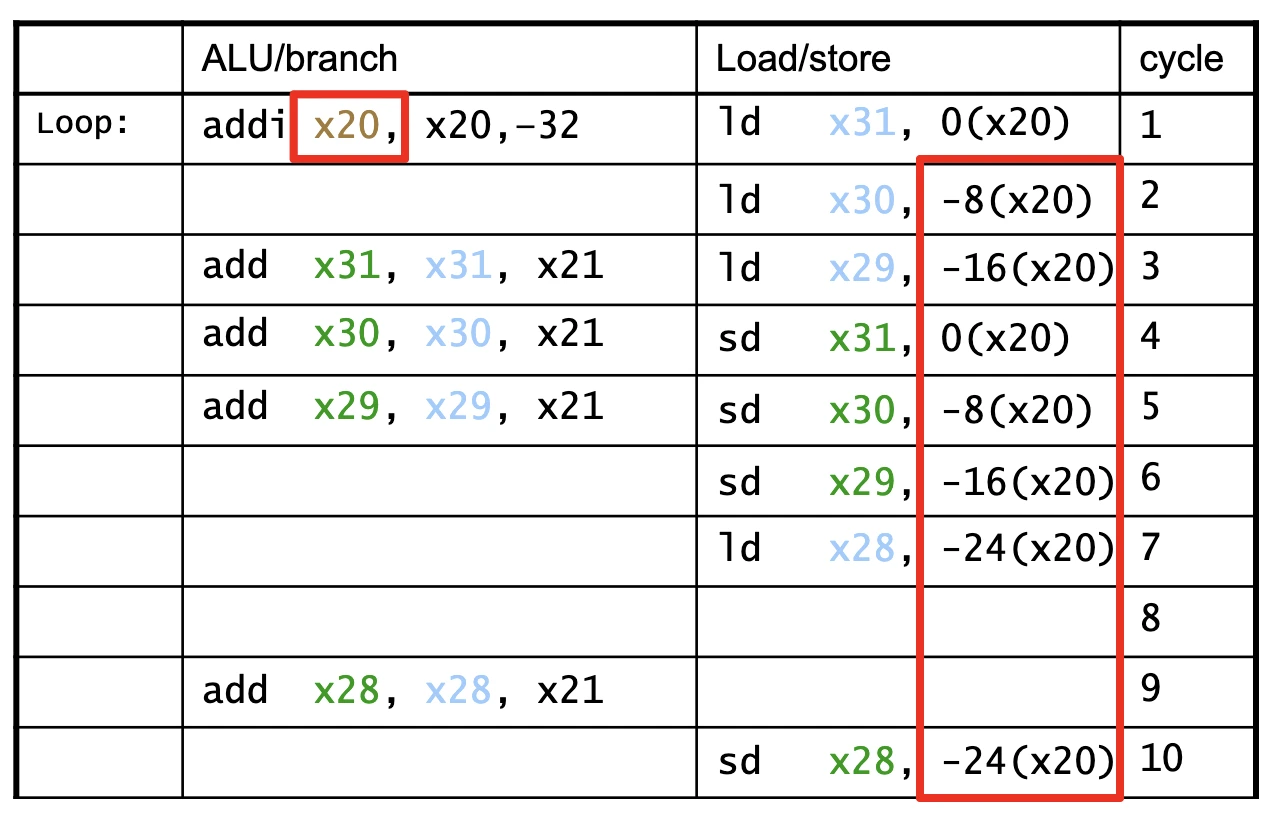
但要注意,reorder 之後的 code 需要重新做 allocate 他的 location information
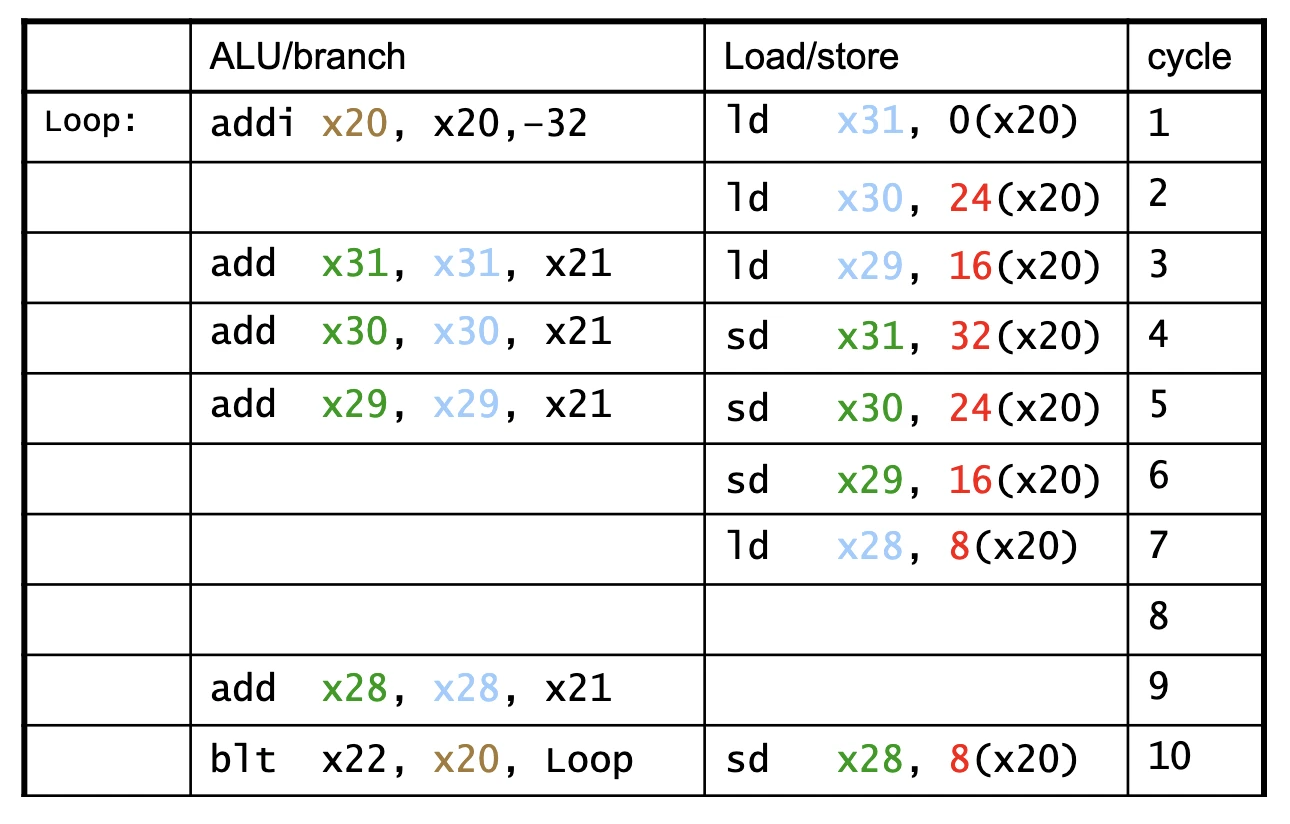
我們甚至可以再次重新排的更激進一點提升 IPC,最終獲得
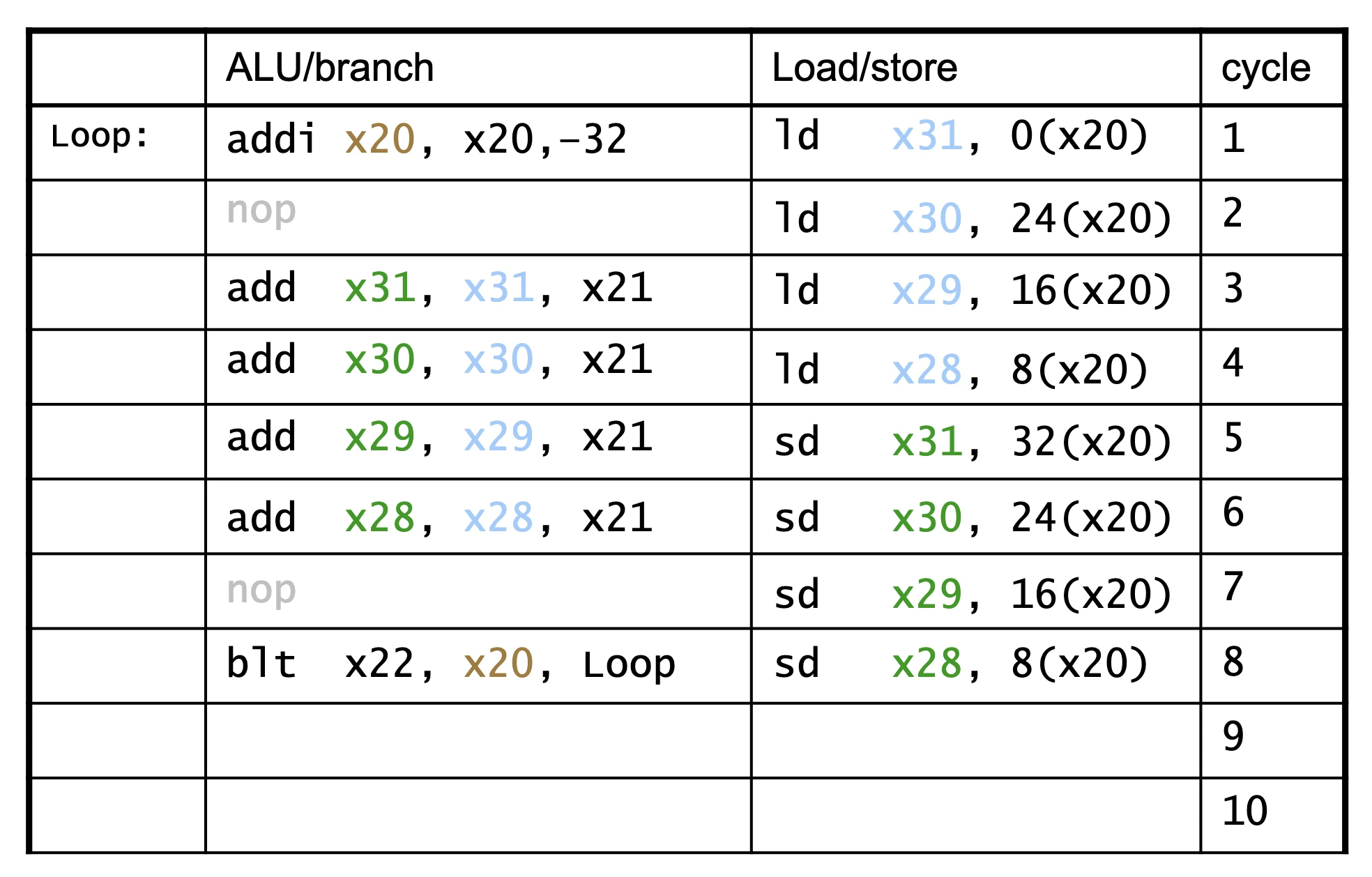
雖然這樣確實可以提升 IPC 但還是增加了 code size 以及 register 的用量,就是標準的以空間換時間
Dynamic multiple issue#
CPU 會在每個 Clock cycle 前決定他這輪要執行哪些 instruction,Compiler 只能藉由 instruction reorder 來幫助 performance,而 hazard 會在 runtime 解決
Superscalar processors 是一個例子,會允許 CPU 一次 issue 多個 instruction,具體數量會在 runtime 跟據 Data Hazard, Structural Hazard 決定,但 Compiler 依舊可以藉由 Instruction reordering 來增進 performance
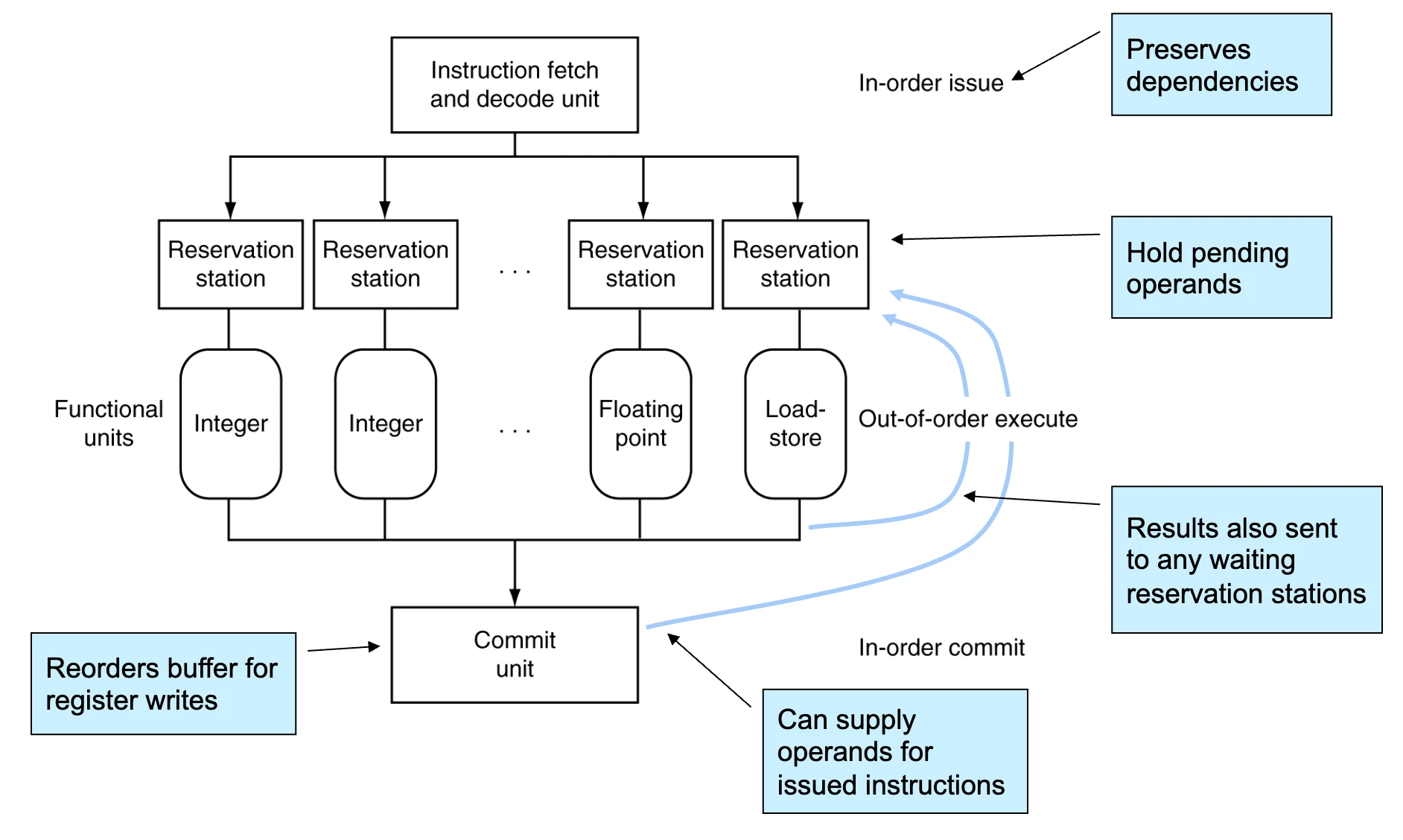
上面這張圖,分為三個步驟
- In-Order Instruction Fetch / Decoding:這兩個步驟都是 in-order 的
- Reservation:把 Fetch 到的 operand 以及其他 information 都累積到某個 reservation station,先存起來
- Out-of-Order Execution:當 Operand 以及對應的 functional Unit 可以使用後,我們就能把對應的 instruction 直接執行,不需 in-order
- Inorder Commit:雖然 execution 可以 out-of-order,但這樣直接執行可能會影響 program 的 semantic,所以真正的 commit 還是要 inorder
使用 Dynamic issue 是因為下列幾個原因
- Stall 通常是 unpredictable 的,例如 cache miss
- Branch result 是 unpredictable 的
- 不同 Implementation 就算用同一套 ISA 還是會有硬體的區別,不同的 Implementation 會有各自的 optimization method