Overview#
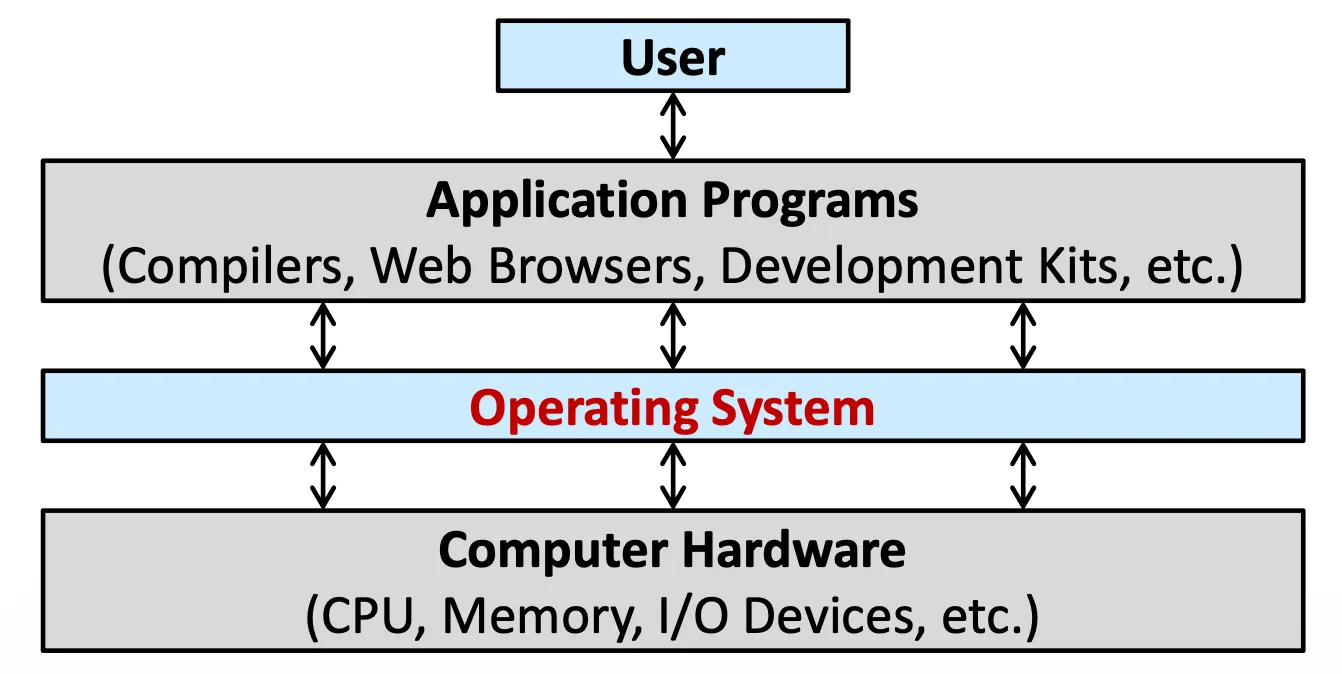
What OS do?#
User View & System View#
User view
- Resource Utilization
- Ease of Use
- Security
- Interface
System View
- Control Program
- Resource Allocator
Definition of OS#
- 很難定義
- Kernel: All time running program on the computer
- System Program: By system, but not all time
- Application Program
- Middleware: 軟體衍生結果,有一些 service 可以讓 developer called,更方便點
Computer-System Organization#
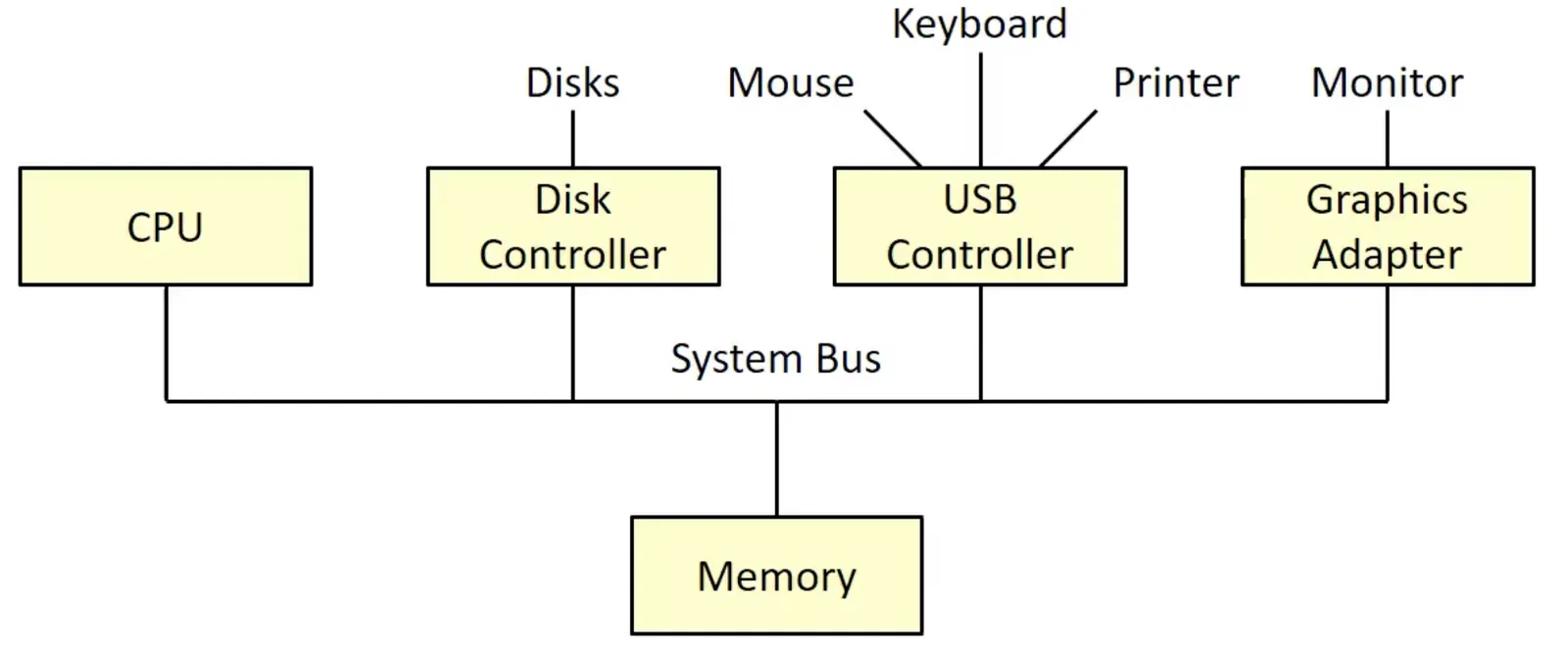
通常一台電腦都會有
- Bus: 連接 CPU, device controllers, share memory
- OS 通常有 Device Driver,是一種 protocol
Interrupt#
- Device Controller: 在 device 方接收 Driver 指令
- 負責通知 Driver 資料傳輸完成
- 把 Device 要傳送的資料 Buffer 起來(有一塊小小的 local buffer)
- Driver 先把 control 給 OS 的其他部分
- read: return data/pointer
- return status
- Hardware 會 trigger interrupt by sending signal to CPU (By bus)
- 這裡的 signal 是硬體上的「電壓變化」而不是 Unix kernel signal
- Interrupt vector: 紀錄要跳到哪裡
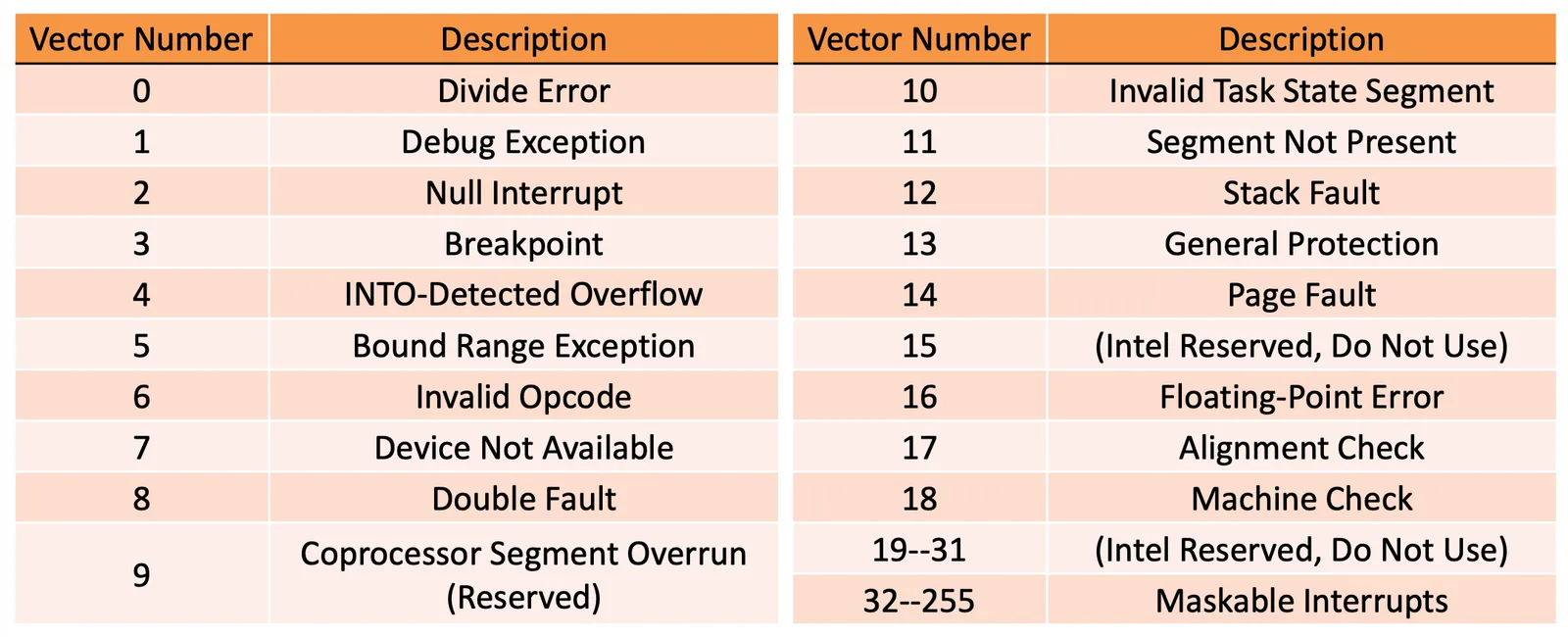
Step
- CPU 收到後,會馬上轉換執行某個動作(存在某個 fixed location)
- 存下剛剛停下的地方
- 執行 ISR (Interrupt service routine)
- CPU 回覆原始狀態
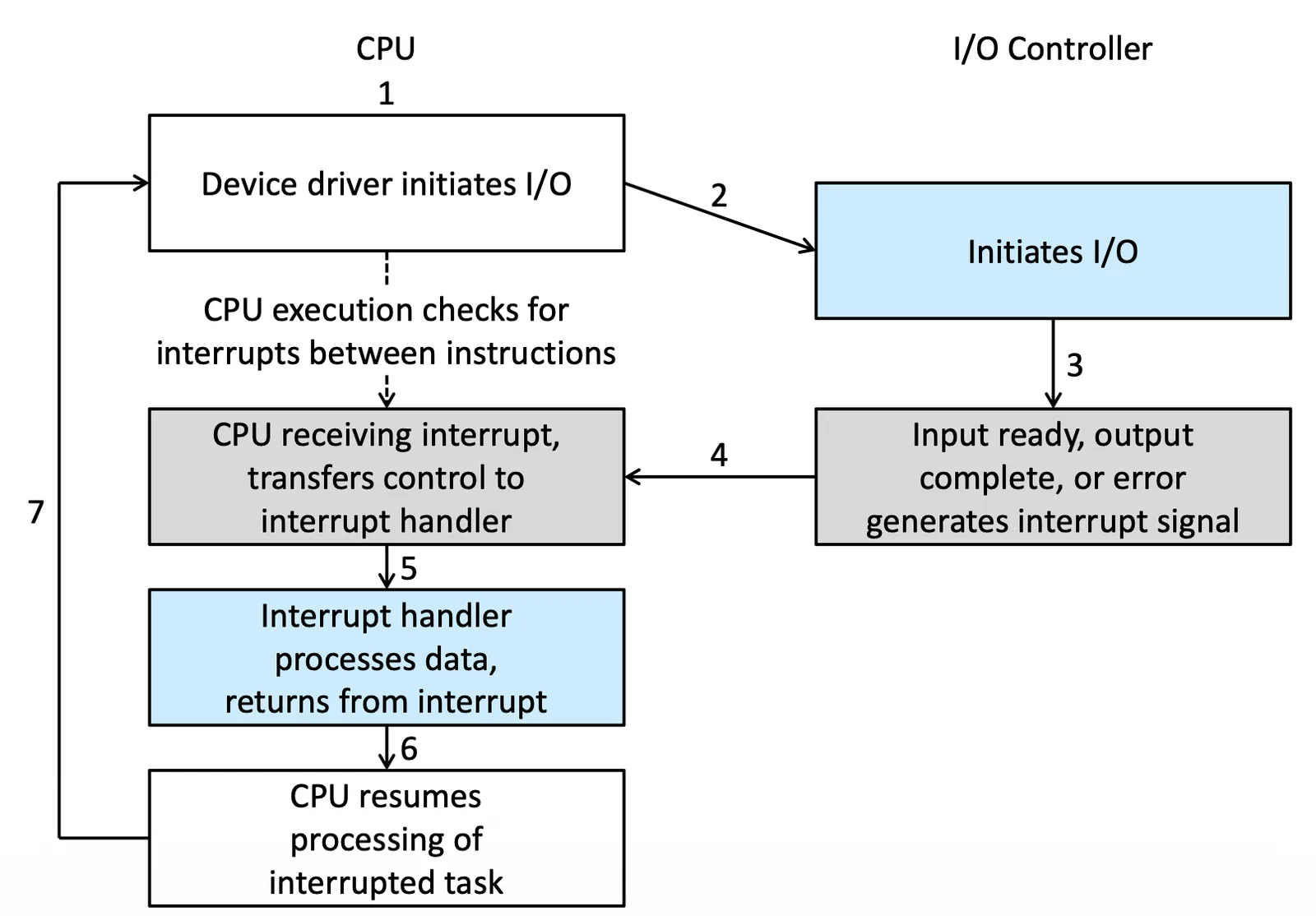
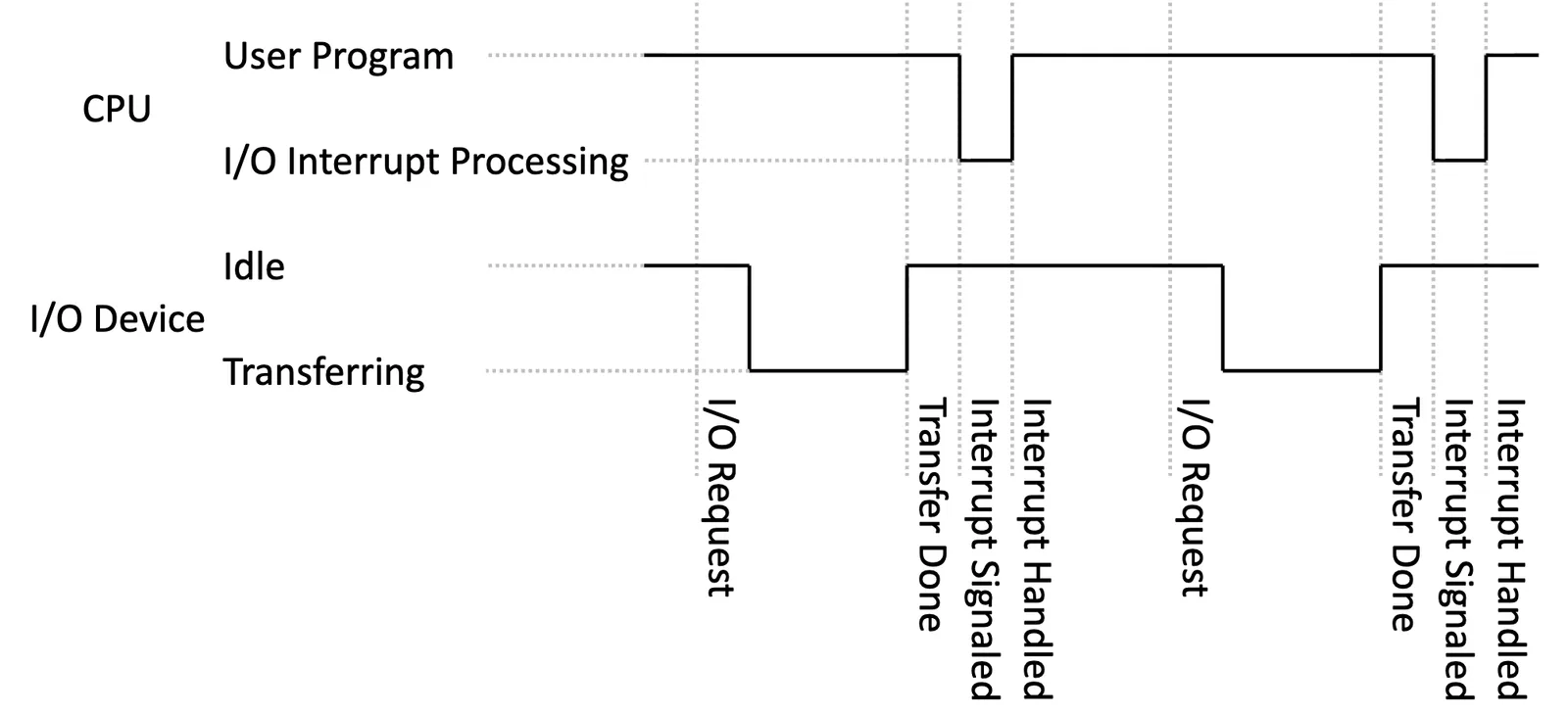
- I/O request 後控制權到 I/O Device 上
- I/O 結束後發送 CPU 被 Interrupt 後會先打斷 User Program 去執行 ISR
- 執行結束後回覆 User Program
Interrupt-handler routine
- CPU 會有 Interrupt Request line,分成 Non-maskable 跟 maskable
- CPU 做重要的事情不可被打斷
- Interrupt Chaining (link list) 可以串連 interrupt vector,可以做搜尋
- 會有 Interrupt Priority level
Storage Structure#
Main memory#
- 也叫做 Random access memory (RAM)
- 最常見的是 DRAM (dynamic)
- RAM 是有揮發性(易變)所以有另一種不揮發(nonvolatile)的硬體來存一些重要、且不用寫入操作的記憶體
- 用來啟動 OS 的 bootstrap program 會存在 Electrically Erasable Programmable Read-Only Memory (EEPROM)
By von Neumann architecture
Secondary and Tertiary Storage#
- Main memory 通常比較小而且 volatile
- Secondary Storage
- Hard Disk Drive (HDD)
- Non-volatile Memory (NVM) Device
- Tertiary Storage
- CD, Blu-ray, 磁碟
Direct Memory Access#
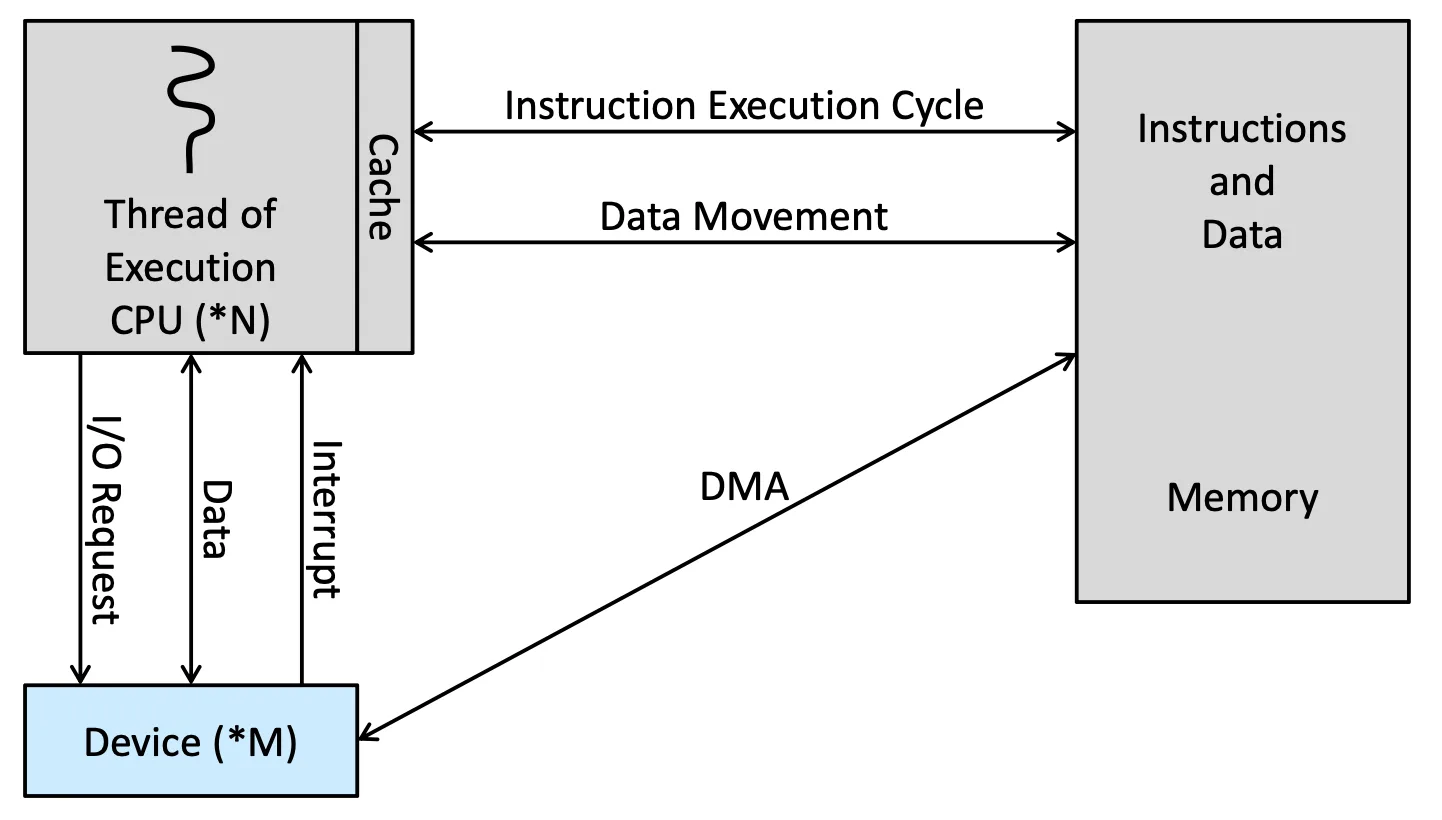
- I/O Management 是 OS 一個很重要的問題
- I/O Interrupt 在小的 device 上可以運行的很好,但當 data 體量變大就會產生 overhead
- Direct Memory Access (DMA)
- Controller 先做 buffer 等到累積一個 block 之後再給 CPU 去 Interrupt
- 在此期間 CPU 可以做自己的事
- 不需要 CPU 參與,可以讓 Device 自己去 access
[!Tip] 有些 high-end system 會用 switch 而不是 bus architecture,DMA 在此情況更有效率
Computer-System Architecture#
- Single Processor Systems
- Multiprocessor Systems
- 在現今的系統內比較重要
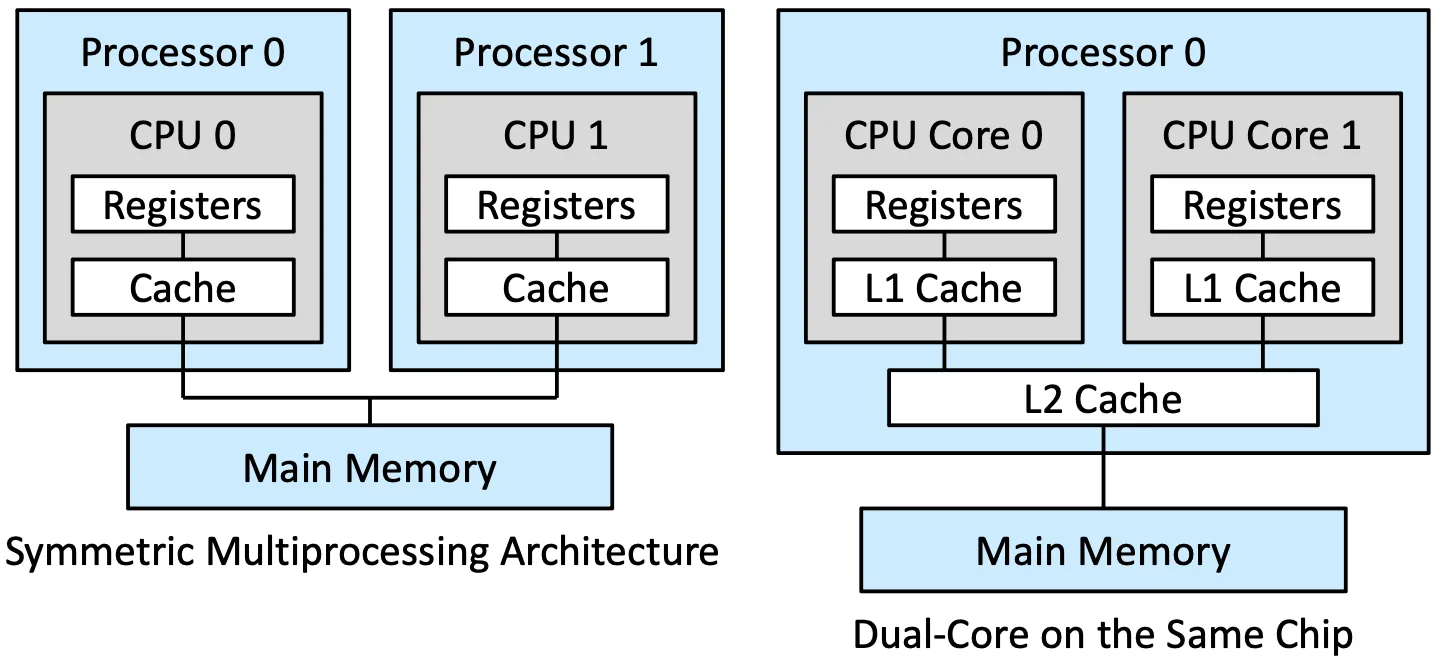
- 可以用不同 CPU 控制也可以用不同 core 控制
- Cluster Systems
Operating System Operation#
- Bootstrap program
- 找到 kernel 的位置
- System daemons
- 不算在 kernel 裡面
- 一種 service,幫助 Application program 使用 OS service
- Interruption
- Hardware interrupt (電壓)
- Software interrupt (Exception or Trap)
- Software error: Division by zero (自己寫特判)
- System Call
Multiprogramming & Multitasking#
- Program 執行中叫做 Process(Program 只是 pattern)
- Multitasking 只是一種 logical 的概念
- CPU switch 的非常快
Dual-Mode & Multimode Operation#
- OS defined code & User defined code
- Kernel mode & User mode
- Mode bit
- 用 system call 做到更改
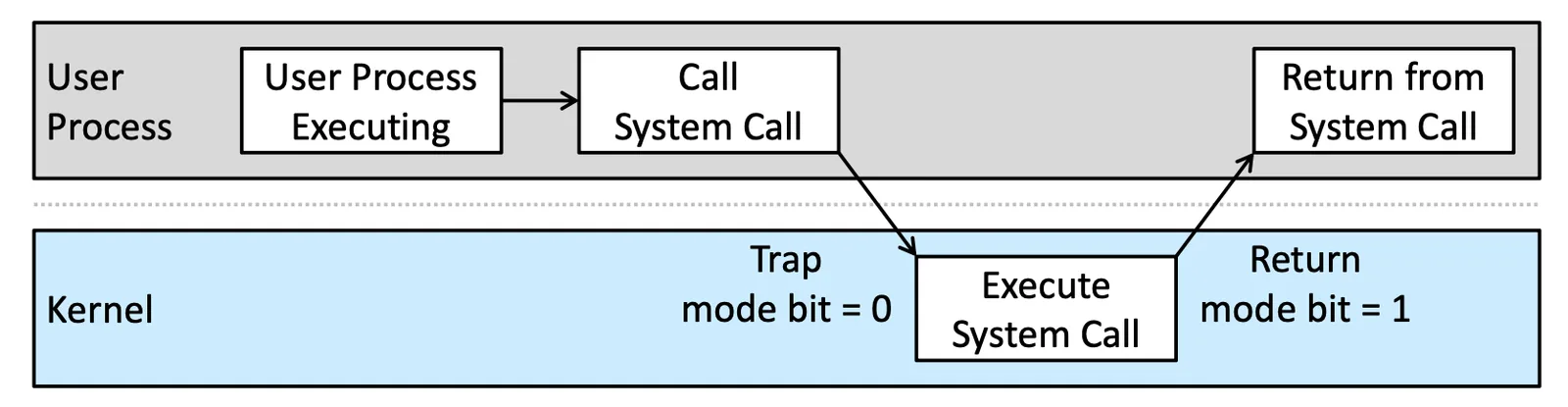
- Privileged instruction: 有些指令 hardware 只讓在 kernel mode 的 process 執行
Timer#
- 以時間來控制 interrupt
Resource Management#
- Process management
- Memory management
- File-system management
- Mass-storage management
- Cache management
- I/O system management
Protection and Security#
- Protection: 不讓別人 access 某些地方
- Security: Malicious 的 attack protect
Virtualization#
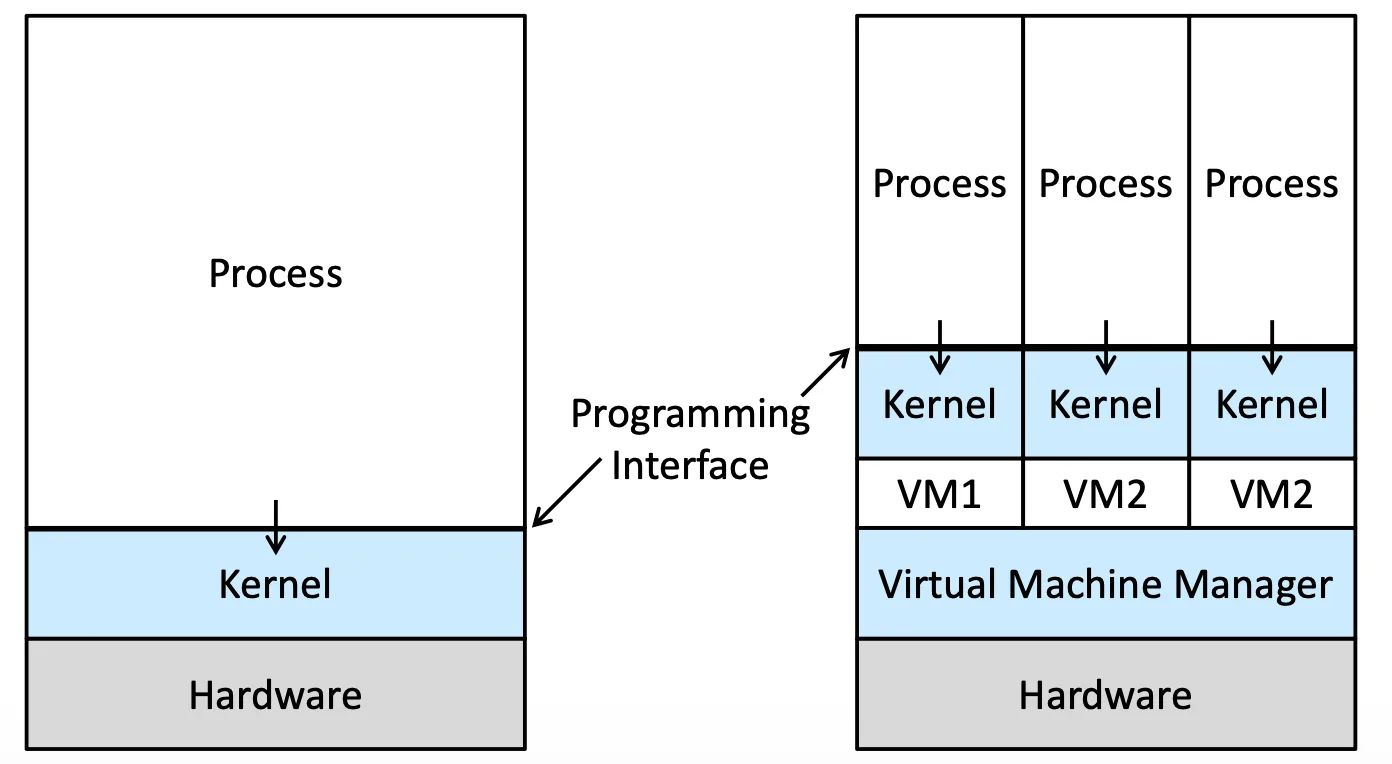
- Virtual machine 可以有多個,各自擁有 Kernel
Distributed System#
- Network:
- TCP/IP
- Local area network
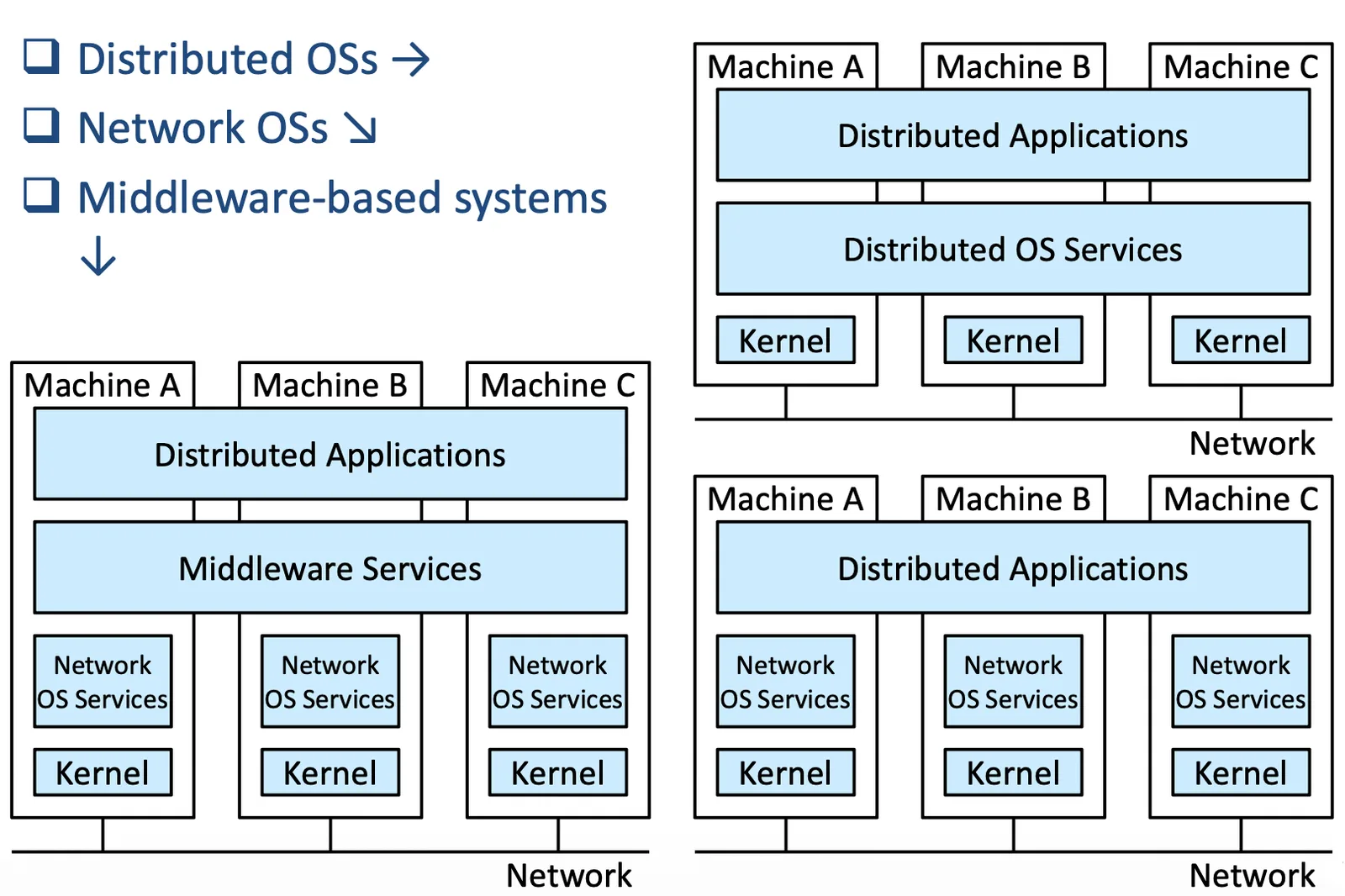
- Distributed OS 是只有一個 OS,可以用很多 kernel
- Network OS 是在 Application 上用 Network 連接
- Middleware OS 是用 Middleware 連接,通常用 subscribe 的方法連接
Kernel Data Structures#
- Lists, stacks, and queues
- Trees
- Hash functions and maps
- Bitmaps
Computing Environments#
- Traditional computing
- Mobile computing
- Client-server computing
- Peer-to-peer computing
- Not distinguish clients and servers
- Cloud computing
- A logical extension of virtualization
- Real-time embedded systems
- Scheduling
Computing Modes#
要想好 System 要做什麼,因為不能兼顧
| Mode | Description | Metrics | Key Focus |
|---|---|---|---|
| Batch mode | 執行後與外界無互動,如:編譯器、ML | CPU utilization、Turnaround time、Throughput,所以不用公平,把資源都集中給正在做的任務。 | Efficiency |
| Online mode | 反應快,有互動,最常見,如:遊戲、 瀏覽器 | Waiting Time、Response Time,避免資源都給最花時間的任務,要讓同一個長度的時間內完成的任務數量差不多,所以才要公平分配資源。 | Responsiveness |
| Real-time mode | 有互動以外,還有時間限制,要準確,如:機器人控制、自駕車 | Tardiness(任務超時時間),要盡量避免任務超時。未必要把所有資源給任務,而是需要恰好使需要的資源都準備好。 | Predictability |