Process#
Process Concept#
Process 就是一個 execution 的 Program
- Program 是 passive entity
- 一個躺在 memory disk 裡面的 file
- Process 是 active entity
- 有 Program Counter
- 有 a set of associate resources
- Loader 執行會讓 Program 變 Process
Memory Layout#
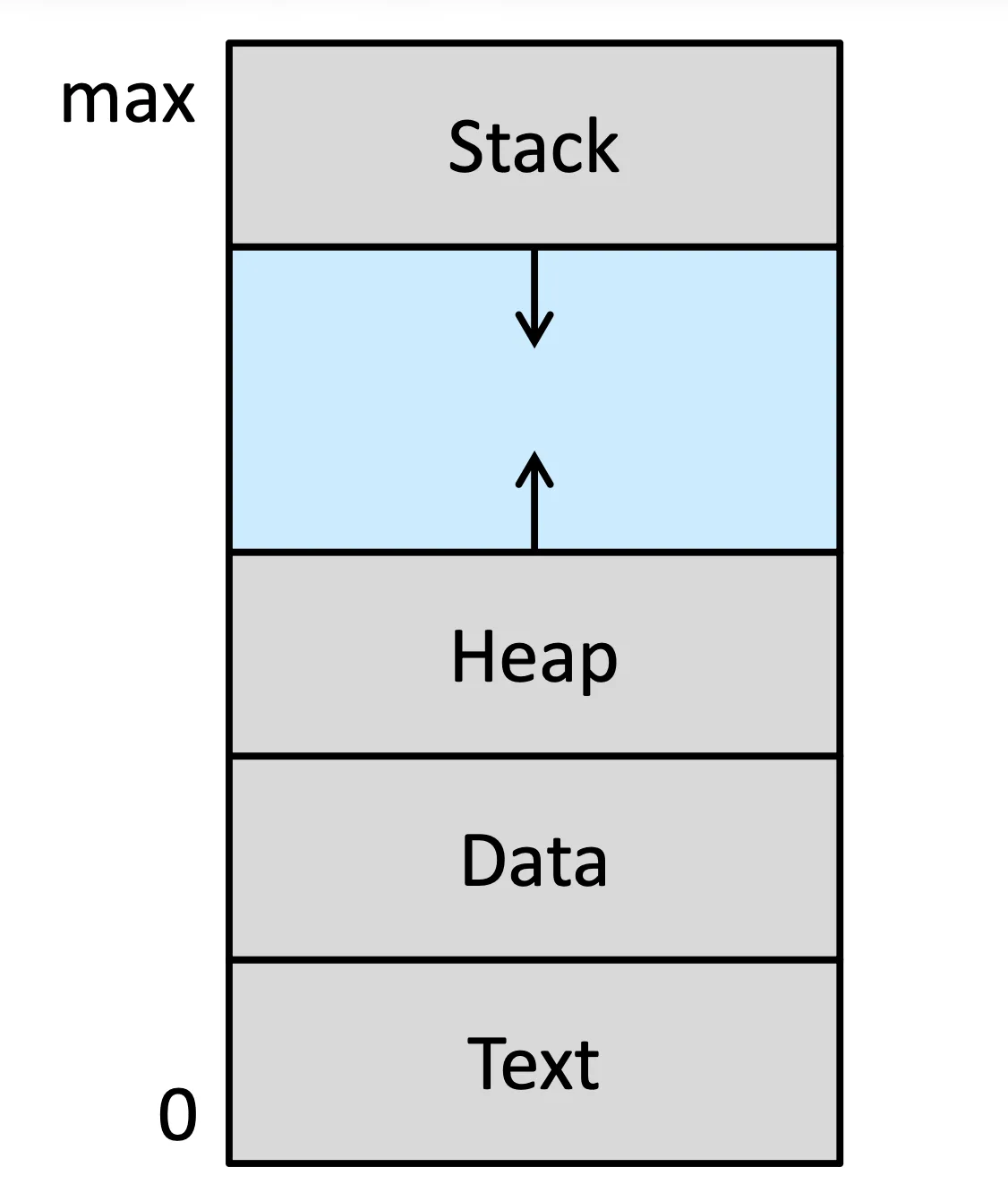
- Text section
- Execution Code
- 無論是硬體上的電壓訊號,還是真實的 code 都可以
- Data section
- Global Variable
- Heap section
- 動態 allocate 的 memory
- Stack section
- function call 使用的 memory
Process State#
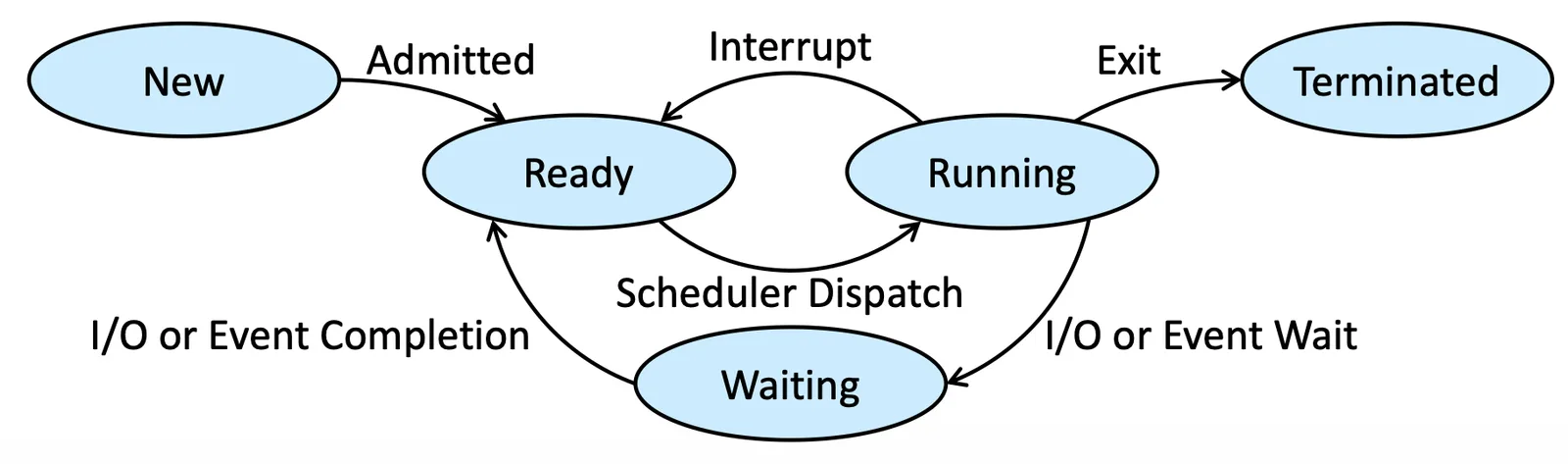
大部分 OS 都分成這樣,但通常會分得更加精細
- New: 被 created 出來的 process
- Ready: 已經可以去 assign 了
- Running: 被 Scheduler 拿出了,正在跑
- 一次只有一個 process 可以執行在一個 core 上
- 被 interrupt 可能有三種情況
- 被打斷,但沒有任合 memory allocate 所以可以直接回 Ready
- 被打斷,但是是要等其他 I/O Request/Child Process 等各種 Event 結束後才 Ready,走到 Waiting
- 完全結束 Terminated
- Waiting: 不可被執行,是等待 Event 而不是 Scheduler
- Terminated: 結束
Process Control Block (PCB)#
會叫做 Process Control Block (PCB) 或是 Task Control Block,必須要維持以下 attribute
- Process state
- Process number
- Program counter
- CPU registers
- 紀錄當前狀態
- CPU-scheduling information
- Memory-management information
- Accounting information
- I/O status information
pid                  t_pid; /* process identifier */
long                 state; /* state of the process */
unsigned int         time_slice /* scheduling information */
struct task_struct   *parent; /* this process's parent */
struct list_head     children; /* this process's children */
struct files_struct  *files; /* list of open files */
struct mm_struct *mm; /* address space of this process */Linux Kernel 會用 Doubly Link List 來記錄所有 PCB(task_struct)
- 會用
currentpointer 來處理現在 executing 的 process

Thread#
只有一個 Program Counter
- 一個 Process 通常只有一個 Thread of Execution
- 多數 OS 現在都支援 Multi-Thread
- 需要更多 TCB 來記錄狀態
- 需要 Multi-core 的 machine 才能真正的 parellel 執行
Process Scheduling#
- 目標是要 Maximize the utilization of CPU
- 從 Ready State 選 Process 的 Strategy
- Degree of Multiprogramming: 現在正在 Memory 的 process 數量
可以分成
- I/O-Bound Process
- I/O 時間 > Computation 時間
- CPU-Bound Process
- I/O 時間 < Computation 時間
Scheduling Queue#
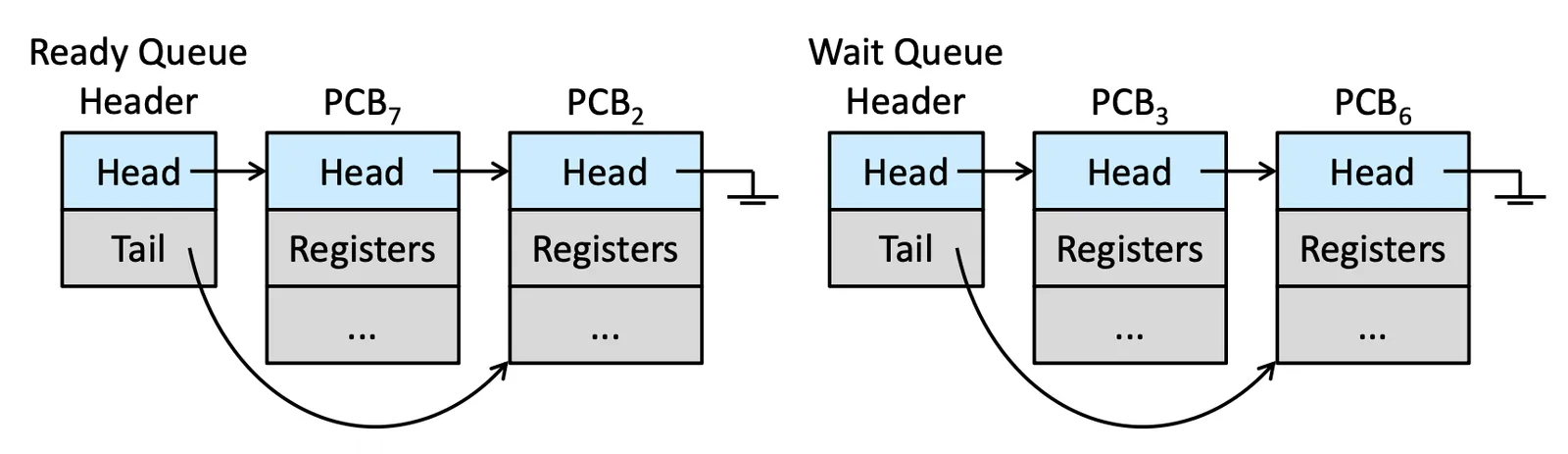
分成
- Wait Queue
- 還在等待 Computation or I/O
- Ready Queue
- 可以被執行的 Process
Queuing Diagram#
等待的狀態不一樣,應該放在不同的 Wait Queue
- 假設是 I/O 結束,我要抓 Process 出來就會找的比較快
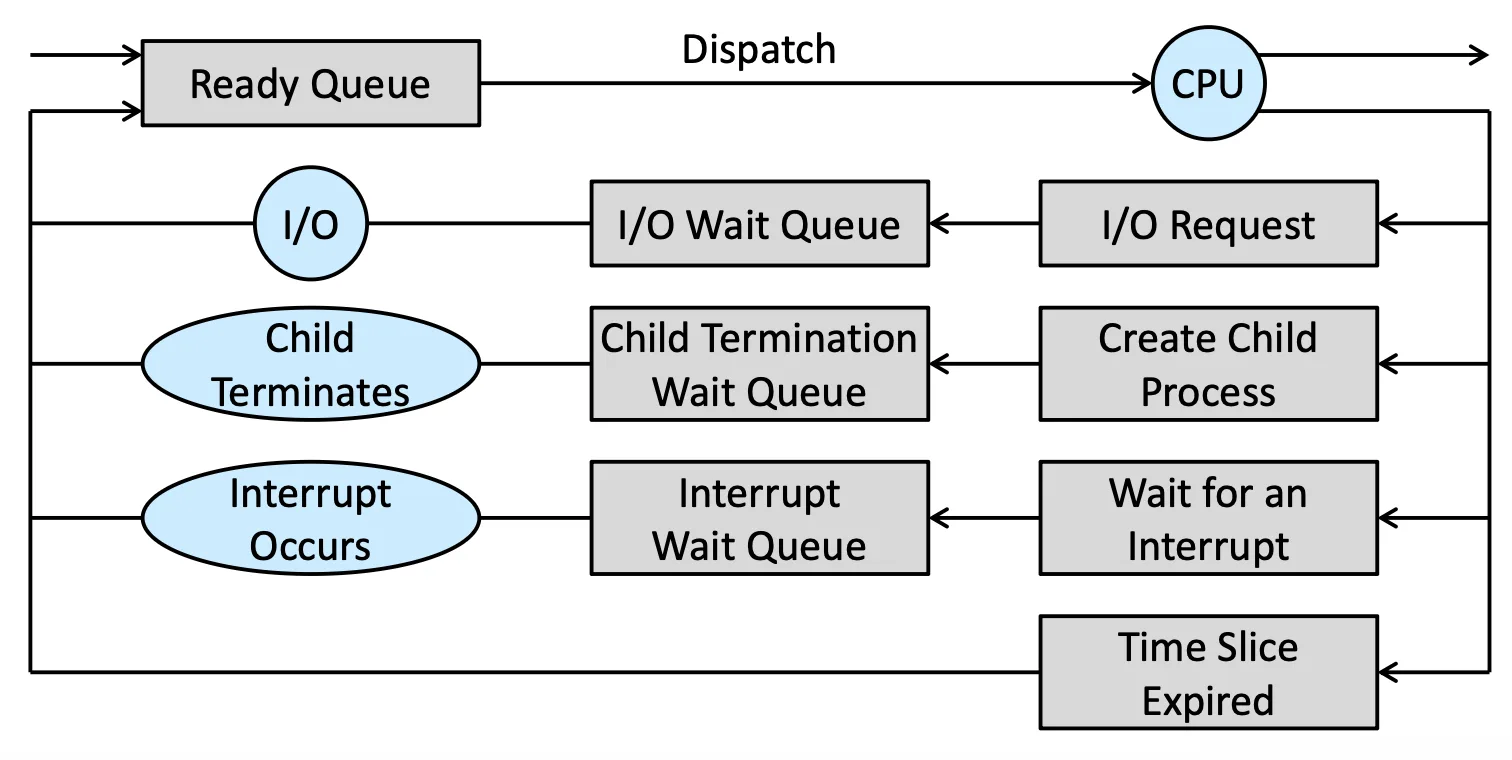
正常的 CPU Scheduler 可能每 100ms 就要做一次 Scheduling
Swapping
- 有時候 memory 有限,有些 Process 可能會被放到 Disk 上,OS 也會提供這個功能
Context Switch#
把 CPU 從一個 Process 換到另一個 Process
- Process 視角:
- State Save
- State Restore
- System 視角:
- Context Switch
這些 Context Switch 需要的資訊都在 PCB 內
- Context: Value of CPU register, Process State, Memory Management information
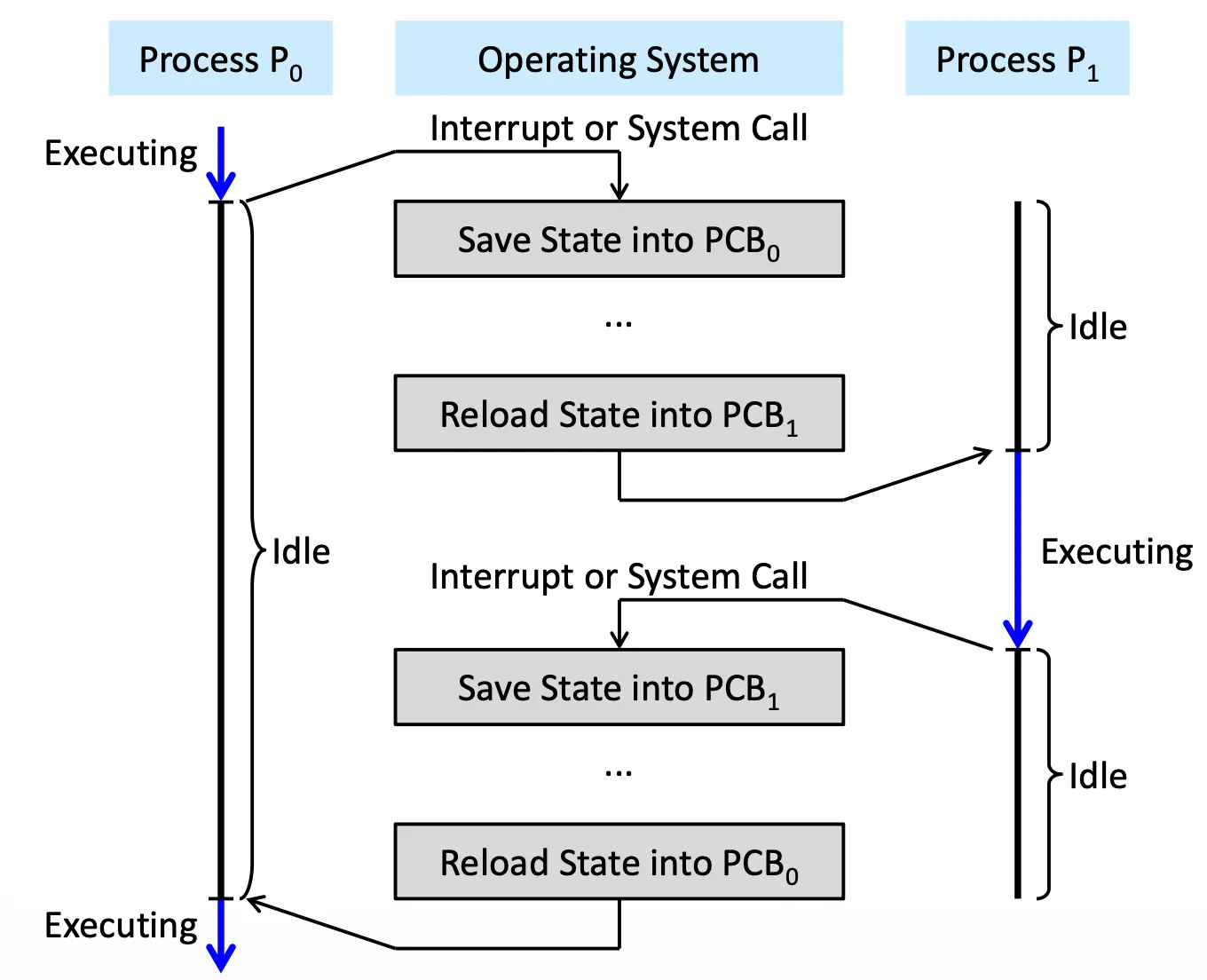
Context Switch 的時候是 Pure overhead,所以必須要很快完成,和 Context Switch Speed 有關的是
- Memory Speed
- 要複製的 Resgister 數量
- Hardware support(幾個 Cycle),跟 ISA 有關
OS 在這件事上設計的越多越快,設計就會相對來說變得複雜
Multitasking in Mobile Systems#
- iOS 4 後可以支援 single foreground with multiple background
- Split-screen
- Android runs foreground and background with fewer limits
Operations on Processes#
Process Creation#
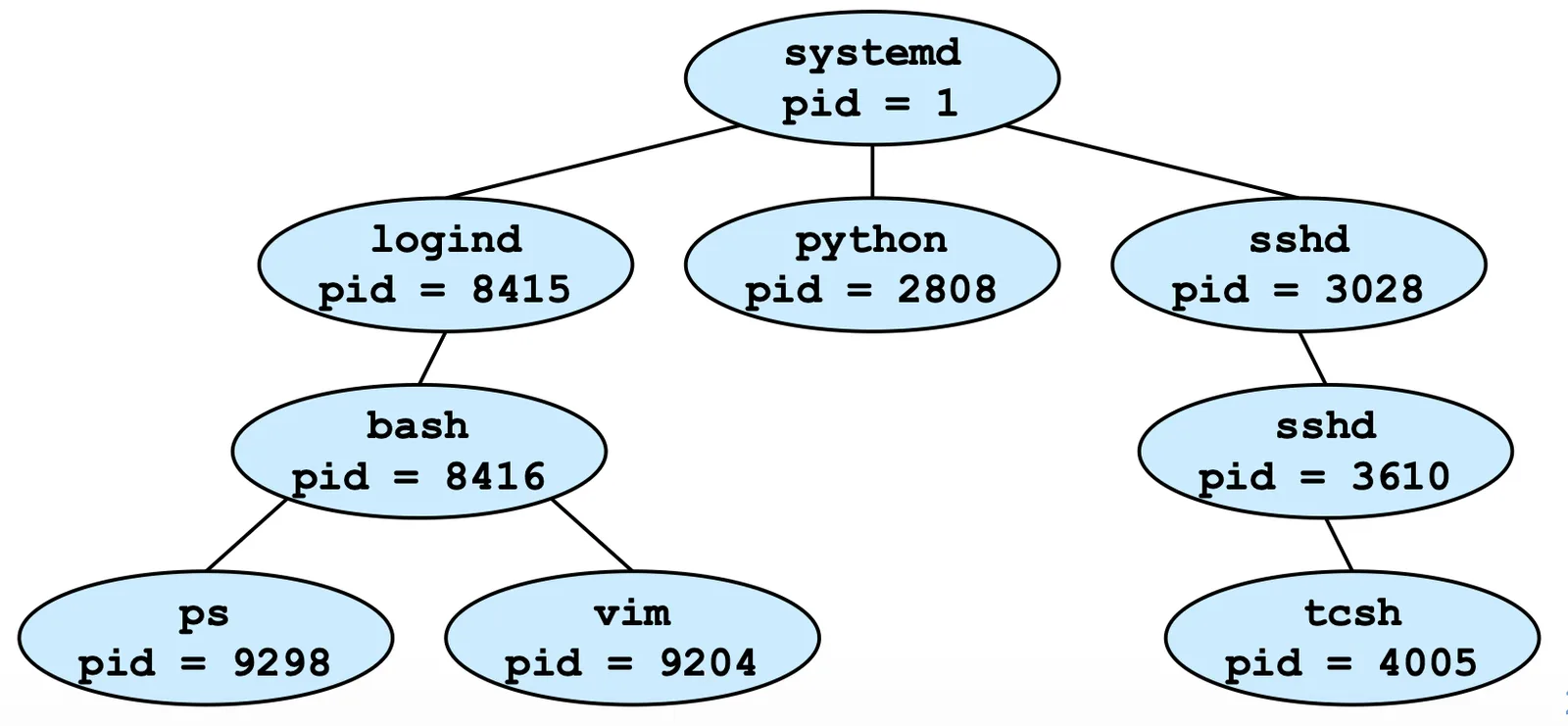
通常是一個 Parent Process 去 create children processes
- process identifier(
pid) 可以去分辨他們
Linux System 的 Tree of Process
- Resource options: Memory, File
- Child 可以共享 all Parent’s resources
- Child 共享的是 Parent 的 subset
- Child 不能跟 Parent 共享
- Execution options:
- Concurrently with Child
- Terminated 後再繼續
- Address-space options:
- Duplicate Parent 的所有
- 有新的 Program to load
Process Creation Using UNIX fork()#
#include <sys/types.h>
#include <stdio.h>
#include <unistd.h>
int main() {
    pid_t pid;
    /* fork a child process */
    pid = fork();
    if (pid < 0) { /* error occurred */
        fprintf(stderr, "Fork Failed");
        return 1;
    }
    else if (pid == 0) { /* child process */
        execlp("/bin/ls","ls",NULL);
    }
    else { /* parent process */
        /* parent will wait for the child to complete */
        wait(NULL);
        printf("Child Complete");
    }
    return 0;
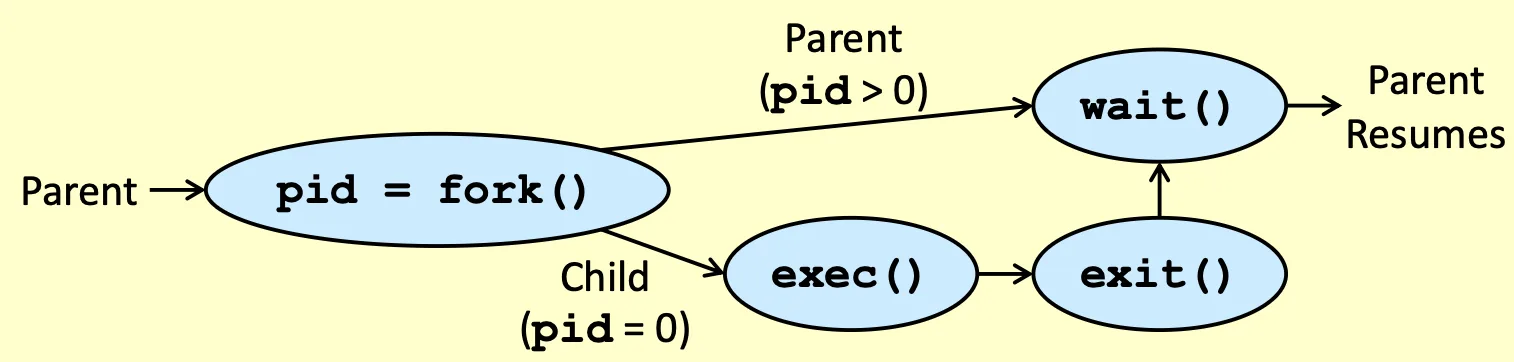
}fork()- 對 Parent 回傳值是
pidof the child - 對 Child 回傳值是 zero
- 對 Parent 回傳值是
exec()- 重新執行一個新的 Binary File
wait()- 等待 Child Process 結束
- 等到 Child Process explicitly call
exit()或 implicitly 預設結束
上面的程式執行大概是這樣
Process Creation Using Windows API#
Windows 在 Create 的時候就要先寫清楚要 load 什麼 Program
CreateProcess()WaitForSingleObject()
Unix like system
fork()不會 pass any parameter
int main(VOID){
    STARTUPINFO si;
    PROCESS_INFORMATION pi;
    /* allocate memory */
    ZeroMemory(&si, sizeof(si));
    si.cb = sizeof(si);
    ZeroMemory(&pi, sizeof(pi));
    /* create child process */
    if (!CreateProcess(NULL, /* use command line */
        "C:\\WINDOWS\\system32\\mspaint.exe", /* command */
        NULL, /* don't inherit process handle */
        NULL, /* don't inherit thread handle */
        FALSE, /* disable handle inheritance */
        0, /* no creation flags */
        NULL, /* use parent's environment block */
        NULL, /* use parent's existing directory */
        &si, &pi))   {
        fprintf(stderr, "Create Process Failed");
        return -1;
    }
    /* parent will wait for the child to complete */
    WaitForSingleObject(pi.hProcess, INFINITE);
    printf("Child Complete");
    /* close handles */
    CloseHandle(pi.hProcess);
    CloseHandle(pi.hThread);
}Process Termination#
Process 執行完或想結束就會 call exit()
-
exit()可以回傳一個 status code
cexit(1) -
wait()可以 returns 結束的 process 的pid也可以接收 status code
cpid_t pid; int status; pid = wait(&status);
Process 也可能會 terminate 掉自己的 Child
- 使用太多 Resource
- Parent 要有方法可以拿到 Child 的狀態
- Parent assign 的 task 不需要了
- Parent 自己先 Terminate 了
- Cascading termination: OS 把死掉的 Parent 底下的 Process 全砍掉
Android Process Hierarchy#
Process 有分成
- Foreground process
- Visible process
- Service process
- Background process
- Empty process
如果有個 Visible process 同時也是 Service process,System 必須要決定被 terminate 的時候他應該當哪個(Visible 比較重要)
Chrome Browser#
有階級式的方法,可以讓每個組件故障的時候不要全部都壞掉
- browser process:user interface, disk and network I/O
- Renderer processes:讀網路上的資料
- plug-in
Interprocess Communication#
每個 Process 之間需要 Cooperation,或是他們之間有 Parent-Child 的關係,可能會需要做 Communication
Interprocess Communication (IPC) 根據 mechanism 可以分成
- Share memory Model
- 一般來說比較快
- Message Passing Model
- 常用在 distributed system
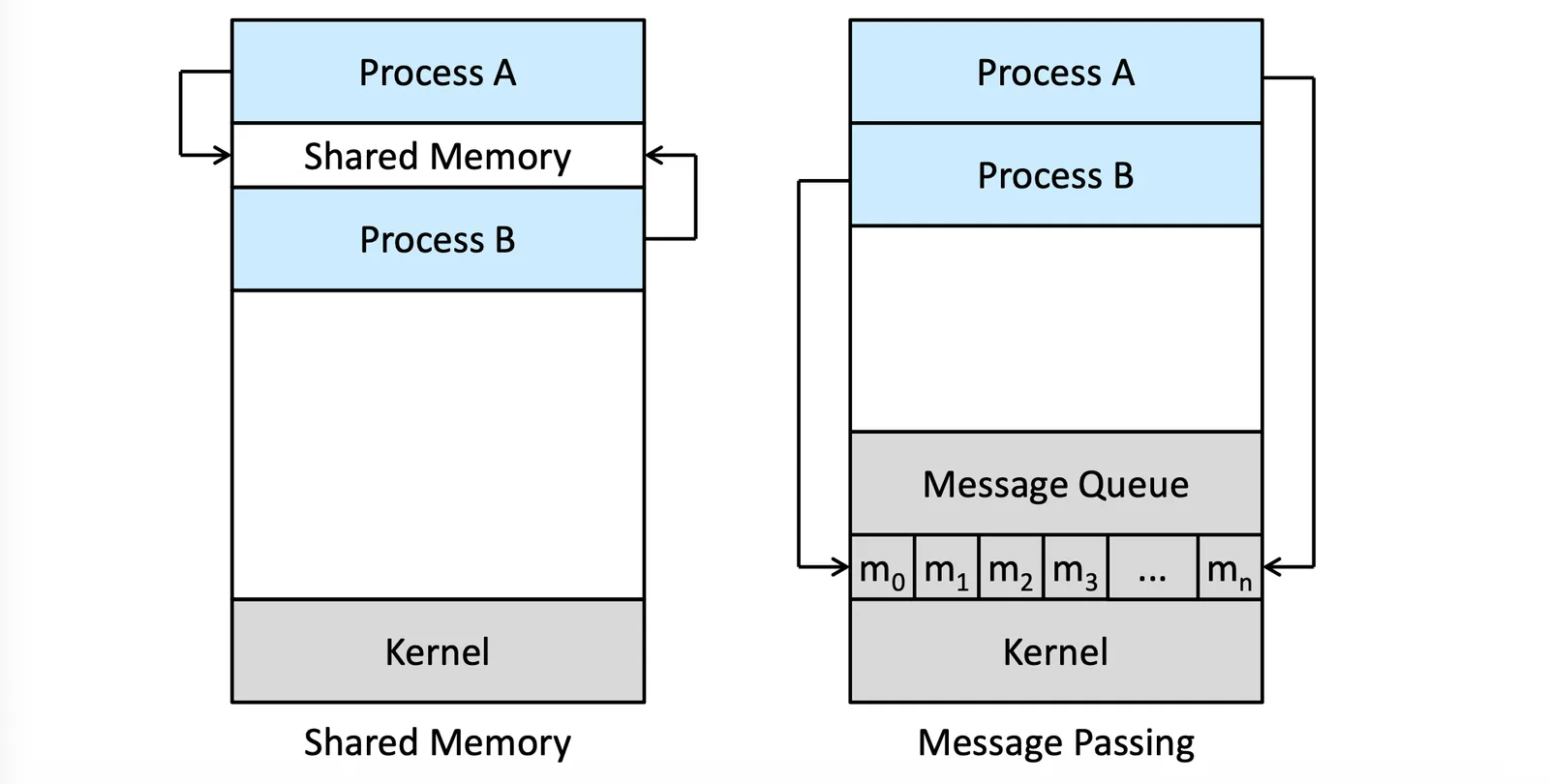
其實 message passing 最後的做法也是用 Shared Memory(圖解)
IPC in Shared-Memory Systems#
通常是由 Process 建立一個 Share memory segment 然後其他 Process 自己 attach 進去,通常 OS 會去防止兩個 Process access 到別的 process 的 address space,Share memory 就需要兩個或以上的 Process 去 ignore 這個 restriction
Producer-Consumer Problem#
Producer process 一直生產資訊到 buffer 內,consumer process 會去接收,buffer 就會在 Share memory 裡面
- unbounded buffer: 無限制
- bounded buffer
- Producer
item next_produced;
while (true) {
    /* produce an item in next produced */
    while (((in + 1) % BUFFER_SIZE) == out)
        ; /* do nothing */
    buffer[in] = next_produced;
    in = (in + 1) % BUFFER_SIZE;
}滿了就等待,空了就繼續放
- Consumer
item next_consumed;
while (true) {
    while (in == out)
        ; /* do nothing */
    next_consumed = buffer[out];
    out = (out + 1) % BUFFER_SIZE;
    /* consume the item in next consumed */
}沒東西就等,有東西就做事情,然後往下讀
IPC in Message-Passing Systems#
Message-Passing Systems 一定有兩個功能
send(message)receive(message)
OS 可以選 fixed or variable in size
必須設計出一個 Logical 的 Message passing Link,重點是在 Logical implementation
- Direct or indirect communication
- Synchronous or asynchronous communication
- Automatic or explicit buffering
Naming#
Direct Communication#
每個 Process 要送訊息都必須要「指名道姓」
- Symmetry in addressing
send(P, message): send a message to processPreceive(Q, message): receive a message from processQ- 每兩個 Process 都有一個 Link,不會有其他 Process share 他們
- Asymmetry in addressing
send(P, message)receive(id, message): 指名道姓,但是可以接收其他 Process 的,但是不寫死是某個 Process(User 可以更改)
Indirect Communication#
Mailbox 的概念,把某個 message 放在一個指定位置,但要給誰不確定
send(A, message): send a message to mailbox Areceive(A, message): receive a message from mailbox A
這個情況下的 Communication Link 不需要更改,固定在那就好
- 多 Process Share 的 Link
- 可以兩個 Process 有很多 Link(Priority)
- 自己一個也可以
Termination 的時候 OS 有兩種選擇
- Mailbox owned by Process
- Mailbox 在 Process 結束的時候會消失
- 那個 Process 需要通知大家
- Mailbox owned by OS
- OS 讓某個 Process 可以 Create, Send and receive, Delete 那個 Mailbox
- 當 Owner (Create mailbox 的 Process) terminate 後,OS 可以換掉 Ownership
Middleware 還會有人來做管理,訊息傳送管理
Synchronization#
分成
- blocking (synchronous):會被擋下來,直到另一邊收到或寄出才能繼續進行
- nonblocking (asynchronous):只 access 一次,沒收到也繼續進行
可以跟
send(),receive()做排列組合
當 both 都是 blocking 就會是 rendezvous
message next_produced;
while (true) {
    /* produce an item in next_produced */
    send(next_produced);
}message next_consumed;
while (true) {
receive(next_consumed);
/* consume the item in next_consumed */
}兩邊都 Blocking 就可以協作,就會變的很 trivial
Buffering#
Message 傳輸的時候需要的 temporary queue
- Zero capacity
- The sender must block,一定要 receiver 收到,sender 才能走(其實是 one capacity)
- Bounded capacity
- 沒滿就繼續
- Unbounded capacity
- 無限制
Examples of IPC Systems#
POSIX Shared Memory#
POSIX 全稱是 Portable Operating System Interface,是一個 IEEE 定出來的系列系統 standard
POSIX API for shared memory#
- Creation of shm object:
shm_fd = shm_open(name, O_CREAT | O_RDWR, 0666); - Configure the size:
ftruncate(shm_fd, 4096); - Establish:
mmap()
Mach Message Passing#
CMU 設計的一個 OS,MacOS, iOS 有採用一部分,原始是設計給 Distributed System 的
- Create a new port:
mach_port_allocate() - Send and receive:
mach_msg()- Kernel 有對 Task Self port 的 receive 權力,可以讓 task(process) 傳訊息
- Task 則是有 Notify port 接收 kernel 訊息
- 有提供一個 header
cstruct message { mach_msg_header_t header; int data; };
當 queue full 的時候,mach_msg() 可以有以下彈性操作
- Wait indefinitely
- Wait at most n milliseconds
- Return immediately
- Temporarily cache
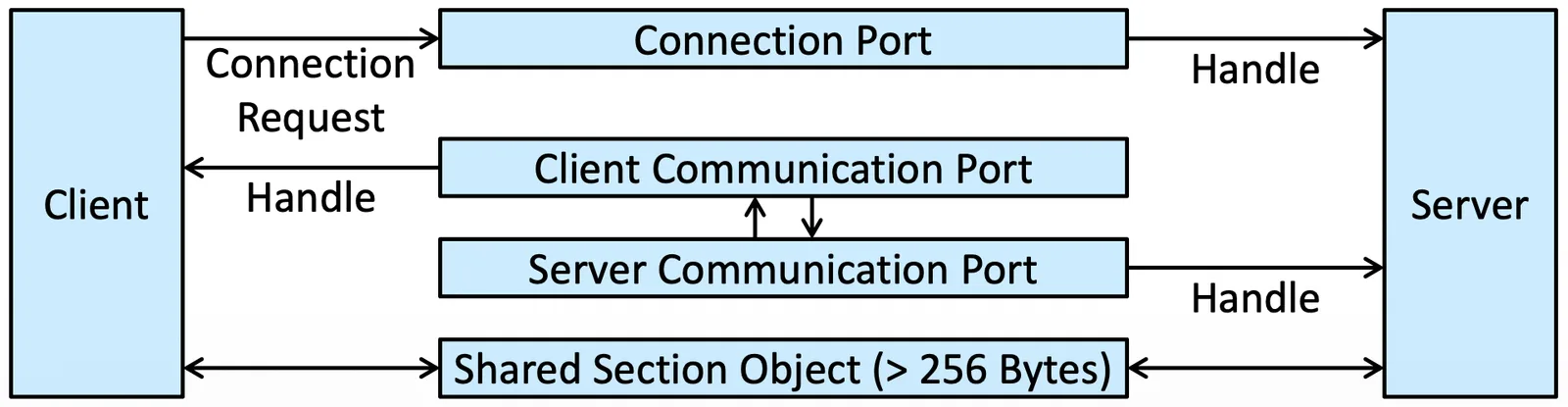
Windows#
有 define 一些 subsystem,各自有各自的 port,可以用 port 做連接
Pipe#
一種 Unix 就有的古老 IPC,可以是單向也可以雙向,簡單但有很多需要考慮的問題
- half duplex / full duplex
- over a network / reside on the same machine
Ordinary Pipes#
應該是 uni-directional 的,又稱 anonymous pipes (Windows)
- write end
- read end
Named Pipes#
可以留下來的 Pipe,通常是一種 file 的形式
- Half-duplex in UNIX
- Full-duplex in Windows
Communication in Client-Server Systems#
Socket#
socket 是一種被定義好的 port,在 1024 以前的 port 通常被當作 well-known 也就是被定義好的
Socket in Java#
- Connection-oriented (TCP) sockets
Socketclass
- Connectionless (UDP) sockets
DatagramSocketclass
- Multicast sockets: 可以用 broadcast 的方法
MulticastSocketclass 是DatagramSocket的 subset
Remote Procedure Calls#
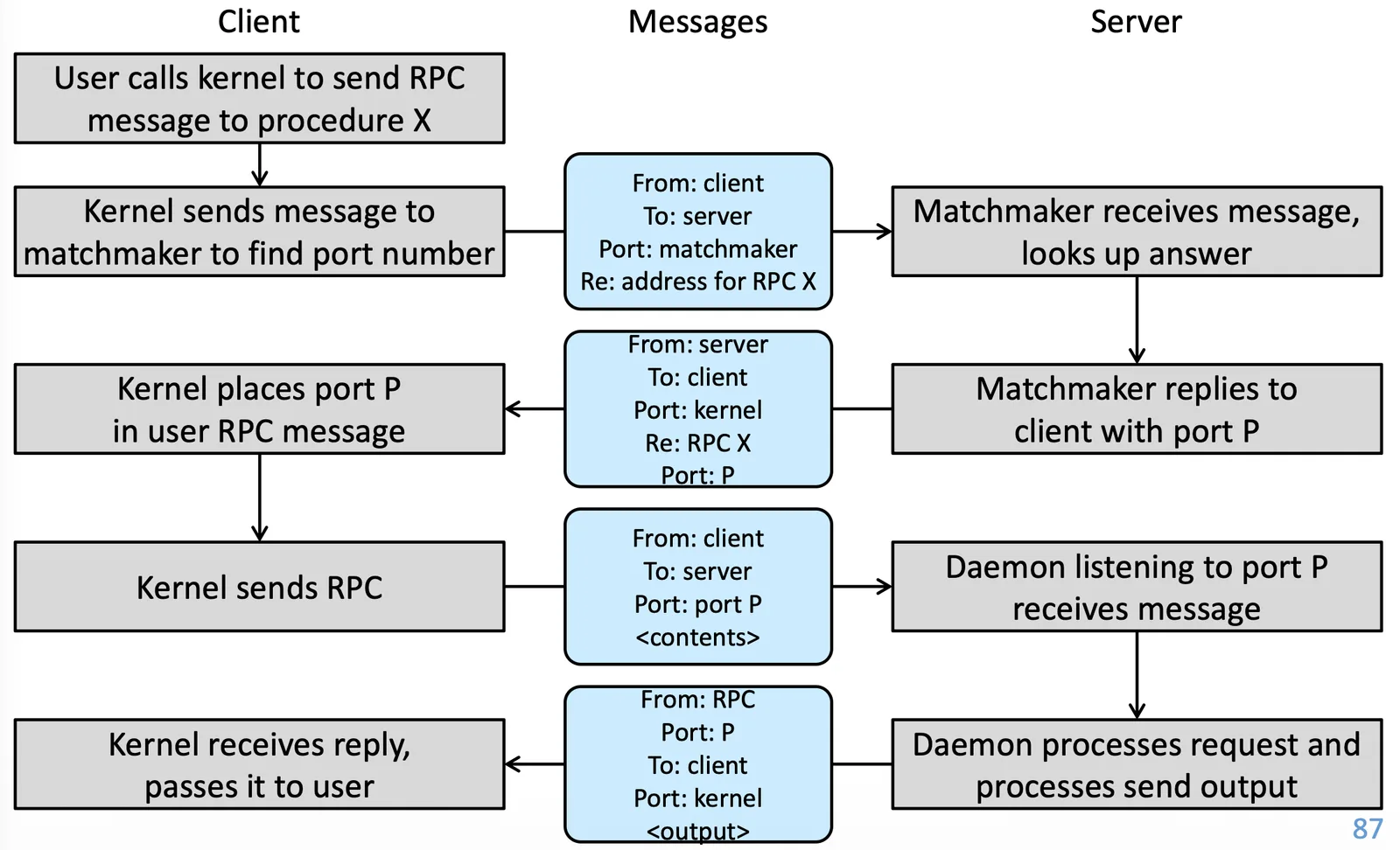
RPC 是一種 abstracts 的行為,實際上是別的機器在完成這件事,但看起來像自己完成的
- RPC 會提供一個 stub,stub 會找到正確的 port,把這些資料弄成一個 msg,把 parameter 都傳過去
- 在 windows 叫做 Microsoft Interface Definition Language (MIDL)
- 因為會有機器問題 RPC 通常都有 machine-independent representation 先轉成 external data representation (XDR)
- 可以設定成 exactly once 或 at most once
- Binding:對 port 的定義
- Predetermined
- Dynamic