Pipeline: Overview#
上一個章節介紹的 Datapath 是 Single-cycle datapath,也就是所有整個過程中 ,但這樣可能會出 Performance 上的問題,因為 Clock time 必須是固定的(hardware 特性),為了讓我們的 performance 提升,我們想讓他越短越好,但
我們的 Cycle time 被執行時間最長的那個 instruction 限制了
- 在 RISC-V 裡面
loadinstruction,他需要經過 5 個 component
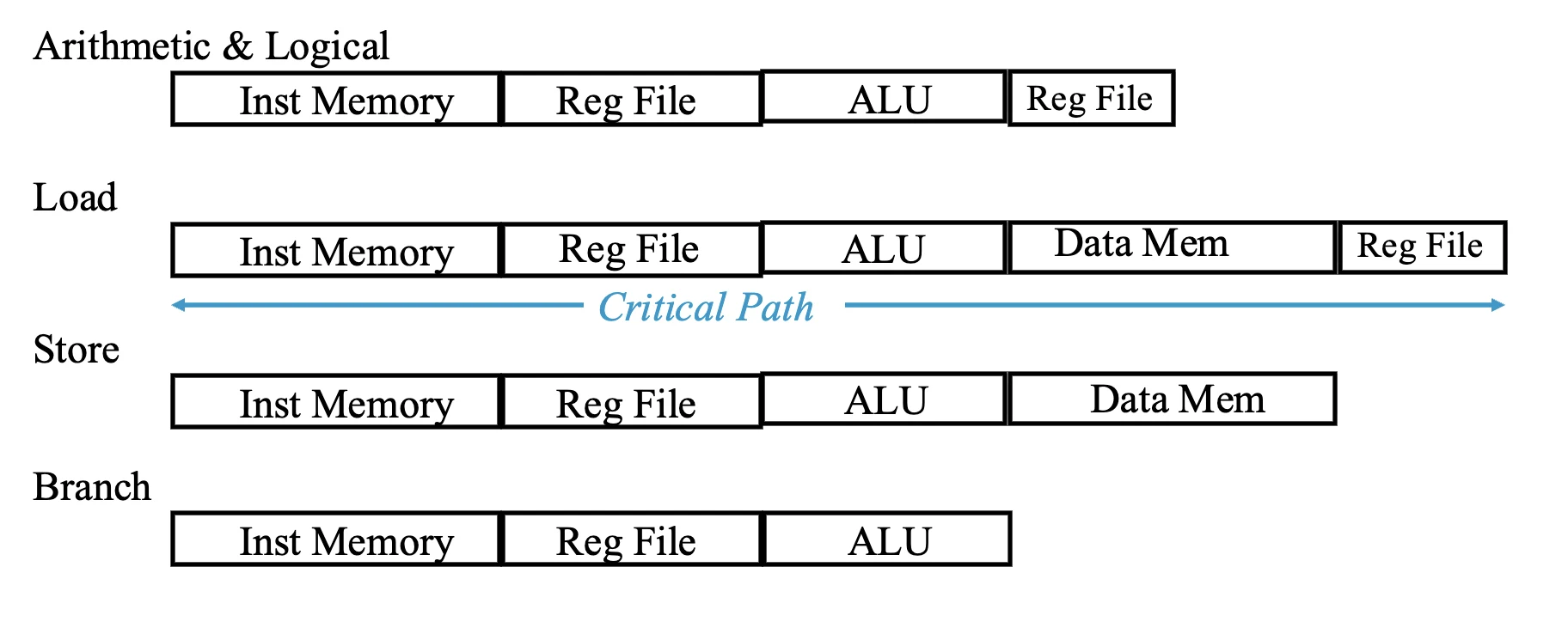
在真實情況下,我們的 Memory Access 不一定會這麼順利,可能會包含很多奇怪的 delay 導致他沒辦法在 single cycle 裡面完成,也會造成 single cycle 的進度嚴重拖延
因此,我們提出一種全新的 method:pipeline,為此我們需要一個新的 architecture 以及 datapath
Concept of Pipeline#
我們在做一件事情的時候可能可以分成很多步驟,拿洗衣服舉例,可能分四個步驟
- Washer 30 min
- Dryer 30 min
- Folding 30 min
- 拿回衣櫃 30 min
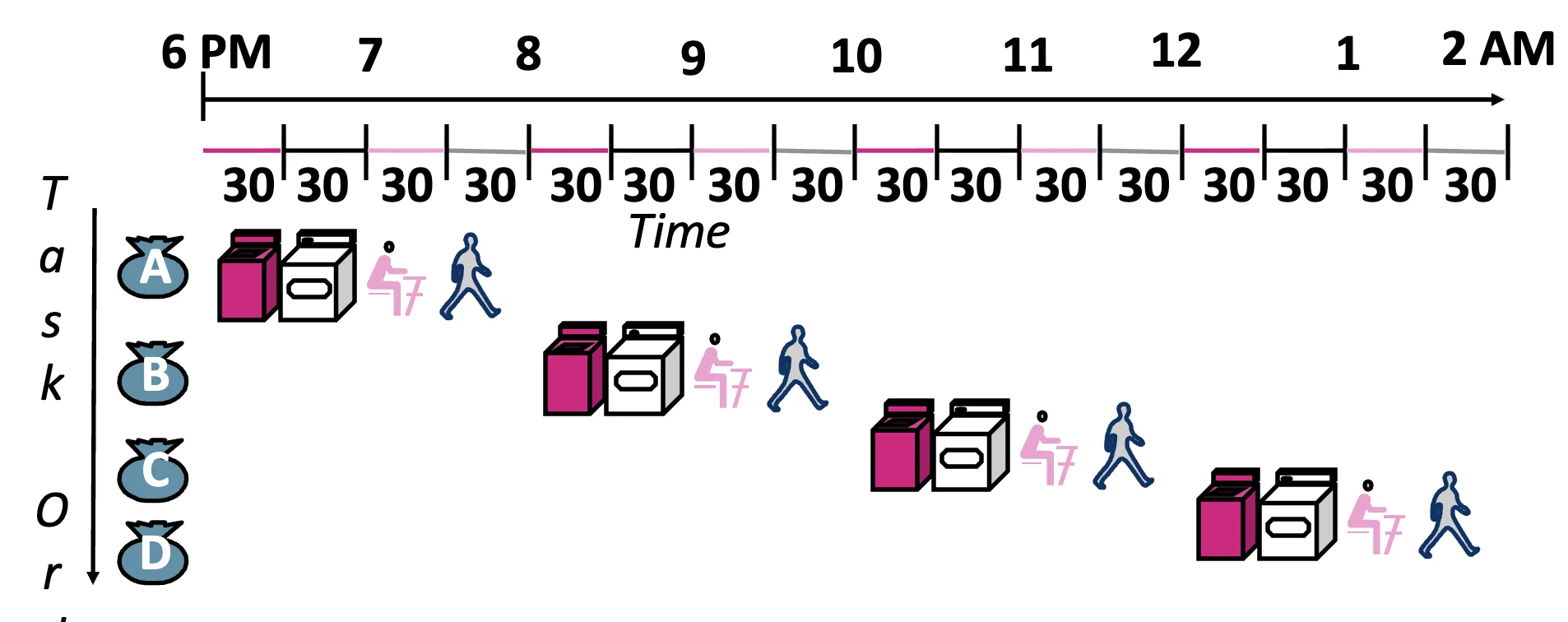
假設現在有 4 個人都需要做這個任務,但這四個任務一次都只有一個人能做,因為機器就那麼一個,每個人要輪流做,我們想要優化的目標是 Total Execution time 而不是單一個 task 的時長
當我們 single path 的時候,每個時間只能執行一個任務,一個人做完才能換下一個人
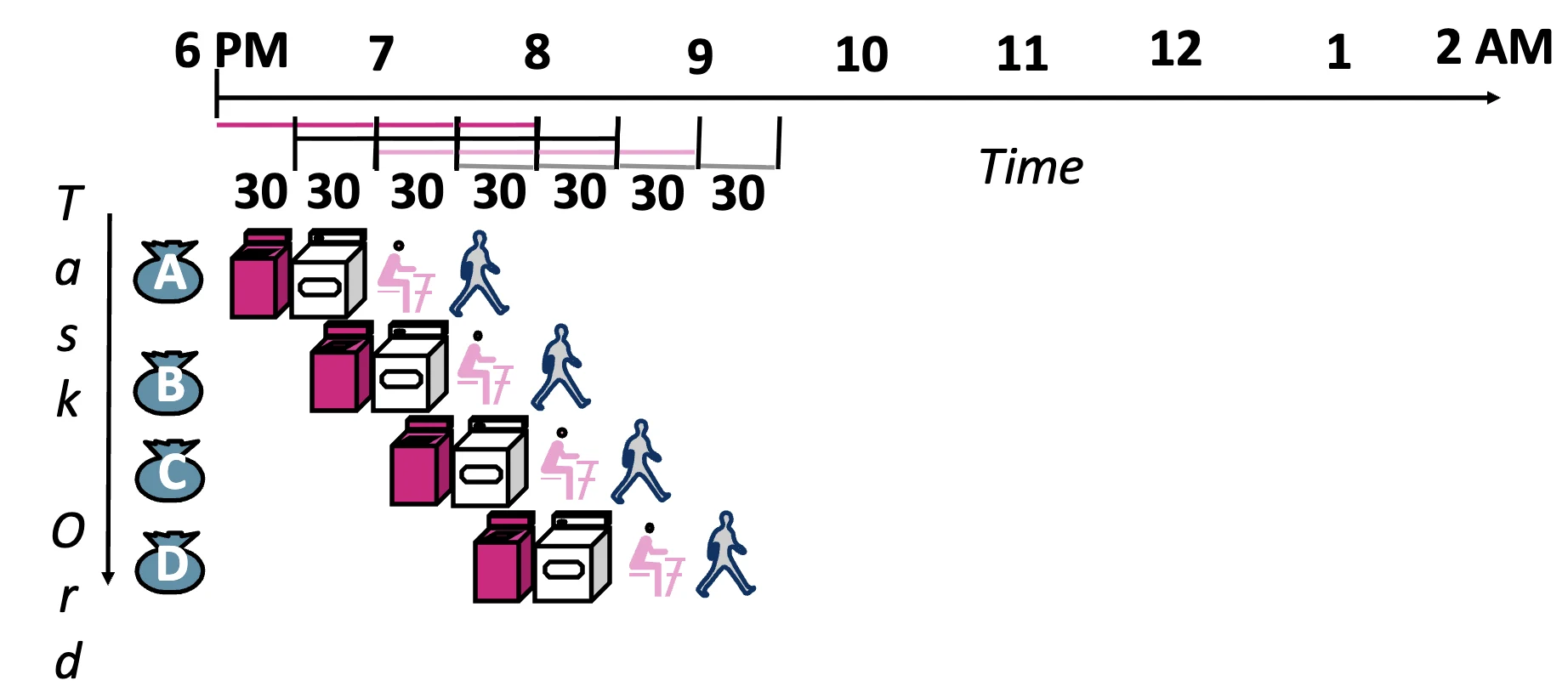
但其實我們可以觀察到,Dryer 在使用的時候 Washer 並沒有在使用,我們可以讓下一個人先去洗衣服,而當後面機器使用結束的時候又剛好可以換成下一個機器
這樣將工作拆成不同階段,並讓多個工作在不同階段同時進行,以提高整體效率的方法我們稱為 Pipeline,從圖上也能明顯看出他的整體速度大大提升
這裡整理幾個 pipeline 的 properties
- Pipeline 會增加 throughput,但不會減少 single task 的 latency
- Pipeline 需要啟動時間,因此 Multitask 的 scenario 比較適合 pipeline
- 因此 pipeline 的速度會取決於 slowest pipeline stage
- Unbalanced task length 會讓 speedUp 下降
Pipeline in CPU#
複習一下,既然 pipeline 有分 stage,其實 RISC-V 的 code execution 也有
- Instruction Fetch (IF)
- Instruction Decode (ID) and Register Fetch (RF)
- Execution (EX), Memory Address Computation, or Branch Completion
- Memory Access (Mem)
- Write-back (WB)
以 load instruction 為例,這個指令一共需要五個 stage
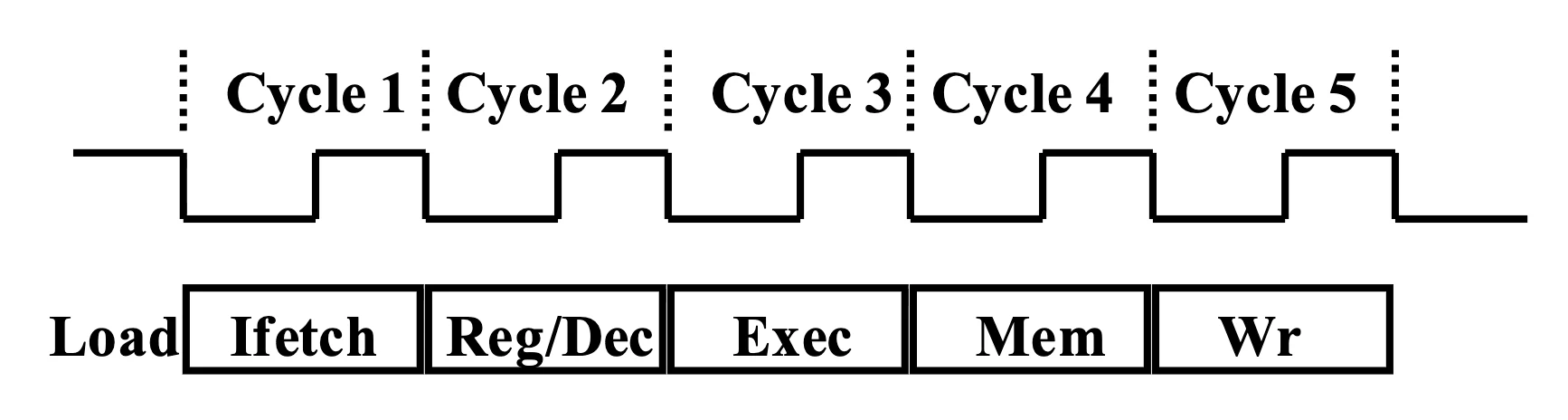
以下是 Load instruction 在 Pipeline 後的 Performance improve
Pipeline 首先需要 4 個 clock cycle 來啟動,然後用剩下每個 instruction 就等同於只需要一個 cycle 就能處理完成
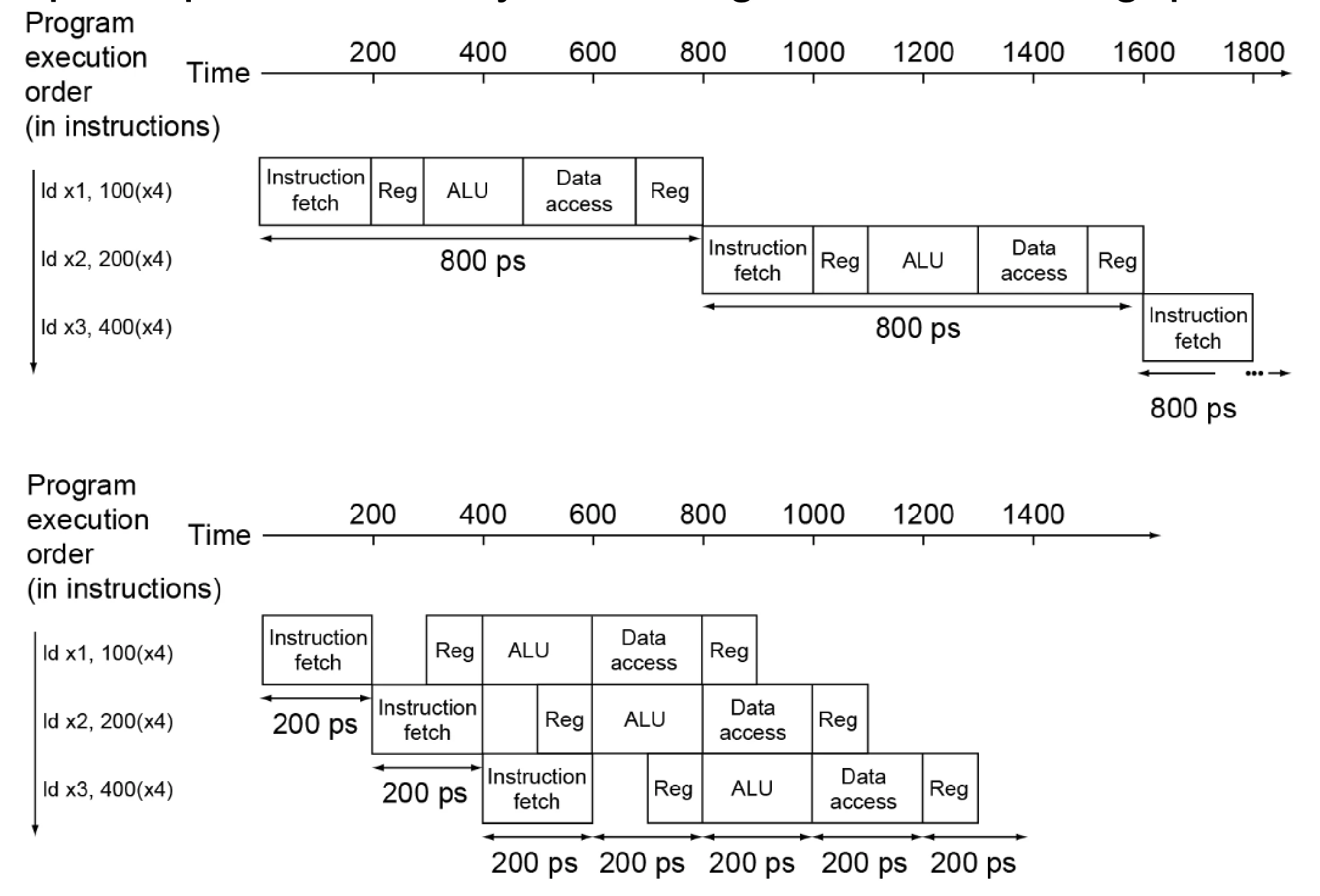
Ideal Pipeline Performance#
把剛剛的 performance generalize 一下,Ideally
總運行時間
所以當每個 stage 都是 balanced 的,並且有大量的 instruction 需要執行,ideal pipeline speedup 就是
並且理論上
- :兩個 instruction 執行間隔時間
- :pipeline stages
Pipeline and ISA#
在 pipeline 設計的時候 ISA 的設計理念又顯得更重要了,比如說
- 為了維持 decoding 都在一個 cycle 內執行,RISC-V 設計讓所有 instruction 都是 32-bits fixed size 所以我們可以在一個 clock 裡面 fetch 到
- 為了讓 decode 跟 register fetch 在一個 cycle 裡面,我們要讓 instruction format few and regular
- 設計 instruction 要讓他 stage 容易分且 balanced,例如
load,store都可以拆解成 calculate memory address 跟 access memory
Graphical Representation of Pipeline#
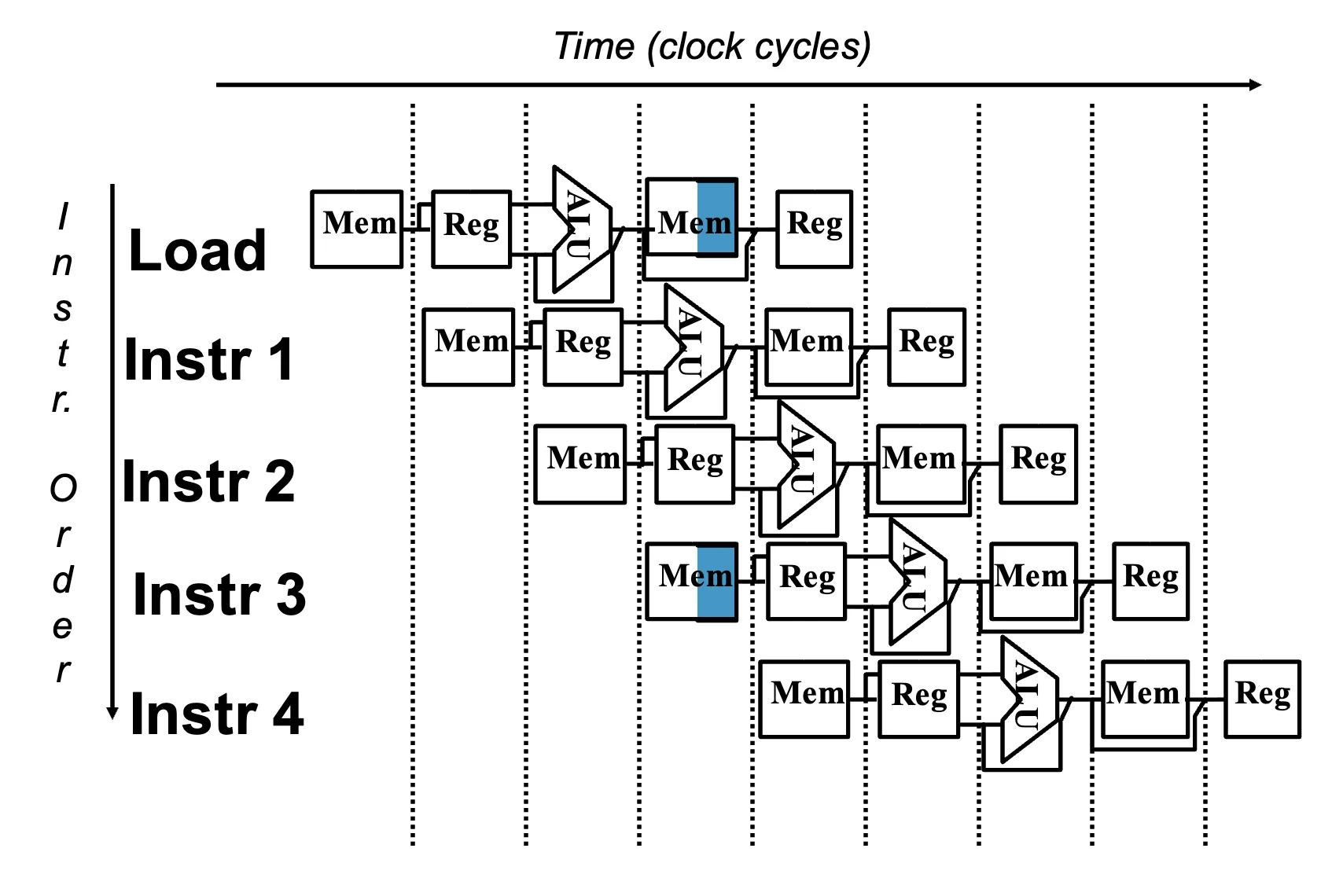
接下來我們分析這個問題都會建立在這種 representation 之上,Graphically Representing Pipelines

這些階段前面都介紹過了,這裡著重講
- 如果前半(左半)塗色,代表這輪的指令是 write
- 如果後半(右半)塗色,代表這輪的指令是 read
Pipeline Hazard#
剛剛分析的 performance 是在 ideal pipeline 上,但其實很多時候,pipeline 並不會是完全完美的,我們統稱這種會造成 pipeline latency 的情況叫做 Hazard,基本上分為以下幾種
- Structural Hazard:當多個 instruction stage 同時需要用某個 component
- Data Hazard:當後面的某些 instruction 想在 data ready 前就先使用他
- Control Hazard:在 conditional instruction 後的 instruction 想在 branch 結果出來前就預先往前跑
這些 Hazard 不外乎都是因為 component 的使用 conflict 造成的,永遠有一招 waiting 非常萬用
Structural Hazard#
在第四個 tic 的時候我們發現 Memory read 需要同時間被操作在兩個 Instruction 上,這種情況就會造成 Hazard
Stall for Structural Hazard#
跟上面說的一樣,我們永遠可以用 Stall 來解決這個問題
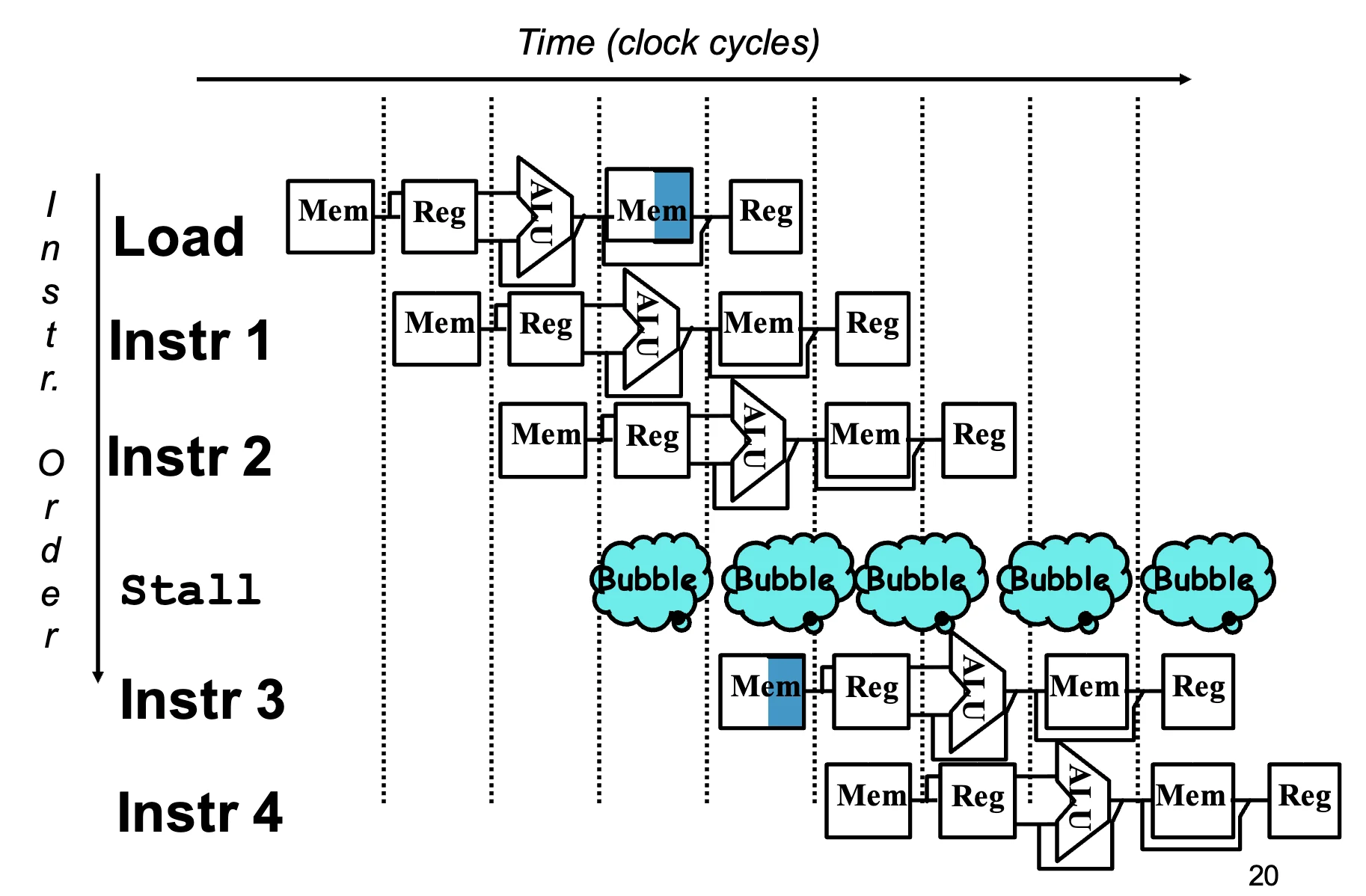
我們在發生 Hazard 的那個 tic 插入一個無意義的 instruction stall 也就是讓整個 CPU 空轉一個 clock,然後讓兩個使用 memory component 的 tic 錯開
Split memory component#
仔細觀察會發現兩個 instruction 使用 memory component 的目的是不一樣的,第一個是要 read data,而第二個是要 fetch instruction,所以我們不如把 data memory 跟 instruction memory 分開來做,讓他們獨立成兩個 component
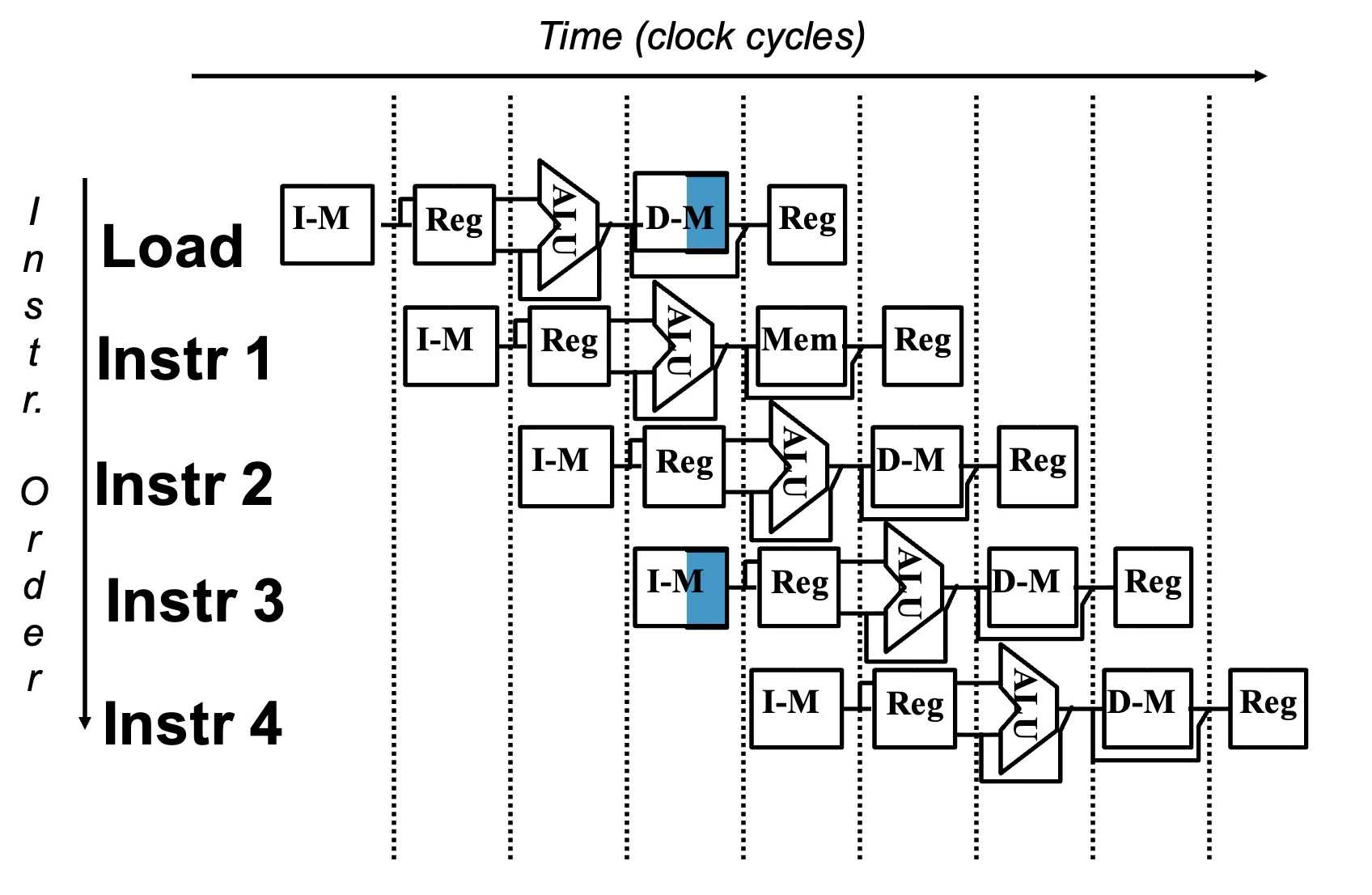
Data Hazard#
下面這個例子,我們不停的在使用 r1 裡面的 data,但其實從第二個 instruction 開始,就沒有使用到正確的資料,也就是說我們應該要等到所有 data 被算出來才能去使用它
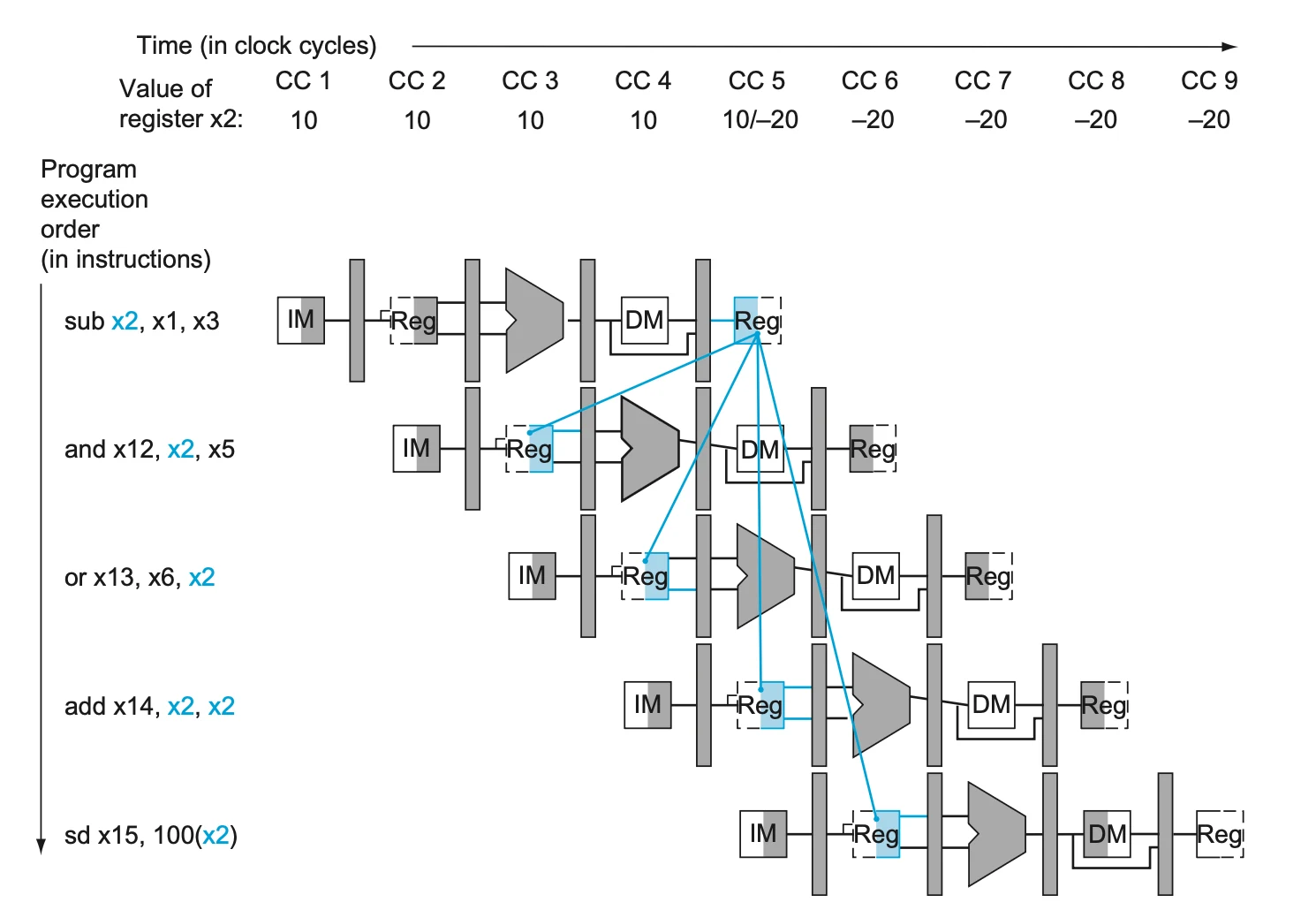
Forward#
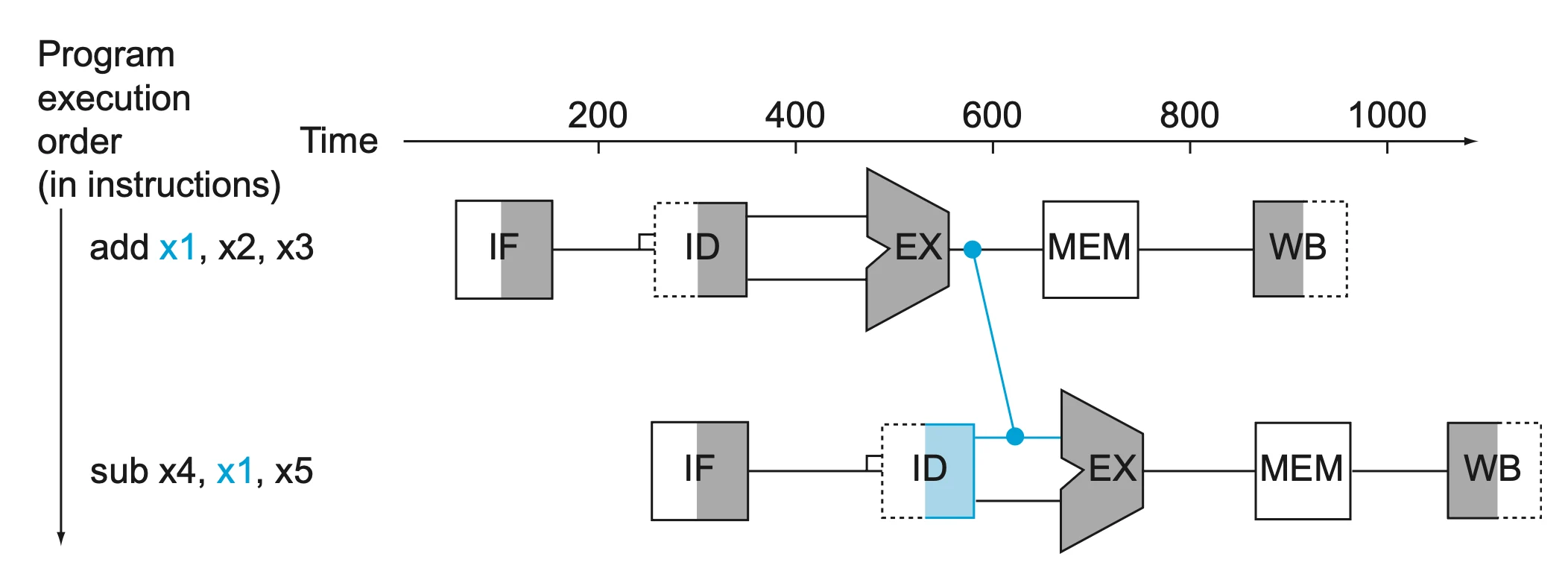
其實 ALU 計算完成後,結果不一定需要先寫回 Register File 才能使用,我們可以直接將結果傳給後續的 Instruction,藉此減少 Pipeline Stall。這種技術稱為 Forwarding(Bypassing)
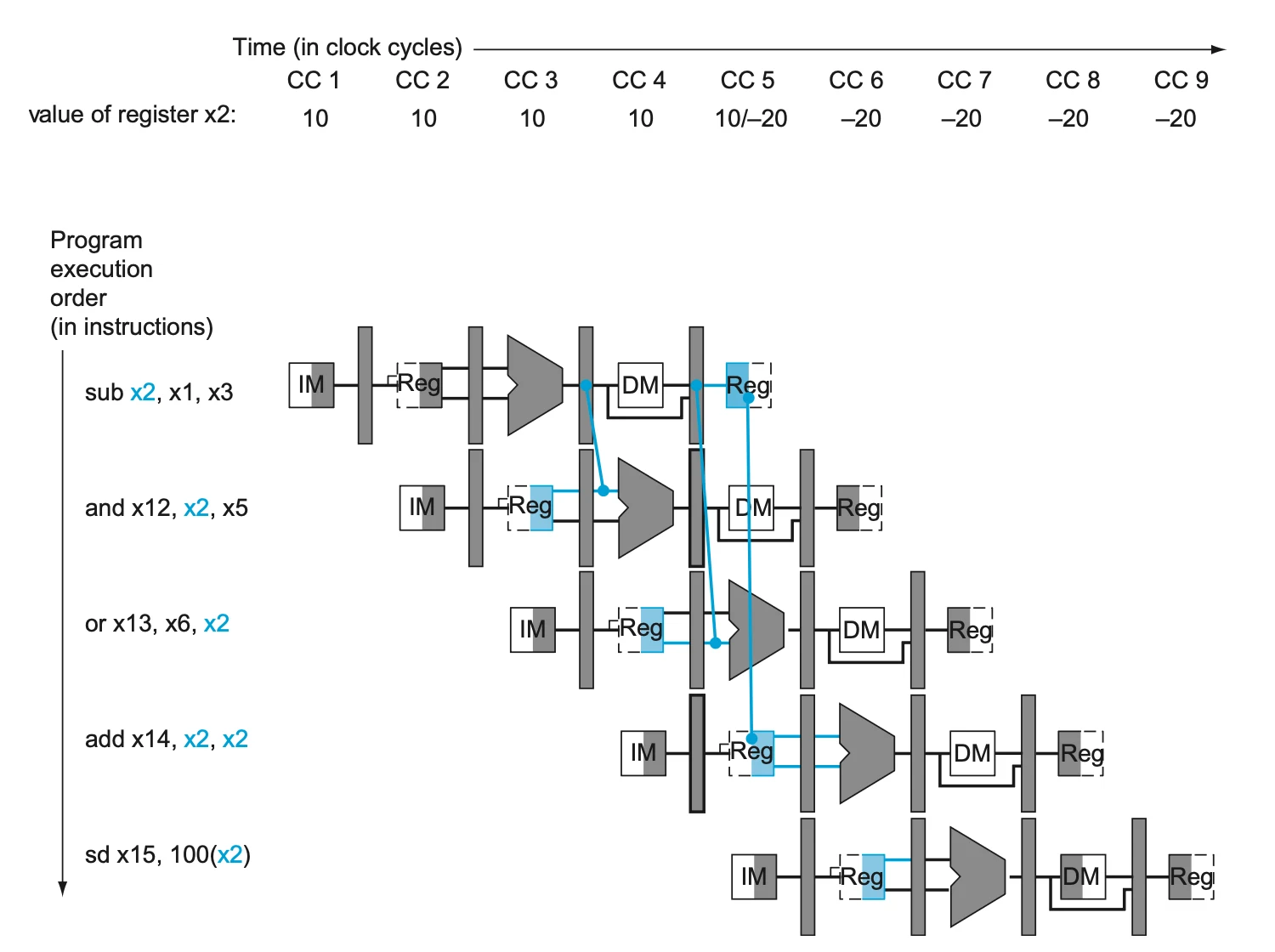
我們來看一下 forwarding 可能的失敗情況,在這個情況下 Forwarding 可以運作的很順利,因為每個 instruction 都是 r-type 的 instruction,所以我們只需要在 ALU 計算完後就直接 Forward 就會成功
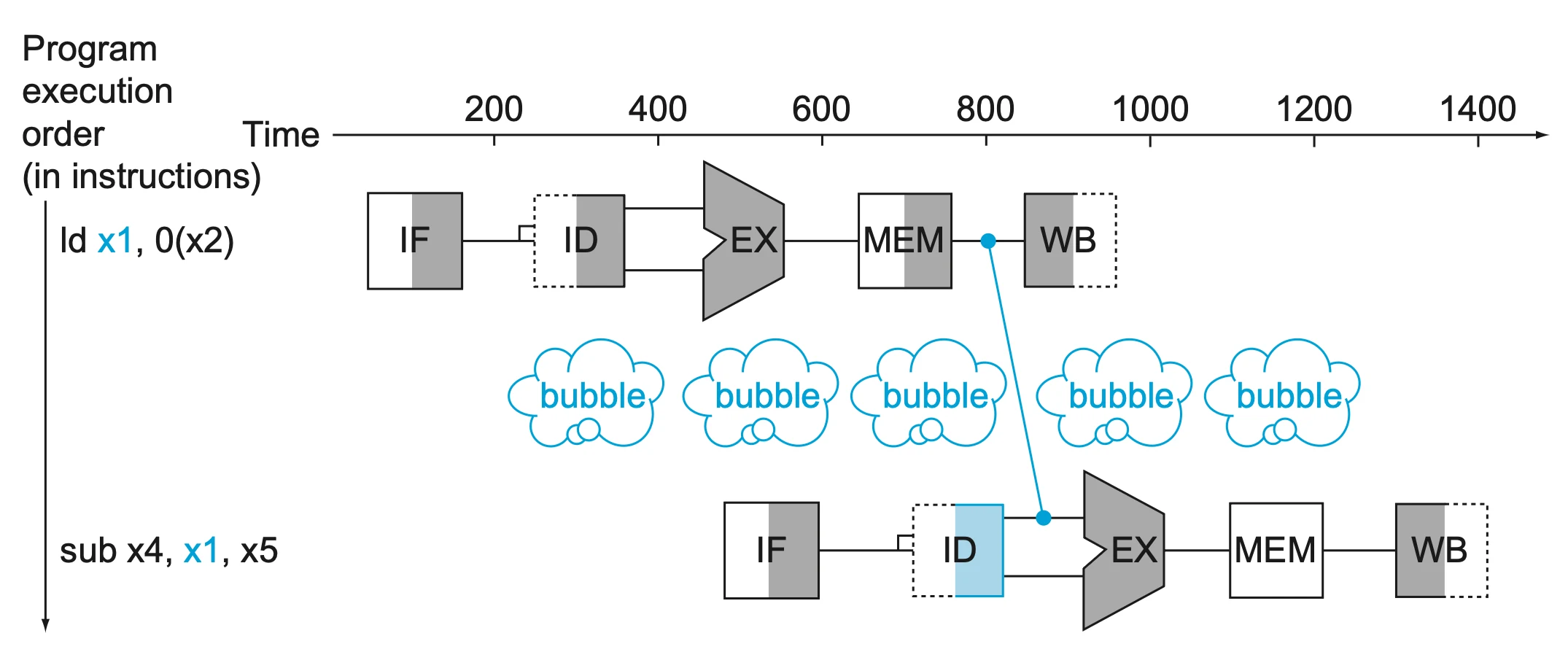
但下面這個例子,第一個 instruction 是 load 也就是說要使用的 data 必須等到 MEM 結束才能拿到,也就是第一個 instruction 的第四個 tic,但第二個 instruction 在第三個 tic 就想要使用了,所以我們還是必須要 Stall 一個輪次,我們稱這個情況為 load-use
這裡你會發現 R-type instruction 其實不需要用到 MEM 這個 stage,但我們依然給他一個空轉的 stage,這是為了讓 pipeline align 後面會解釋
Reordering#
還有一種方式可以避免這個問題,就是 Code Scheduling 或是 Reordering,下面一個範例程式
ld   $t1, 0($t0)
ld   $t2, 4($t0)
add  $t3, $t1, $t2
sd   $t3, 12($t0)
ld   $t4, 8($t0)
add  $t5, $t1, $t4
sd $t5, 16($t0)在 3, 4 以及 6, 7,兩組 instruction,我們都可以把 ALU 的 execution result 直接 forward,來維持 pipeline 的順暢,但明顯的我們看到 2, 3 以及 5, 6 都有 load-use 的情況
ld   $t1, 0($t0)
ld   $t2, 4($t0)
ld   $t4, 8($t0)
add  $t3, $t1, $t2
sd   $t3, 12($t0)
add  $t5, $t1, $t4
sd $t5, 16($t0)Reorder 後我們發現,執行結果不變,下面依然可以 forwarding,但 load-use 只剩下 3, 4 一次
這是一個很重要的 Compiler Optimization issue
Control Hazard#
Control Hazard 情況比較特殊,我們一般來說有兩種解決方法
- Stall:萬用,但會讓 pipeline 效率大大減低
- Prediction:需要有 roll back mechanism,因為預測不會永遠都正確,需要一個 correction 機制
Stall#
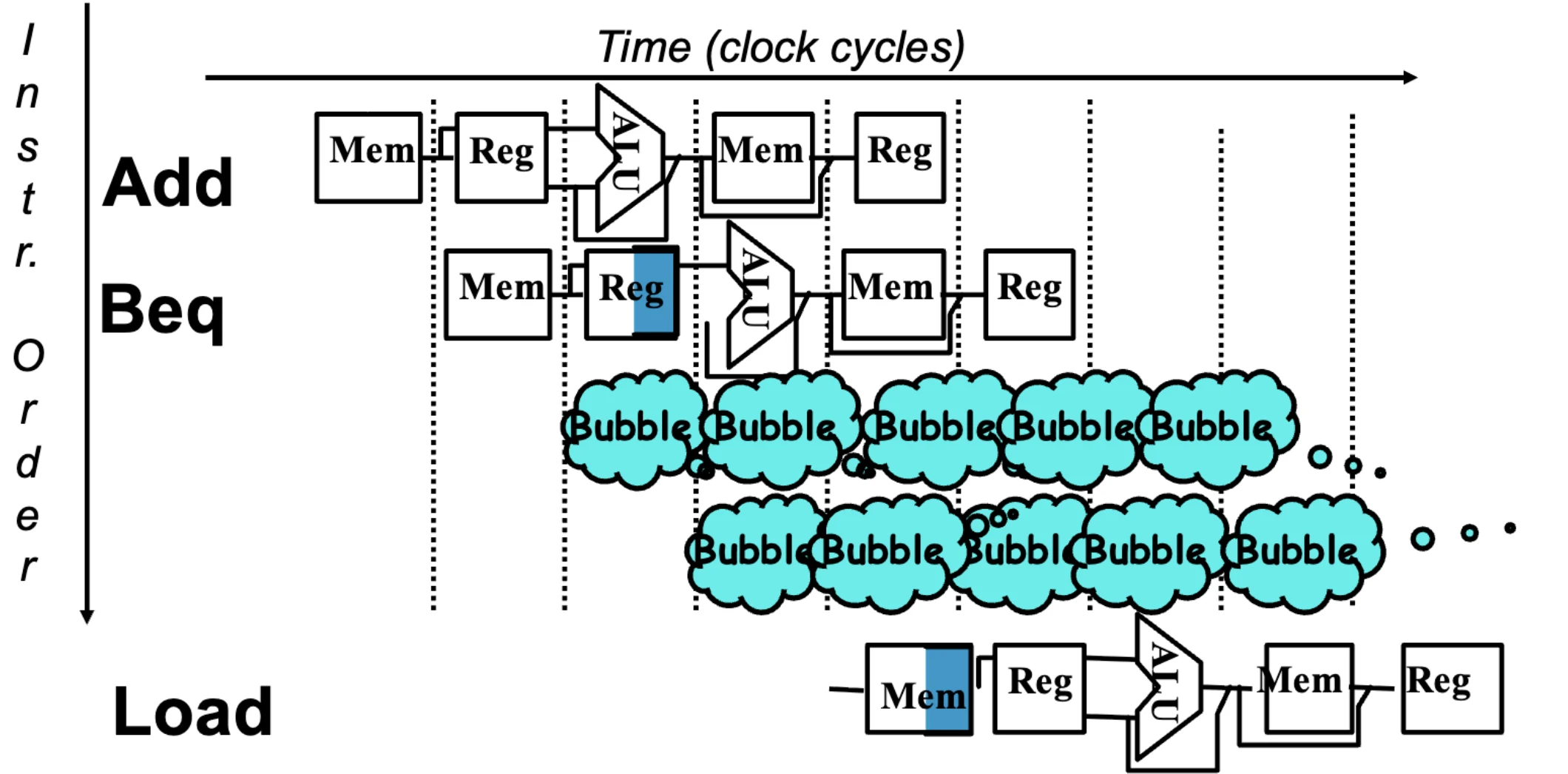
因為 branch 的結果會在第三個 tic 的 ALU 計算完後才會有結果,所以我們需要 stall 兩個 instruction
Resolve Branch Earlier#
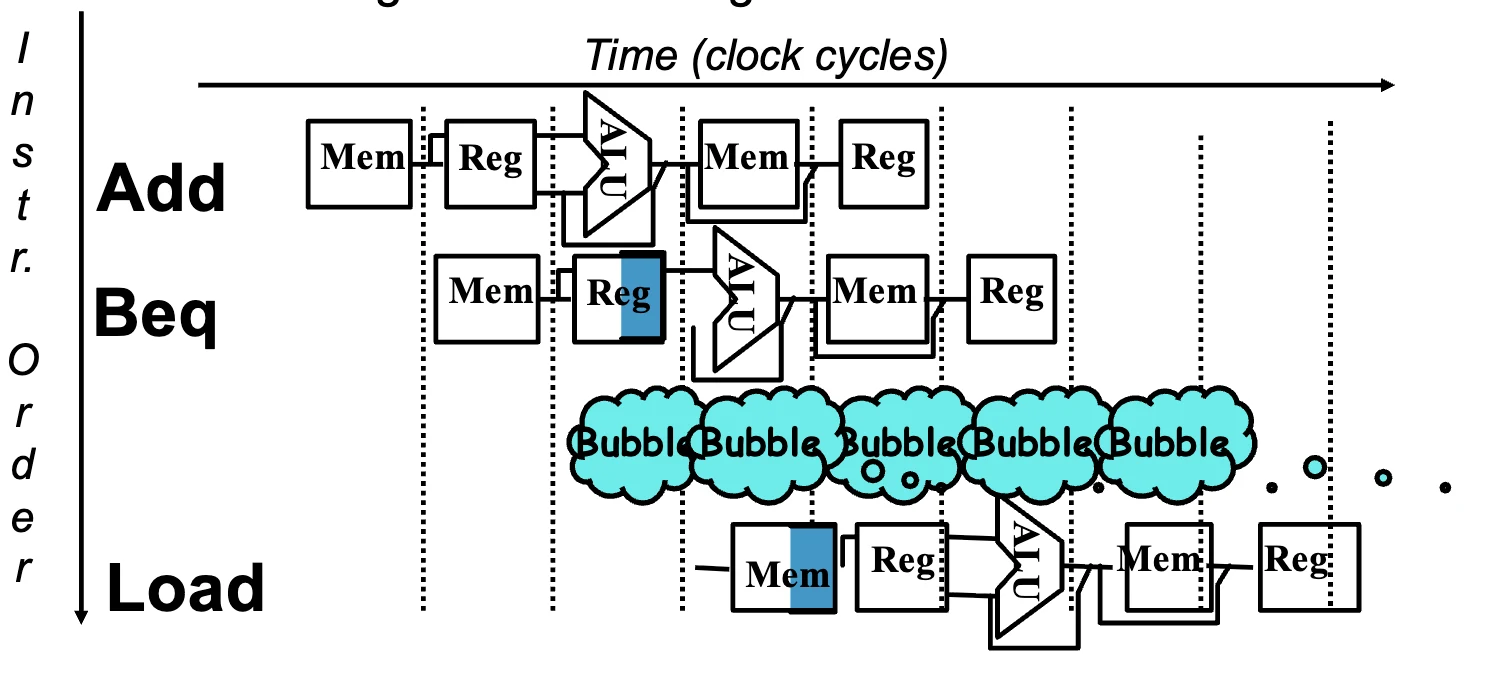
原本的 Hazard 需要 stall 兩個輪次才能夠繼續維持 pipeline,但是我們可以重新設計 hardware,我們設計 hardware 讓他,可以在 Reg stage 就把 branch 結果傳出來,這樣就能減少一個 stall instruction
Predicted Untaken#
我們可以預測這個 branch 沒有被觸發,也就是預測他繼續執行 PC + 4 的下一個指令,Predict Untaken 整體上來說會比 Predict Taken 更加好實作,因為 Target 運算通常都需要更多的 computation
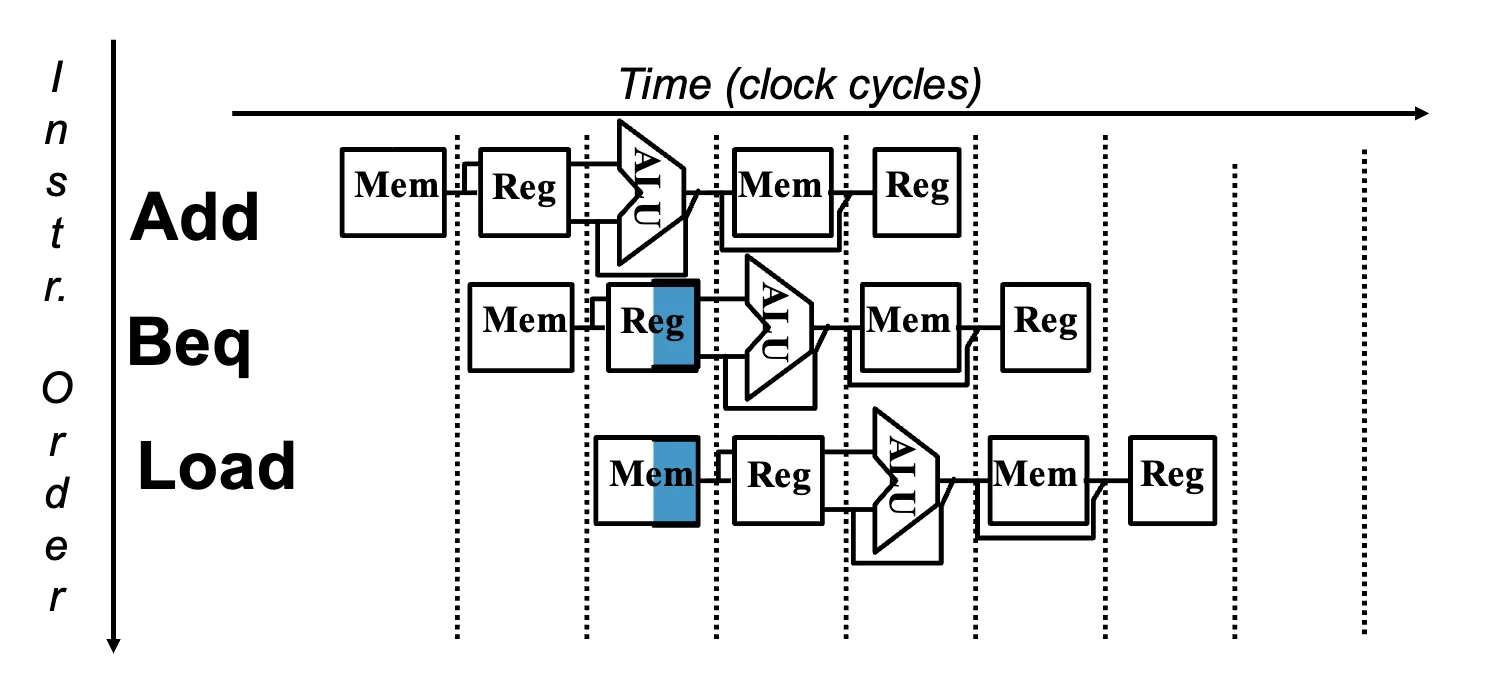
運行邏輯會長這樣,以下是預設的 pipeline 順序,ID 後 untaken 直接執行下去
Branch Inst (i) IF  ID  EX  MEM WB
Inst i+1            IF  ID  EX  MEM WB
Inst i+2                IF  ID  EX  MEM WB
Inst i+3                    IF  ID  EX  MEM WB
Inst i+4 IF ID EX MEM WB如果 ID 結果是 taken 但第 i+1 個 instruction 已經執行一個 stage 的話,我們會需要 roll back
Branch Inst (i) IF  ID  EX  MEM WB
Inst i+1            IF  nop nop nop nop
Branch target IF ID EX MEM WBRoll back 簡而言之就是把已經進入 pipeline 的 instruction flush 出去,CPU 需要做兩件事
- 標記 instruction 也就是我們看到的
nop - 把
PC挪到Target
在這個情況下,只有 Instruction i+1 需要 roll back,我們稱為 One cycle penalty
Pipeline Datapath#
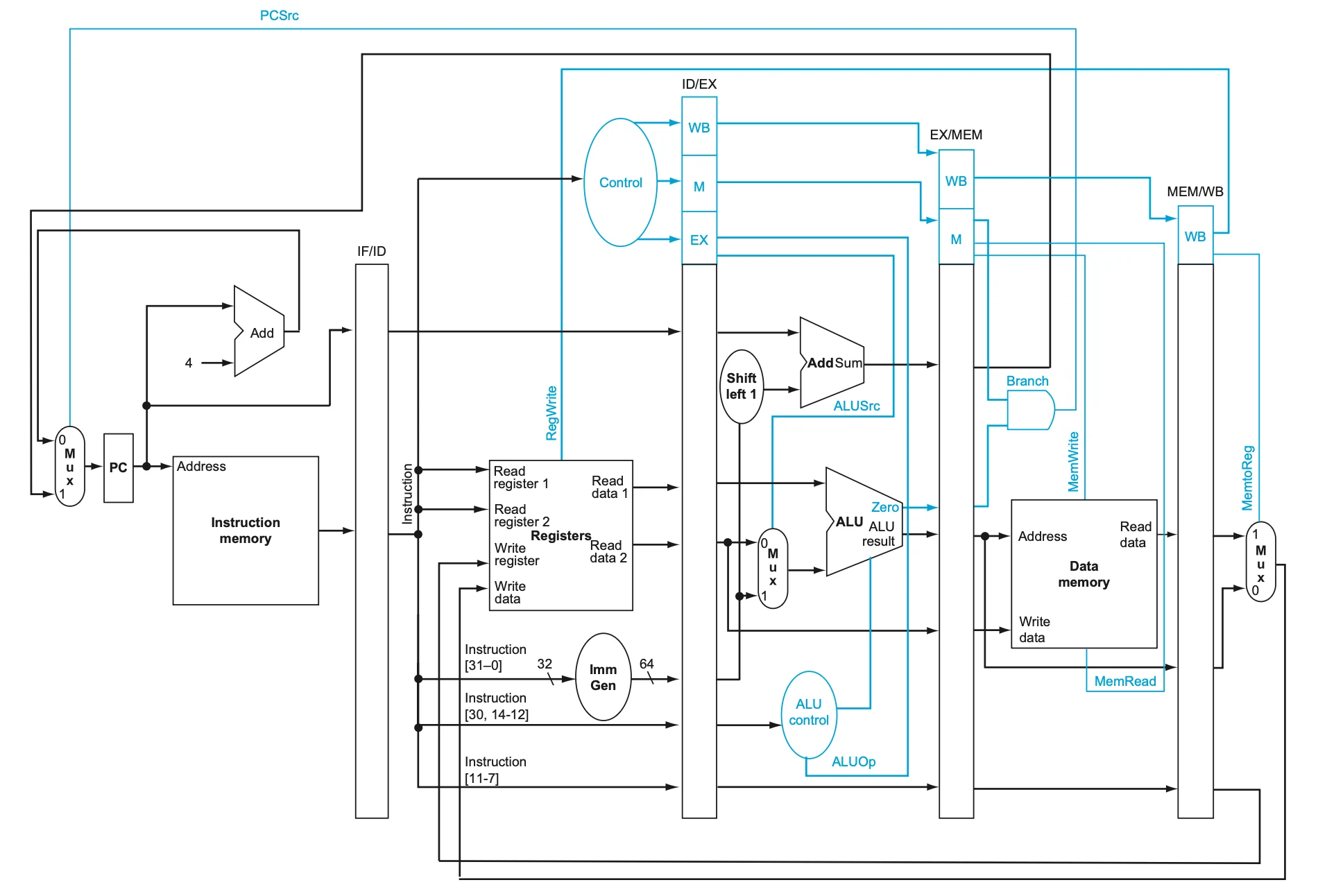
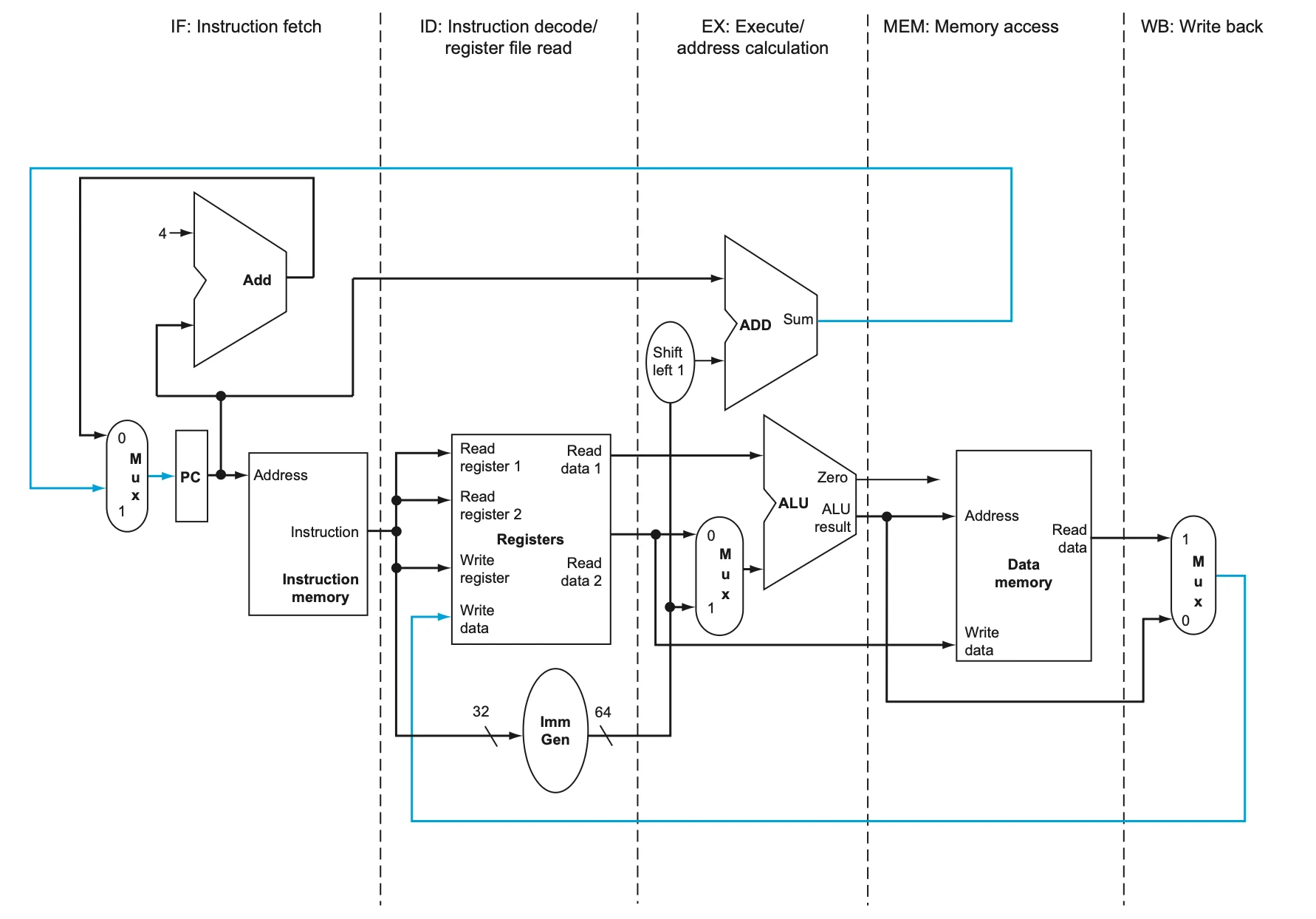
回憶一下先前的 Single Datapath,但如果我們要直接套 pipeline 的話,很明顯會出問題
- 我們需要維持所有 stage 的時間一樣,來保證資料可以不要跟下一輪的 data 混在一起
- 每一個 stage 的 control signal 不能混用
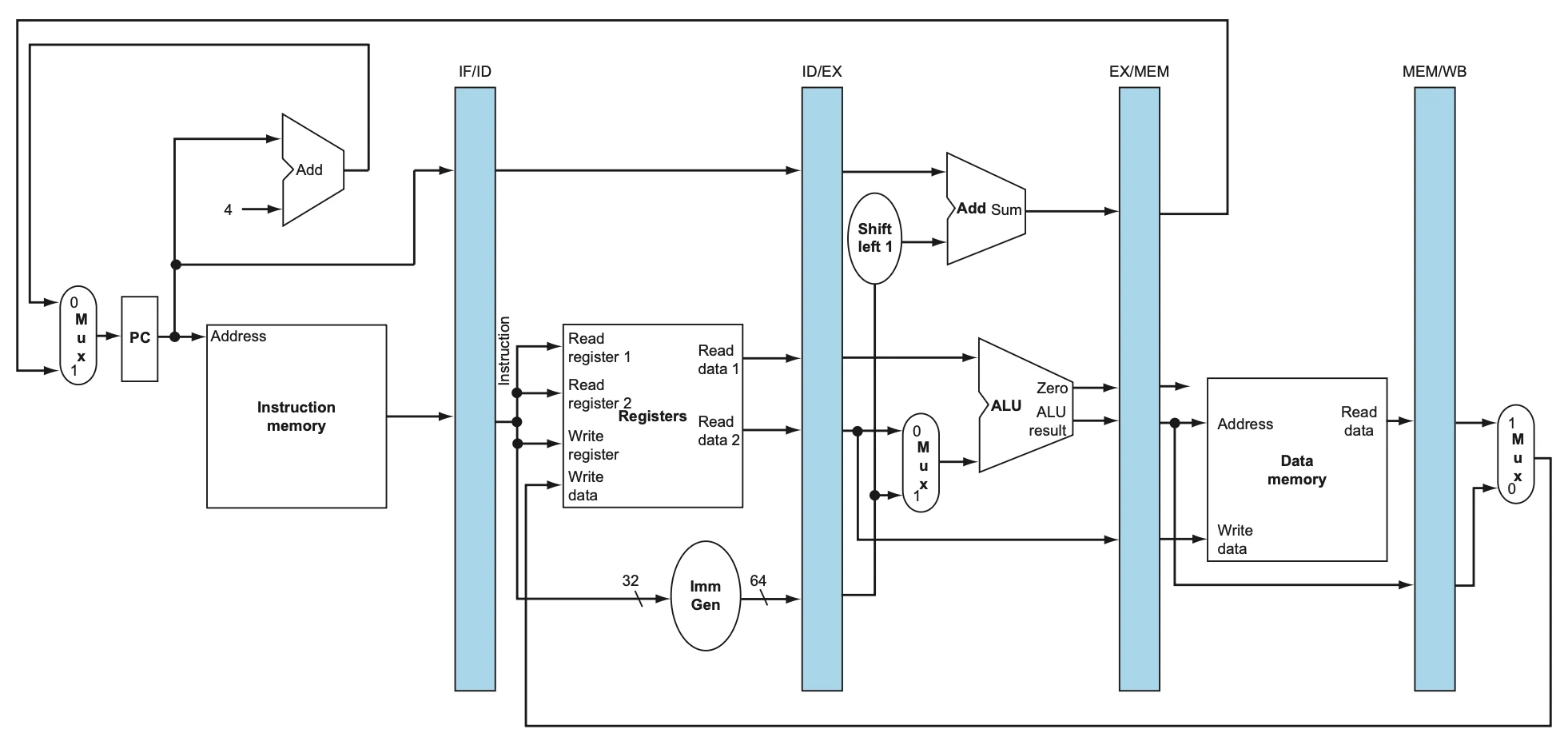
我們只需要在每個 Stage 的 Component 之間都加上一個 register 來儲存這輪的 data 就能很好的解決這個問題,五個 stage 需要四個 Register,而他們的命名方法就是鄰接他的兩個 stage:IF/ID, ID/EX, EX/MEM, MEM/WB
Pipeline in Load#
因為並不是所有 instruction 都需要四個 stage 都用到,我們拿 load 來舉例
- Instruction Fetch:
IF/ID.IR = mem[PC];
IF/ID.PC = PC;
PC = PC + 4;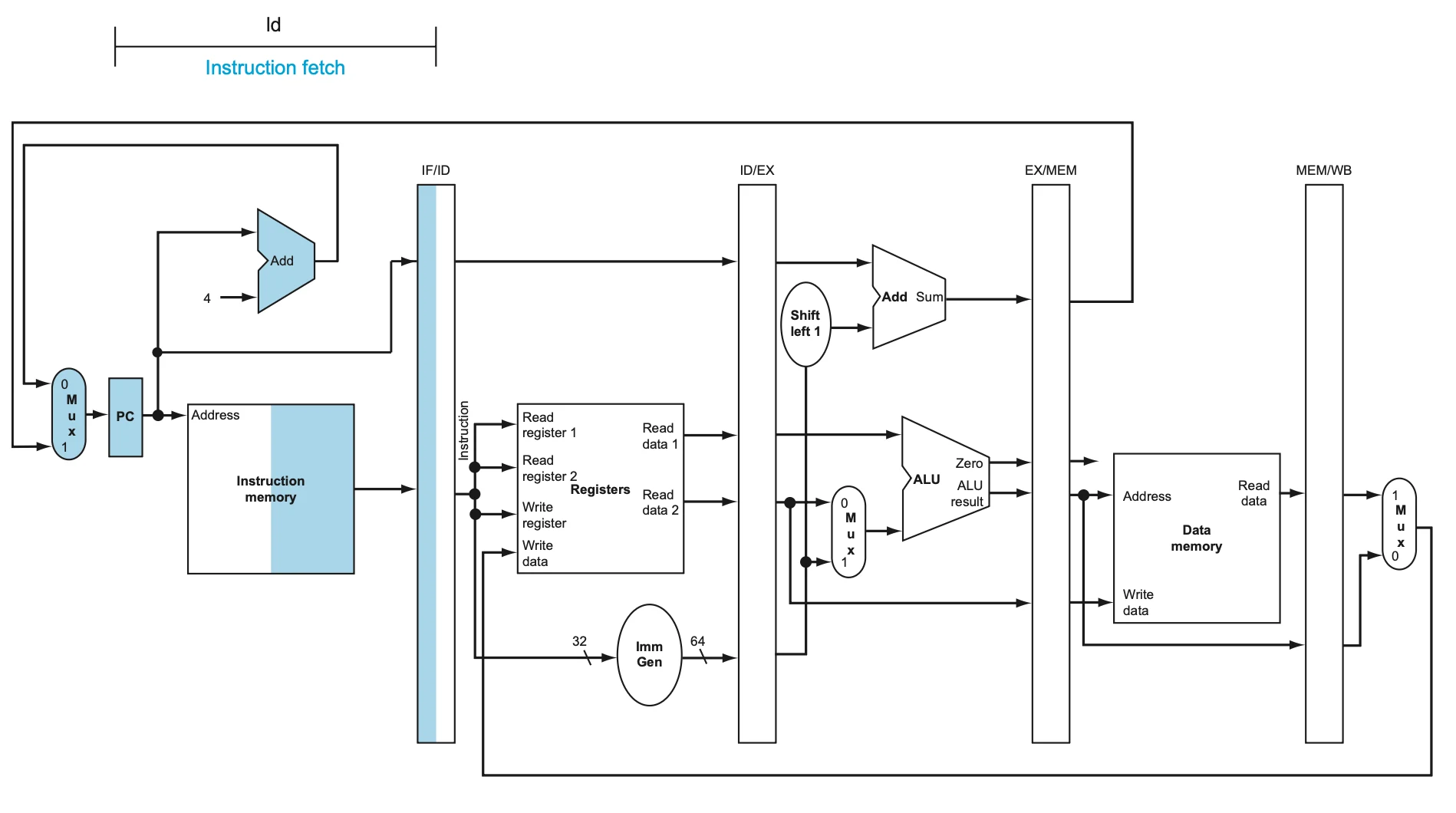
- Instruction Decode:
ID/EX.A = Reg[IF/ID.IR[19-15]];
ID/EX.B = Reg[IF/ID.IR[24-20]];
ID/EX.immediate = sin_ext(IF/ID.IR[31-20]);
ID/EX.PC = IF/ID.PC;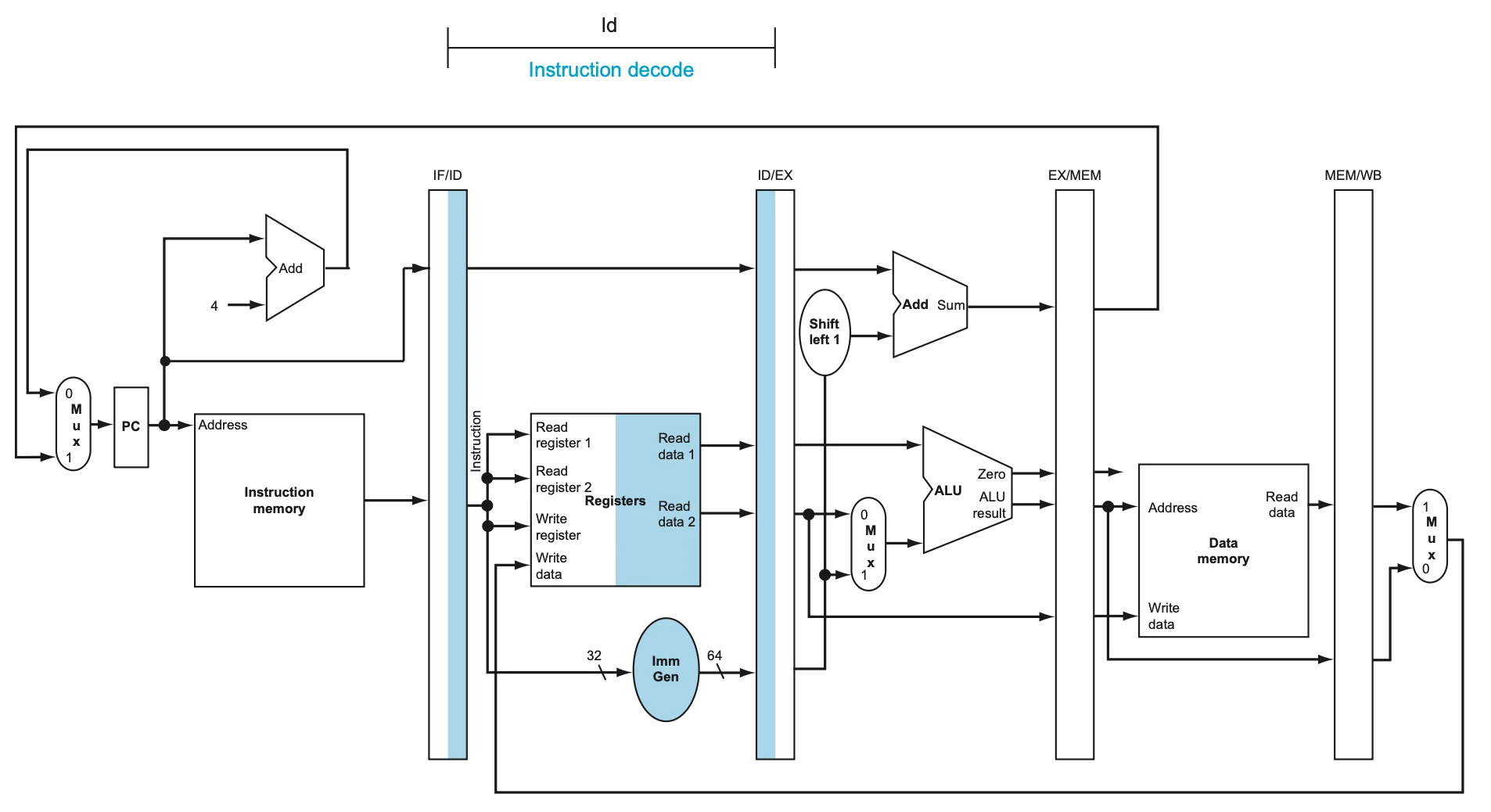
- Execution:
EX/MEM.ALUout = ID/EX.A + ID/EX.immediate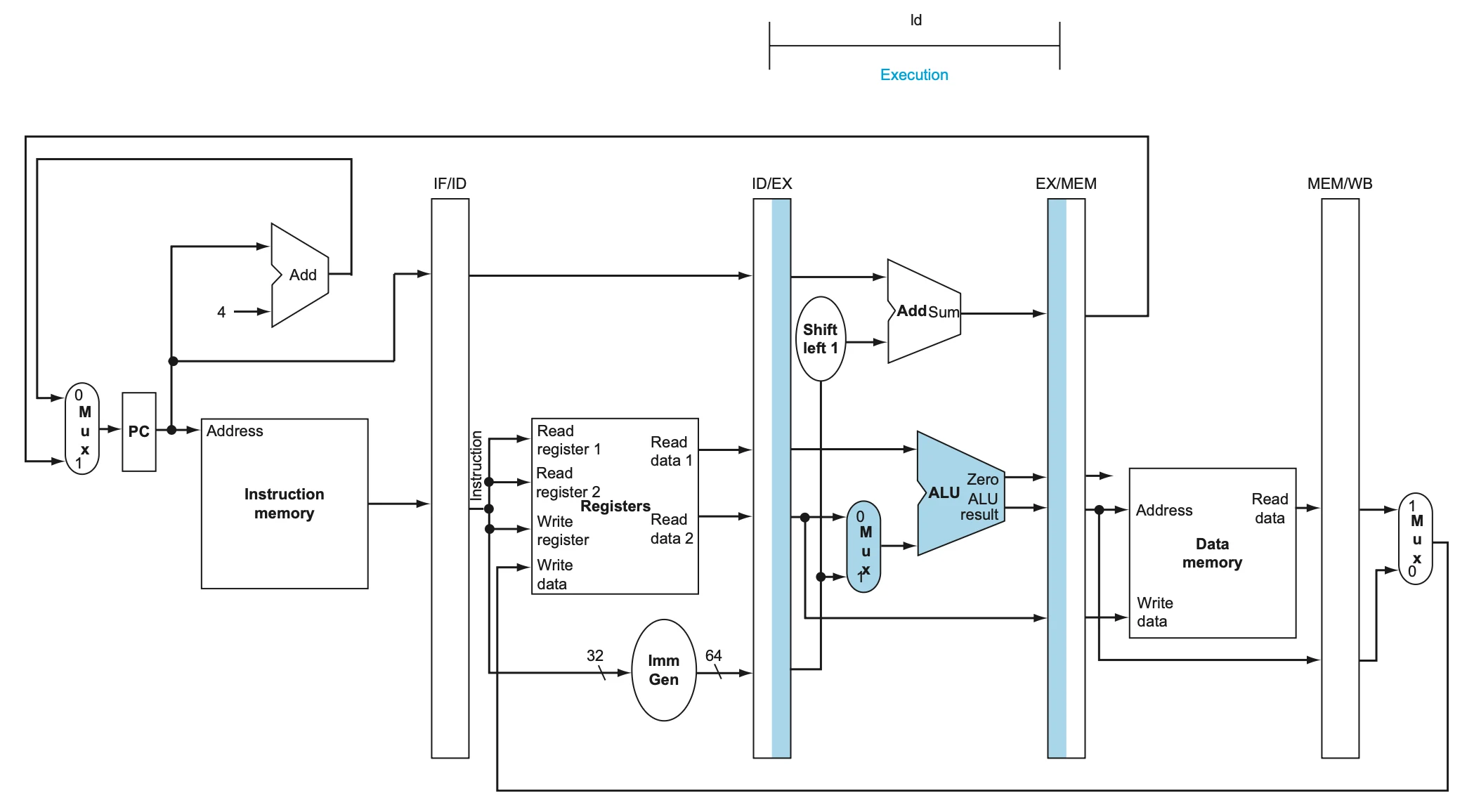
- Memory Access:
MEM/WB.MDR = mem[EX/MEM.ALUout]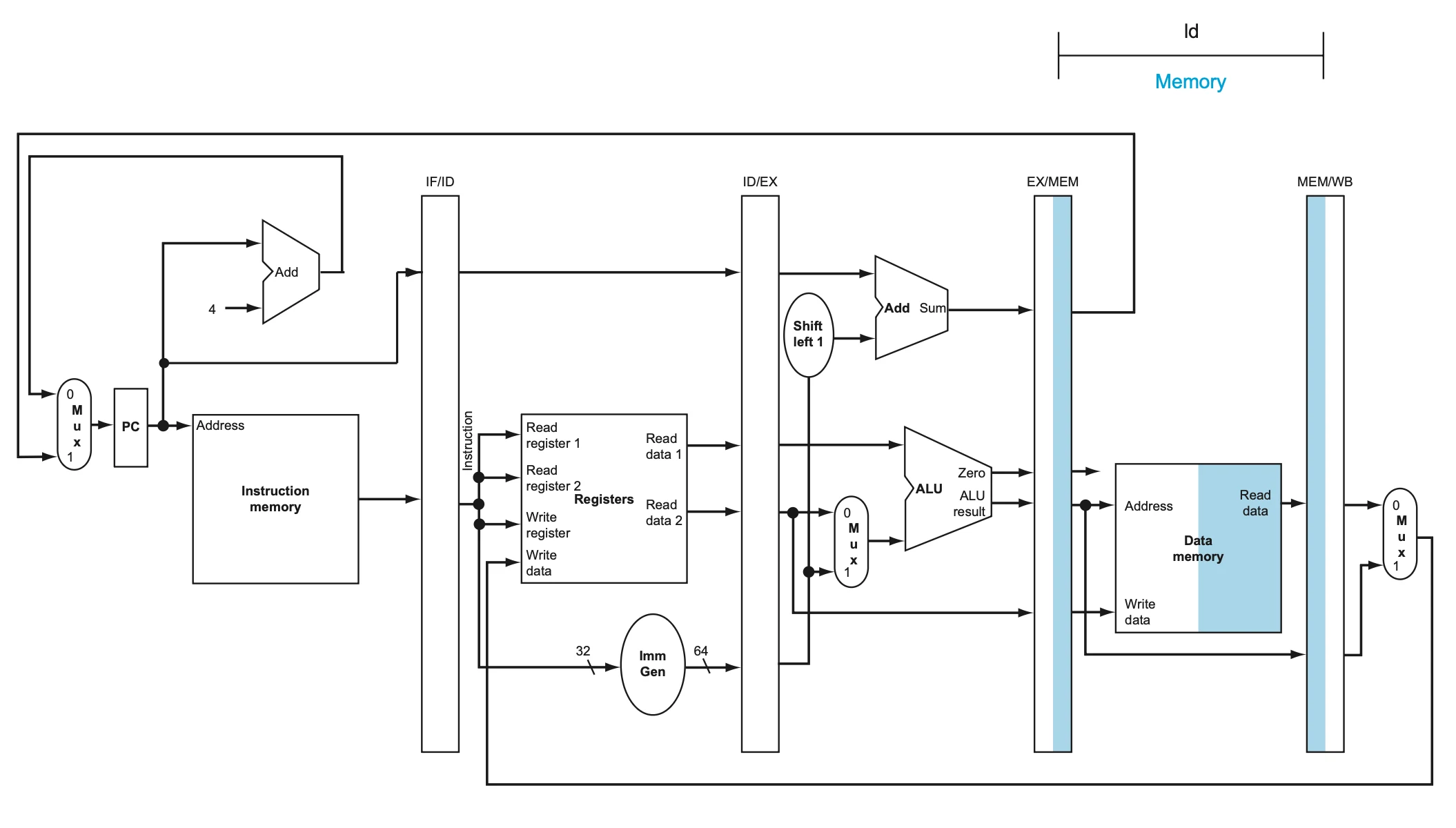
- Write Back:
Reg[Rd] = MEM/WB.MDR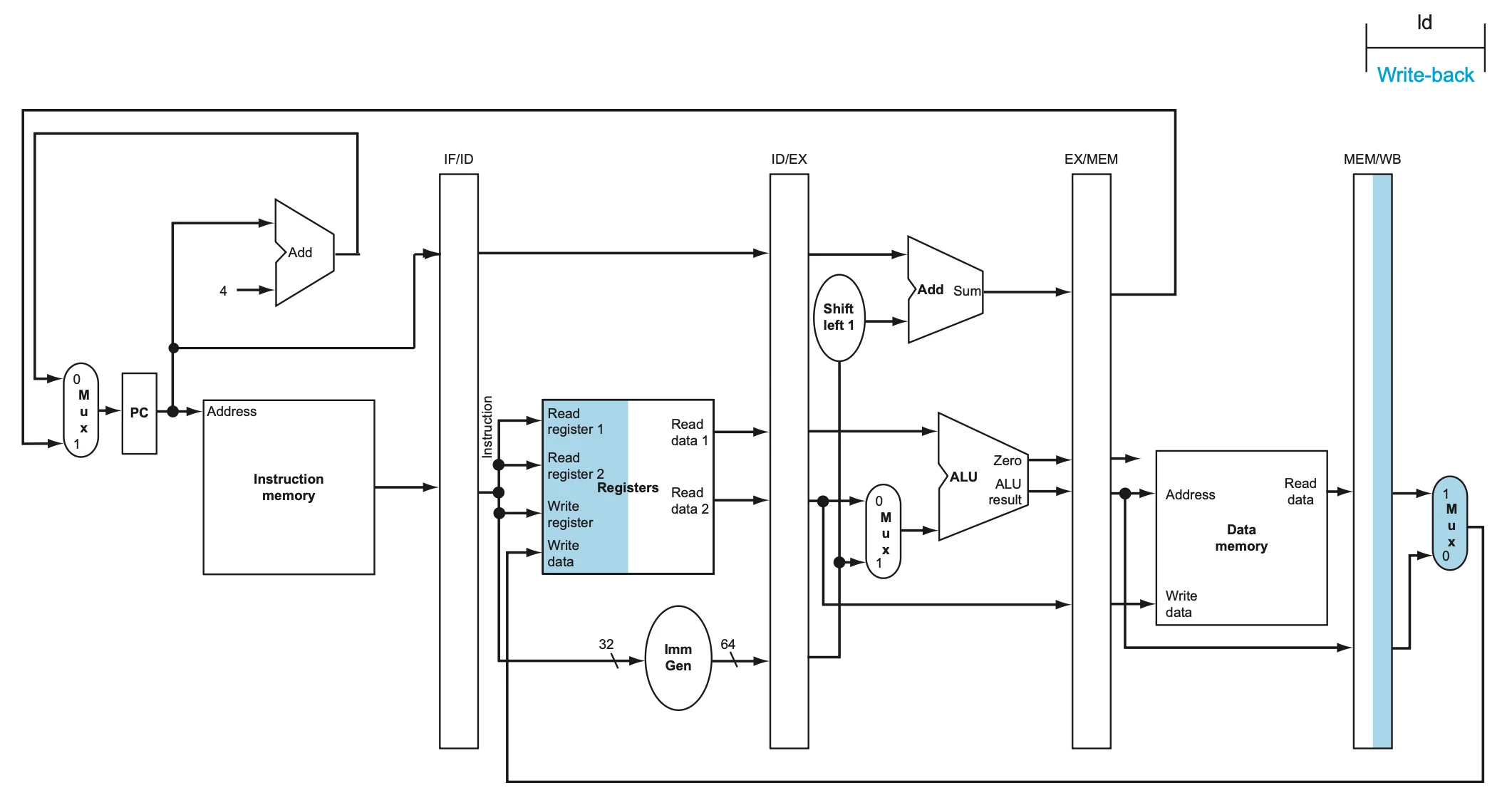
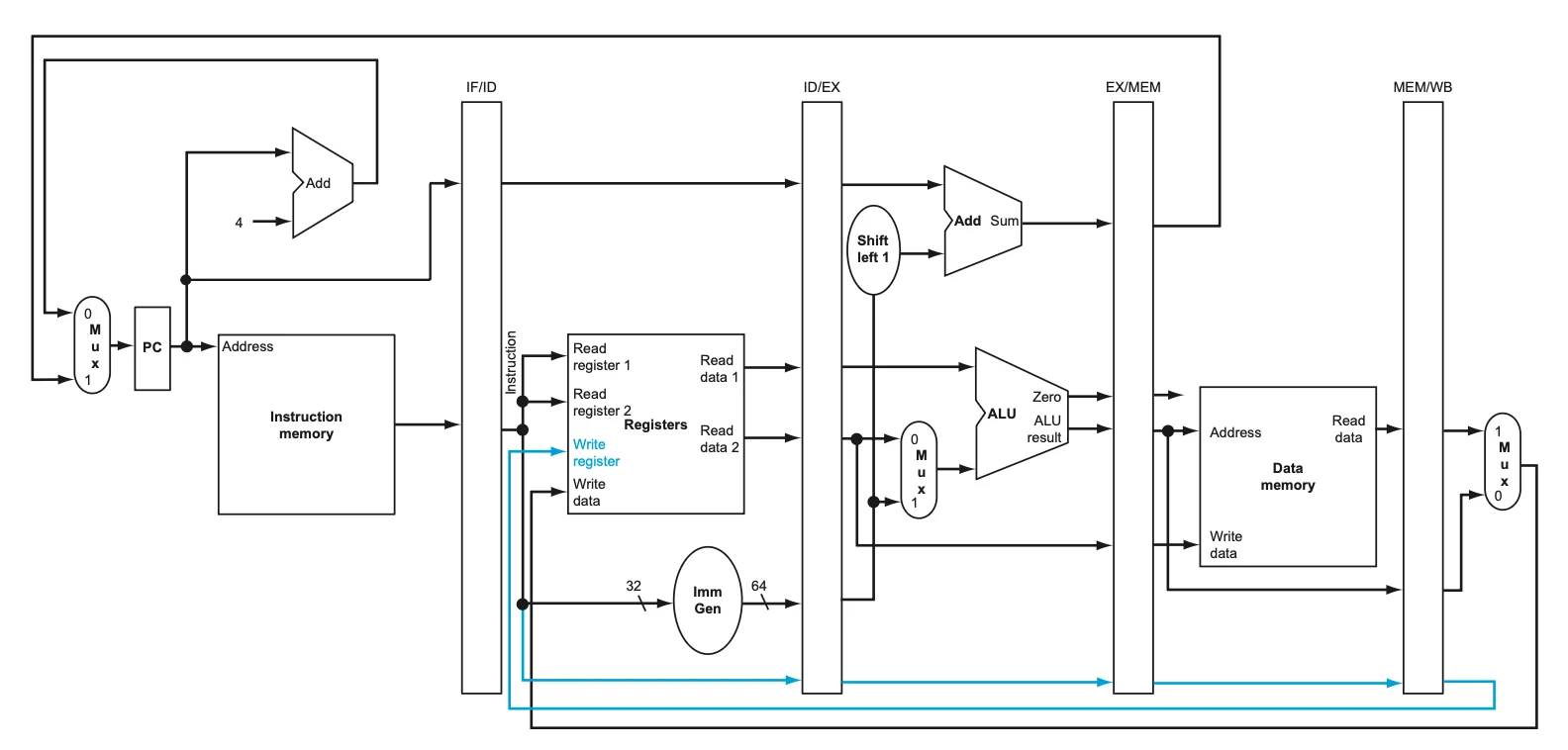
這裡 Stage 我們可以發現一個問題,Write Register 的 Number 已經在第一個 stage 就被 pass 掉了,我們應該要把 Write Register number 也就是 rd 從 ID/EX 傳到 EX/MEM 傳到 MEM/WB 才能夠放回去給 register,所以我們需要多接一條線回去
Pipeline for Branch#
接下來我們來討論 beq 這個 instruction,整體而言他的運作流程如下
- Instruction Fetch (IF):Fetch Instruction,並預設
PC = PC + 4 - Instruction Decode (ID):讀取兩個 Source Registers,並取得 Immediate
- Execution (EX):計算 Branch Target Address,並透過 ALU 比較兩個 Registers 是否相等
- Memory (MEM):根據 Zero Flag 決定是否將 PC 更新為 Branch Target Address
- Write Back (WB):不需要執行任何操作
我們著重討論 PC 決定的 pipeline datapath,首先在 Execution stage 如果 ALU 的計算結果是 0 的話,發出一個 zero signal 到後面,並且同時把 Target 算出來
EX/MEM.PC = ID/EX.PC + (ID/EX.immediate << 1);
EX/MEM.Zero = (ID/EX.A – ID/EX.B) ? 0 : 1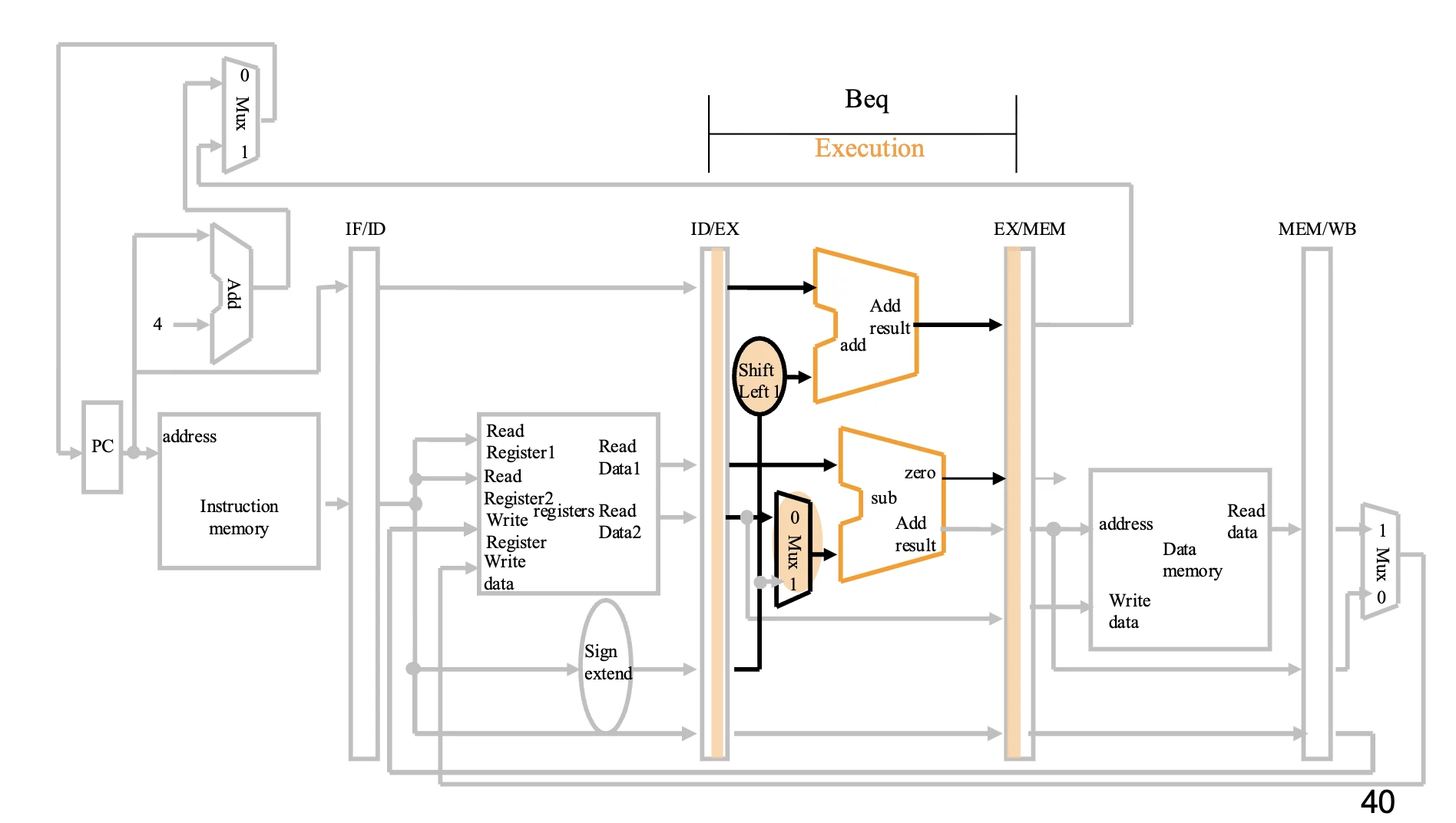
在 Memory access stage 的時候,我們用利用 zero signal 作為上面的 Mux 的 control signal,判斷 PC 要變成 Target 還是維持 PC+4
If (EX/MEM.zero) PC = EX/MEM.PC;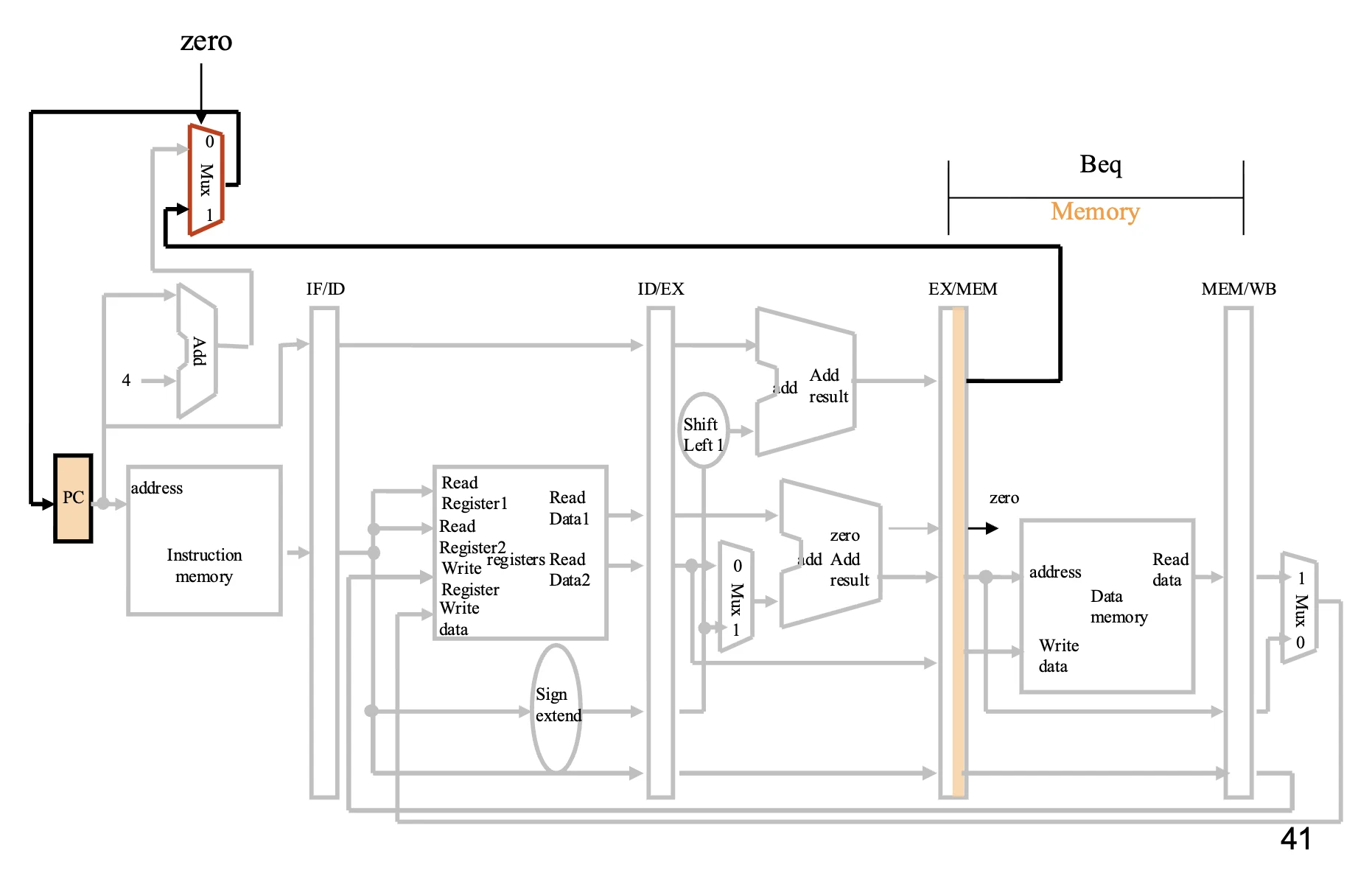
Pipeline Stage Alignment#
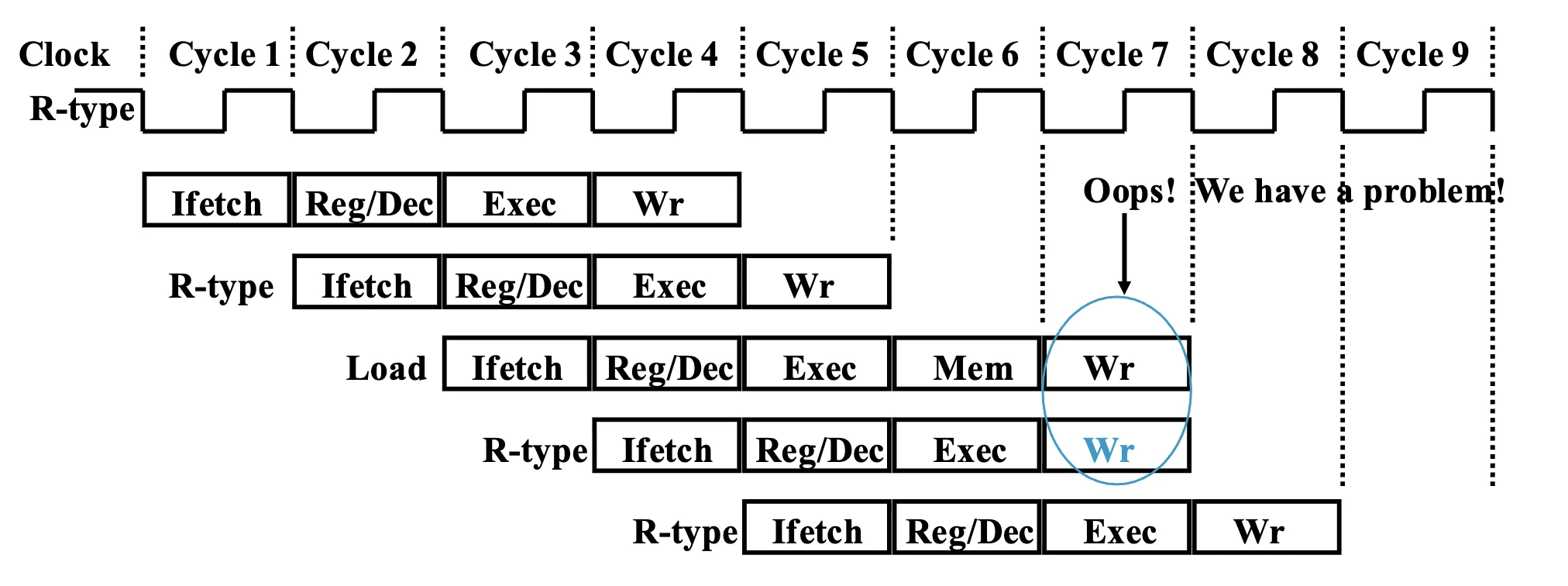
一般來說 Load instruction 有 5 個 stage
- Instruction Fetch
- Instruction Decode
- Execution
- Memory Access
- Write Back
但 R-type instruction 只有 4 個 stage
- Instruction Fetch
- Instruction Decode
- Execution
- Write Back
這個情況如果我們混用 Load, R-type instruction 的話就會發現,在某些階段,Load 承接 R-type 的時候會發生 conflict 或是 structural hazard
Inserting “Bubble”#
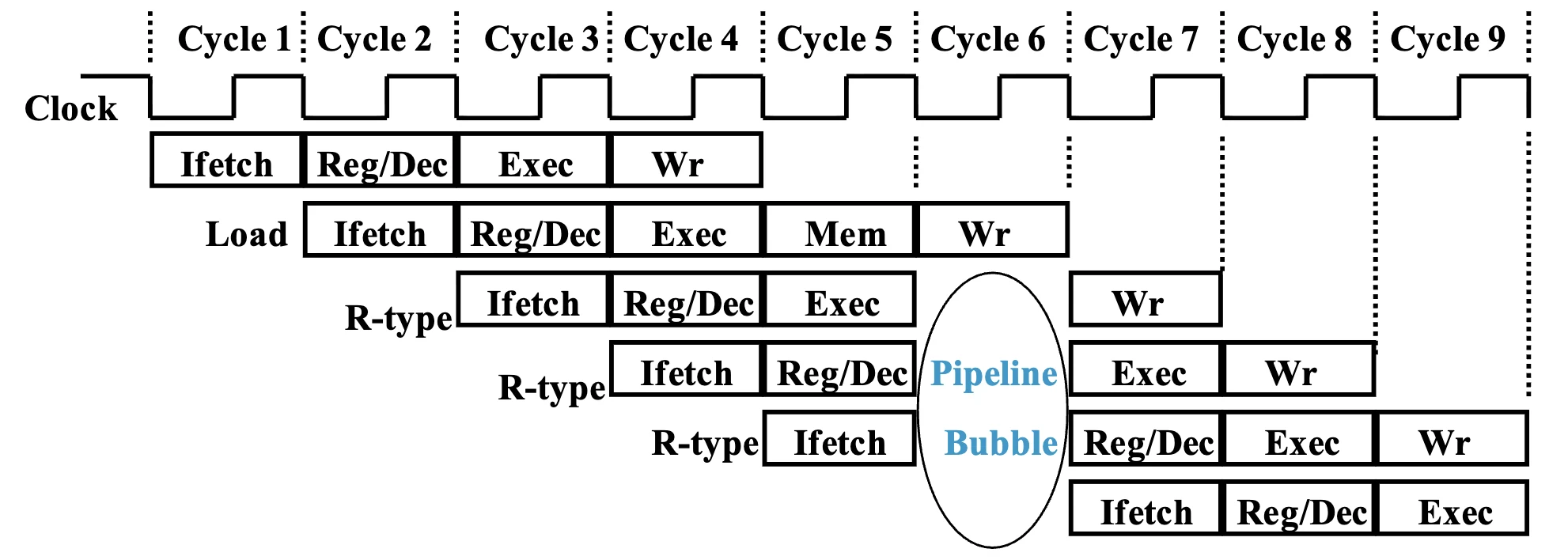
一種方法是在 Structural Hazard 發生的時候插入一個 Bubble 在前面,要往下插入讓所有 instruction 都往後一格,但這樣會讓
- Control Logic 變複雜
- Cycle 6 沒有 instruction 被 fetch,會出問題
Delay R-type’s Write#
第二種常見的方法是我們讓 R-type instruction 全體延後一格,對齊 Load instruction,也就是多塞一個空轉的 MEM stage

這樣我們的整體 Pipeline 就不用做額外設計
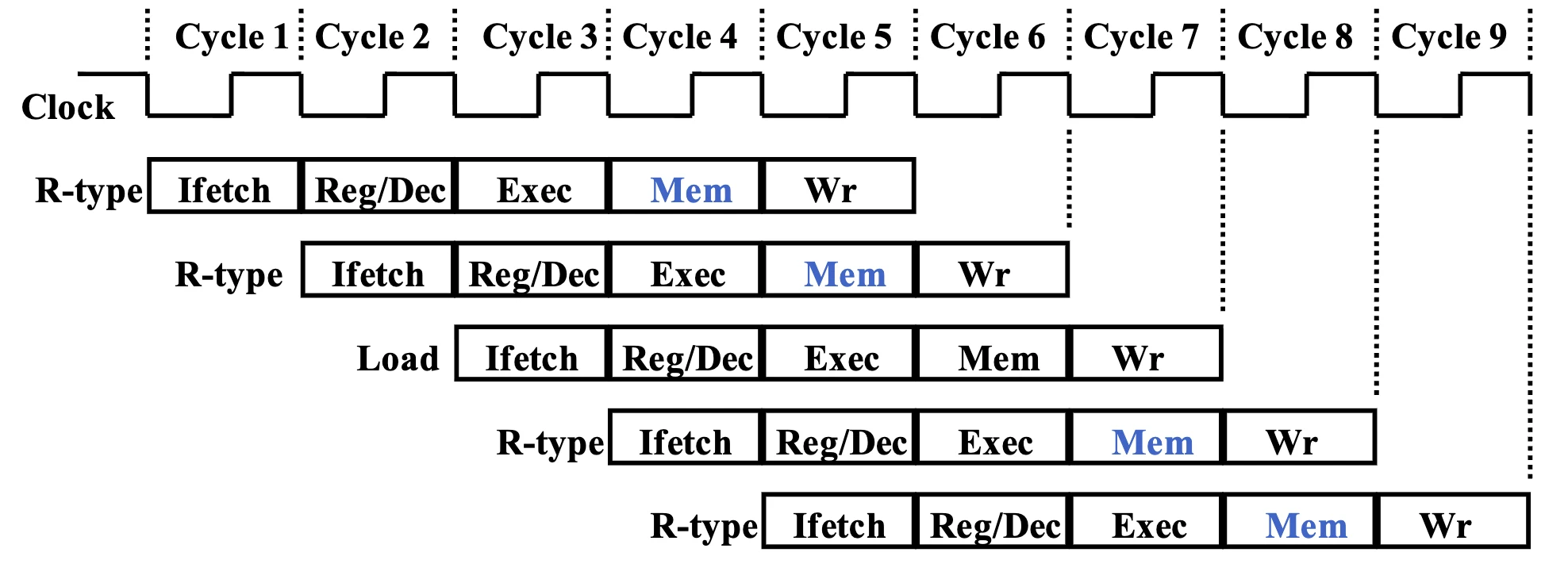
少了 WB stage 的 store instruction 也是一樣道理,多加上一個不做事的 WB stage

Branch 比較特別一點,我們需要在
- MEM stage 決定是否更新 PC,並選擇 Branch Target
- WB 空轉一輪

Pipeline Control#
複習一下 Single Cycle Datapath,這個東西
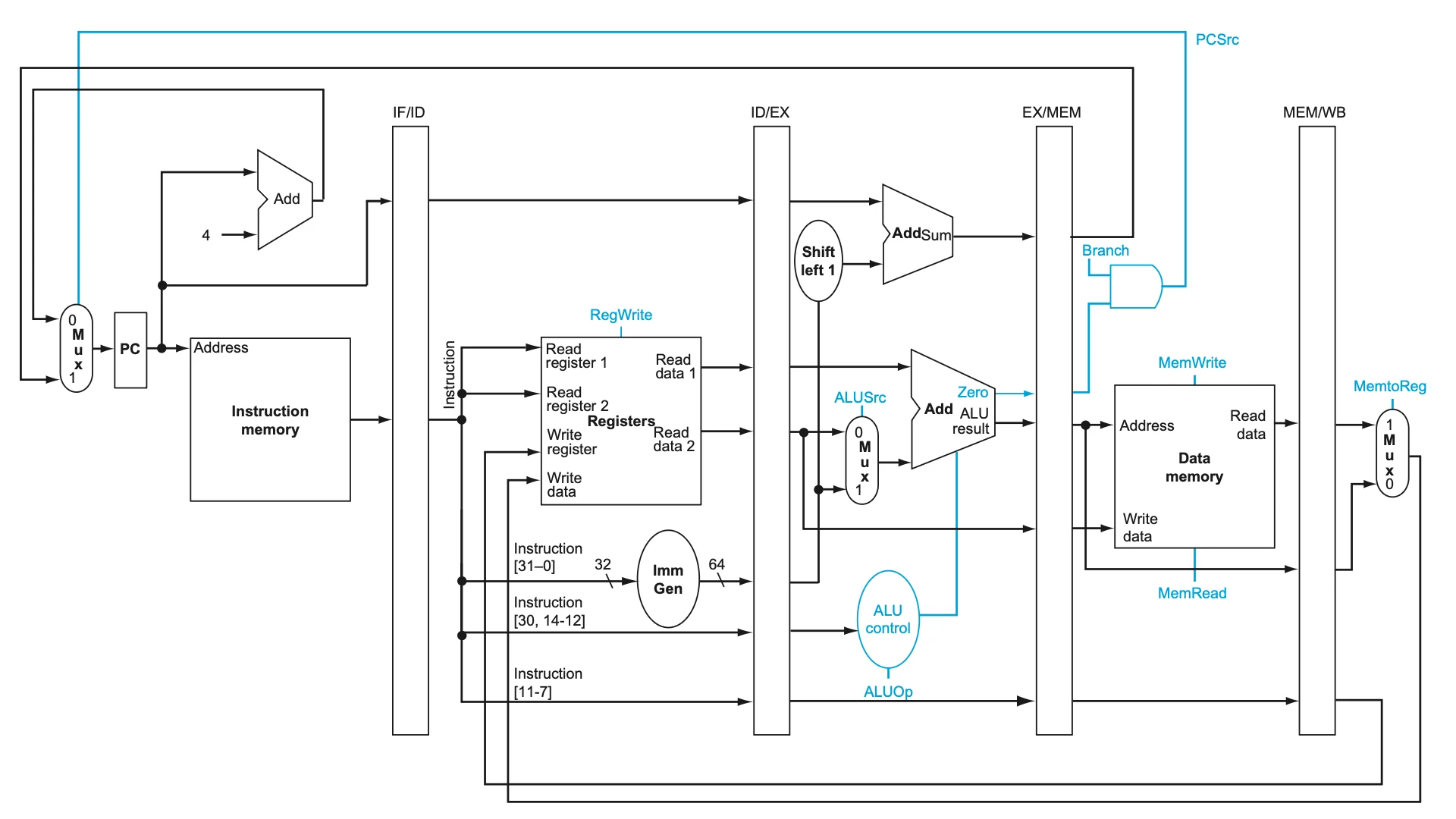
但在 pipeline 的情況下,control signal 應該是要跟著 stage 而非跟著 instruction,但我們原本的設計上,硬是把 Pipeline 套上去的話 Control Signal 會無法跟 data 傳到的時間配合,所以我們可以把他跟 stage 之間的 register 們配合
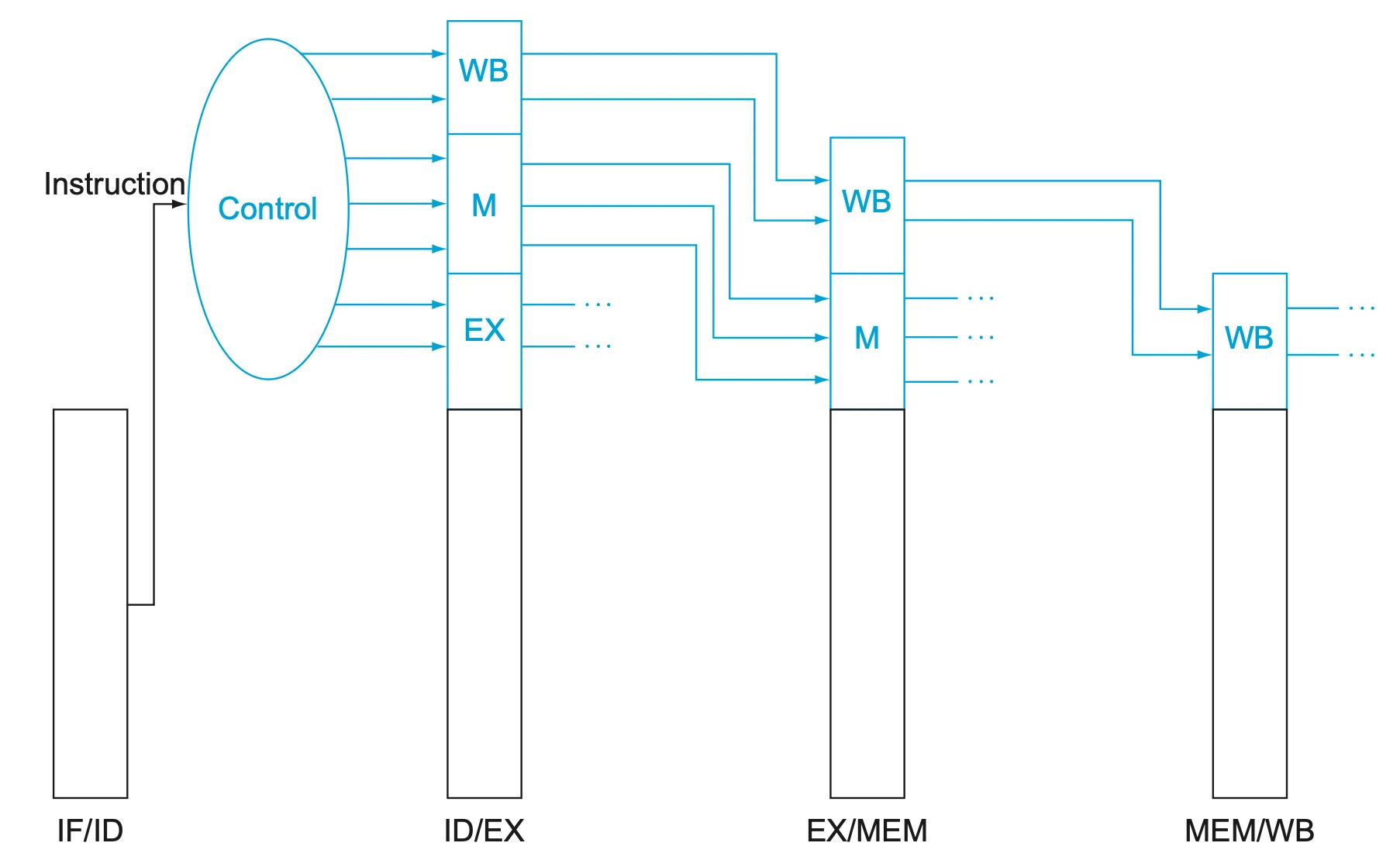
所有 Control Signal 從 Main control 出來之後,根據他該在哪個 stage 使用,不在那個 stage 使用的 signal 繼續傳給下一個 register