Design a Simple Compiler#
這個章節我們會先嘗試把一個語言(AC)翻譯成另一個語言(DC)
AC Language#
Informal definition#
AC (Adding Calculator) language 就是一種簡單的語言,只支援
- Type:
- Integer: 只能十進制
- Float: 只能寫 5 位
- Keywords
- Reserved
f (float),i (int),p (print)
- Reserved
- Variables
- 23 variable name
有一個程式語言的性質叫做 type conversion,分成兩種
- Implicit type conversion 就是 compiler 會自動做轉型,也稱作 type coercion
- Explicit type conversion 是 type casting
AC language 是一種 one direction 的 coercion,只會做 int to float
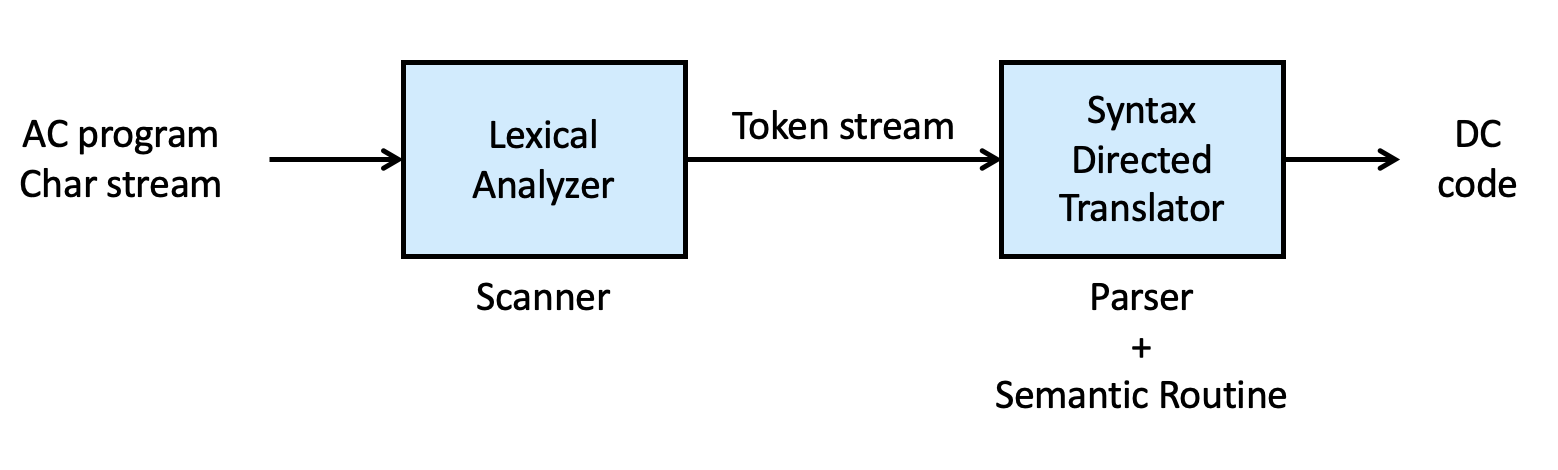
Formal Definition#
一個語言的 formal definition 一定要有 token, syntax, and semantics
- Regular Expression (RE) 定義 token
- Context Free Grammar 定義 syntax
Scanner#
以下是 AC-DC compiler 的 Scanner 定義的 token,用 RE 定義的
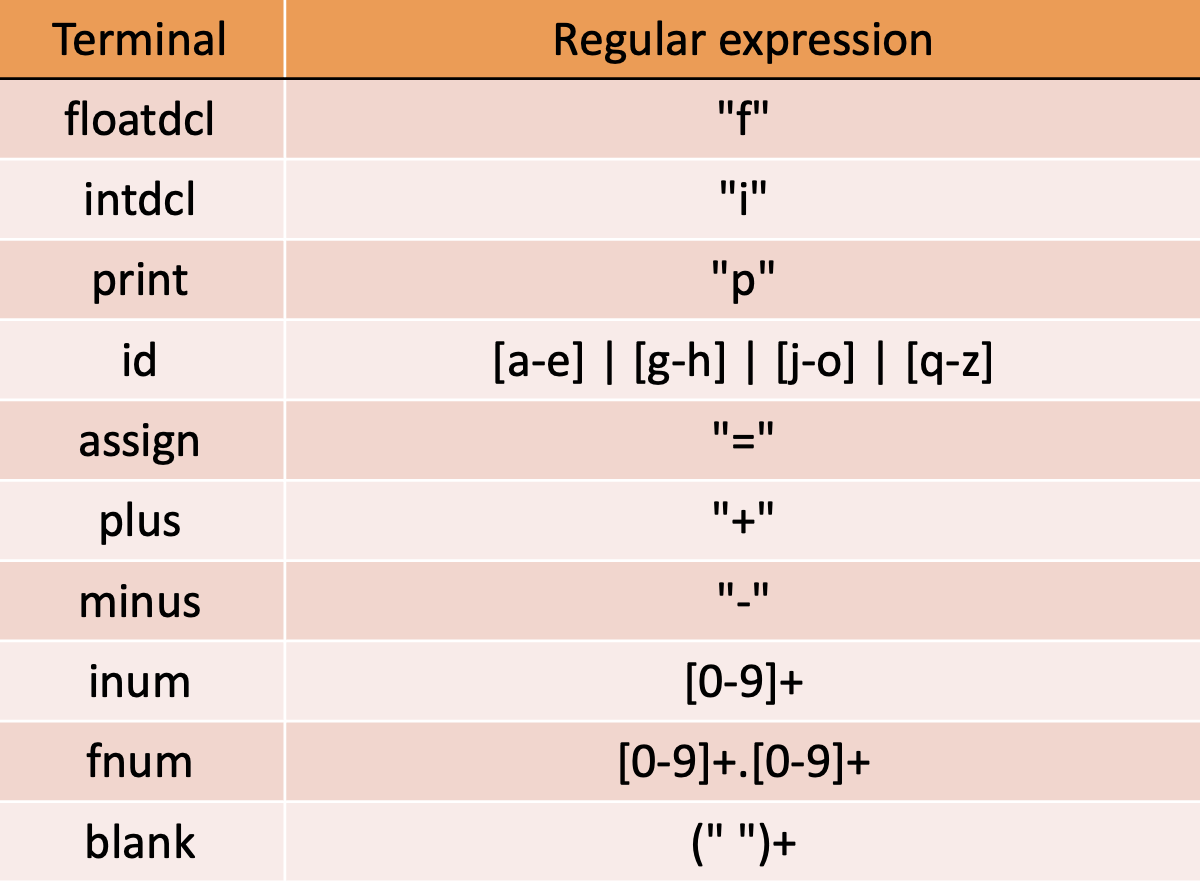
會有這些 token 加上 EOF
空白常常會被 compiler 跳過,有時候不需要被 parse 到
Parser#
CFG 是一種 rewriting rules 也稱作 Backus-Naur Form (BNF) grammar
意思是這個語言一定是 begin 開始 end 結尾
- 可被替換的,也就是有被
<>括號起來的就是 nonterminals 也就是還可以繼續被替換 - 而其他的則是 terminals 無法繼續被替換
CFG 一定要包含
- A set of tokens
- A set of non-terminals
- A set of productions
- A start symbol (one of the non-terminals)
如果一個 program 可以從起始點根據 CFG rules 被替換成 program 本人,那他就是 syntax 正確的 program
假設我們有一段 code
f b i a a = 5 b = a + 3.2 p b 還有以下這些 CFG
Prog  → Dcls Stmts $
Dcls  → Dcl Dcls
      | λ
Dcl   → floatdcl id
      | intdcl id
Stmts → Stmt Stmts
      | λ
Stmt  → id assign Val Expr
      | print id
Expr  → plus Val Expr
      | minus Val Expr
      | λ
Val   → id
      | inum
| fnum最後可以通過這段流程來解析我們的 code
<Prog>
<Dcls> Stmts $
<Dcl> Dcls Stmts $
floatdcl id <Dcls> Stmts $
floatdcl id <Dcl> Dcls Stmts $
floatdcl id intdcl id <Dcls> Stmts $
floatdcl id intdcl id <Stmts> $
floatdcl id intdcl id <Stmt> Stmts $
floatdcl id intdcl id id assign <Val> Expr Stmts $
floatdcl id intdcl id id assign inum <Expr> Stmts $
floatdcl id intdcl id id assign inum <Stmts> $
floatdcl id intdcl id id assign inum <Stmt> Stmts $
floatdcl id intdcl id id assign inum id assign <Val> Expr Stmts $
floatdcl id intdcl id id assign inum id assign id <Expr> Stmts $
floatdcl id intdcl id id assign inum id assign id plus <Val> Expr Stmts $
floatdcl id intdcl id id assign inum id assign id plus fnum <Expr> Stmts $
floatdcl id intdcl id id assign inum id assign id plus fnum <Stmts> $
floatdcl id intdcl id id assign inum id assign id plus fnum <Stmt> Stmts $
floatdcl id intdcl id id assign inum id assign id plus fnum print id <Stmts> $
floatdcl id intdcl id id assign inum id assign id plus fnum print id $
f b i a a = 5 b = a + 3.2 p b如果我們可以用這些 CFG 從起始狀態推出這段 code,那這段 code 就通過了 Syntax check
Parse tree#
建構 Parse tree 的方法如下
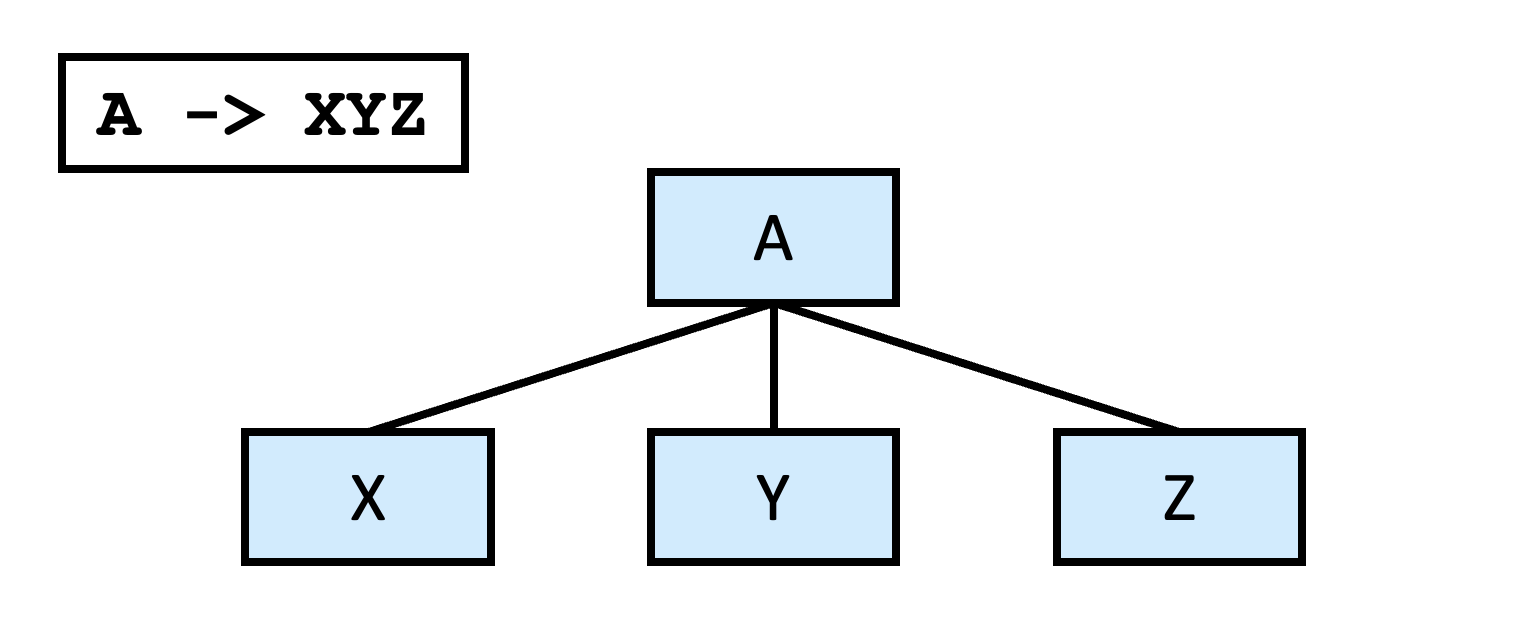
如果同一段在某個語言中的 code 可以被畫成很多種 parse tree 的話,我們就稱這門語言有 ambiguous
Association and Precedence#
原則都是:希望先做的放在 tree 的下面,後做的往上面放
Association#
我們可以把 Association (結合律) 分成兩種
- Left associative operators:
+,-,*,\這些 operator - Right associative operators:
<assign>,exp
Left association 會讓左邊的 operator 先做,而 right 則相反
假設我們有幾個 operator,我們可以定義出
<expr> → <primary> { <add_op> <primary>}
<expr> → {<primary> <assign_op> } <primary>這樣就可以標記出他是左結合律還是右結合律
但現代 compiler 做這件事的方法其實是用一種 recursion 的方法
<expr> → <expr> OP <primary>
<expr> → <primary> OP <expr>第一行會變成 left associative, 第二行則是 right associative
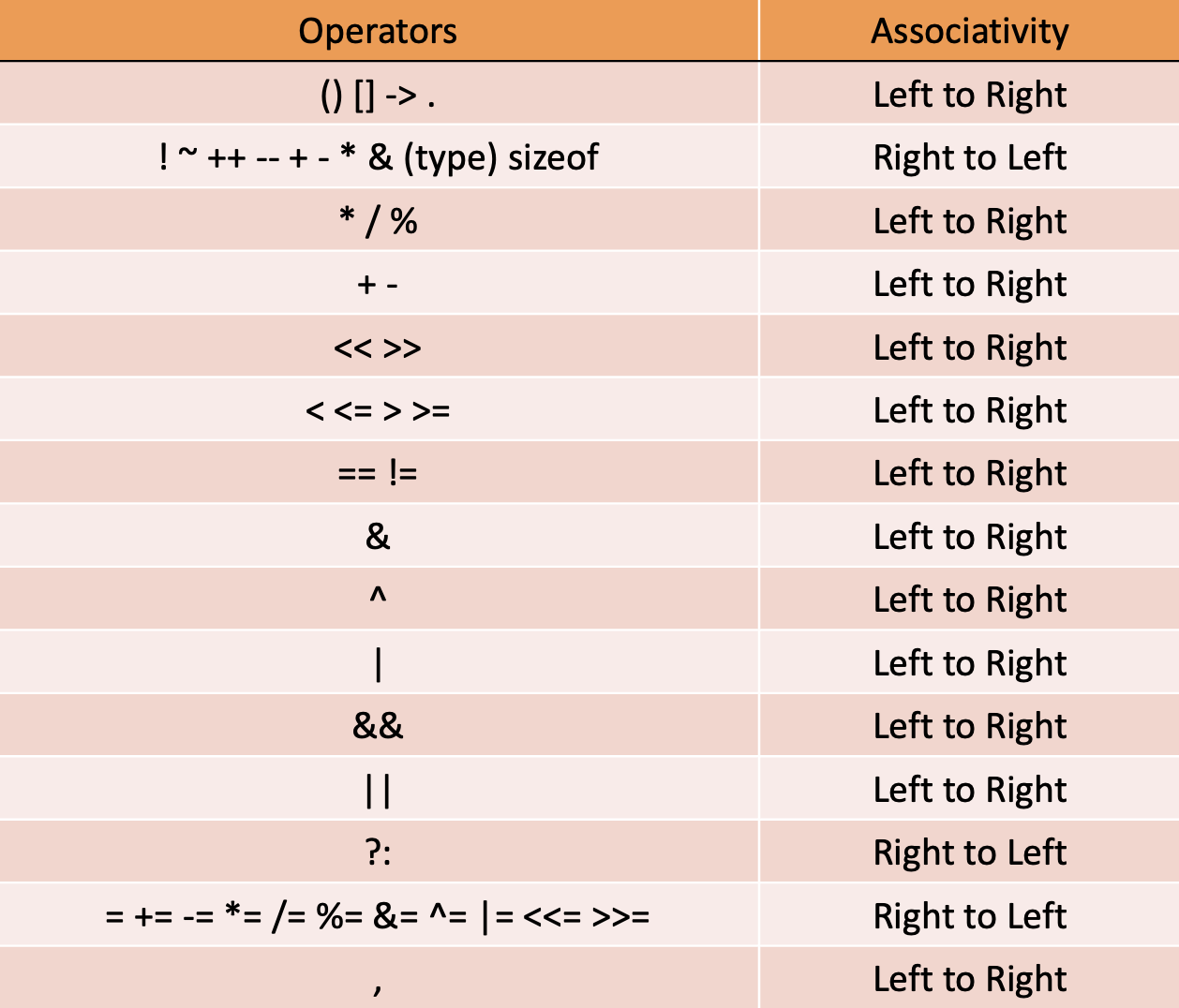
Precedence#
也就是優先權的概念,先加減後乘除,或是從左做到右還是從右做到左
Parsing#
分為兩種方法
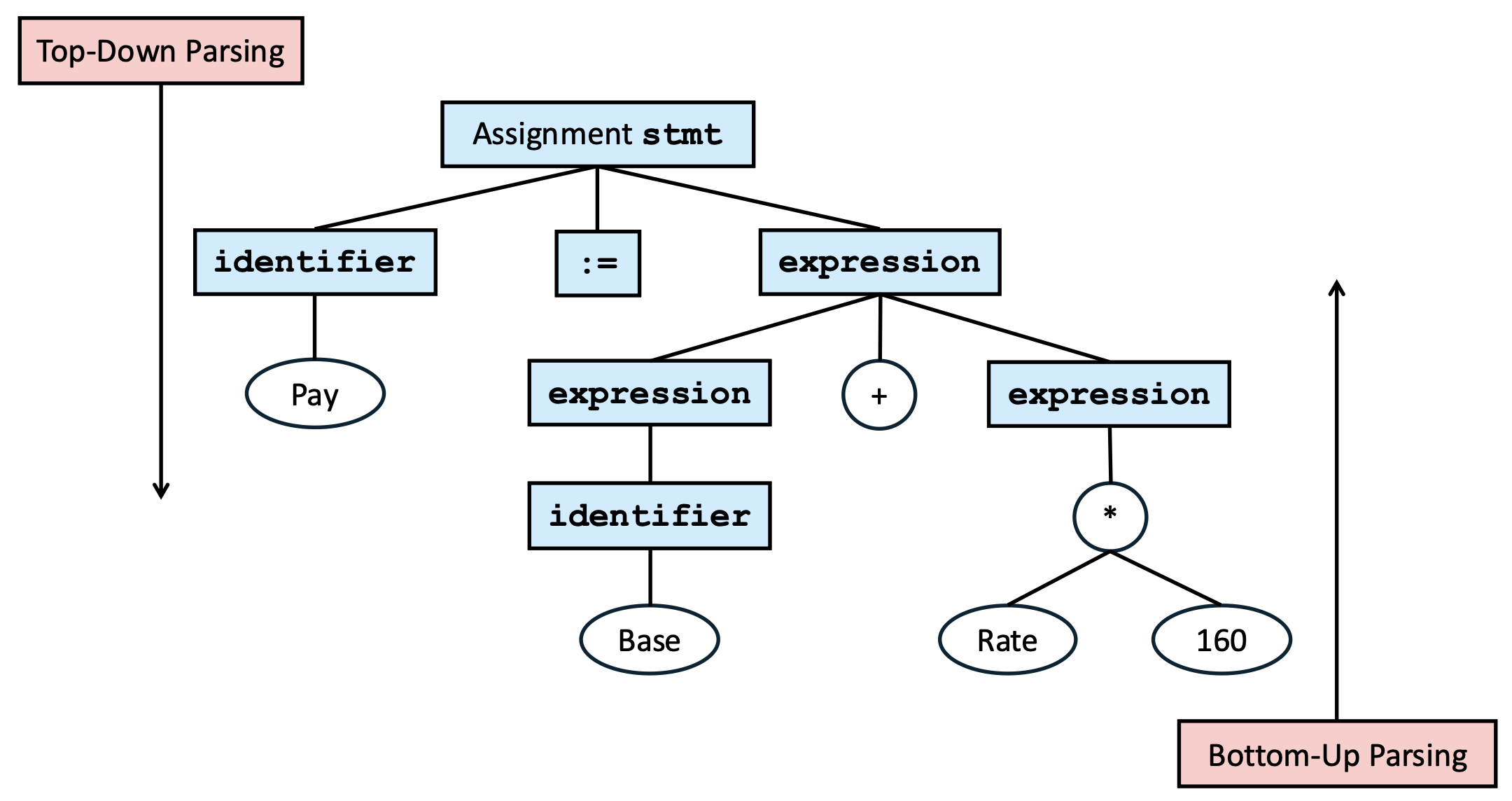
- Top-down Parsing:從 start symbol 開始,根據 grammar rules 不斷展開 non-terminal,嘗試產生出輸入的 token sequence
- Parsing tree 是從 root 往 leaves 建立
- e.g. Recursive Descent Parsing、LL Parsing
- Bottom-up Parsing:從輸入的 token sequence 開始,從左到右,找出符合 grammar rule RHS 的部分並進行 reduction,逐步將它們合併成 non-terminal,最後得到原始的 start symbol
- Parsing tree 是從 leaves 往 root 建立
- e.g. Shift-Reduce Parsing、LR Parsing
假設我們有一個 string abcxy,並且有 rule
S → AB
A → abc | w
B → de | xy假設我們執行 top-down parsing,我們會先把整段 code 塞進去一個 register 裡面,然後我們執行以下步驟
- 把
S替換成AB A有兩種可替換,parser 去偷看我們的 code 最左邊的開頭是a,替換為abc,buffer 剩下xyB有兩種可替換,parser 去偷看我們的 code 最左邊的開頭是x,替換為xy
真實情況會有 stack 進行操作
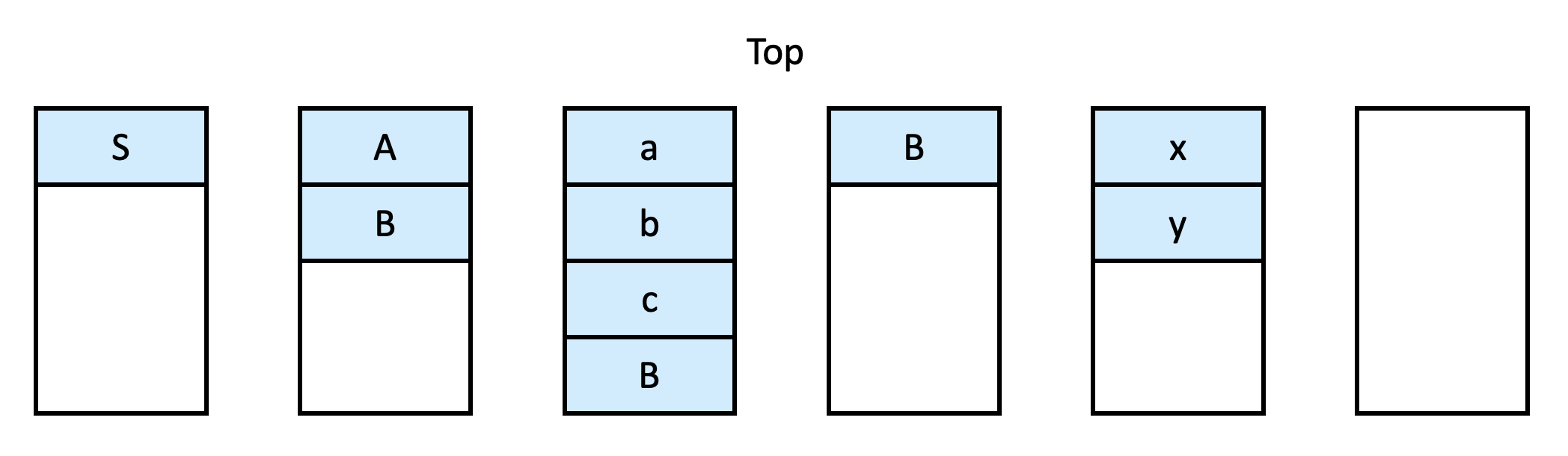
而 bottom-up 則是
abcxy開頭為a,有一條 rule 把A → abc會拿到相似的東西,推回去abc,buffer 剩下xyxy開頭為x,有一條 rule 把B → xy推回去AB → S結束
Bottom-up parsing 對 grammar 的限制比較少,可以處理比一般 top-down parsing 更大的 grammar class,因此通常比較不需要為了 parser 而修改 production rules
最終我們會把 Parse tree 變成 Syntax tree(刪除中間產物的版本),Parse tree 的 internal node 都會是 non-terminal,而 Syntax tree 則會是 operators
Recursive Descent Parsing#
是一種 implement top-down parsing 的方法,每個 non-terminal 都有他的 parsing procedure
假設我們有一個 rule
<system_goal> → <program> SCANEOF他的 procedure 是
void system_goal (void)  {
    program();
    match (SCANEOF);
}遇到 terminal 去 match(),遇到 non-terminal 則繼續 call procedure
而當遇到多種可能的時候
Stmt → ID = Val Expr
| Print ID我們的 procedure 會是
Stmt() {
	token t = next_token();
	if (t == ID) {
        match(ID);
        match(ASSIGN);
        Val();
        Expr();
    } else if (t == Print) {
        match(Print);
        match(ID);
    }
}會進行一個 look ahead 的動作
Ch.4 會再詳細介紹更精確的 abstract definition
假設我們有一個 rule 長這樣
A → BcD
| EF那我們的 procedure 可以設計成
function A {
    if (lookahead == First(BcD)) {
        call B; match(c); call D;
    } else if (lookahead == First(EF)) {
        call E; call F;
    }
}First() 就是去維護一個 set of starting terminal token,所有可能由此產生的 starting terminal,為什麼需要 First(BcD) 而不是 First(B) 是因為 B → λ 空字串
Predictive Parsing#
Top-down parsing 又稱為 predictive parsing,因為我們會需要預測他後面會出現什麼(lookahead),如果我們只需要透過 lookahead one token 就可以得出要走哪條路那我們就稱這個 CFG 為 ,以此類推要先偷看 個才能走出分岔就是
Left Recursion Removal#
當這樣的形式出現時
假是我們有一個 rule 長這樣
A → Aα | β那 function A 就會無限 call 自己永遠不會停,因為永遠也跑不到 match 這個部分,所以我們可以改寫成
A → bR
R → αR | λTop-down parser 通常會利用 lookahead tokens 決定要選擇哪一條 production,因此 grammar 必須讓 parser 能夠根據有限的 lookahead 做出決定。除此之外,left recursion 會讓 top-down parser 在沒有 consume input 的情況下無限遞迴,因此通常必須先消除 left recursion,而對 bottom-up 來說,left recursion 是一個自然的語法
Building AST#
以下兩個是基礎規則
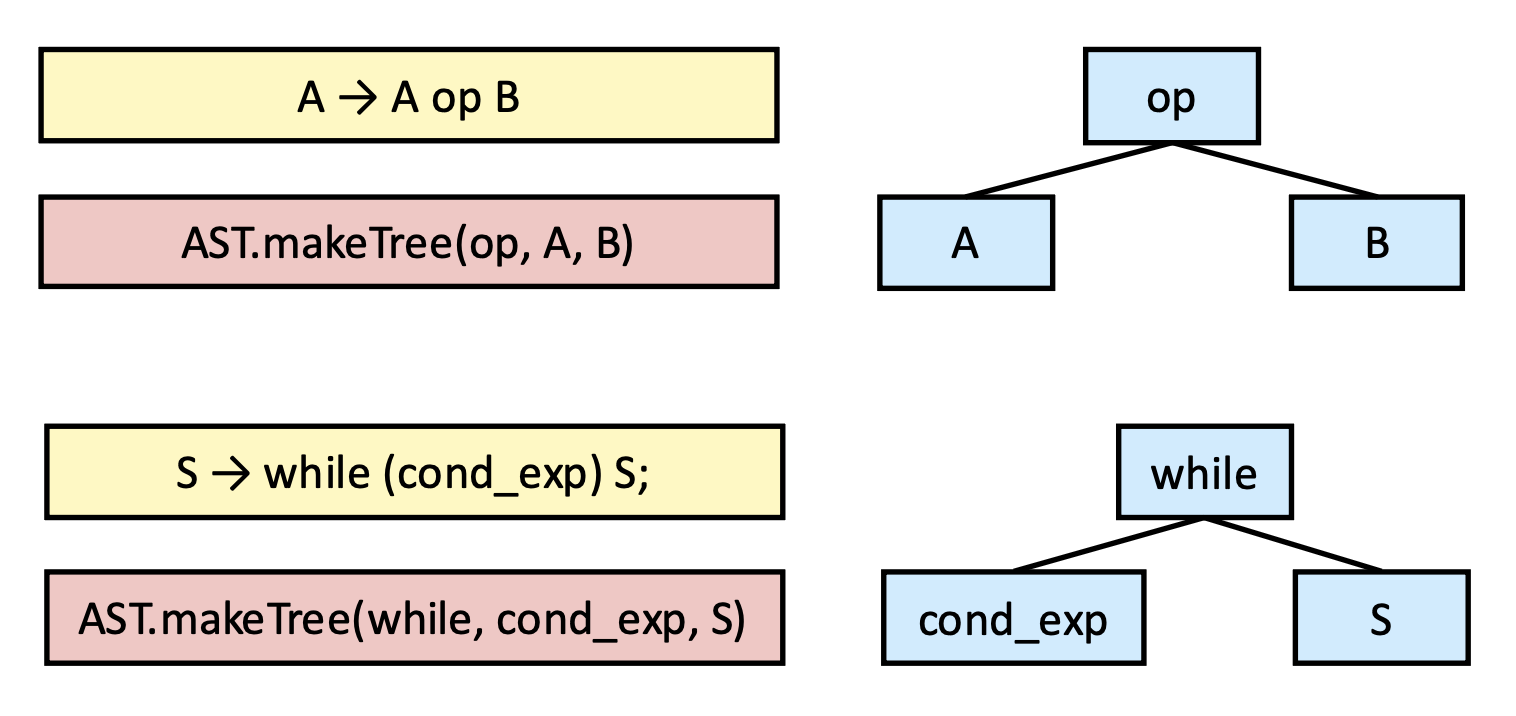
AC CFG 為了減少 left recursion,會讓 AST tree 的 construction 變得跟原本的不太一樣,比如說原本的 CFG 是
<expr> → <expr> + <term>這樣的 construction 應該是
makeTree("+", expr(), term());但做了 left removal 就變成
<stmt> → id assign <val> <expr'>
<expr'> → + <val> <expr'>
        | - <val> <expr'>
| λ此時 grammar 本身變成 right-recursive,因此如果直接照 parse tree 建 AST,會得到錯誤的 associativity,所以在 parsing <expr'> 時,需要保存前面已經建立好的 subtree:
previous-subtree = makeTree(op, previous-subtree, val());Semantic Analysis#
在 Semantic Analysis 我們主要是要做兩個工作
- Symbol table
- Type Checking
Symbol table#
簡單來說 symbol table 是 compiler 在記錄所有 identifier 的一張表
主要有幾個功能
- 記錄所有 identifier 的詳細資訊:type, name, scope, offset
- 可以檢查有沒有任何 duplicate
- 當要使用變數的時候可以從 symbol table 裡面抽出來檢查,檢查 scope 等
以下是 AC 裡面的 symbol table construction 最需要的幾個功能,ENTERSYMBOL(), LOOKUPSYMBOL()
/* Visitor methods */
procedure VISIT(SymDeclaring n)
    if n.GETTYPE() = floatdcl
    then call ENTERSYMBOL(n.GETID(), float)
    else call ENTERSYMBOL(n.GETID(), integer)
end

/* Symbol table management */
procedure ENTERSYMBOL(name, type)
    if SymbolTable[name] = null
    then SymbolTable[name] ← type
    else call ERROR("duplicate declaration")
end

function LOOKUPSYMBOL(name) returns type
    return (SymbolTable[name])
endAC symbol table 內部紀錄大概會這以下這樣
Symbol  Type      Symbol  Type      Symbol  Type
a       integer   k       null      t       null
b       float     l       null      u       null
c       null      m       null      v       null
d       null      n       null      w       null
e       null      o       null      x       null
g       null      q       null      y       null
h       null      r       null      z       null
j null s nullType checking#
有了 Symbol table 後我們就可以對 AST 進行 type checking,type checking 主要有幾個目的
- 決定每個 AST node 的 type
- 檢查運算元的 type 是否 compatible
- 檢查 assignment 是否允許
- 如果可以進行 implicit conversion,就在 AST 中插入 conversion node
AC 目前主要只有兩種 type int float,並且只允許 widening conversion,也就是 int to float 這一個方向
以下是 type checking 的 code
/* Visitor methods */
procedure VISIT(Computing n)
    n.type ← CONSISTENT(n.child1, n.child2)
end

procedure VISIT(Assigning n)
    n.type ← CONVERT(n.child2, n.child1.type)
end

procedure VISIT(SymReferencing n)
    n.type ← LOOKUPSYMBOL(n.id)
end

procedure VISIT(IntConsting n)
    n.type ← integer
end

procedure VISIT(FloatConsting n)
    n.type ← float
end


/* Type-checking utilities */
function CONSISTENT(c1, c2) returns type
    m ← GENERALIZE(c1.type, c2.type)
    call CONVERT(c1, m)
    call CONVERT(c2, m)
    return (m)
end

function GENERALIZE(t1, t2) returns type
    if t1 = float or t2 = float
    then ans ← float
    else ans ← integer
    return (ans)
end

procedure CONVERT(n, t)
    if n.type = float and t = integer
    then call ERROR("Illegal type conversion")
    else
        if n.type = integer and t = float
        then
            /* replace node n by convert-to-float of node n */
        else
            /* nothing needed */
end以剛剛的例子來說
f b i a a = 5 b = a + 3.2 p b 會先被 parse 成下面這個 AST
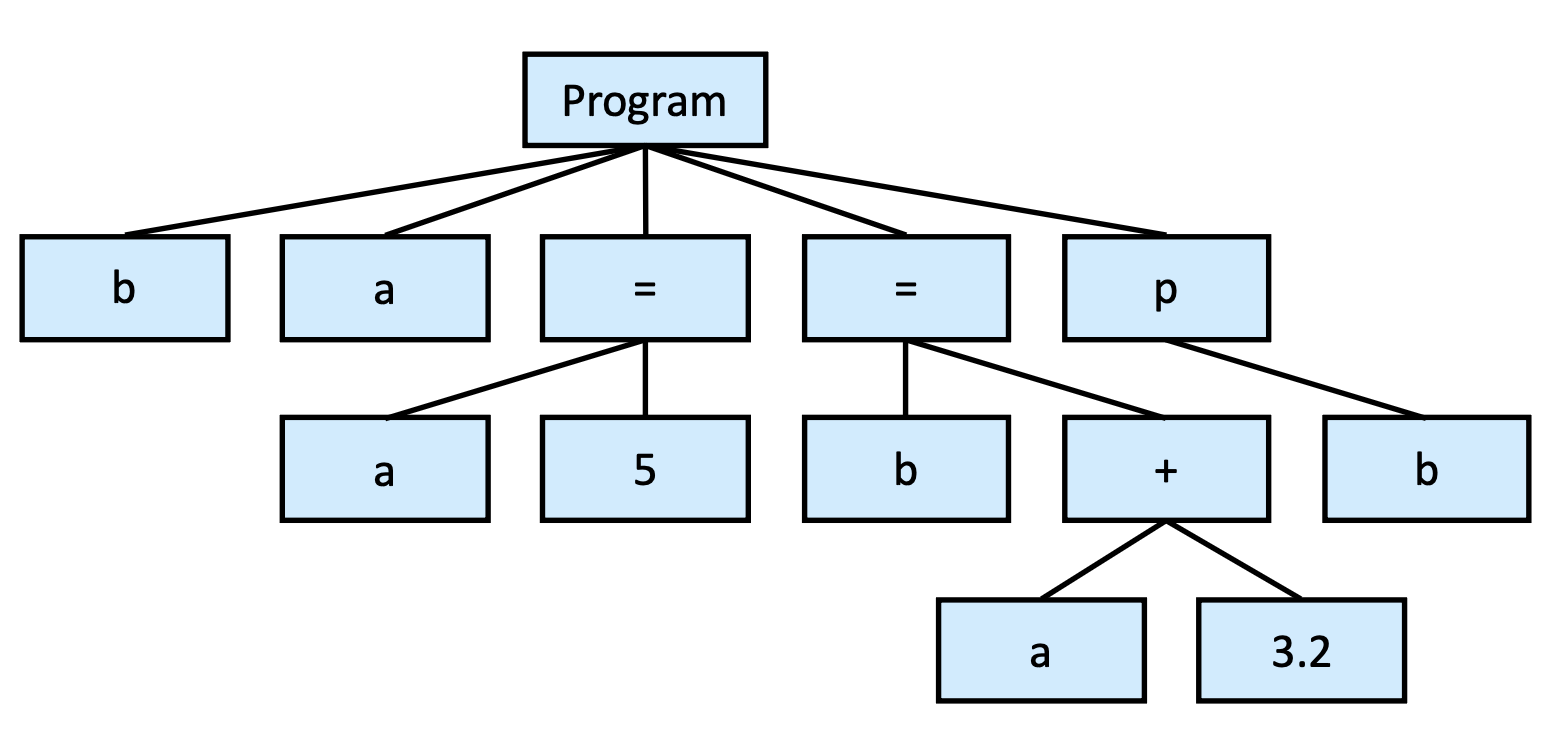
而做完 type checking 則會變成
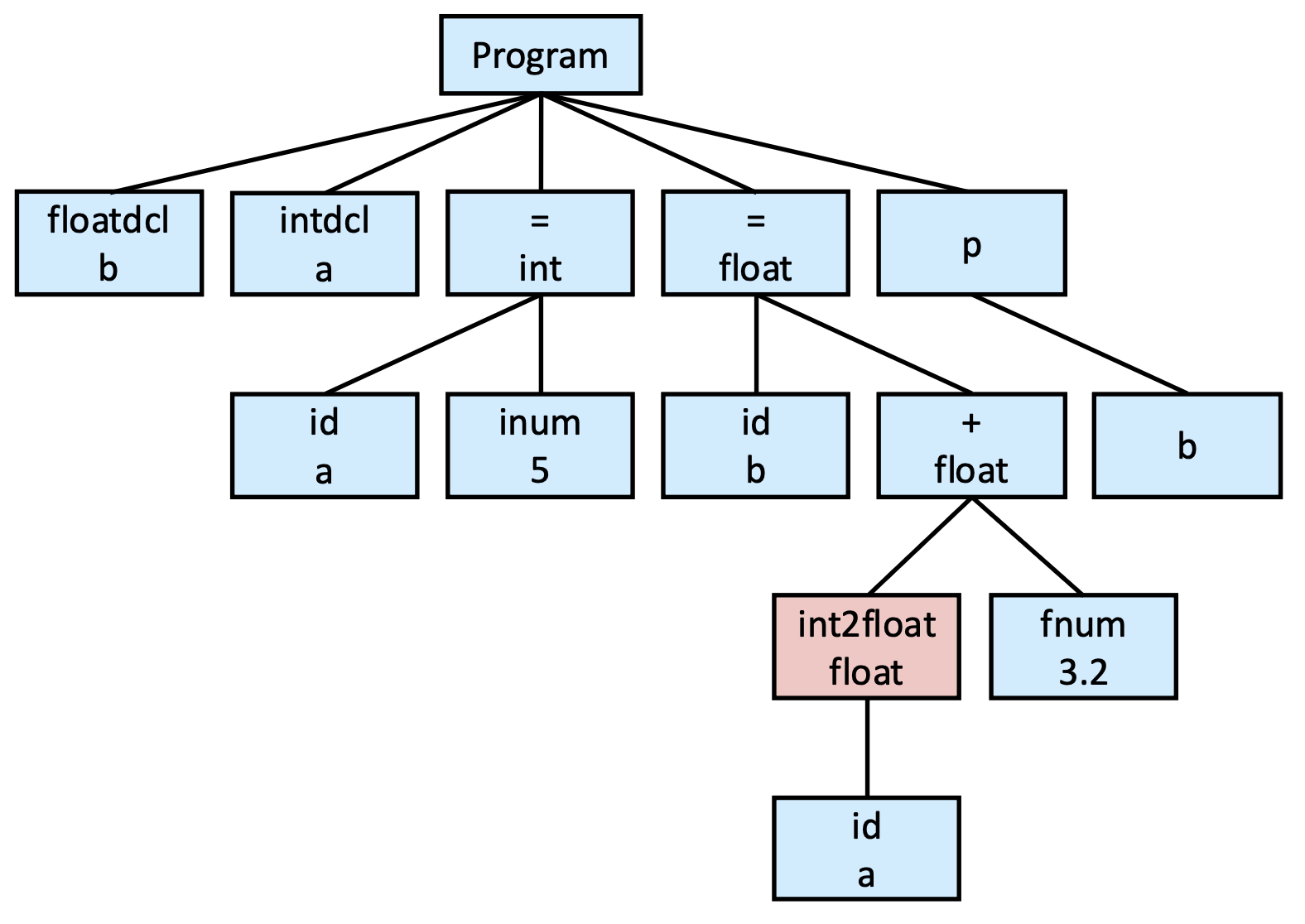
經過這個過程我們就做完 semantic analysis,可以進行 code generation 了
Code Generation#
Code Generation 的工作是把前面處理好的 AST 轉換成 target code,在真正的 compiler 中,這個階段通常還需要考慮:
- instruction selection
- register allocation
- intermediate value allocation
- memory access
但 AC compiler 的 target 是 DC,一個 stack-based language,因此可以直接利用 stack 儲存 expression 的中間結果,不需要處理真正 CPU 的 register allocation
可以利用下面這段 code 進行 code generation
procedure VISIT(Assigning n)
    call CODEGEN(n.child2)
    call EMIT("s")
    call EMIT(n.child1.id)
    call EMIT("0 k")
end

procedure VISIT(Computing n)
    call CODEGEN(n.child1)
    call CODEGEN(n.child2)
    call EMIT(n.operation)
end

procedure VISIT(SymReferencing n)
    call EMIT("l")
    call EMIT(n.id)
end

procedure VISIT(Printing n)
    call EMIT("l")
    call EMIT(n.id)
    call EMIT("p")
    call EMIT("si")
end

procedure VISIT(Converting n)
    call CODEGEN(n.child)
    call EMIT("5 k")
end

procedure VISIT(Consting n)
    call EMIT(n.val)
endBack to the content
NTU Compiler Design
2026 Fall
← Back to the content