CPU Scheduling#
CPU 希望可以 maximize usage 或是 minimize time,需要做 Scheduling
Basic Concepts#
CPU-I/O Burst Cycle#
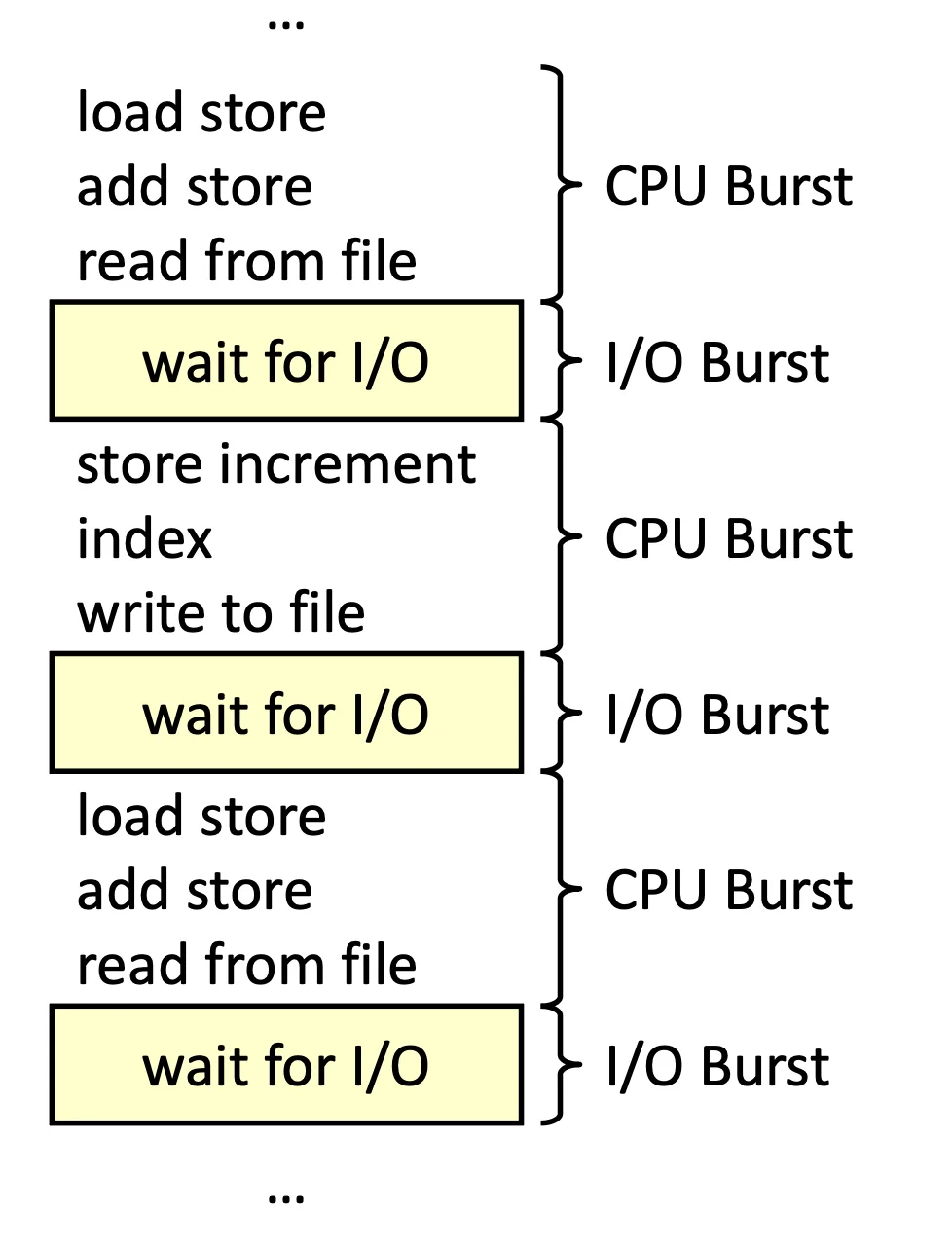
從 Process 角度來看,只做兩件事
- CPU Burst 進行運算
- I/O Burst 等待 I/O event
我們稱為 CPU-I/O Burst Cycle,而從 System 的角度來看,必須讓 CPU 在某個 I/O Burst 的時間去做別的事情
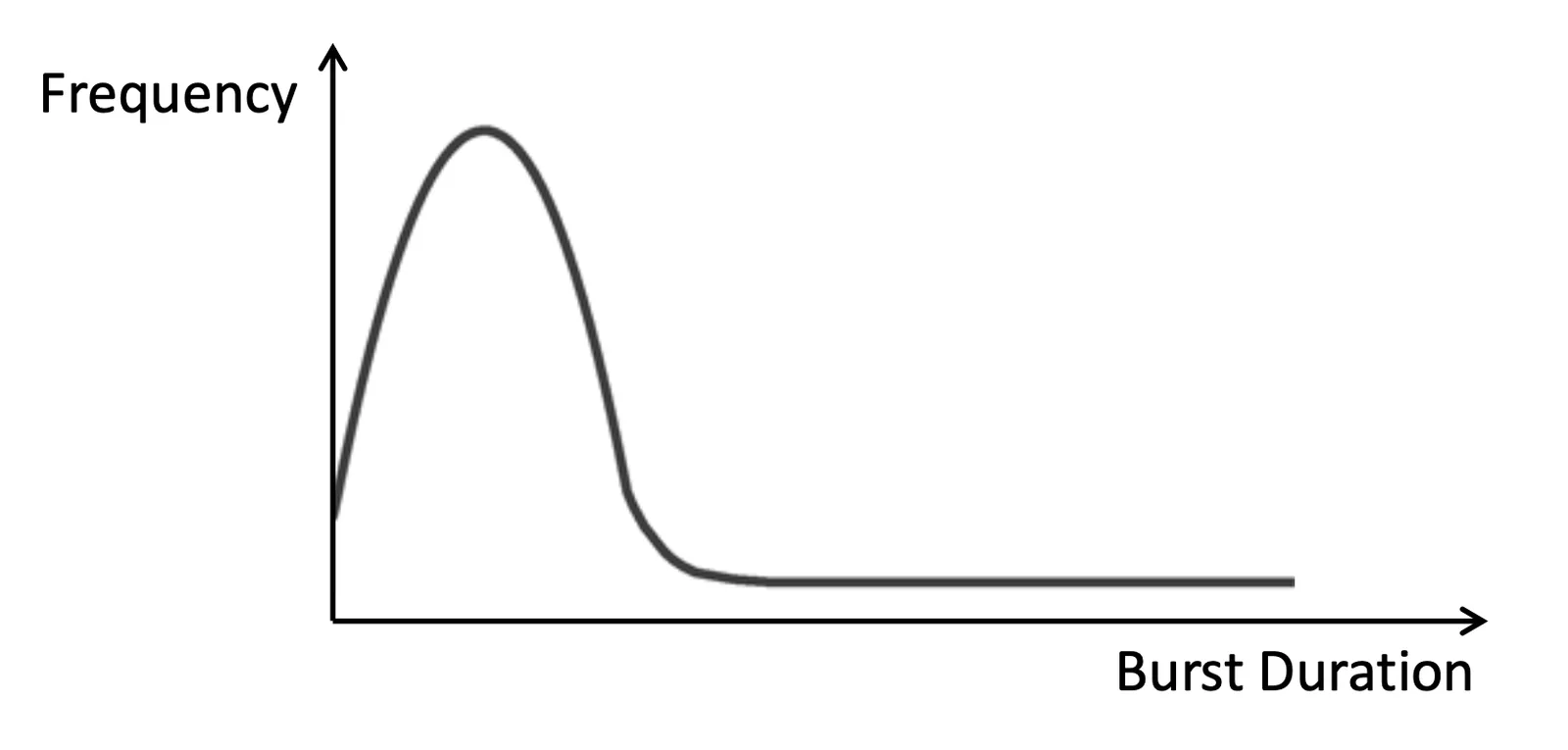
我們通常會發現 CPU Burst time 都是非常短的,Distribution 偏小(跟網路封包一樣),根據他們的各自的使用時間,可以分成
- I/O Bound Program
- CPU Bound Program
CPU Scheduler#
CPU Scheduler 主要 focus 在 Ready, Waiting, Running 三個 State 之間的轉換,基本上做的事情就是在四種情況下
- Process 從 Running 到 Waiting
- Process 從 Running 到 Ready
- Process 從 Waiting 到 Ready
- Terminates
如果是 1 or 4 Scheduler 必須從 Ready State 裡面找一個 Process 去 Running State
如果是 2 or 3 系統則有兩種選擇,維持現狀,或是重新抓一個 Process 去 Running
Preemptive and Nonpreemptive Scheduling#
Scheduling 分成兩種
-
Nonpreemptive,就是當任何 Process 回到 Ready State 時,我們不切斷原本正在 Running 的 Process
-
Preemptive,有些在 Waiting 的 Process 有可能是非常重要的 Process 只不過是在等 I/O,等到 I/O 一結束回到 Ready 就要馬上回去 Schedule
大部分現代 OS 大部分是 Preemptive Scheduling,但可能會產生 Race condition,因為有可能產生被 Priority high 的 Process context switch 掉的情況
這個問題會在 Synchronization 的章節解決
Dispatcher#
負責把 Process 分配下去給 CPU run,包含 Context Switch, Switch to User mode 等一系列工作
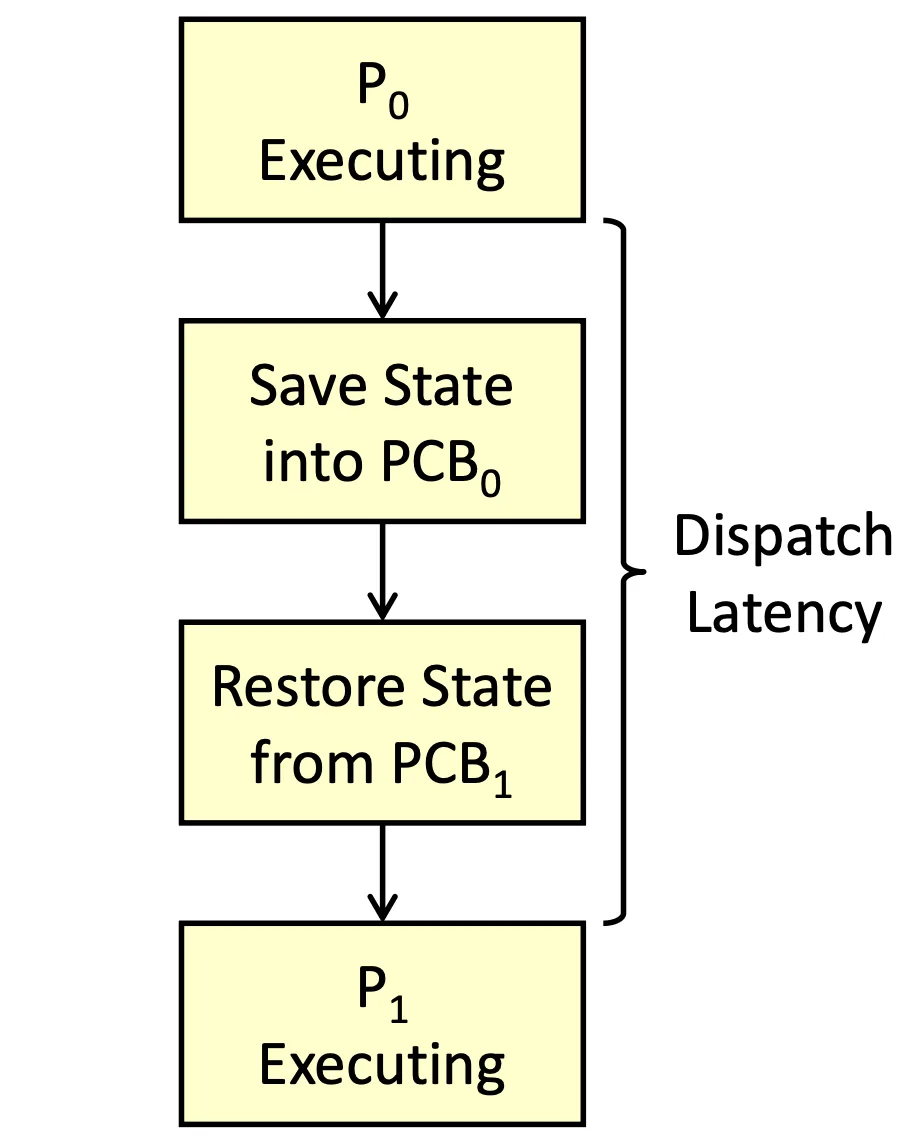
Dispatcher 負責把 CPU 內的資訊存到 PCB 裡面,然後將 CPU 的內容抽換成另一個 PCB 的內容
正在 switch 的過程花的時間我們稱為 Dispatch Latency,是一段 overhead
Scheduling Criteria#
為了要 Optimize 一個 System,我們需要設定一些目標
- Maximize CPU utilization
- Maximize throughput
- Minimize turnaround time:arrival 到執行完畢的時間
- Minimize waiting time:是在 ready queue 裡面等多久
- Minimize response time:從送出 request 到第一次有回應的時間
Scheduling Algorithms#
First-Come, First-Served (FCFS) Scheduling#
| Process | |||
|---|---|---|---|
| Burst Time | 24 | 3 | 3 |
- 假設 arrival order 是 ,我們就可以畫出 Gantt Chart

Waiting time 分別是 , average 是
- 接下來假設 arrival order 是 會拿到

Waiting time 分別是 , average 是
我們可以觀察到 Convoy effect:所有 process 在等最大的那個 process,所有人都在等他
- one CPU-bound and many I/O-bound processes
Shortest-Job-First (SJF) Scheduling#
如果目標是 minimize waiting time 的話,那 SJF 會是最佳解,簡而言之就是把時間短的工作先做掉
- 如果加上 Preemptive 那會改成 shortest-remaining-time-first
難點是在於我們很難得知後面的 CPU Burst 到底多長,通常得用 estimate 的方式
| Process | ||||
|---|---|---|---|---|
| Burst Time | 6 | 8 | 7 | 3 |

Waiting Time
Prediction of Next CPU Burst#
假設
- : 第 個 CPU Burst 的正確數字
- : 下一個 CPU Burst 的預測
e.g.
| X | 6 | 4 | 6 | 4 | 13 | 13 | 13 | |
|---|---|---|---|---|---|---|---|---|
| 10 | 8 | 6 | 6 | 5 | 9 | 11 | 12 |
- : 固定的預測值
- : 只看最近一次
把公式展開
Shortest-Remaining-Time-First Scheduling#
| Process | ||||
|---|---|---|---|---|
| Arrival Time | 0 | 1 | 2 | 3 |
| Burst Time | 8 | 4 | 9 | 5 |
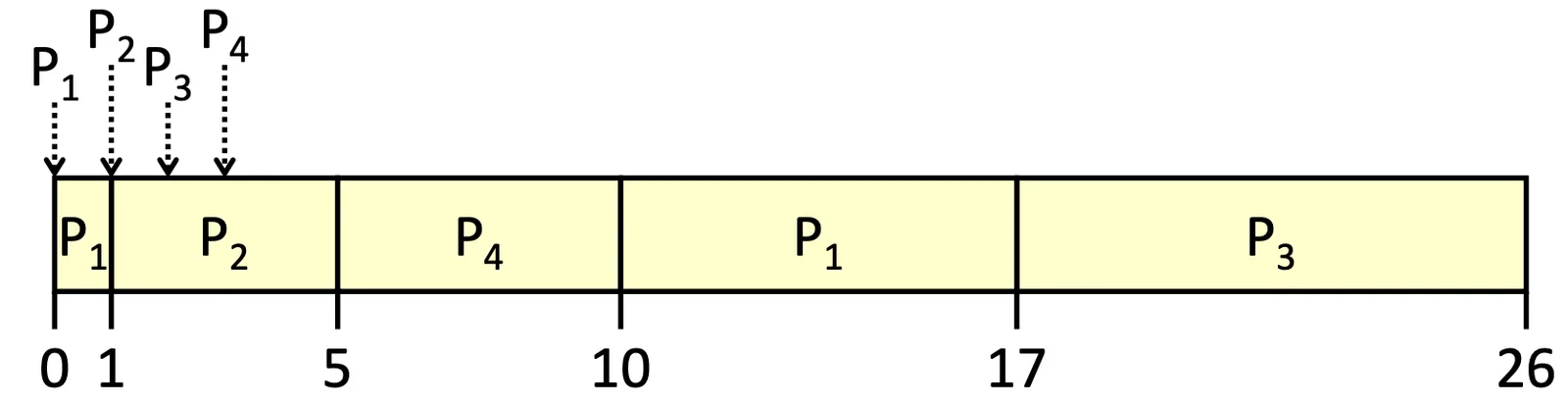
如果 Nonpreemptive OS 在這種情況下(arrival time 不一樣),我們的 SJF 不一定會是 Optimal
Round-Robin (RR) Scheduling#
是一種基於「輪流」的演算法,把所有 CPU time 去劃分成很多 time quantum
- 通常是 10~100 msec.
Timer 會在每個 quantum 結束後去做 interrupt 然後 Reschedule
如果現在有 個 process,那每個 process 都會拿到 的 CPU time,而每次最長拿到 time,所以每個 process 最多不會等超過 time
- 如果 很大就變成 FCFS
- 如果 很小理論上很好,會有很好的 response time,但我們還是得考慮 context switch 的 overhead
| Process | |||
|---|---|---|---|
| Burst Time | 24 | 3 | 3 |
Assume
有些 OS 會強制讓 process 把 quantum 用完,即便他結束了

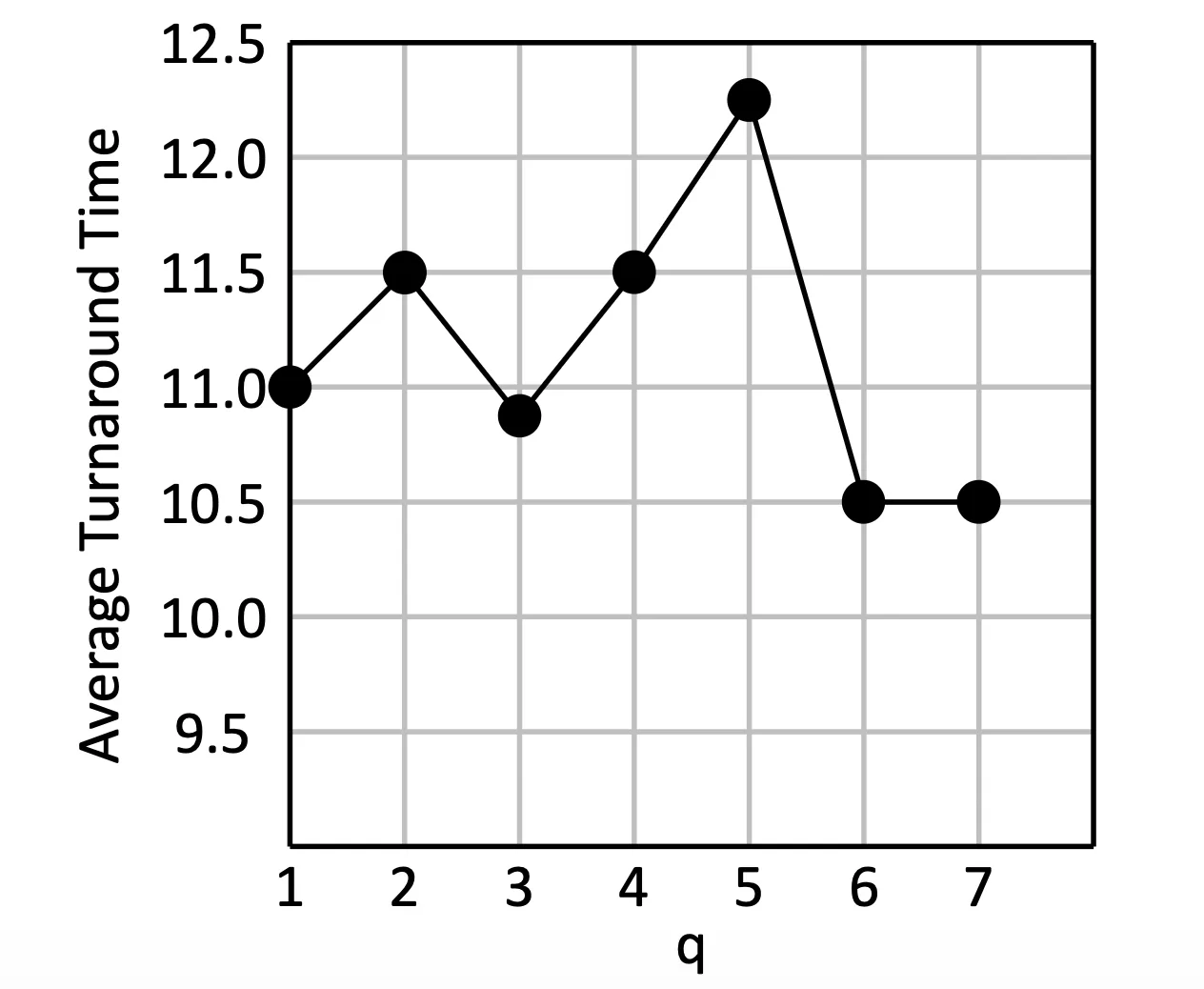
簡單來講,Avg Turnaround time 比 SJF 高,但在 Response time 會比較好
| Process | ||||
|---|---|---|---|---|
| Burst Time | 6 | 3 | 1 | 7 |
80% 的 CPU burst 都會小於 ,所以 Round Robin 就會是一種還不錯的方法,不會讓 Turnaround time 暴增
Priority Scheduling#
SJF 其實也是一種 Priority Scheduling,我們通常講到 Priority 都是
可能會產生 Starvation 的問題,也就是 Priority 低的 Process 完全不可能分配到 CPU time,我們可以用 Aging,也就是根據他存在的時間來提高他的 Priority
| Process | |||||
|---|---|---|---|---|---|
| Burst Time | 10 | 1 | 2 | 1 | 5 |
| Priority | 3 | 1 | 4 | 5 | 2 |
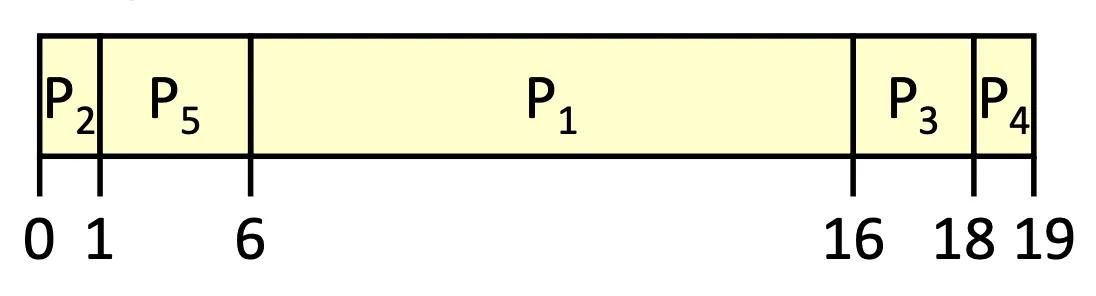
Waiting time:
通常我們如果都做了 Priority,Avg time 的 Criteria 就應該考慮其他項目,比如果 Priority 高的項目的 response time
Priority Scheduling with Round-Robin#
| Process | |||||
|---|---|---|---|---|---|
| Burst Time | 4 | 5 | 8 | 7 | 3 |
| Priority | 3 | 2 | 2 | 1 | 3 |
Time Quantum

基本上就是先以 Priority 做排序,如果一樣就用 Round Robin 做輪換
Multilevel Queue Scheduling#
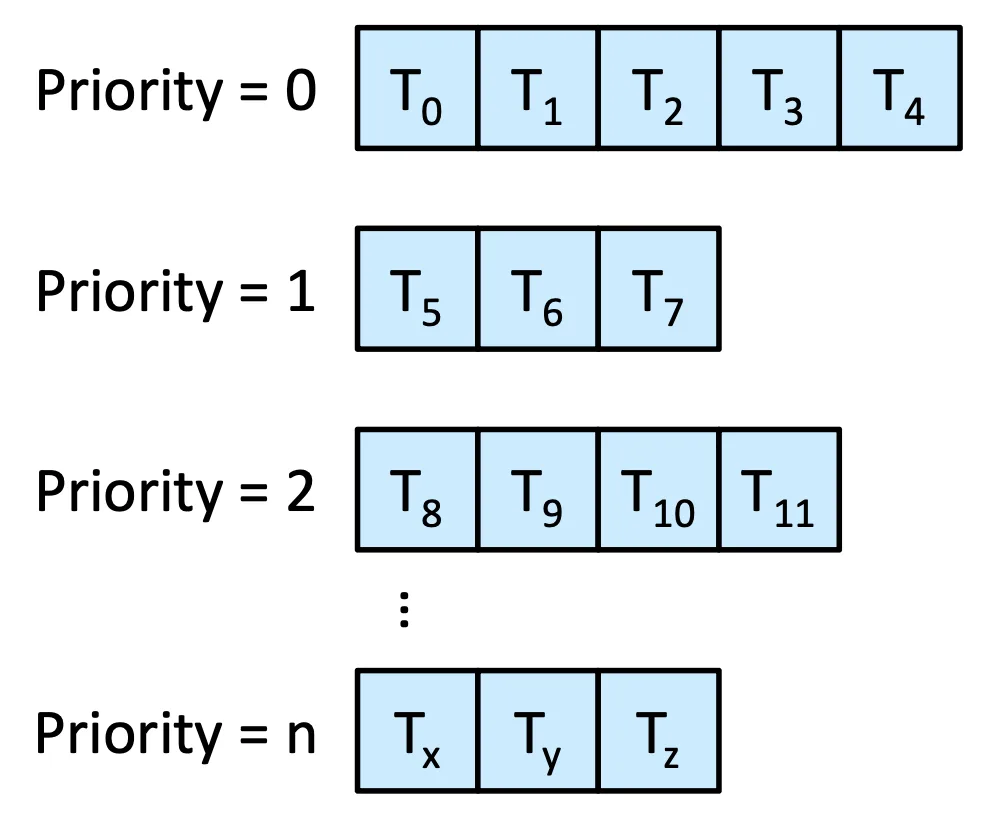
一次直接選一整個 Queue,先執行最高 Priority 的 Queue
以下是一個真實案例,每個 Queue 可以有自己的 Schedule Algorithm
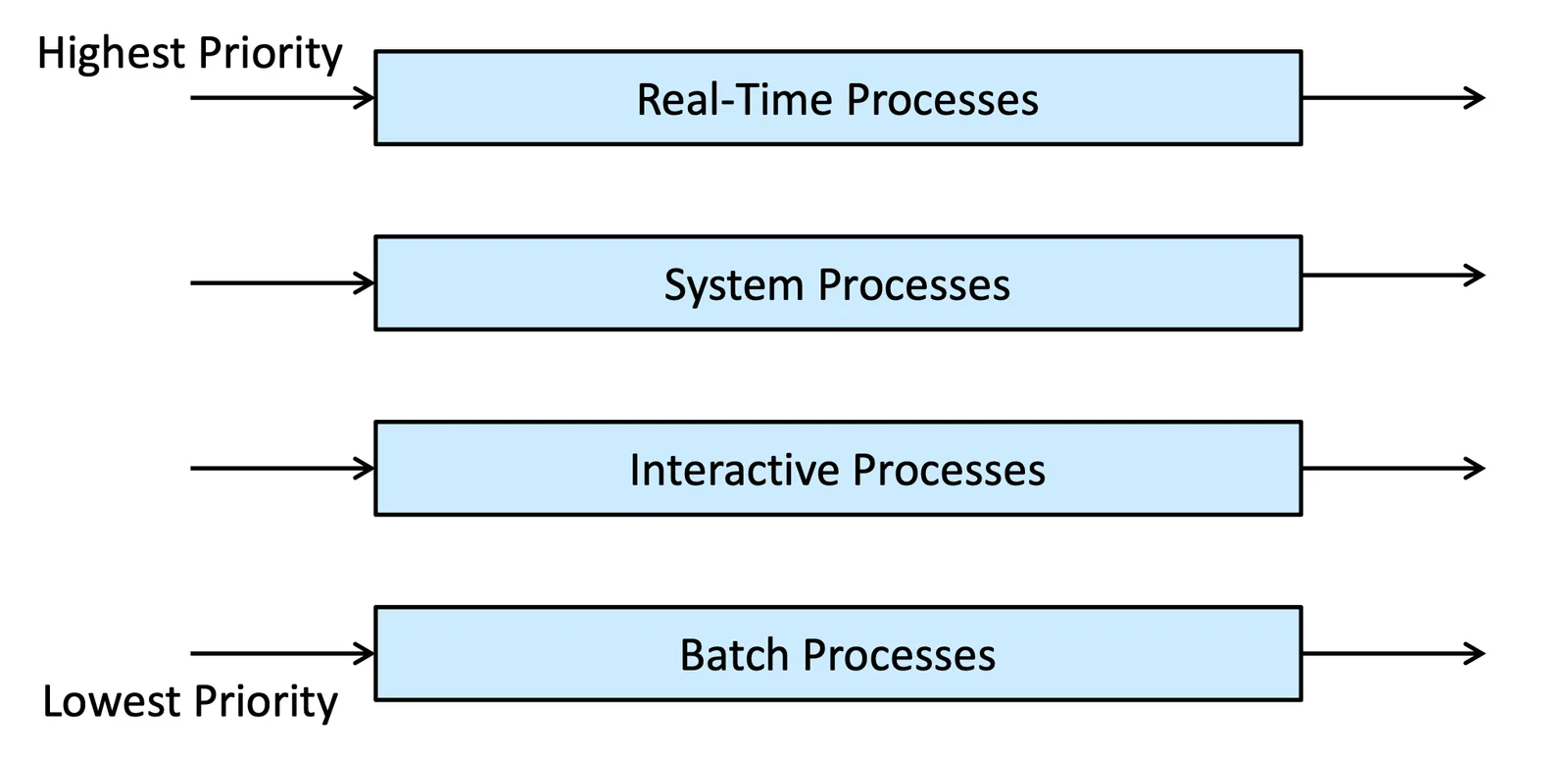
- Real-time Process:代表他是有自己的 Deadline 的 process
- System Process:維持基本系統功能的 process
- Interactive Process:有互動式介面,要時不時去 Check Output/Input
- Batch Process:單純的運算
Multilevel Feedback Queue Scheduling#
一個 Process 本來在某個 queue,但可能會在執行過程中發生變換,Priority 會有變動
- Aging 就可以用這種 mechanism 實現
以下是一個實際例子
- :RR with time quantum 8 milliseconds
- :RR with time quantum 16 milliseconds
- :FCFS
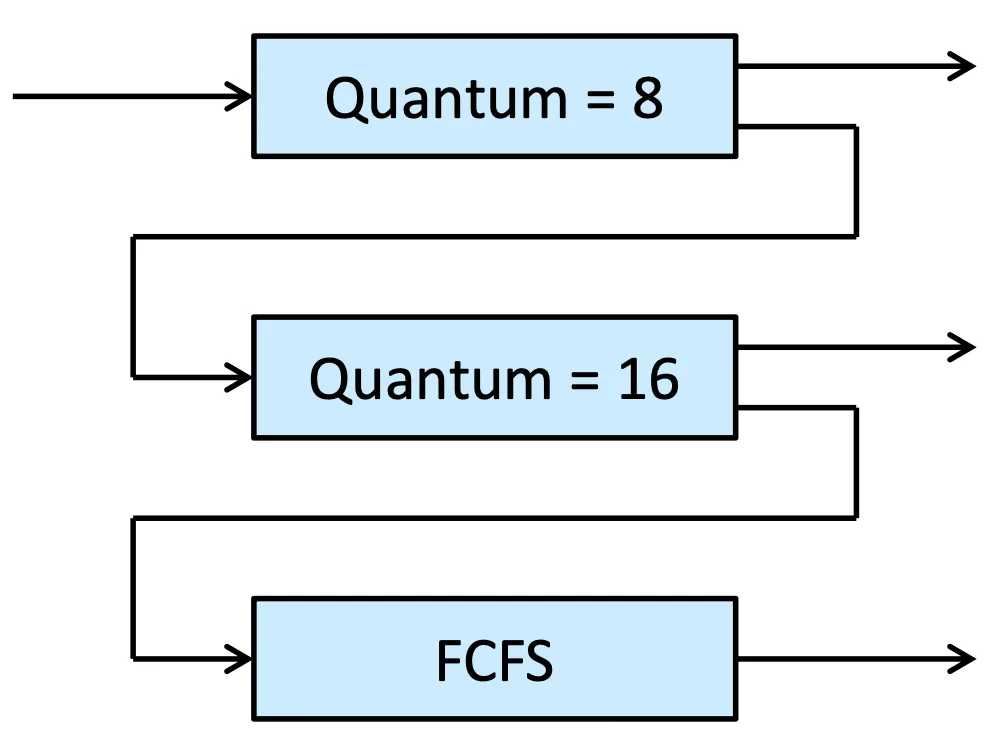
- 如果一個 Process 先進到 ,用 RR 做 schedule,在 1 個 quantum (8 ms) 內沒做完的話,我們就放到 內
- 進到 ,用 RR 做 schedule,在 1 個 quantum (16 ms) 內沒做完的話,我們就放到 內
- 在 內做 FCFS
Thread Scheduling#
我們現在講 Scheduling,其實在現代 OS 上都是在排 Kernel Thread,基本概念跟 Process Scheduling 一樣,而 User-level Thread 都會用 LWP 去做 Mapping,把 User Thread Map 到 Kernel Thread 上
Contention Scope#
分成 Process-contention scope (PCS), System-contention scope (SCS)
- Process-contention scope (PCS):當 Model 是 many-to-one 或是 many-to-many,會產生同一個 process 內的 thread 自我競爭,通常會讓 Programmer 自行排定 Priority
- System-contention scope (SCS):全系統上的競爭,Thread Scheduling 可能會需要考慮全系統的 Thread,比如說 one-to-one model
Pthread Scheduling#
PTHREAD_SCOPE_PROCESSPCS schedulingPTHREAD_SCOPE_SYSTEMSCS scheduling
Linux and macOS only allow
PTHREAD_SCOPE_SYSTEM
以下是設定的方法 pthread_attr_getscope()
#include <pthread.h>
#include <stdio.h>
#define NUM_THREADS 5
int main(int argc, char *argv[]) {
    int i, scope;
    pthread_t tid[NUM_THREADS];
    pthread_attr_t attr;
    /* get the default attributes */
    pthread_attr_init(&attr);
    /* first inquire on the current scope */
    if (pthread_attr_getscope(&attr, &scope) != 0)
        fprintf(stderr, "Unable to get scheduling scope\n");
    else {
        if (scope == PTHREAD_SCOPE_PROCESS)
            printf("PTHREAD_SCOPE_PROCESS");
        else if (scope == PTHREAD_SCOPE_SYSTEM)
            printf("PTHREAD_SCOPE_SYSTEM");
        else
            fprintf(stderr, "Illegal scope value.\n");
    }
    /* set the scheduling algorithm to PCS or SCS */
    pthread_attr_setscope(&attr, PTHREAD_SCOPE_SYSTEM);
    /* create the threads */
    for (i = 0; i < NUM_THREADS; i++)
        pthread_create(&tid[i], &attr, runner, NULL);
    /* now join on each thread */
    for (i = 0; i < NUM_THREADS; i++)
        pthread_join(tid[i], NULL);
}

/* Each thread will begin control in this function */
void *runner(void *param)
{
    /* do some work ... */
    pthread_exit(0);
}Multi-Processor Scheduling#
現代的系統通常是 multi-core,所以 Schedule 會變成一個更複雜的問題,需要考慮 Locality 的問題,並且有很多種 Architecture
- Multicore CPUs
- Multithreaded cores
- NUMA systems
- Heterogeneous multiprocessing
Approaches to Multiple-Processor Scheduling#
當要做 Schedule 的時候我們分成 Symmetric 跟 Asymmetric
-
Asymmetric Multiprocessing: 存在一個 Master 管控所有 Processor,讓他去做真正的 Schedule,這樣簡單,但是 Master Processor 就會非常忙碌,I/O event 會特別的多
- 在 embedding system 比較常見
-
Symmetric Multiprocessing (SMP): 每個 Processor 都是同等地位,每個 Processor 要自己去處理自己的 Schedule 問題,從 Queue 裡面拿出 task,可以分成兩種
- 共用 Queue,有彈性,但需要處理 Race Condition (需要 Locking)
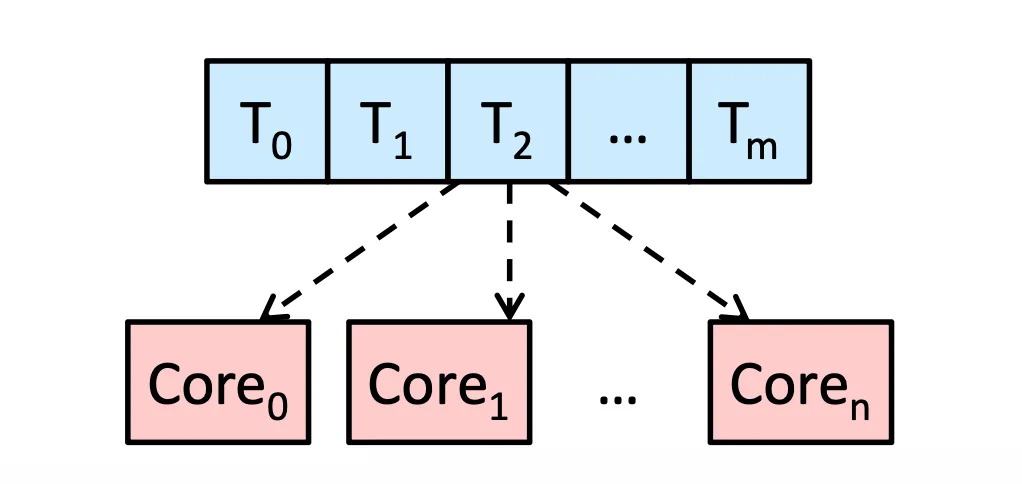
Share Queue - 分開 Queue,需要做 Load Balancing
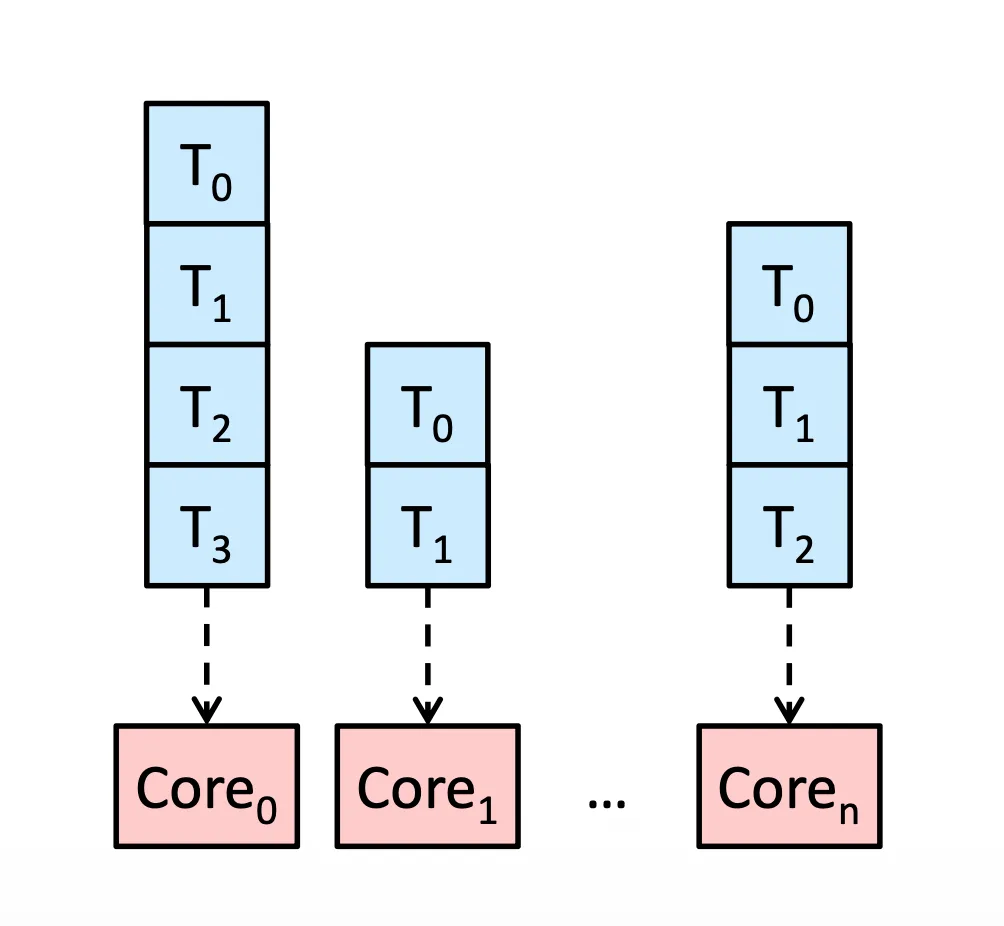
Separate Queue
Multicore Processors#
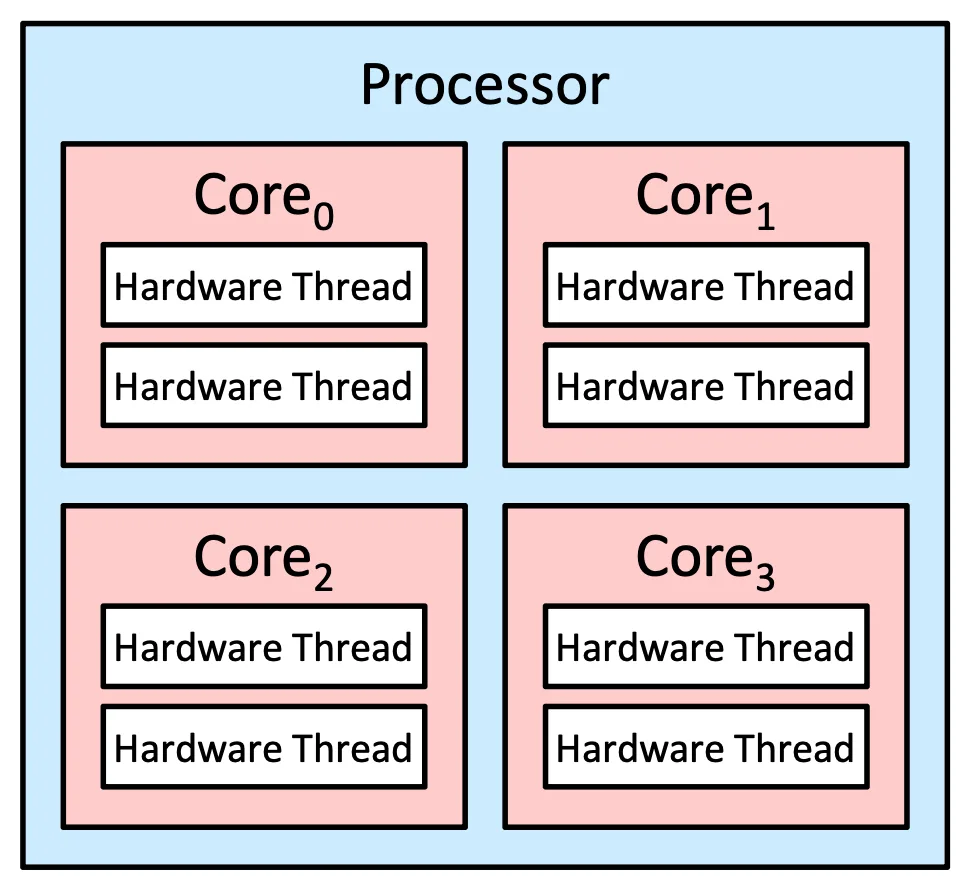
是一種趨勢,每個 core 本來就支援超過一個 Hardware Thread 在同一個 core 上執行,是一種 Hardware 等級的加速
因為 core 在執行一個 thread 的時候一定會需要 memory stall 也就是需要去讀取 memory,就會需要暫停一下,為了增加效率,我們可以讓 thread 做交替的 Compute, Memory Stall,就可以達成加速
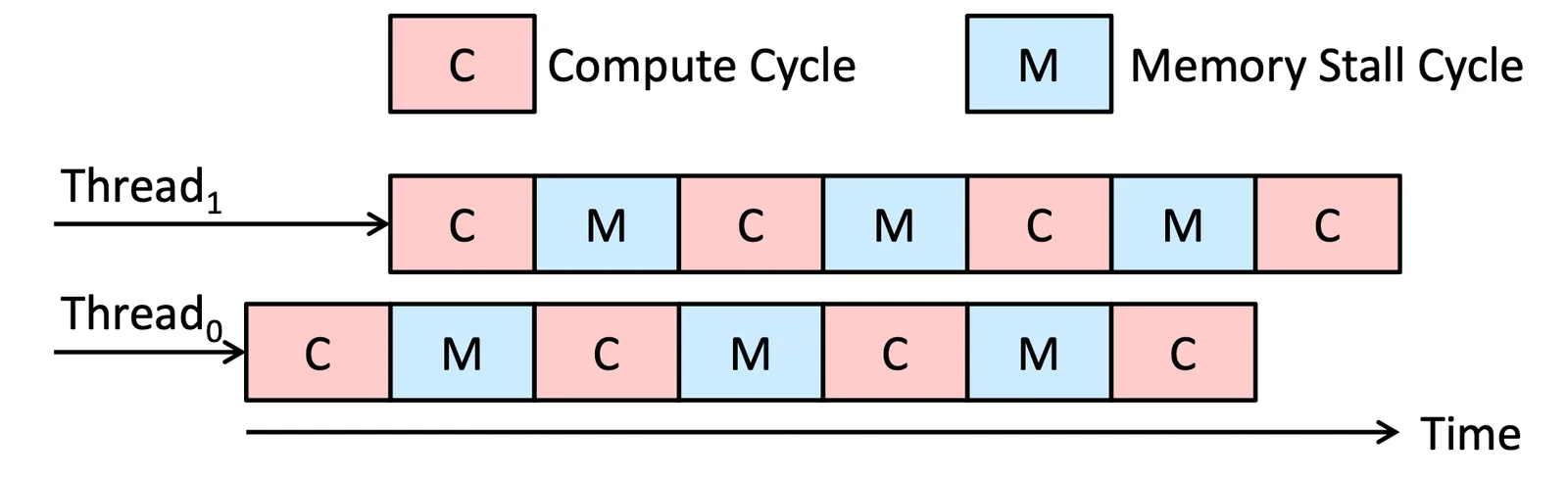
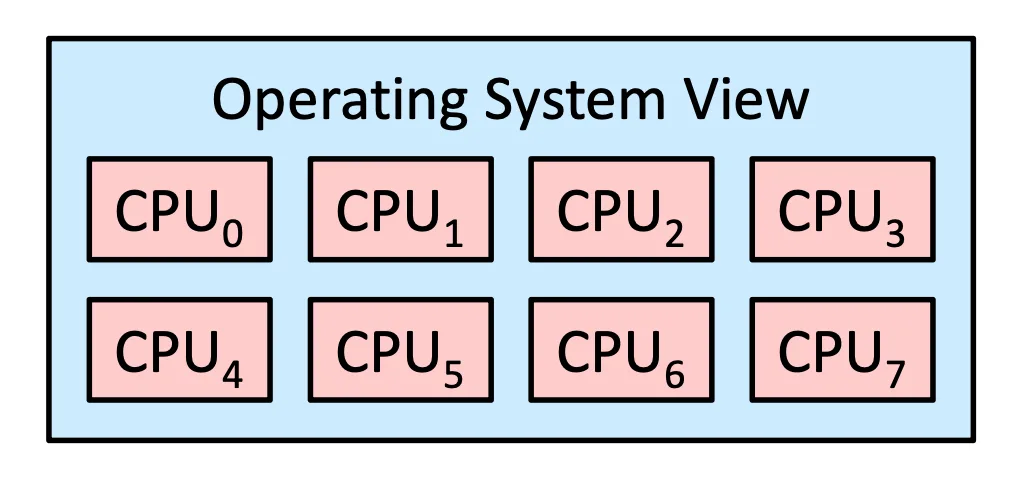
在 OS 層面上他其實不在乎有多少個 Core 在執行我的 Process,或是硬體 implement 的方法,系統通常會做 Virtualization,也就是把真正的硬體,轉化成一個 OS 比較看得懂的形式
- 真正的把 CPU 對應到 Core 上的 Thread 我們是用 Chip multithreading (CMT) 來分配,在 Intel 裡面叫做 hyper-threading
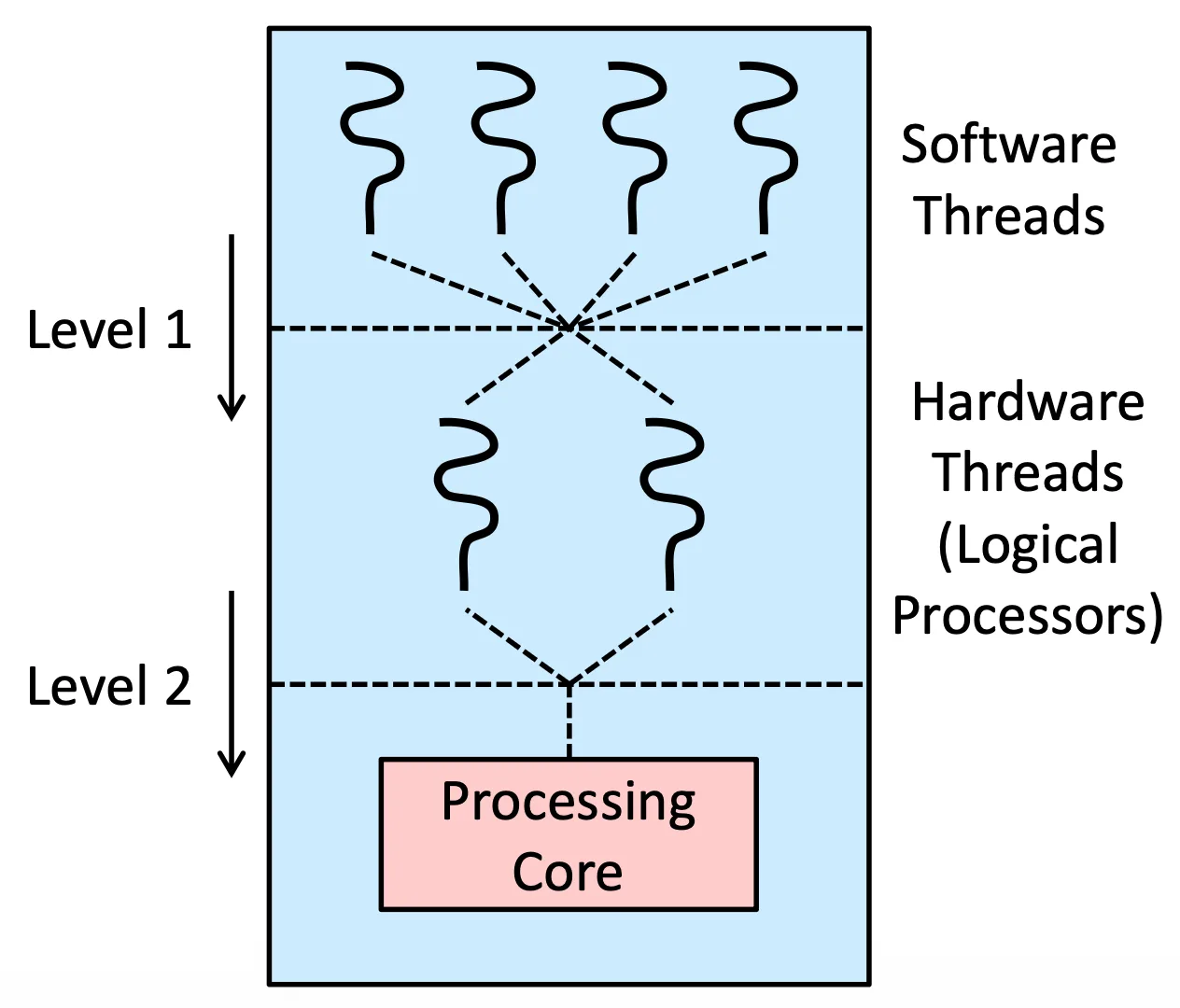
Threading 有各種 Thread: User, Kernel, Hardware,我們會做 2 level threading 來實現
- User Thread,我們通常只會接觸這個,用 LWP 接到 Logical processor 上
- 在用第二層的 Schedule 把它弄到真正的 core 上
這樣兩層式的 Scheduling 如果完全切開,那就有可能會把最佳解給切掉,所以我們設計的時候通常會把東西不切得那麼死,這些 thread 不會 mutually exclusive,完全切開的話就是簡單,有時候也是一種好事(有時候如果 level 之間可以有一些 communication 或是 knowledge 就可以讓 performance 變好)
Load Balancing#
在一個 SMP 系統裡面,我們希望可以平衡每個 core 的 loading,這裡只有很 high level 都講而已,這些方法其實都可以做數學證明保證
-
Push Migration: 每個 processor 上有一個 task 專門去看現在是不是工作分配不均,如果發現的時候,就把多的任務推出去
-
Pull Migration: 空的 processor 去把別人的 task 拉過來
Processor Affinity#
Affinity 是親和力的意思,看看 process 有沒有自己偏好的 core
e.g. 有一個 thread 本來在一個 core 上,那執行相關 data 的 thread 理應要跑在那個 core 上
我們可以分成兩種 Affinity
- Soft affinity: 不強迫,processor 可以拒絕,那就 schedule 到其他 core 上
- Hard affinity: 強迫他到那個 processor 上,可能是 security 的問題,在車子上可能有很多 CPU 但某些 task 一定要指定 CPU,因為車子通常是不做 scheduling 的,東西都是週期性的
NUMA and CPU Scheduling#
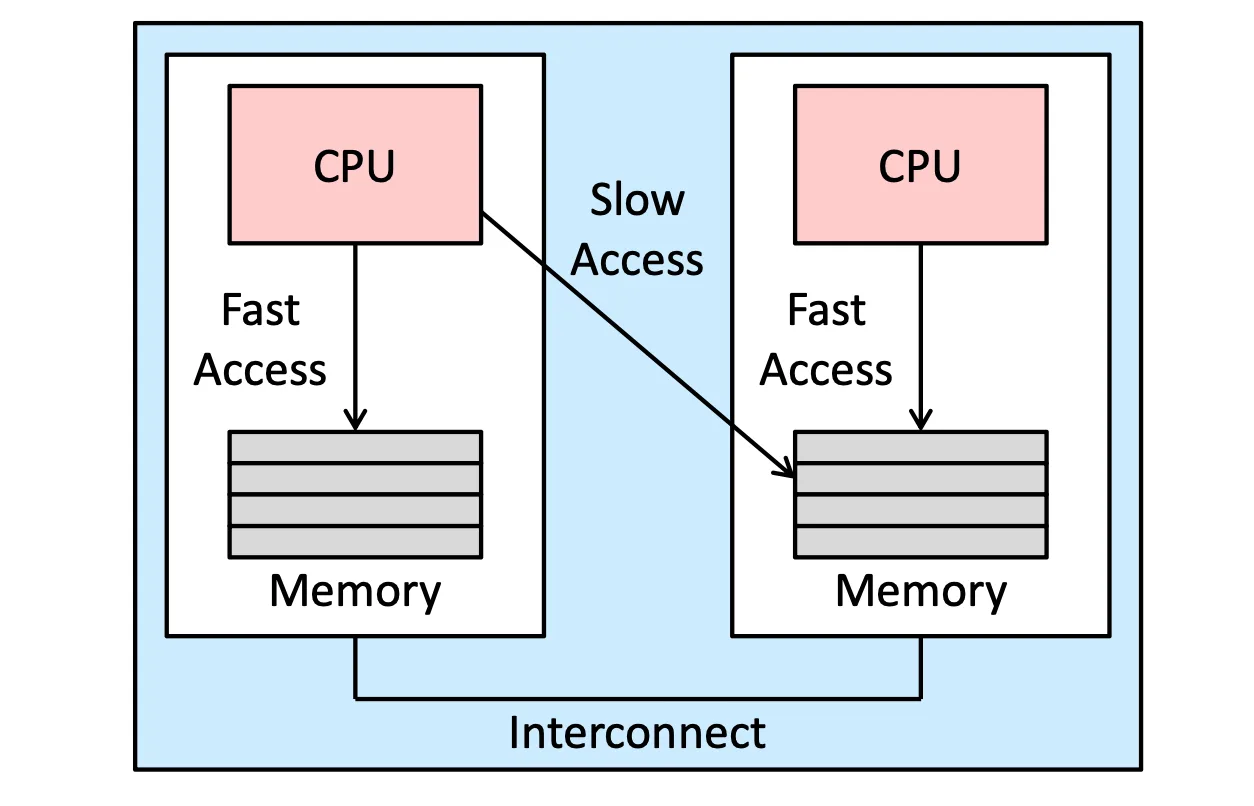
如果一個 system 是 NUMA-aware,那 memory 的地位就不一樣了,需要考慮 Processor Affinity
Heterogeneous Multiprocessing (HMP)#
在 ARM 架構下,有一個 big.LITTLE 架構,可以根據 task priority 或是 mode 去做選擇
- Big cores:耗能,但算得很快
- Little cores:用的能量少,做日常工作
Real-Time CPU Scheduling#
在做 realtime scheduling 的時候我們會引入 deadline 的概念
- Soft real-time systems:有保證 Critical real-time tasks 會比別人先做,但並不保證 deadline 前做完
- Hard real-time systems:保證在 deadline 前必須做完
一般我們用的電腦沒有需要使用到 real-time,通常是用在汽車、醫療系統上
Minimizing Latency#
定義 Event latency:從發生時間,到被 system response 的時間
這裡的 reponse time 跟普通 system 的 response time 不太一樣,因為 real-time system 的 response time 是必須要 process 處理完畢並且做出反應才算完成的,而普通 system 的 response time 是從送出 request 到第一次有回應的時間(讓你不會覺得系統卡住)
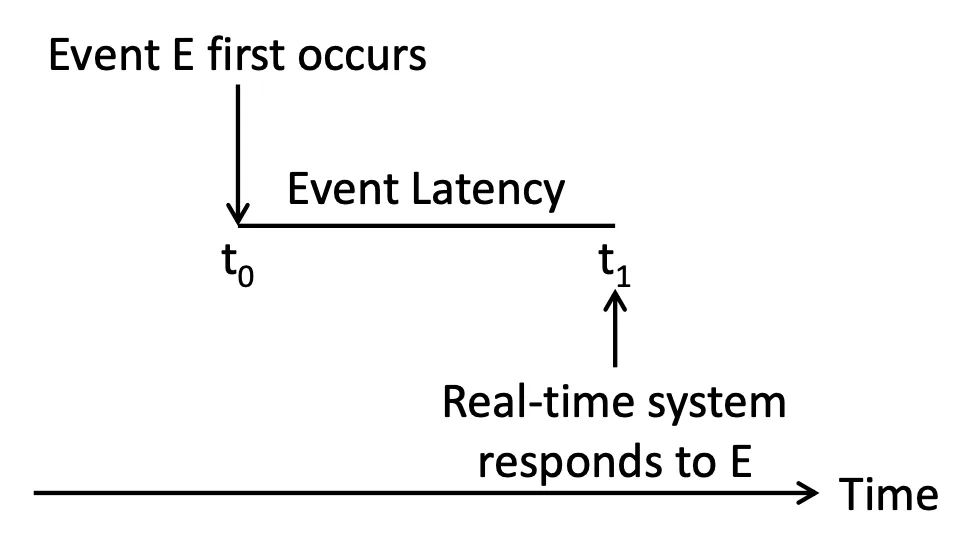
通常有兩種 latency 會影響到 Event latency
- Interrupt latency
- Dispatch latency
Interrupt Latency#
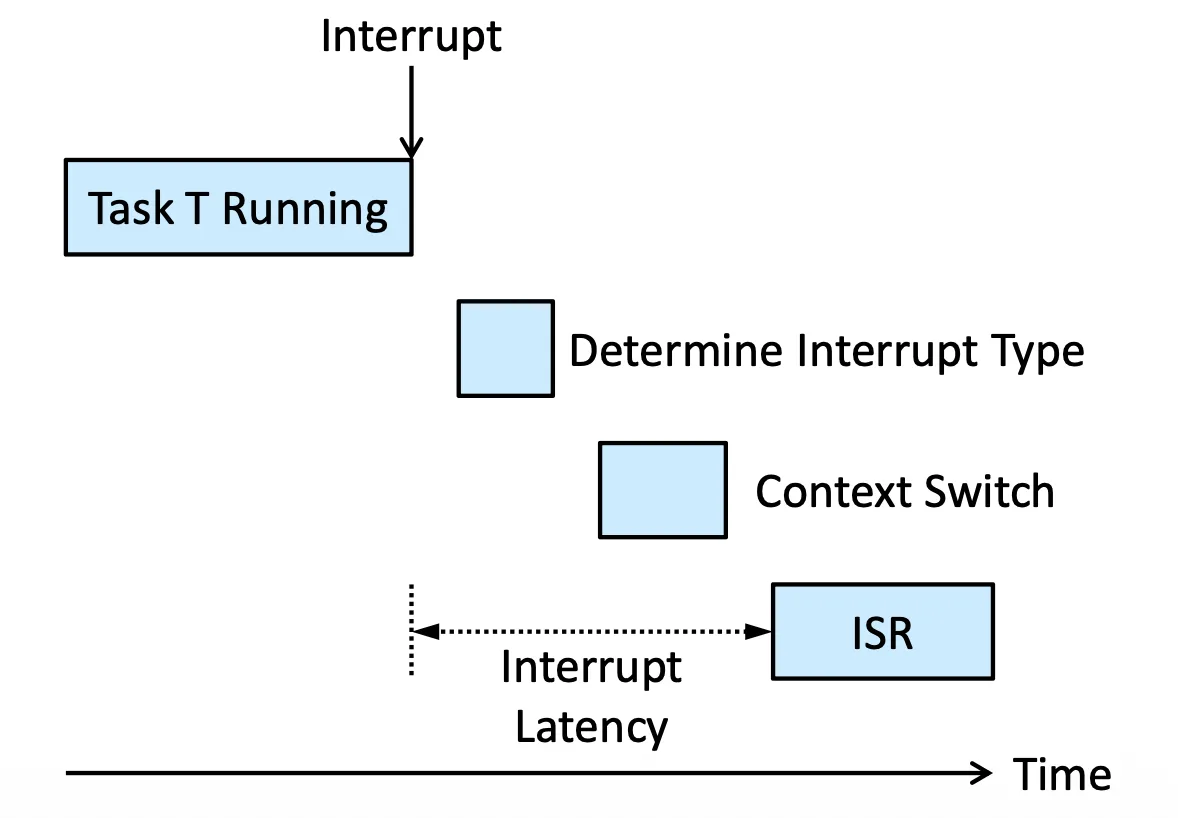
Interrupt 到的時間,一直到開始跑 ISR(Interrupt Service Routine)的時間,因為需要花時間決定哪個 Routine 來 handle 這個 interrupt
real time system 我們會希望這個時間短
Dispatch Latency#
我們需要把 Core 上的 Process 轉換成另外一個 Process 來跑,要把資源 release 出來
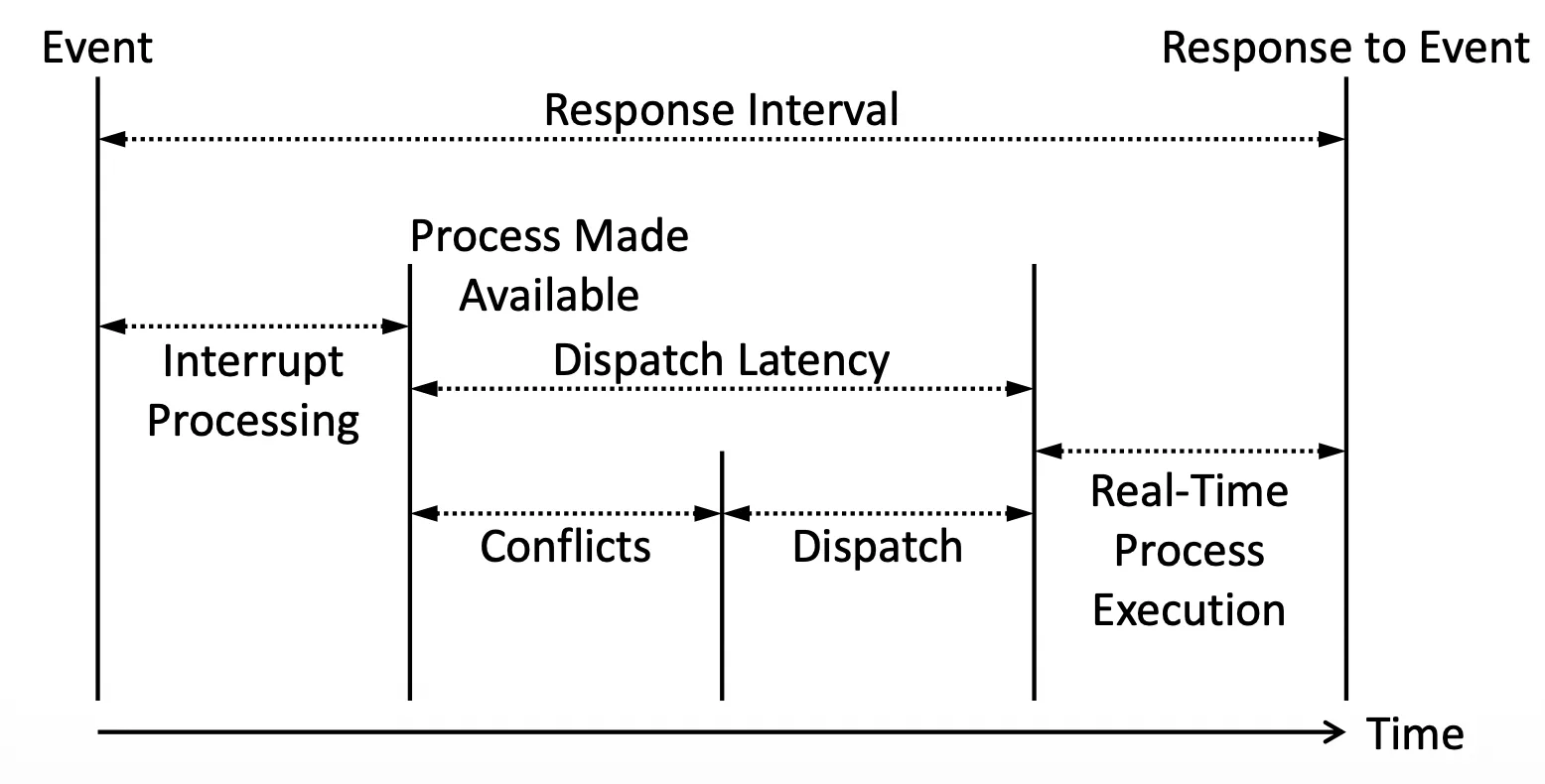
其實看圖可以知道,後面還有 Real-Time Process Execution 佔了大宗的 Response time,但這其實是 Application 該處理的部分
Interrupt Processing 其實又可以分成 Interrupt Latency 跟 ISR Processing
Priority-Based Scheduling#
跟之前的 Priority Scheduling 是一樣的,我們給他一個 Priority,但是,如果我們只給他一個 Priority 我們不能保證他必定 meet deadline
我們還需要做一些數學分析,才能知道能不能在 deadline 內處理完
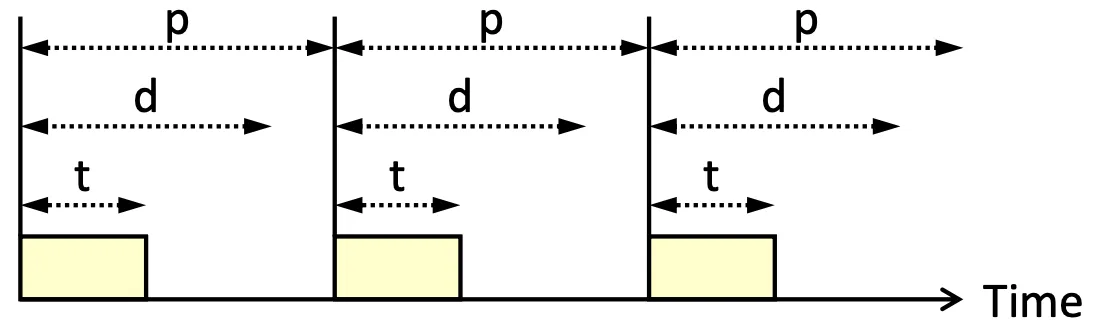
現在這種 model 我們需要考慮 periodic 的 Process
- Processing time =
- Deadline =
- Period =
- Rate of periodic task is
在真實世界 realtime system 需要處理的 task 通常都是週期性的,如果不是週期性,我們很難做到 real time
Rate-Monotonic Scheduling#
其實也是一種 Priority Scheduling,每個 task 進來我們用 Period 做 Priority,因為通常週期越短 deadline 也越短,而且通常 deadline 會小於 Period(甚至通常都是一樣的),因為在後一個 Instance 進來前我們就要做完前面一個
假設我們有一個 Preemptive System
| Process | ||
|---|---|---|
| 20 | 35 | |
| (= ) | 50 | 100 |
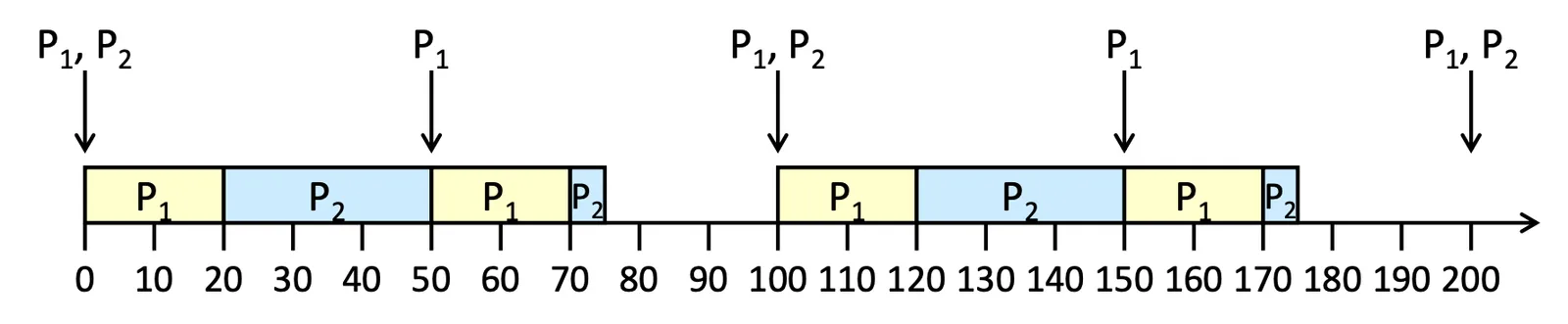
, 都在 deadline 前做完了
現在這裡有一個反例,明明可以滿足,但 Rate-Monotonic 失敗了
| Process | ||
|---|---|---|
| 25 | 35 | |
| (= ) | 50 | 80 |
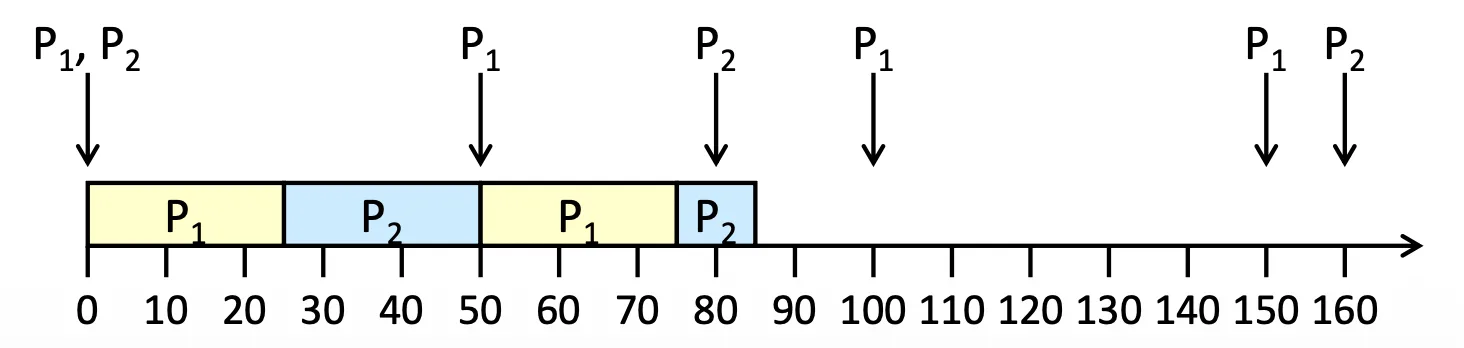
雖然 都可以符合,但 失敗了,但其實明明就可以 fulfill,只要不 Preempt
Earliest-Deadline-First (EDF) Scheduling#
從名字就可以看出來,他一定是最佳解,但是 trade-off 也最高,把 deadline 早的那個設成高 Priority
| Process | ||
|---|---|---|
| 25 | 35 | |
| (= ) | 50 | 80 |
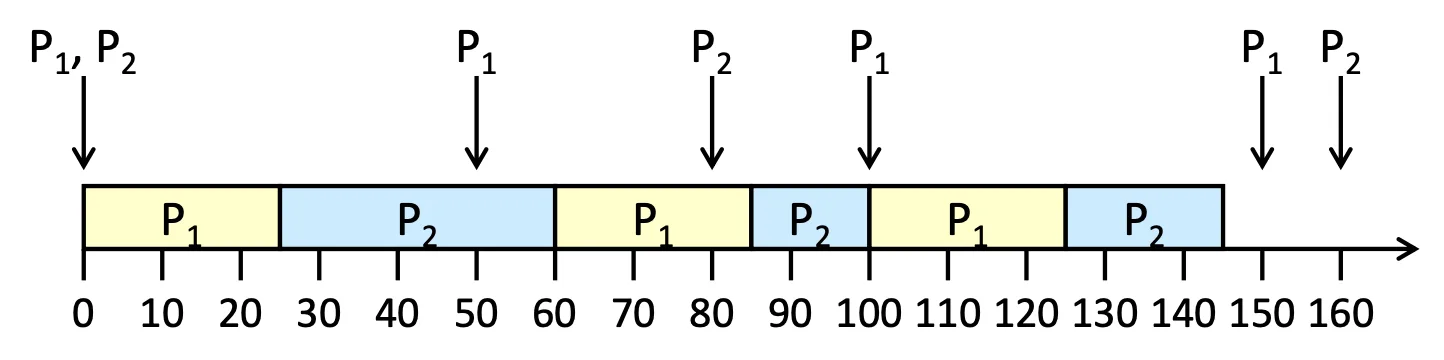
在第 50 秒的時候, 第一個 instance 的 Priority 是高於 的,所以不會被打斷 在第 100 秒的時, 第二個 instance 的 Priority 低於 所以被打斷
Proportional Share Scheduling#
把 CPU 的運算時間,分成很多個小的 interval,保證分給某個 Task 某些數量的 interval,是一種 guarantee
假設 是所有 Process share 的時間,Process 可以 share 到 ,也就是可以保證每個 Process 收到 的 Time interval
假設 , 分別有 ,如果有個 想進來,只要他 就會被 admission controller 拒絕掉這個要求,因爲他不是照比例分的,而是時間保底,在 real-time system 裡面,我們做了數學分析,如果 要做,我們保證他可以分到某個數量,那麼 worst case 就是可控的
POSIX Real-Time Scheduling#
POSIX 上有兩種建立在 Priority Base 的 Implementation
SCHED_FIFOSCHED_RR
以下兩個指令可以控制
pthread_attr_getschedpolicy(pthread_attr_t *attr, int *policy)pthread_attr_setschedpolicy(pthread_attr_t *attr, int policy)
以下是範例 code
#include <pthread.h>
#include <stdio.h>
#define NUM_THREADS 5
int main(int argc, char *argv[])
{
    int i, policy;
    pthread_t tid[NUM_THREADS];
    pthread_attr_t attr;
    /* get the default attributes */
    pthread_attr_init(&attr);
    /* get the current scheduling policy */
    if (pthread_attr_getschedpolicy(&attr, &policy) != 0)
        fprintf(stderr, "Unable to get policy.\n");
    else {
        if (policy == SCHED_OTHER) printf("SCHED_OTHER\n");
        else if (policy == SCHED_RR) printf("SCHED_RR\n");
        else if (policy == SCHED_FIFO) printf("SCHED_FIFO\n");
    }
    /* set the scheduling policy - FIFO, RR, or OTHER */
    if (pthread_attr_setschedpolicy(&attr, SCHED_FIFO) != 0)
        fprintf(stderr, "Unable to set policy.\n");
    /* create the threads */
    for (i = 0; i < NUM_THREADS; i++)
        pthread_create(&tid[i],&attr,runner,NULL);
    /* now join on each thread */
    for (i = 0; i < NUM_THREADS; i++)
        pthread_join(tid[i], NULL);
}
/* Each thread will begin control in this function */
void *runner(void *param)
{
    /* do some work ... */
    pthread_exit(0);
}Operating-System Examples#
Linux Scheduling#
早期的 Linux Scheduling 是 time,但是後來覺得應該要更優化,時間變長,但效果更好
現代採用的是 Completely Fair Scheduler (CFS),是一種 Priority Base,把 task 分出 scheduling classes
- Default Scheduling
- Real-Time Scheduling
Default Scheduling#
沒有直接把 Priority 定死,有兩個參數影響
- nice value:
-20 ~ +19越大代表越容易讓 core,會牽扯到 targeted latency,也就是在某段時間內一定要給這個 task 跑一次,是可能會變動的 - virtual run time:
vruntime可以控制預估的 Burst time,也可以根據過去的經驗變動
Real-Time Scheduling#
根據 POSIX.1b 來規定,會把 Default Scheduling class 的 nice value map 到 100 ~ 139
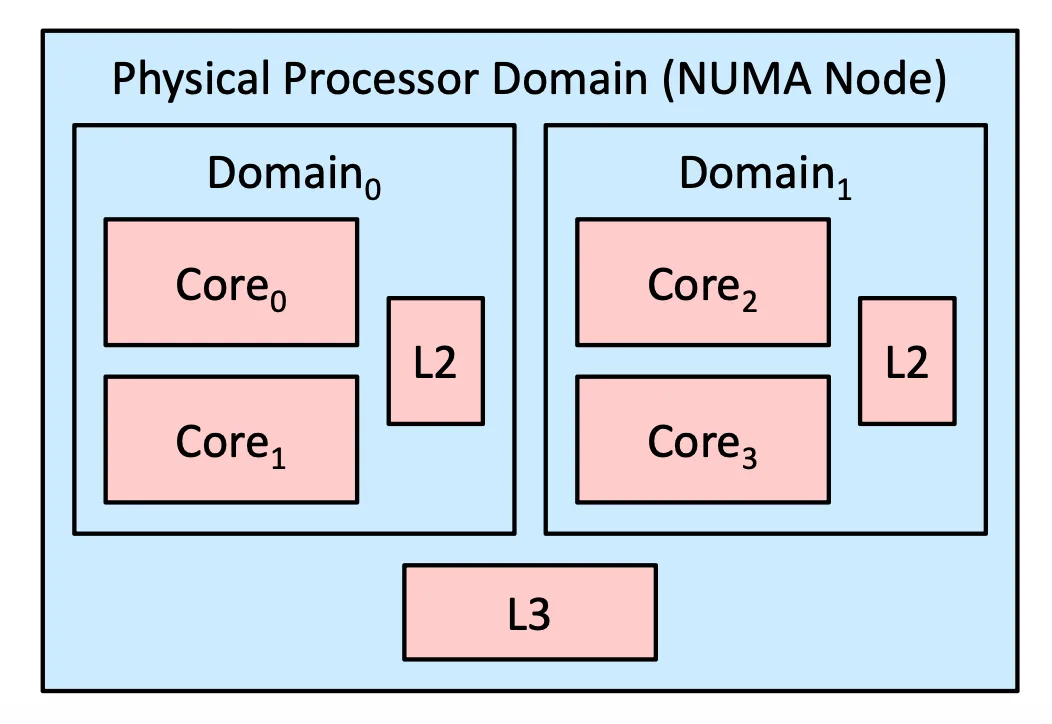
Linux NUMA-Aware Load Balancing#
可以讓同一個 thread 的工作都被放在同一個 domain 裡面運作
Windows scheduling#
也是 Priority base,有一個 dispatcher 負責,有很多種 class,variable class 是 1 to 15,real-time class 是 16 to 31
每個 thread 都有 class REALTIME_PRIORITY_CLASS, HIGH_PRIORITY_CLASS, ABOVE_NORMAL_PRIORITY_CLASS, NORMAL_PRIORITY_CLASS, BELOW_NORMAL_PRIORITY_CLASS, IDLE_PRIORITY_CLASS
並且他們在裡面還有再細分 TIME_CRITICAL, HIGHEST, ABOVE_NORMAL, NORMAL, BELOW_NORMAL, LOWEST, IDLE
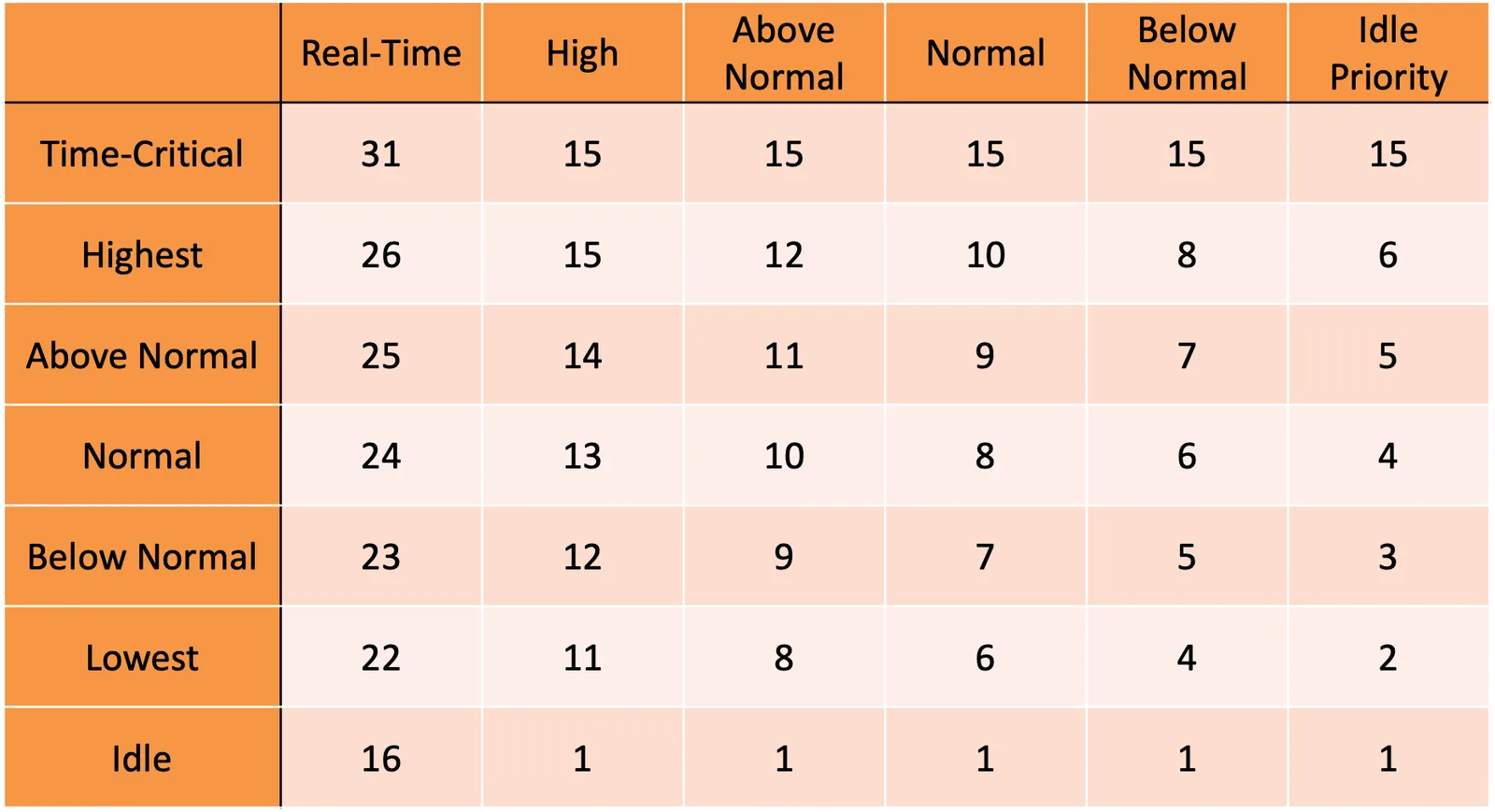
Real-time IDLE 還是比剩下的高
如果被放到 foreground,那通常他的 scheduling quantum(時間配額)會被乘以 3,Win7 有提供 user-mode scheduling (UMS)
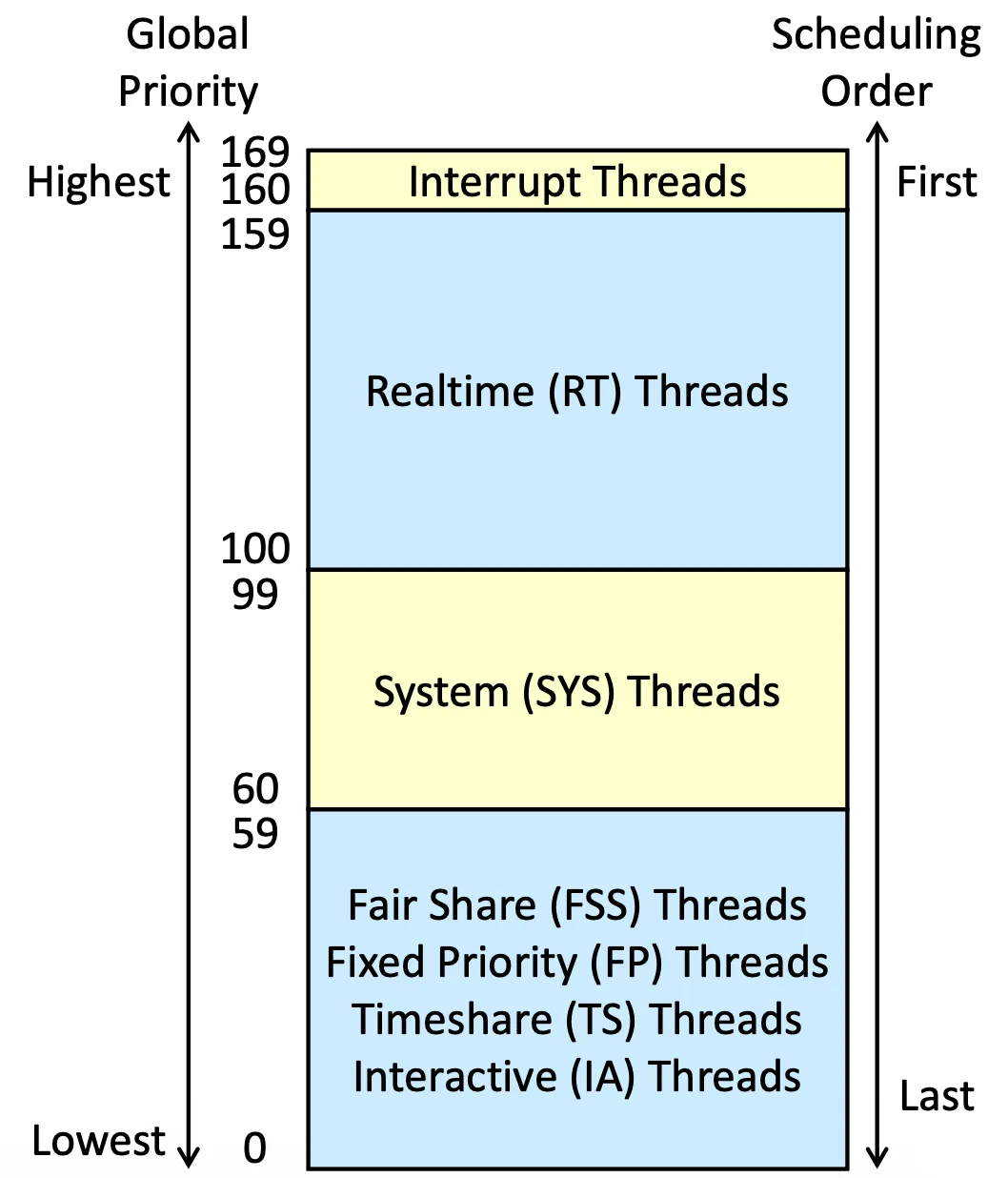
Solaris scheduling#
用 RR,也分 class
- Real time (RT)
- System (SYS)
- Fair share (FSS)
- Fixed priority (FP)
- Time sharing (TS)
- Interactive (IA)
也細分,Time Sharing 跟 Interactive,當 expired 的時候,分到的 Priority 會變化
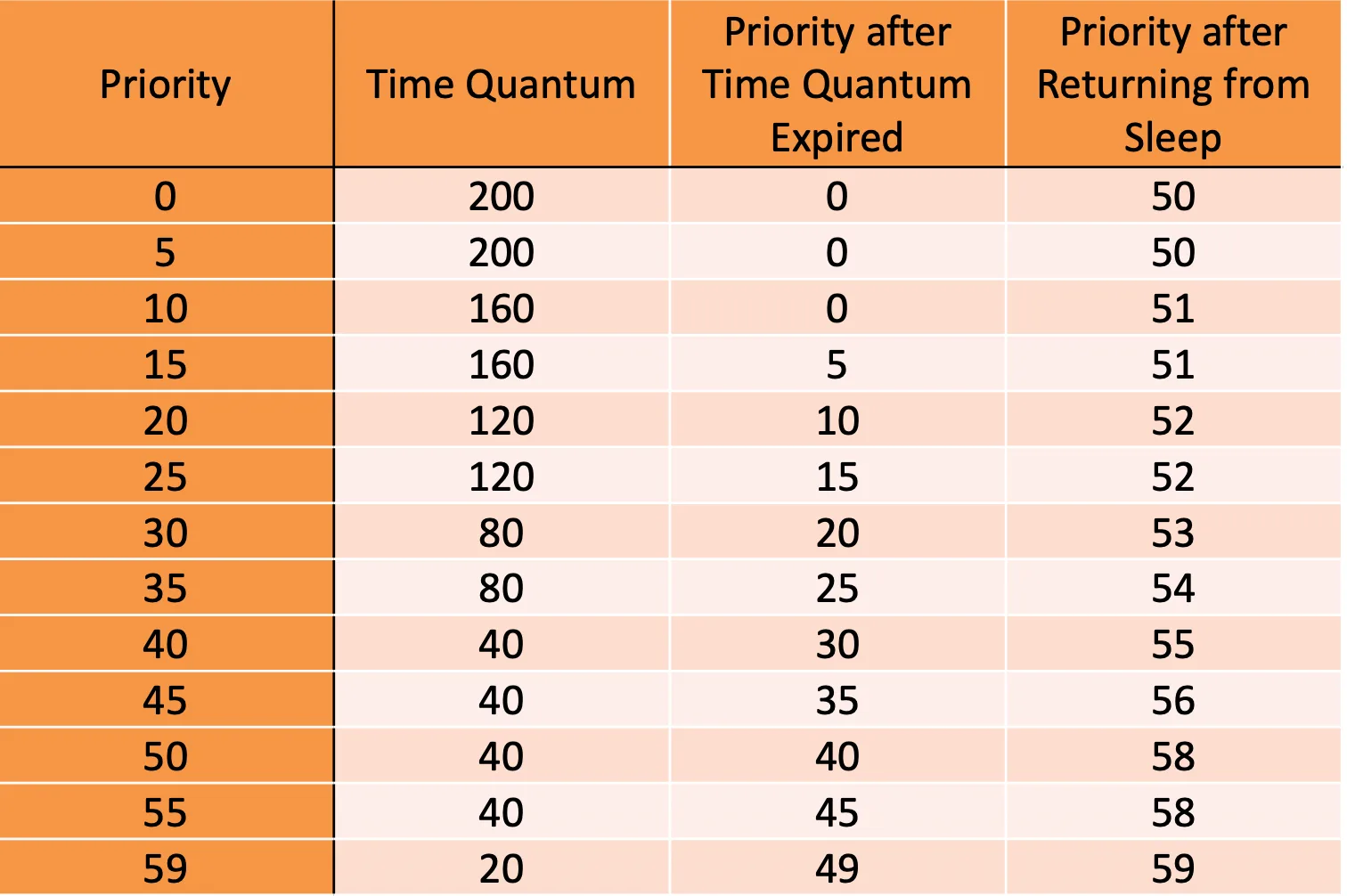
在 Solaris 裡面 Priority 數字越高,代表 Priority 越高
Algorithm Evaluation#
我們一樣得先想好要用什麼 criteria,不同系統需要的東西不一樣
Deterministic Modeling#
直接用實際例子去跑
| Process | |||||
|---|---|---|---|---|---|
| Arrival time | 0 | 0 | 0 | 0 | 0 |
| Burst Time | 10 | 29 | 3 | 7 | 12 |
假設我們要 minimize avg waiting time



這種方法只能判斷出每個 input 的結論,沒辦法給出全局結果
Queueing Models#
我們用機率模型去描述一個 CPU 到底是怎麼運行的,也就是用 Queuing Theory 來做分析,這是另外一門課,會涉及到 Markov Process 之類的 model
Simulations#
採用一個大量測資,以量來模擬,用過去機率分布來決定,就是根據實際的資料去跑 Deterministic Modeling,用平均決定
但 simulation 終究沒辦法保證有數學上的 Worst case,通常用數學 close form 表示都會比較悲觀
Implementation#
我們直接把它 implement 到一個 system 上面測試,但這樣會非常高風險、高成本,而且真實的環境有很大的波動