Threads & Concurrency#
Overview#
A Thread is the smallest unit of CPU utilization
Thread 就是 CPU 能夠安排運行的最小單位,擁有
- thread ID
- Program Counter (PC): 可能會是一個或多個
- Register Set
- Stack
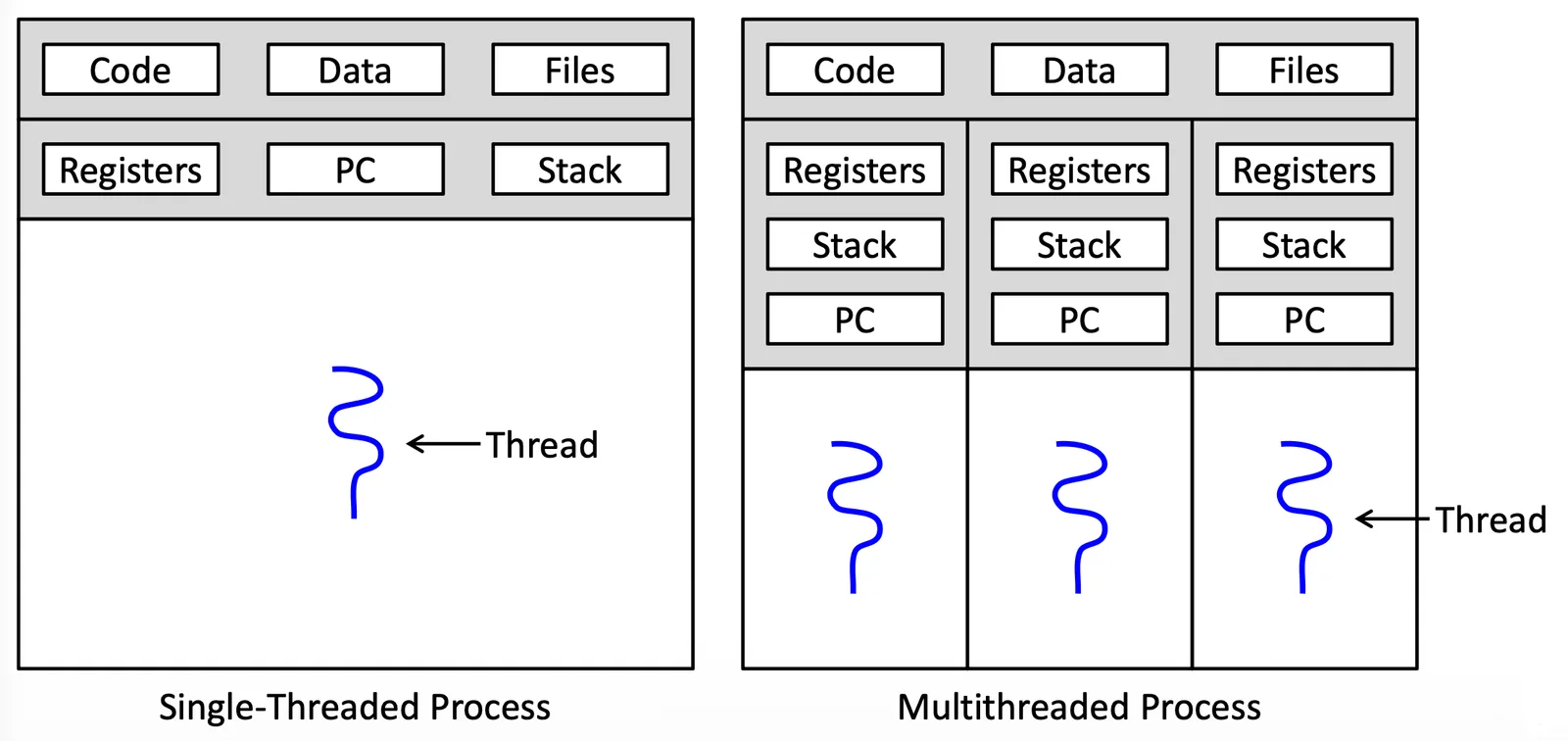
跟 Process 最大不同就是會 share resource, code, file
Thread 可以來平行的進行各種計算,Process 是一個 time consuming 的東西,而 Thread 比較少成本,平行計算 multi-threading 可以節省很多時間跟成本
- Responsiveness: 反應會比較即時,因為可以平行運行
- Resource sharing: 效率高,但會出現 Synchronize 的問題
- Economy
- Scalability
Multicore Programming#
- Concurrency: 不同的 task 各自都有 progress
- Parallelism: 完全獨立的運行
Single core 也可以有 Concurrency,但無法 Parallelism

下面這張則是同時有 Concurrency 跟 Parallelism

Challenge#
- Identifying tasks
- Balance: 分工問題
- Data splitting: 資料同一份無法切割
- Data dependency: 執行順序問題,可能導致最後根本沒有 Concurrency
- Testing and debugging
Parallelism#
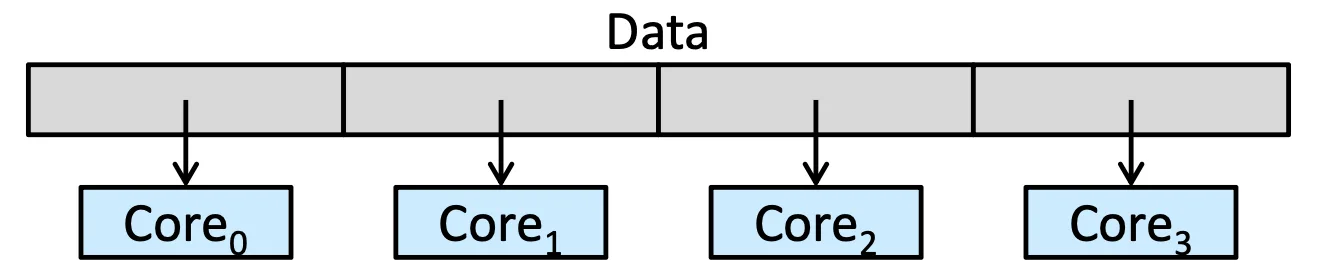
- Data parallelism 從資料下手,把資料分成四段,執行一樣的 code 四個 core 執行完畢再由統一一個 core 做整合
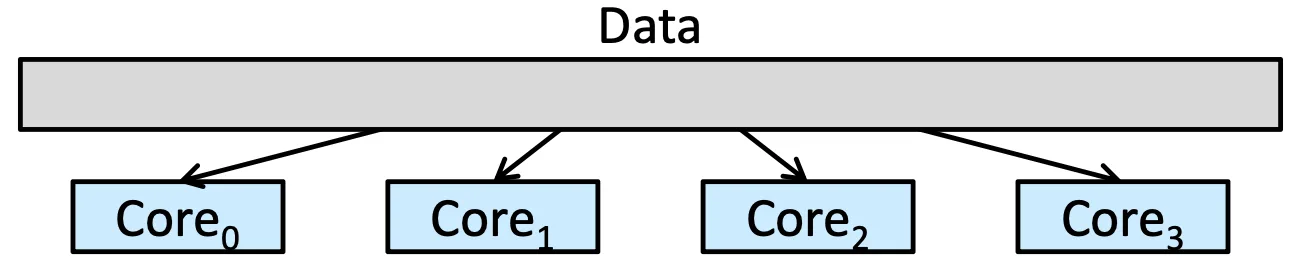
- Task parallelism 共用一個 data,但四個 core 在做不同的 task
兩種 parallelism 可以混用,只是概念而已
Amdahl’s Law#
把每個 Task 切割成可以平行以及不能平行計算的部分,就可以得到
- : 必須得 serial 執行的部分
- : Processing Core
雖然有平行化,但通常都會多一些 overhead,所以現實情況都會差一點
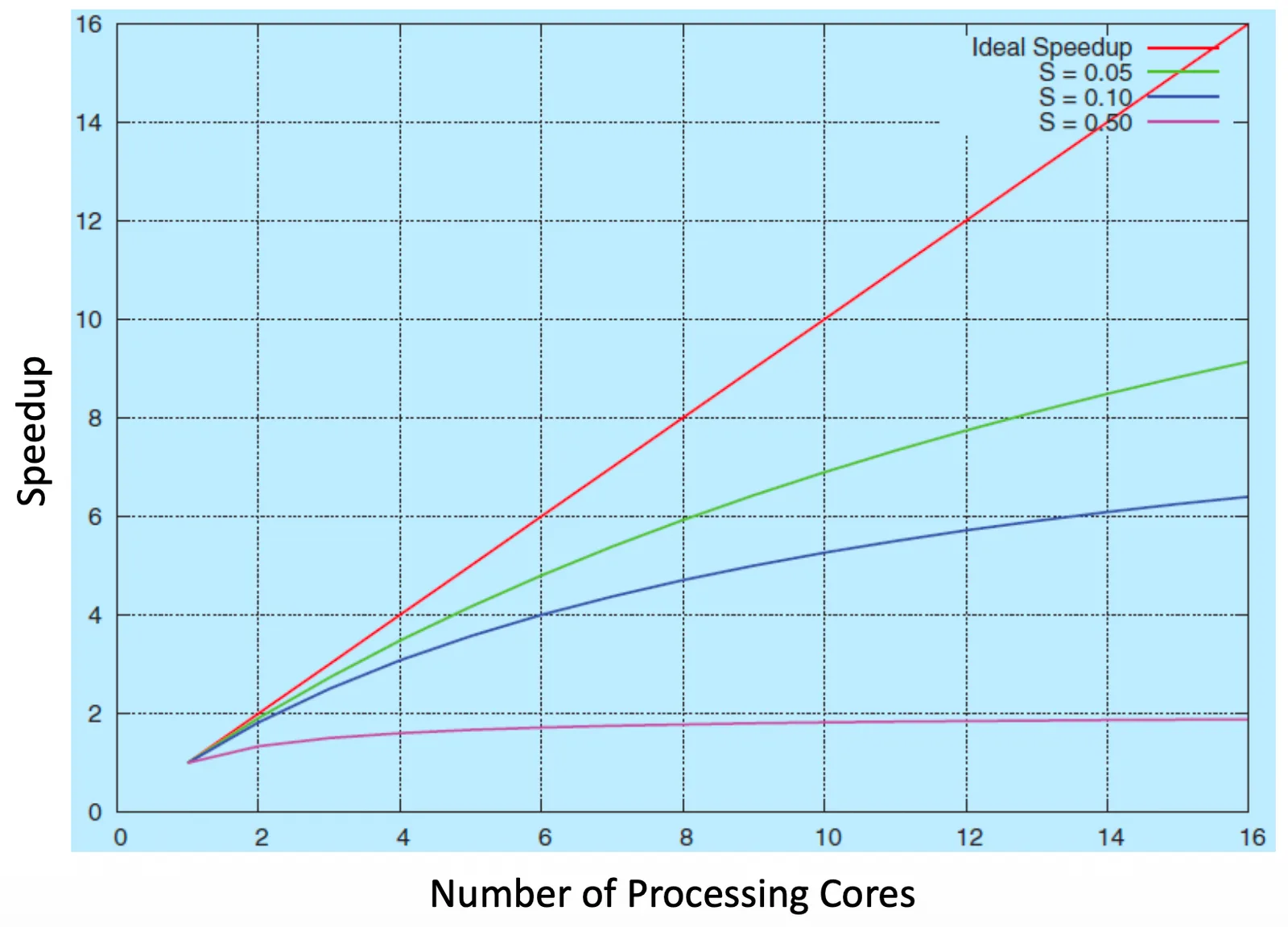
無法平行化的部分越多,multi-core 的效果就越差
Multithreading Models#
User thread / Kernel thread#
看是誰負責處理這個 thread 決定他是 kernel/user
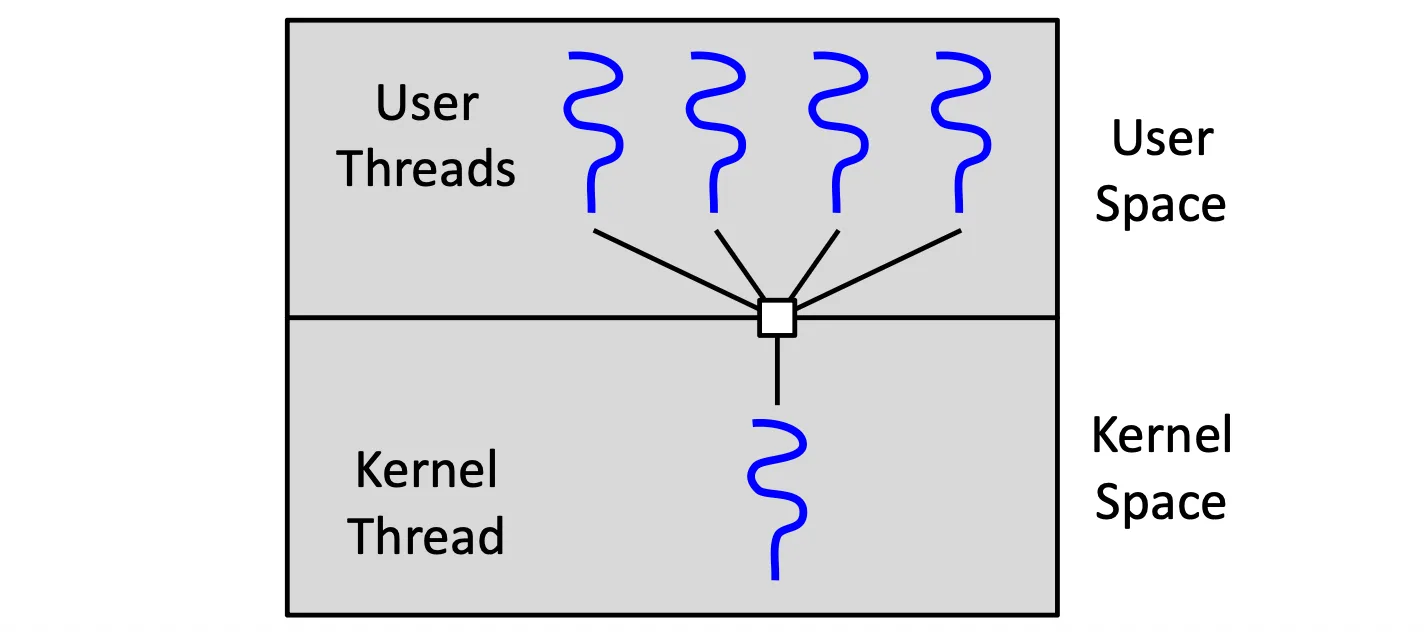
Many-to-One Model (user-level threading)#
有很多 user thread,但全都由同一個 kernel thread 管理,等於實際上只有一個真正的 thread
- 同時只有一個 thread 可以 access kernel
- 當有一個 user thread 被 block 住就會讓整個 kernel 卡住
- 站在 kernel 角度其實沒辦法真正 implement multi-thread
- efficient 但是無法真正發揮 parallelism
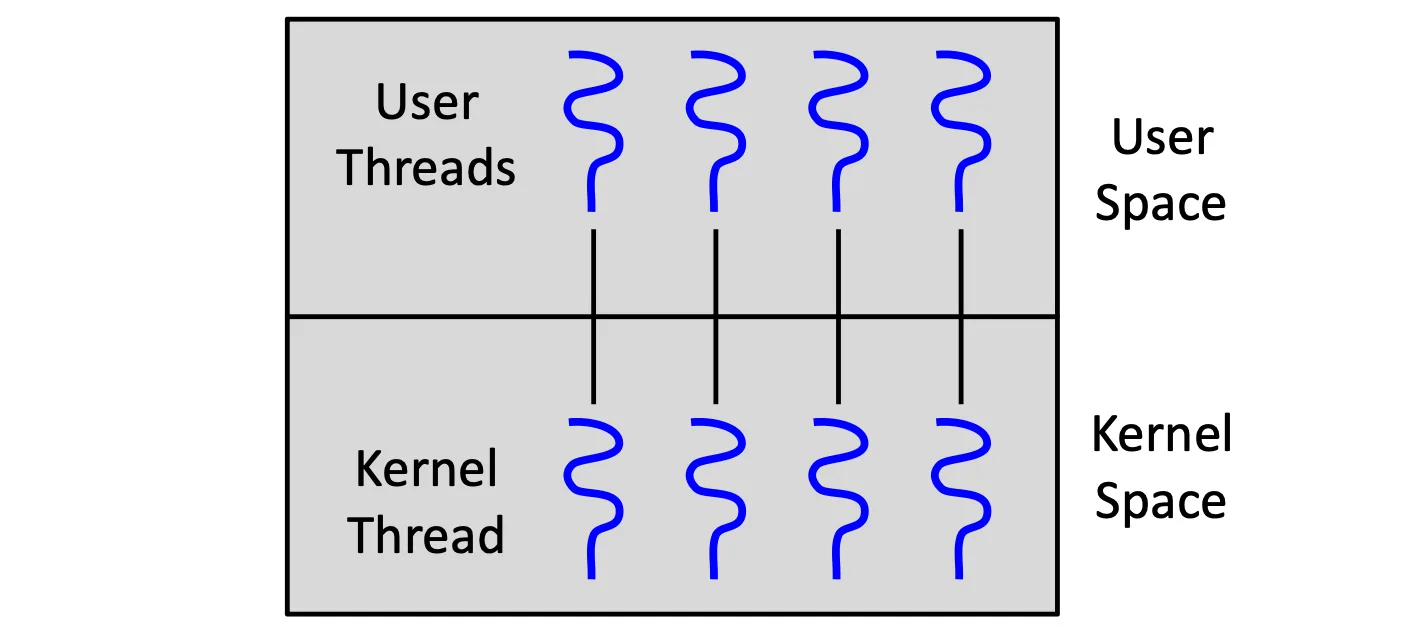
One-to-One Model (kernel-level threading)#
每個 user thread 都有對應的 kernel thread
- 當有 blocking system call 只會讓對應的 kernel thread 被 block 住
- 高成本
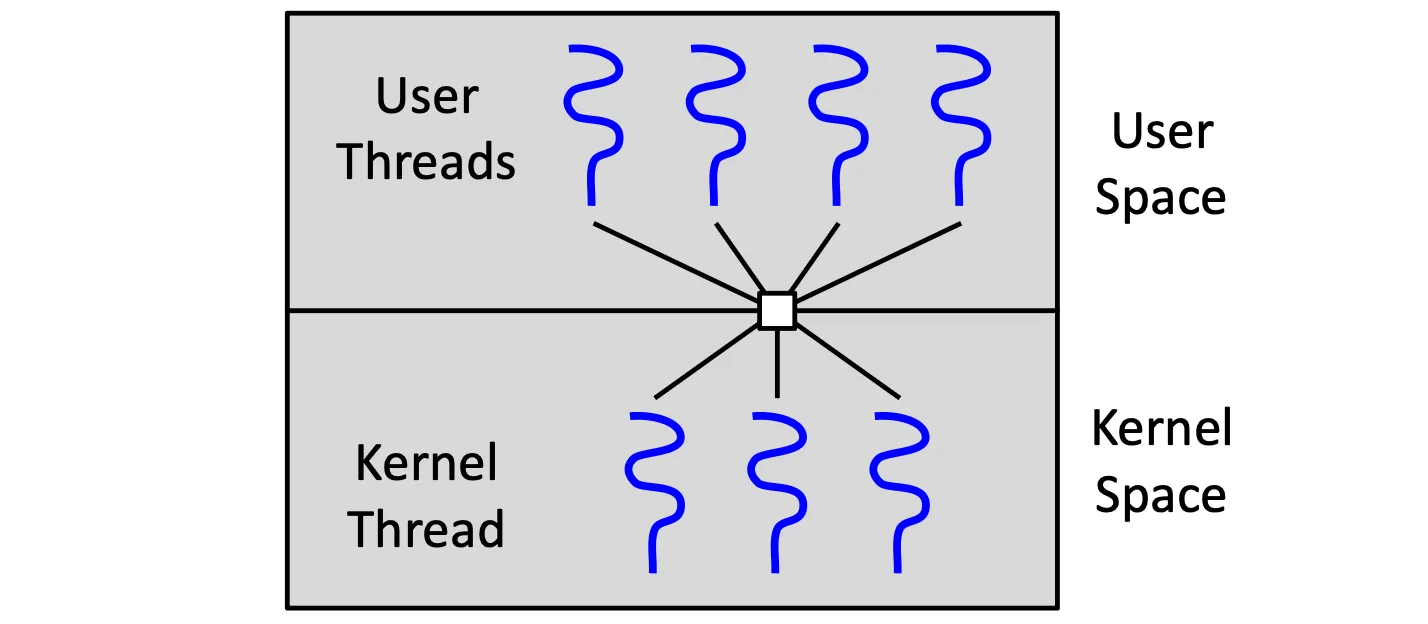
Many-to-Many Model (hybrid threading)#
混合版模型,把 M 個 application 丟給 N 個 thread entities (Virtual Processor)
- 比較彈性,可以根據 task 的複雜度,來決定到底要多少 thread
Two-level model 也是一種 Many-to-Many Model 的變形
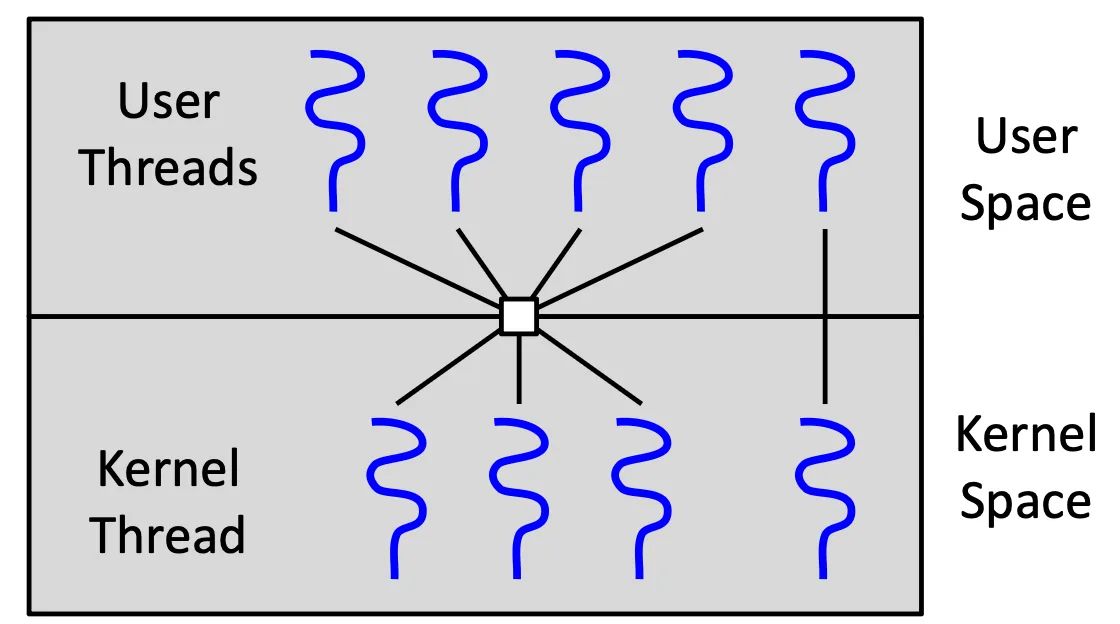
現今大部分 OS 都是 one-to-one model 因為效能足夠
Thread Libraries#
Thread Libraries 就是用 api 來實現各種 Thread 的管理,有可能是 user-level,也可以是 kernel-level
-
Asynchronous threading independent 的執行下去 parent 可以繼續執行
-
Synchronous threading 需要先 block 住,等 child thread 執行再繼續
Pthreads#
POSIX standard 只是一個 spec,而不是一個 implementation
#include <pthread.h>
#include <stdio.h>
#include <stdlib.h>
int sum; /* this data is shared by the thread(s) */
void *runner(void *param); /* threads call this function */
int main(int argc, char *argv[]) {
    pthread_t tid; /* the thread identifier */
    pthread_attr_t attr; /* set of thread attributes */
    /* set the default attributes of the thread */
    pthread_attr_init(&attr);
    /* create the thread */
    pthread_create(&tid, &attr, runner, argv[1]);
    /* wait for the thread to exit */
    pthread_join(tid, NULL);
    printf("sum = %d\n",sum);
}
/* The thread will execute in this function */
void *runner(void *param) {
    int i, upper = atoi(param);
    sum = 0;
    for (i = 1; i <= upper; i++)
        sum += i;
    pthread_exit(0);
}- Process Creation
#include <sys/types.h>
#include <stdio.h>
#include <unistd.h>
int main() {
    pid_t pid;
    /* fork a child process */
    pid = fork();
    if (pid < 0) { /* error occurred */
        fprintf(stderr, "Fork Failed");
        return 1;
    }
    else if (pid == 0) { /* child process */
        execlp("/bin/ls","ls",NULL);
    }
    else { /* parent process */
    /* parent will wait for the child to complete */
        wait(NULL);
        printf("Child Complete");
    }
    return 0;
}- function call
#include <stdio.h>
#include <stdlib.h>
int sum;
void runner(void *param);
int main(int argc, char *argv[]) {
    runner(argv[1]);
    printf("sum = %d\n",sum);
}
void runner(void *param) {
    int i, upper = atoi(param);
    sum = 0;
    for (i = 1; i <= upper; i++)
        sum += i;
}join 10 個 pthread
#define NUM_THREADS 10
/* an array of threads to be joined upon */
pthread_t workers[NUM_THREADS];
for (int i = 0; i < NUM_THREADS; i++)
pthread_join(workers[i], NULL);Windows Threads#
#include <windows.h>
#include <stdio.h>
DWORD Sum; /* data is shared by the thread(s) */
/* The thread will execute in this function */
DWORD WINAPI Summation(LPVOID Param) {
    DWORD Upper = *(DWORD*)Param;
    for (DWORD i = 1; i <= Upper; i++)
        Sum += i;
    return 0;
}
int main(int argc, char *argv[]) {
DWORD ThreadId;
    HANDLE ThreadHandle;
    int Param;
    Param = atoi(argv[1]);
    /* create the thread */
    ThreadHandle = CreateThread(NULL, 0, Summation, &Param, 0, &ThreadId);
    /* now wait for the thread to finish */
    WaitForSingleObject(ThreadHandle,INFINITE);
    /* close the thread handle */
    CloseHandle(ThreadHandle);
    printf("sum = %d\n",Sum);
}- 透過
CreateThread設定參數 WaitForMultipleObjects(N, THandles, TRUE, INFINITE);可以等多個 thread
Java Threads#
Java 是 run 在 Java virtual machine (JVM) 上的,而 JVM 又會跟底層 OS 做 communication,但在這個地方我們只討論最上層(Java thread)
- Create a new class derived from the
Thread然後要 override itsrun()method - 用
Runnable去 callrun(),直接 callrun()是不會跑的
class Task implements Runnable {
    public void run() {
        System.out.println("I am a thread.");
    }
}Creation: 不要直接 call run() 而要用 start() 去啟動
Thread worker = new Thread(new Task());
worker.start();Wait:
try {
    worker.join();
}
catch (InterruptedException ie) { }Implicit Threading#
Threading problem 其實是一個非常困難的問題,Thread 之間的交互影響以及順序問題,是非常複雜的
Implicit Threading 就是把 creation, management 都交給 compiler 或是 runtime library,User face 來看,是完全沒有 Thread 的概念,而是 Task
Thread Pool#
在一群 Thread 裡面抓人出來做 task,省略了 Thread creation 的步驟,一直使用同一組 Thread pool 裡的 Thread,沒有 creation 跟 termination
- Create 這件事是有很大的 overhead
- Thread Pool 可以限定所有 Thread 都在同一個 Management 底下(因為是同一組),可以控制數量,但限定了效能
- Thread Pool 可以讓我們對 Thread Management 有更大的 flexibility
Fork join#
跟 Process 很像,只是我們這次是用在 Thread 上
- 站在使用者的角度是分成兩個 Task,但是實際上的 implementation 也有可能是 Thread Pool

通常會有 library 來處理,會使用 synchronous thread,也就是全部執行完畢才會回到 main thread
OpenMP#
是一種 compiler directives,可以讓 compiler 知道哪段要做平行計算
#pragma omp parallel
{
    printf("I am a parallel region.");
}
#pragma omp parallel for
for (i = 0; i < N; i++) {
    c[i] = a[i] + b[i];
}使用者一樣不用處理 Threading 的部分
Grand Central Dispatch (GCD)#
MacOS 或是 iOS 使用的,Run-time API
GCD schedules tasks 可以把他們分成
- Serial (private) dispatch queue
- Concurrent (global) dispatch queue
可以告訴 compiler 這個大括號內是一個 block
^{ printf("I am a block"); }dispatch_async(queue,{ print("A closure.") })Intel Threading Building Blocks (TBB)#
可以把
for (int i = 0; i < n; i++) {
    apply(v[i]);
}變成
parallel_for(size_t(0), n, [=](size_t i) {apply(v[i]);});就可以讓 library 去處理 task 的 parrellel
Threading Issues#
fork() and exec() System Call#
在 Multi-thread 的情況下可能會有問題
- 有一個 Thread call
fork()的話出來的 process 需要繼承所有 thread 嗎- Duplicate all thread
- Duplicate only the caller thread
exec()的 call 如果在fork()後,就沒必要 Duplicate 了
Signal Handling#
signal 在 Unix 中是用來 notify 的,通常 signal 被發出就必須 handle(但可以用 ignore 來 handle)
- Synchronous signal
- 會送給 perform operation 的 process
- Asynchronous signal
- 外部的操作(
Ctrl+C)
- 外部的操作(
每個 Signal 都有 default signal handler 也可以用 user-defined signal handler 來 overwrite,可能是 terminate 也可能是 ignore
允許的操作有
- Deliver 給專門處理 signal 的 Thread
- Deliver 給所有 Thread
- Deliver 給一部分 Thread
- Deliver 給做出操作的 Thread
Thread Cancellation#
Cancellation 不同於 Termination,是在沒結束的時候就先砍,因為時間不固定,所以要特別處理 Cancelation Point
- Deferred cancellation
- Asynchronous cancellation
要被 Cancel 的 Thread 通常叫做 target thread
Pthread Cancellation#
有三種 cancellation modes:
- disabled
- deferred
- asynchronous
pthread_t tid;
/* create the thread */
pthread_create(&tid, 0, worker, NULL);
/* cancel the thread */
pthread_cancel(tid);
/* wait for the thread to terminate */
pthread_join(tid,NULL);pthread_testcancel() 可以設定 cancellation point
while (1) {
    /* do some work for awhile */
    ...
    /* is there a cancellation request? */
    pthread_testcancel();
}到了 Cancelation point 才會檢查自己有沒有被 Cancel,Cancel 後會呼叫 cleanup handler
Java#
跟 Pthread 一樣是 deferred
Thread worker;
...
/* set the interruption status of the thread */
worker.interrupt()while(!Thread.currentThread().isInterrupted()){
...
}Thread-Local Storage (TLS)#
可以讓 Thread 計算的 variable 不會直接消失,有點像 static data
Scheduler Activations#
Lightweight Process (LWP)#
Two level model 我們通常都會把 kernel thread 當成一個 virtual processor,而 LWP 就是一種 virtual processor
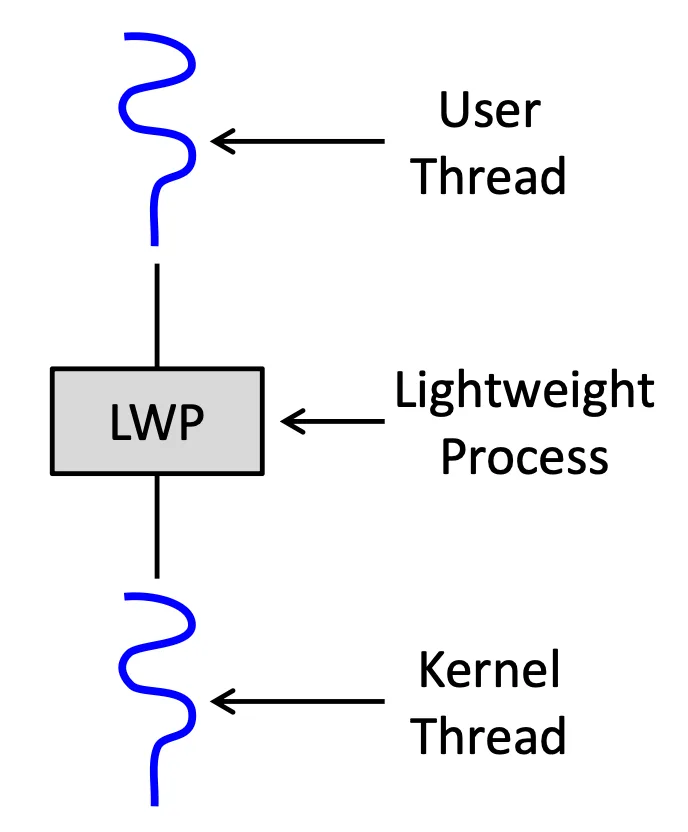
有時候的 communication 是 bottom up 的,我們會叫他 upcall
LWP 在知道 下面發生的情況後就可以對 User Thread 做適當的處理
Operating System Examples#
Thread 角度的 Context
- A thread ID uniquely identifying the thread
- A register set representing the status of the processor
- A program counter
- User and kernel stacks, employed when the thread is running in user and kernel modes, respectively
- A private storage area used by run-time and dynamic link libraries
都應該記錄下來當作 Context