I/O Systems#
Overview#
是一個很雜的章節,一個電腦的 I/O 有千千百百種,真的去考慮所有 I/O 根本沒辦法討論完
因為太雜亂了,所以我們需要一個 I/O subsystem 來做到 Virtualization 讓我們好控制,Device driver 能讓 device 更好控制
I/O Hardware#
- Storage devices (e.g., disks, tapes)
- Transmission devices (e.g., network connections, Bluetooth)
- Human-interface devices (e.g., screen, keyboard, mouse, audio)
- More specialized devices (e.g., steering of a jet)
我們先定義幾個名詞
- Port: Device 跟裝置對接的口
- Bus:連接、傳輸 signal 用的
- Daisy Chain: 有些裝置沒對接,但可以透過間接連接上
- A, B 有 bus, B, C 有 bus,所以 A, C 有 Daisy Chain
Typical PC Bus Structure#
- PCIe (Peripheral Component Interconnect Express) Bus 連接所有 Device, Memory
- Expansion Bus 可以讓慢速裝置傳輸稍微加速
- Serial-attached SCSI (SAS) bus 串接 DISK
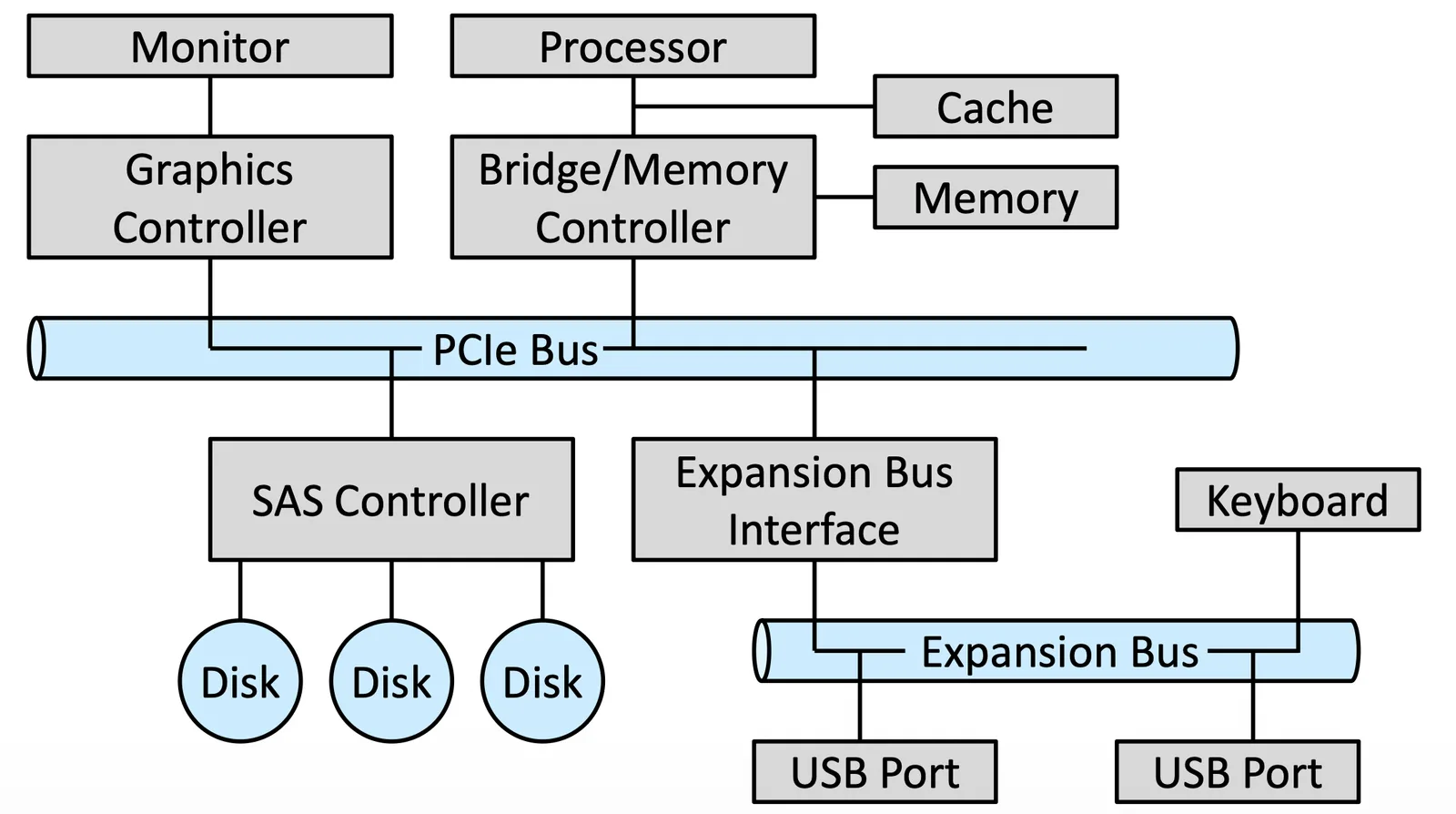
Controller: 解讀、Construct 要溝通的訊息,是在 Device 方的
- Serial-port controller
- 負責 Control serial port,按照順序控制
- Fibre channel (FC) bus controller
- 更加複雜,可能用 Host Bus Adapter (HBA) 來 implement
Memory-Mapped I/O#
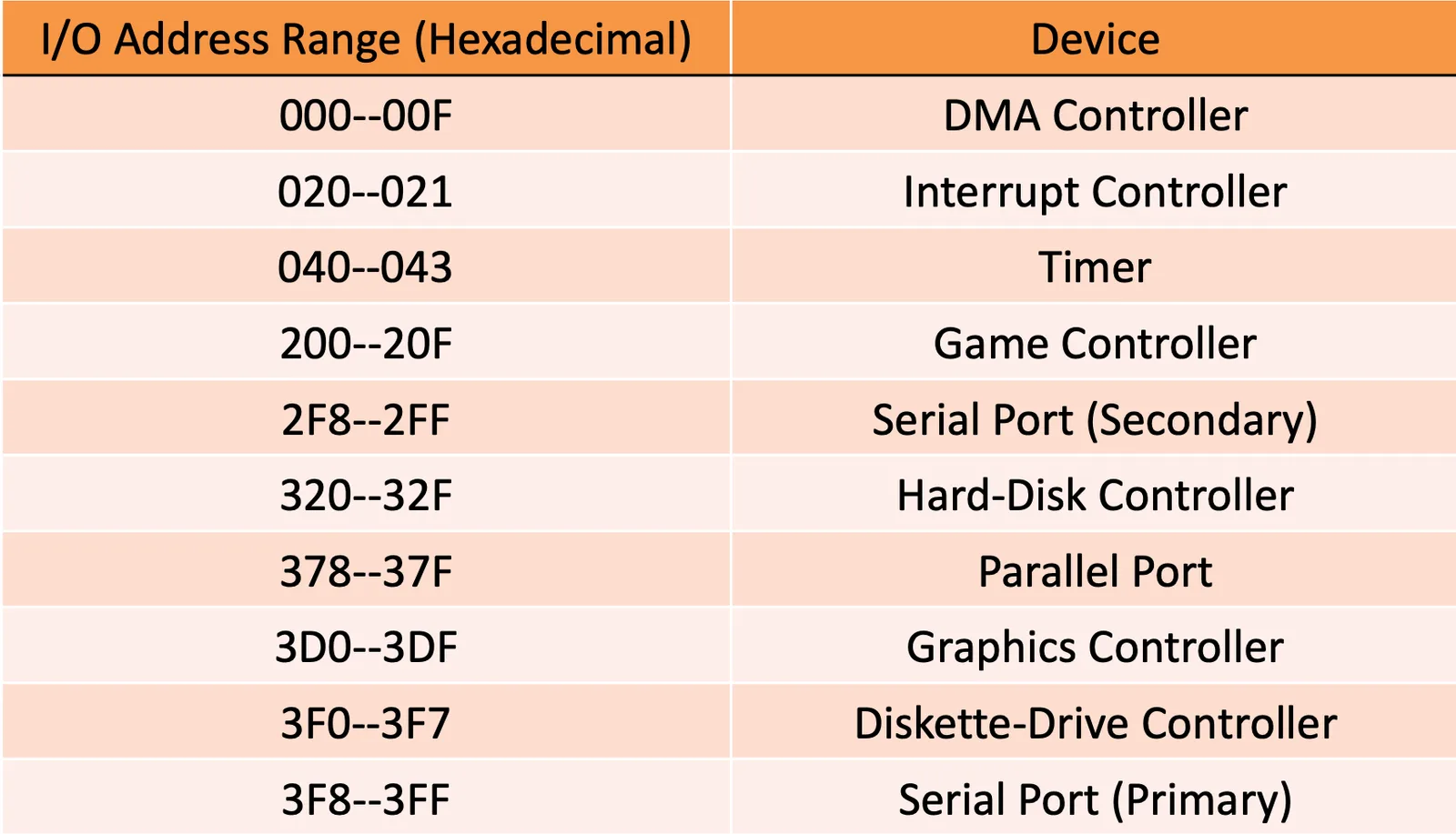
我們通常比較關心:如何把指令傳給一個 Controller,Controller 裡面會有一個 device 的 register,我們要去控制這個 register,有兩種做法
- Special (Direct) I/O: 直接傳輸
- Memory-Mapped I/O: 採用 Share memory
站在 Process 的角度,我就不用關心要怎麼把資訊放在 Bus 上傳,只需要關心寫入指定位置,並且 Memory 讀寫肯定比 I/O transfer 快
我們可以把 Device 的 Register 分成四類
- Status register
- current command has completed
- available to be read
- device error
- Control register
- Start a command
- Change the mode
- Data-in register
- Data-out register
Polling#
Handshaking#
一個 Host 跟 Controller 如何溝通完成一個任務的過程
- 一直 read
status Register裡面的busybit 直到變成clear了 - Host set 一個
writebit 在command(control) register並且把資料放到data-out register - Host set
command-readybit 在command(control) register裡面 - Controller set
busybit 在status register裡面 - Controller 讀取
command(control) register看到write,去讀取data-out register(此處才是真正的 I/O) - Controller clear
command-readybiterrorbitbusybit
這個過程中的第一步驟就叫做 busy-waiting 或是 polling,所以我們才需要引入 interrupt 的概念,由 Device 去做通知
Interrupt#
- Interrupt-request line
- Interrupt vector
- Interrupt-handler routine
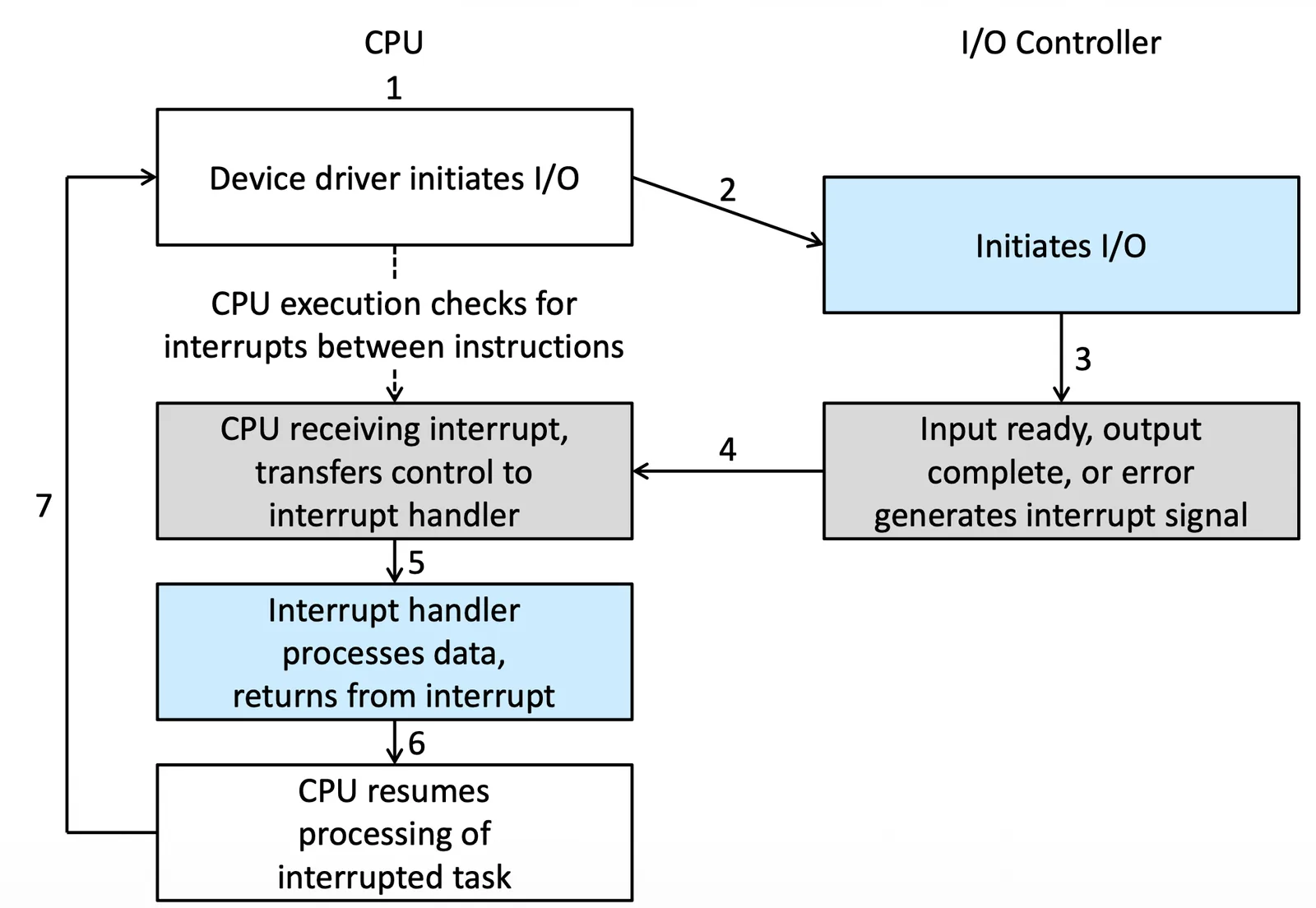
Interrupt Routine 後才會把東西 CPU 使用權交回去給原本的 Process
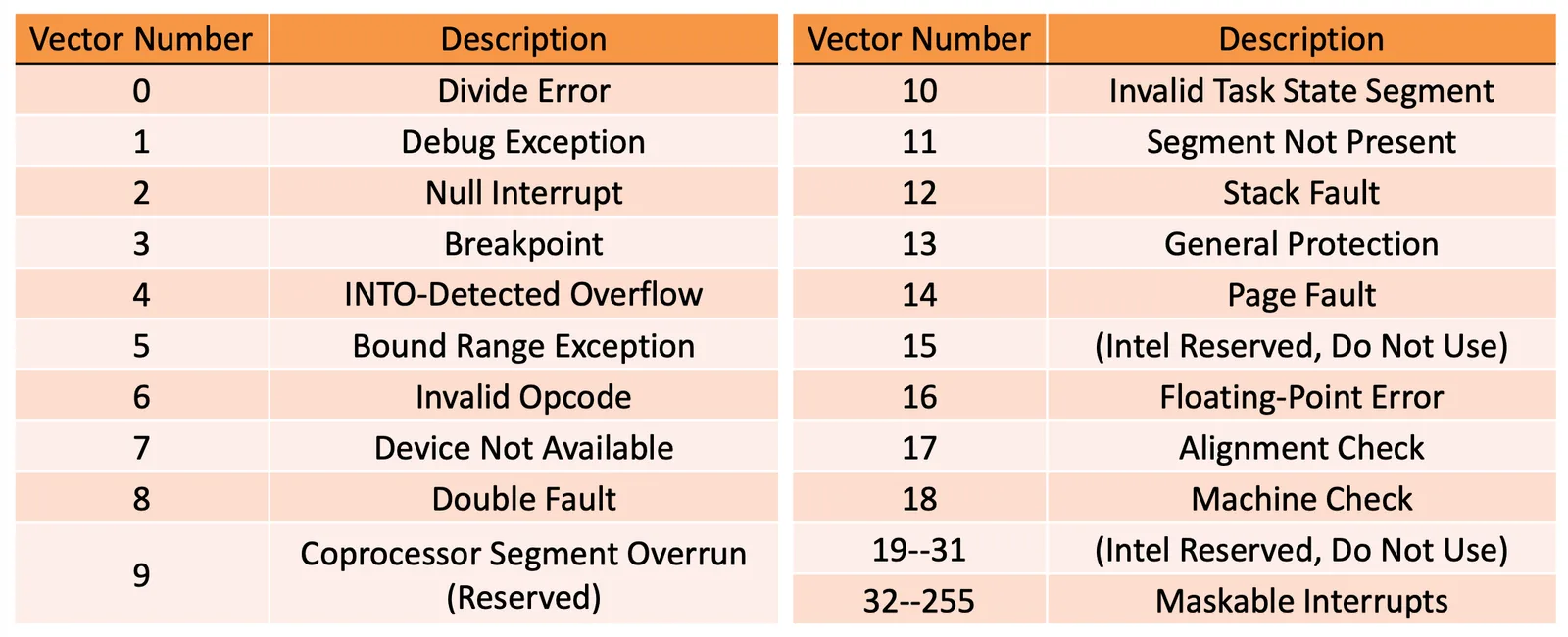
Interrupt 有以下的 features
- Nonmaskable or Maskable,處理上更方便
- Interrupt vector or Interrupt chaining,應對不夠用的空間
- Interrupt priority level,interrupt 也應該分等級
- Trap,也就是 Software interrupt,system call 有時候會報錯,也需要有 Interrupt
Direct Memory access#
我們希望大量的 I/O 傳輸 不要牽扯到 CPU 也就是避免 programmed I/O(one byte by a time,由 CPU 下指令控制的 I/O)
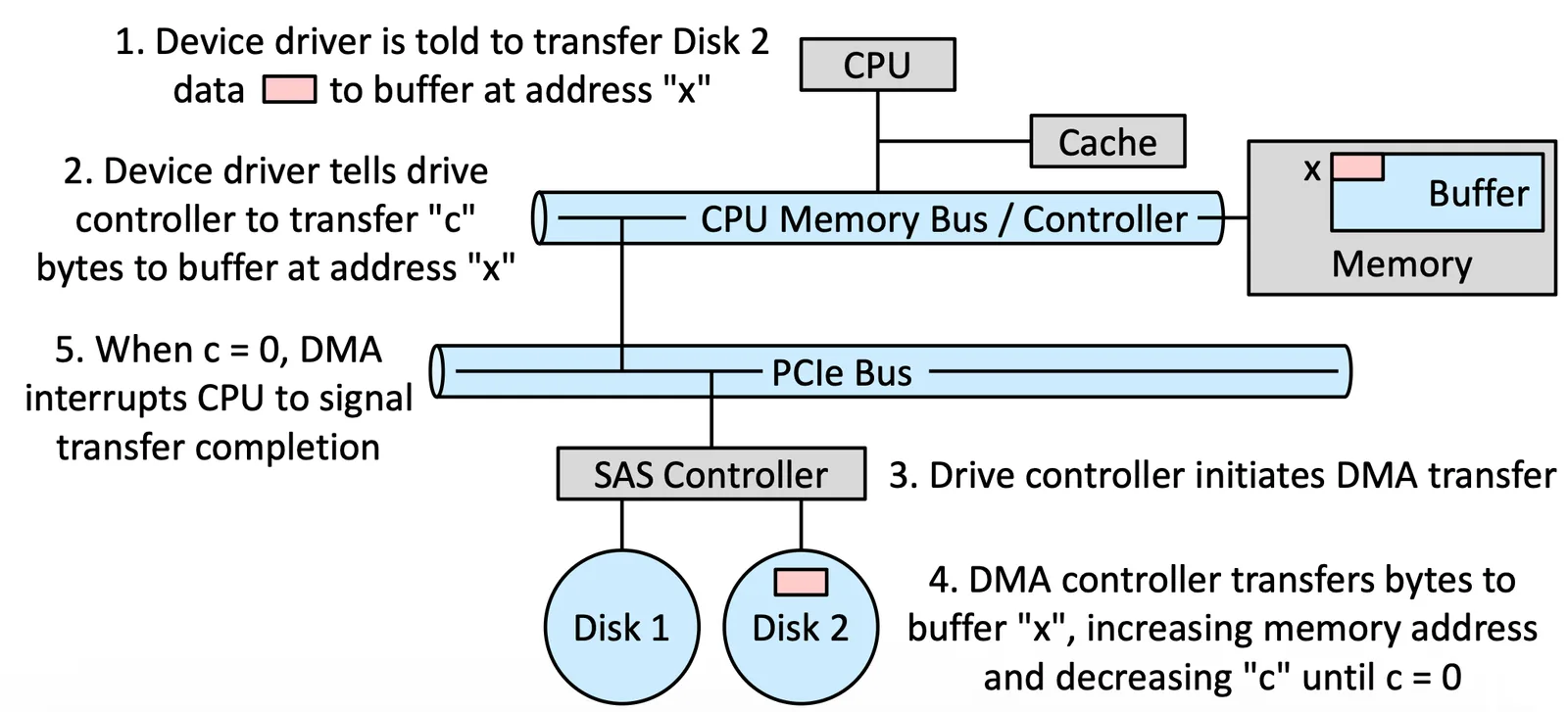
- 我們想把 Disk 2 上的一段 data 寫到 memory 裡面
- Device driver 會告訴 Controller 要傳輸
cbytes 到 addressx上 - Controller 開始進行 DMA
- DMA controller 直接傳輸,直到
c降低到 0 c == 0DMA 會 interrupt CPU
整個過程中 CPU 只參與了第一個步驟,其他都不會碰到
以下是幾個 DMA 的 method
- Scatter-gather method:一次指令先把所有分段的 memory 要送到哪裡就先設定好,DMA 慢慢去做就好
- Double buffering (inefficient):先把東西搬到 kernel space 再搬到 user space
- DMA-request and DMA-acknowledge wires:handshaking 時候的 DMA controller 跟 device 之間的 communication(就跟網路傳輸一樣,詳見計算機網路 transport layer ↗)
- Cycle stealing:在 DMA 正在對 Memory bus 做事的時候,CPU 會被禁止 access 到 main memory
- DVMA:用 virtual addresses
Application I/O Interface#
在時代的演進之下,有各種 Interface,我們做一些分類
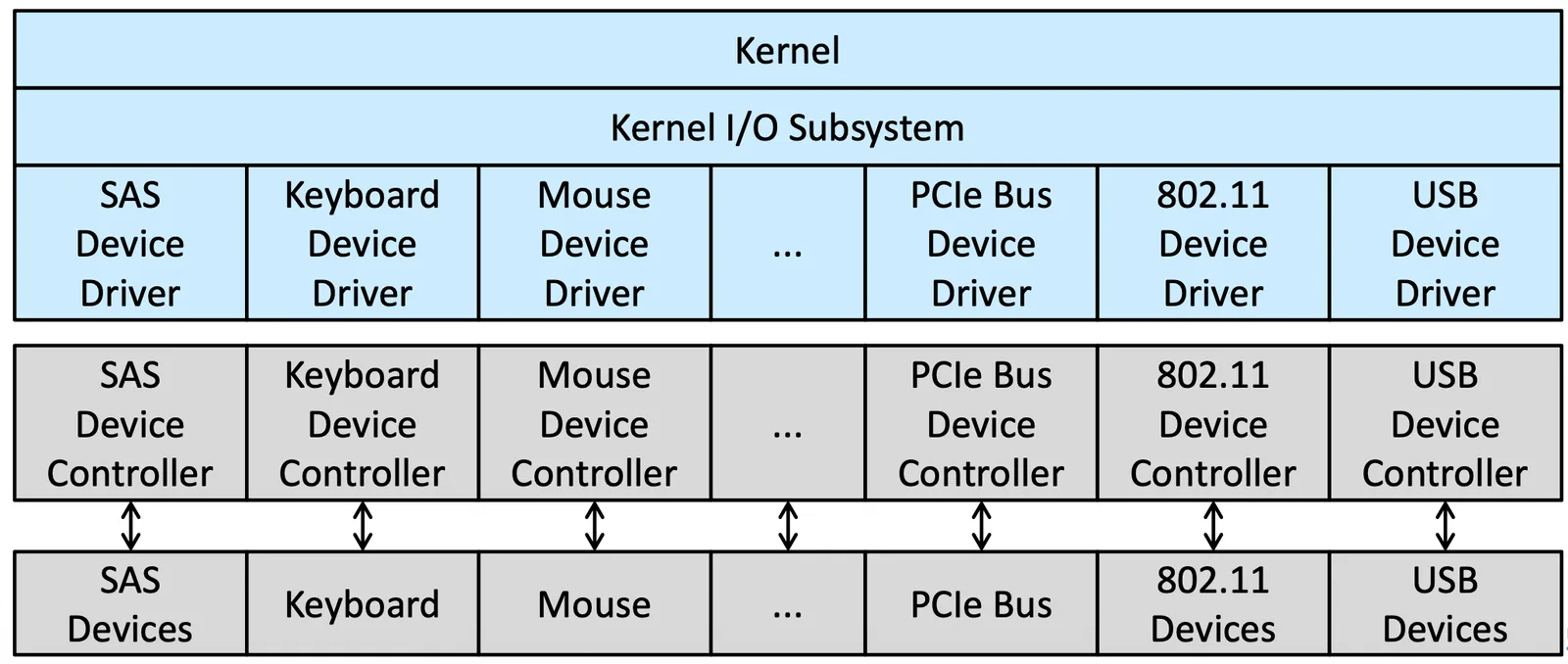
可以用以下的分類方法,有各種不同的限制
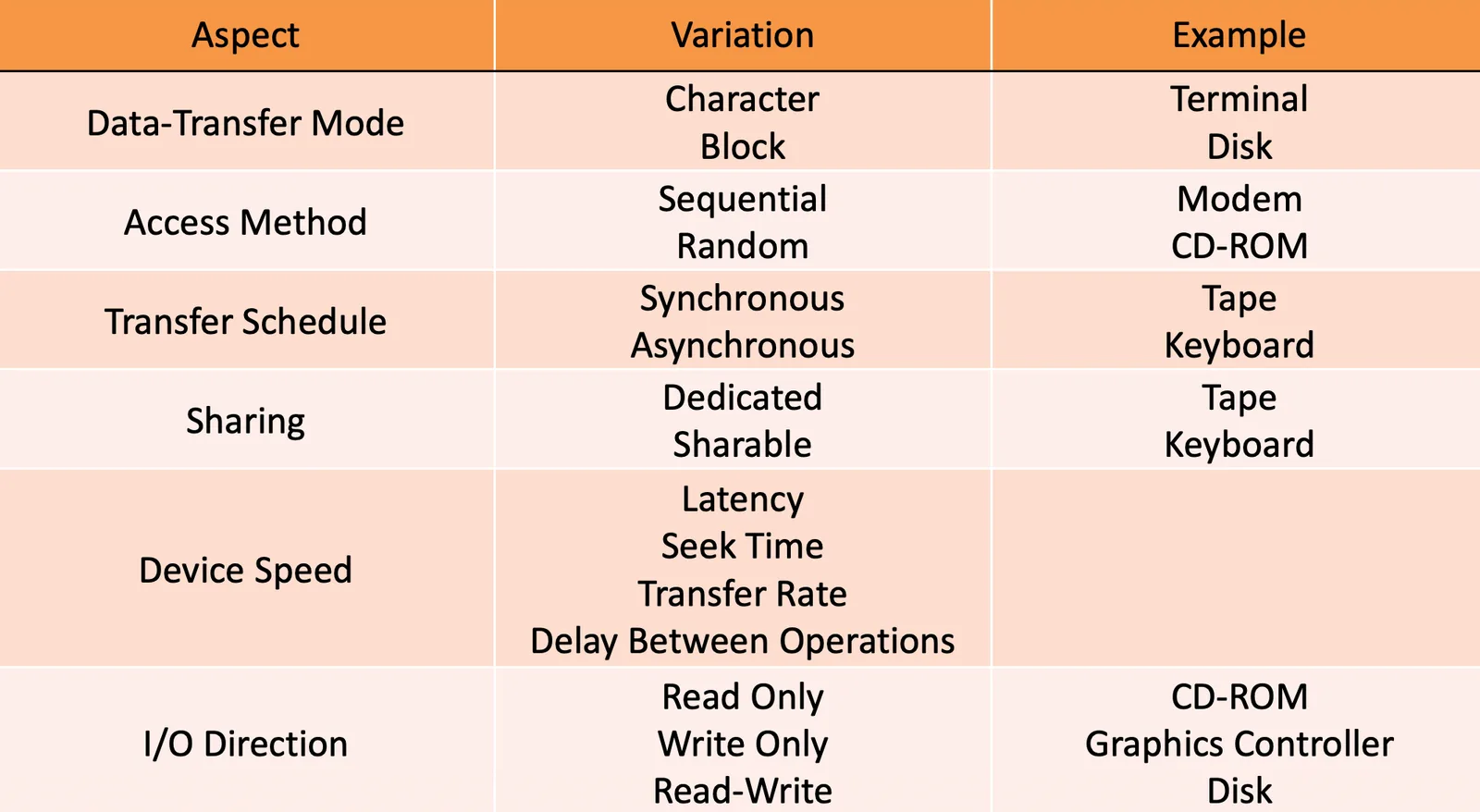
通常我們都還是會分成
- Block I/O
- Character-stream I/O
- Memory-mapped file access
- Network sockets
OS 會有一些 Backdoor 或叫 Escape,可以直接對 I/O 控制( e.g., ioctl())
Block and Character Devices#
Block-device interface,通常用在 disk 上,以 block 為單位進行讀寫,通常會有 read(), write(),由於是 Addressable 的所以還可以用 seek() 去做操作,每個 system call 都有不同的 parameter
- Raw I/O:跳過 OS 的 File System, OS buffer cache,直接去控制 I/O device,(e.g., Database system 對 Disk 有更好的 Management)
- Direct I/O:透過 OS 的 File System 操作檔案,但跳過 OS 的 Buffer Cache / Page Cache ↗,這個模式下會 disable buffer, locking
在這些操作上,可以有額外的 library 去做額外的變化,像是 memory-mapped file 的 access,利用 MMU, Page fault 去做一些優化,或是直接把檔案的內容映射到 memory 裡面,這樣就不需要 read(), write() 了
Character-stream interface 則是一次讀取一個字元,像是 get() or put(),通常用於鍵盤,也可以做變化,像是讀一行
Network Devices#
通常是用 socket interface,當 system 用 network 連接才會需要用到
Clocks and Timers#
有很多程式或演算法需要透過時間去做 control,需要給出
- current time
- elapsed time
- 設定 timer 來 trigger operation X at time T
因此我們需要
- Programmable interval timer
- High-performance event timer (HPET)
- Network time protocol,透過網路 protocol 做到對時這件事
Nonblocking and Asynchronous I/O#
假設我們都有 system call 叫做 read()
- Non-blocking: 不管狀態如何,一定會回傳,無論狀態到底是啥,可能會沒讀到任何東西
- Asynchronous: 會去執行 read 直到所有要讀的資訊都接收到,不會 suspend 住原來的 process
以上兩種都不會 suspend 原始 process,但 blocking system call 就是會去讀,suspend 原始 process 直到讀取完畢
Vectored I/O#
DMA 可以一個指令就多件事情都完成,而 vector I/O 也是一樣的概念,算是一種 scatter-gather 的方法,但我們需要額外做一些 property 的保證,不然可能會失敗
Kernel I/O Subsystem#
為了要做到 Abstraction,我們希望可以設計出一系列的 subsystem,所以我們需要知道以下的 property
I/O Scheduling#
可能一次會有很多個 process 都需要用同一個 I/O device,所以我們需要留存 I/O device 的資訊
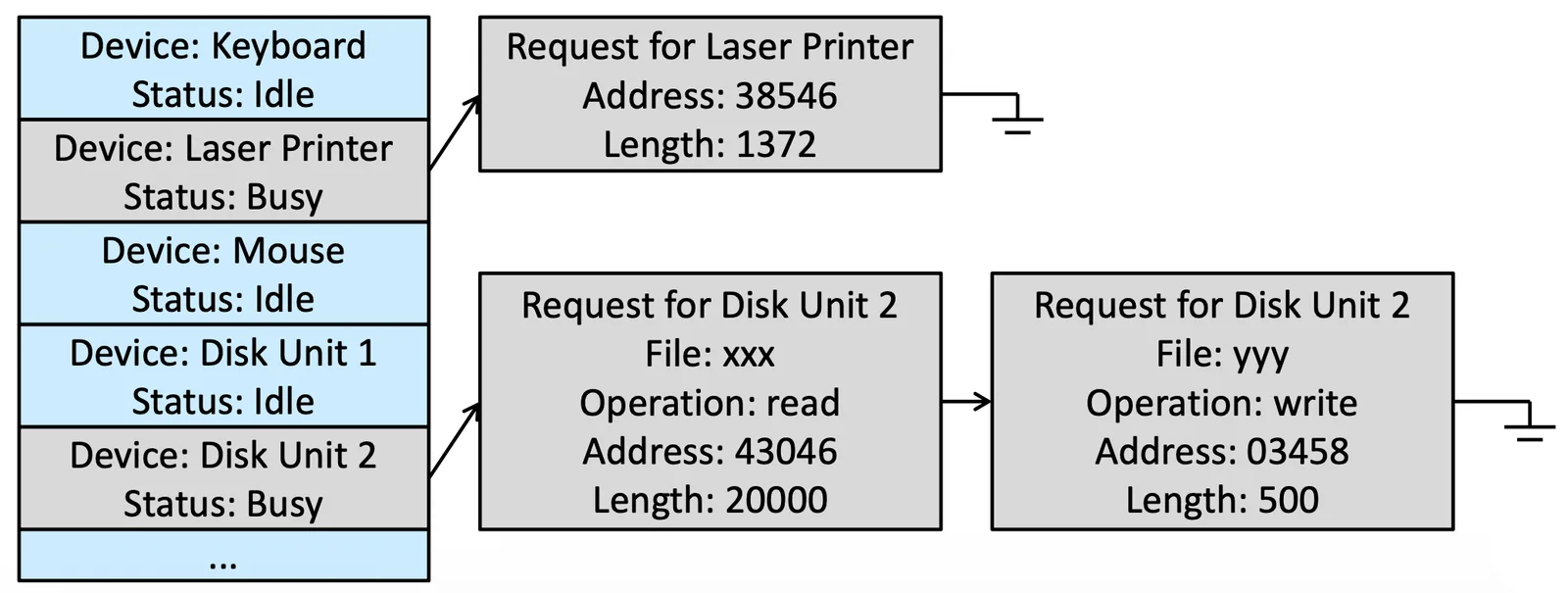
有必要的話,可以做一些 scheduling,改變 request 處理的順序,我們可以 maintain 一個 waiting queue
Buffering#
可以存在於一個 device、device 之間,或是 device、application 之間,因為 Producer 跟 Consumer 之間的讀寫 speed 差太多了,可能會產生 lost
- 如果速度真的差太多也可以用 double buffering,多重 buffer 可以存著一些資訊
第二種情況是 size 差太多了,一個大檔案應該會存成很多個小檔案,我們需要一個地方讓他先存起來,等接收到所有資訊後,在做組合,也就是 packet(封包) 的概念
第三個理由是 copy semantics,也就是在傳輸的過程中,後半段的資訊遭到改變,我們可以用 buffer 儲存下指令時的狀態
Caching#
在 hardware 裡面會有 cache 因為比較靠近 memory,所以可以解決速度、效率的問題,另外 Cache 不同的地方是我們通常會把他視作一種 copy,不像 buffer 是用來儲存舊版本的
Spooling and Device Reservation#
Spool 是一種不能被中斷的 memory 空間,不能再中間插入 data stream,可以用在某些 device 上(e.g., printer)
也可以做 Device Reservation,但要小心遇到 deadlock,非常容易發生
Error Handling#
Device、I/O 失敗的方法有千千百百種,一定要有機制去分辨錯誤的方式,也要有機制去 handle 他們,去閱讀 read(), send() 通常裡面都會搭配一個 ret 也就是 return value,讓我們可以很好的去 handle 哪些錯誤要做哪些操作,以 Disk 為例子
- sense key
- additional sense code
- additional sense-code qualifier
I/O Protection#
我們希望所有 I/O 操作 User 都沒辦法直接碰到 device,希望藉由 OS 提供的 system call interface 去做使用
- Trap to kernel
- Perform I/O
- Return to calling thread
不要讓 user 自己亂搞,或是在 memory-mapped I/O 要確保不會有奇怪的操作亂指亂寫
Kernel Data Structures#
為了記錄 I/O 的所有狀況,我們需要記錄
- Open files
- Network connections
- Character-device communications
- Other I/O activities
我們會用 Object-Oriented 的方法去做 maintain,例如
- Windows 把所有資訊當作 message,每個傳送的 Object 裡面就可以在對應的欄位紀錄對應資訊
但這樣也是有些 data structure 的 overhead,也是一種 trade-off
Power Management#
近年來才產生的問題,因為移動設備、資料中心等高耗能裝置興起
- Greenhouse gas reduction
- Cooling:非常重要的問題,現在的運算設備工作一定會非常熱
OS, kernel 也需要對這件事情有一定的控制權,Power Collapse 是一種新的處理方法,也就是睡眠模式
Android 會用一個 data structure 紀錄所有 device 上的運作情況,如果 tree 上裝置全關了就會 Power Collapse
Advanced configuration and power interface (ACPI) 是一種專門拿來管理 Power 的 subsystem,這在近年來是非常重要的事情
Transforming I/O Requests to Hardware Operations#
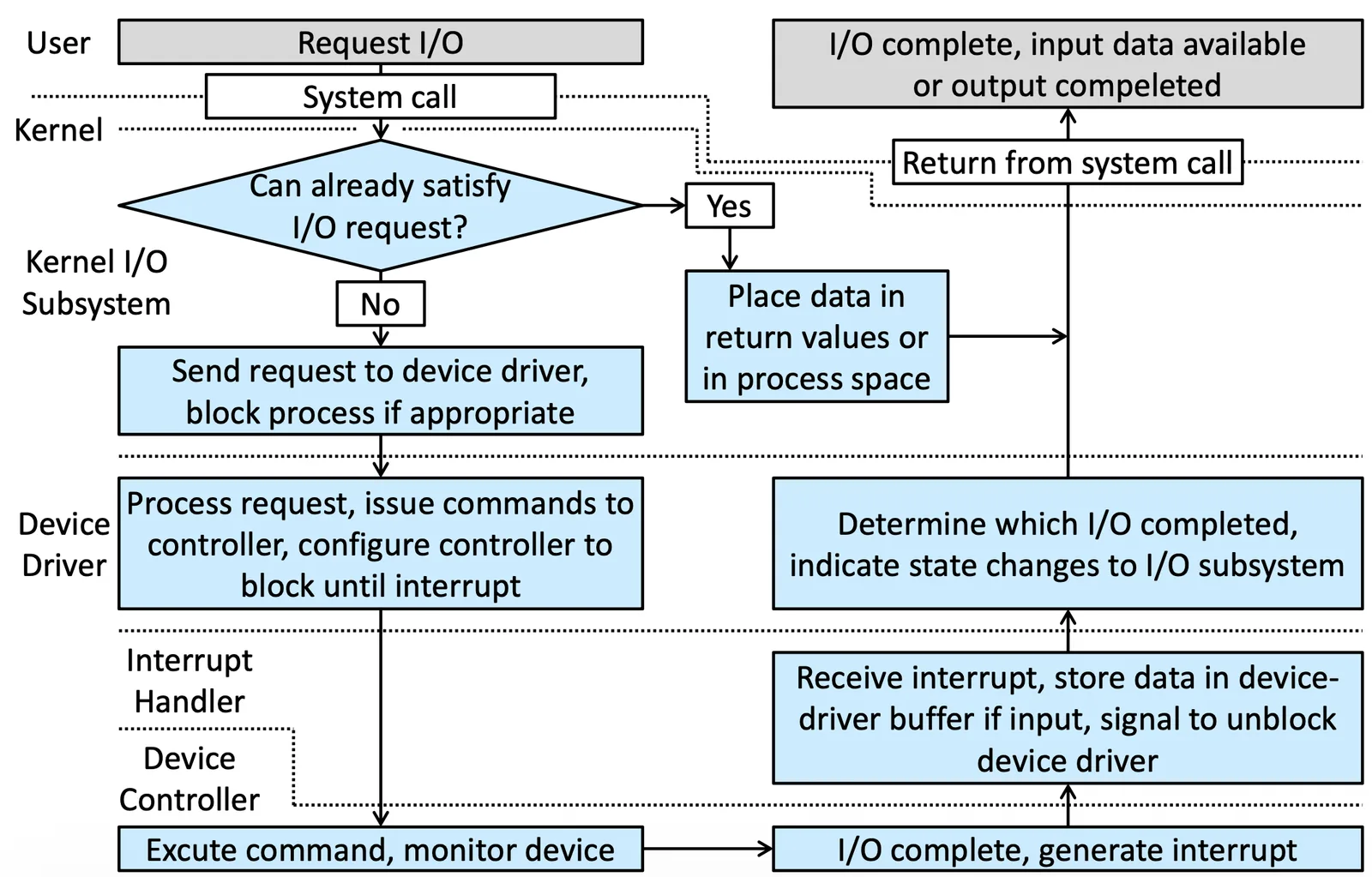
STREAMS#
這是在 Unix 系統中特有的結構,本質上就跟 Network 一樣,是用 Moduler 的結構化設計,User 跟 Device 之間有各自的 format 互相不會侵犯,是 layer 化設計的代表
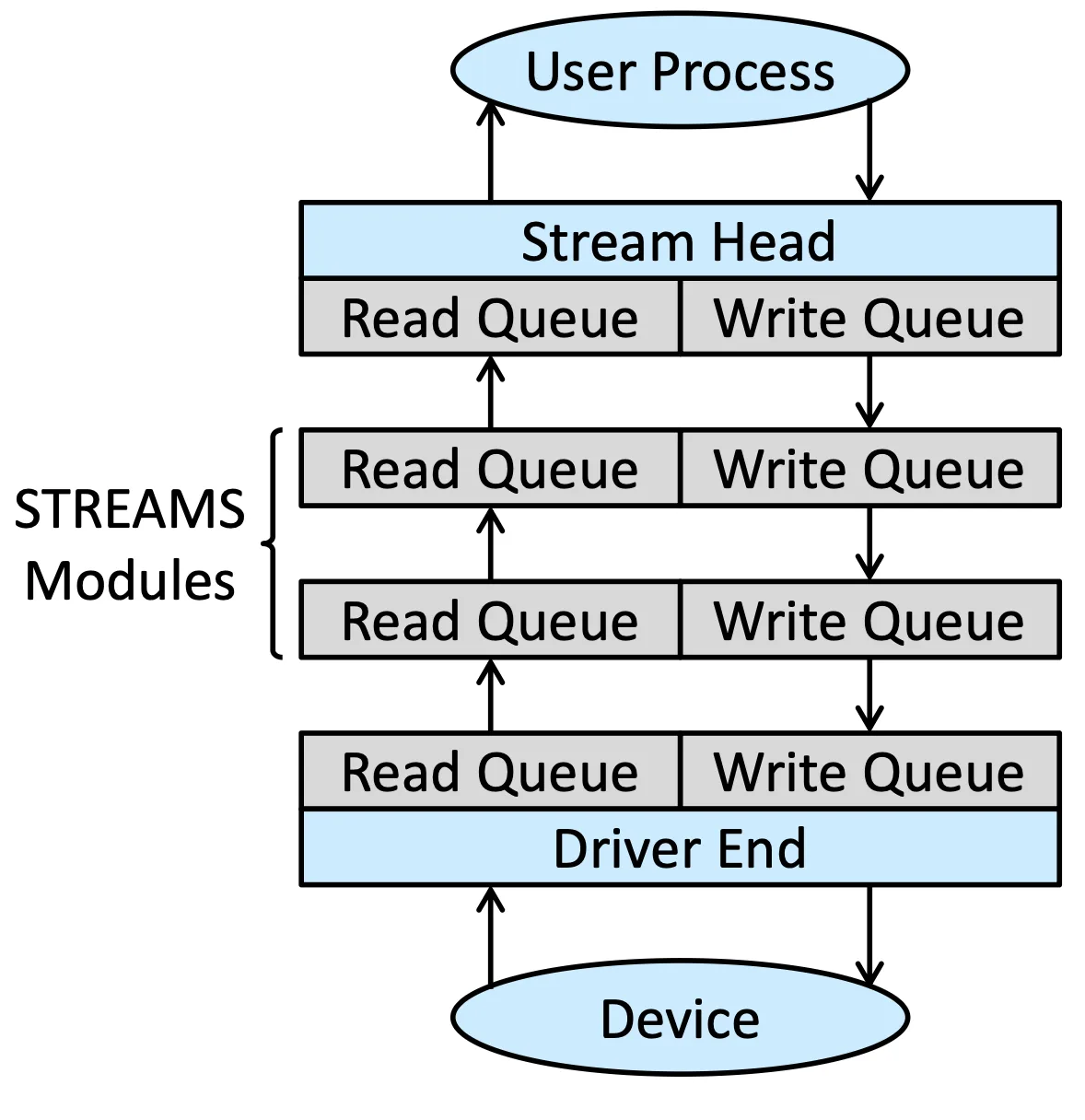
可以拆開來設計,新加一層也很方便
Performance#
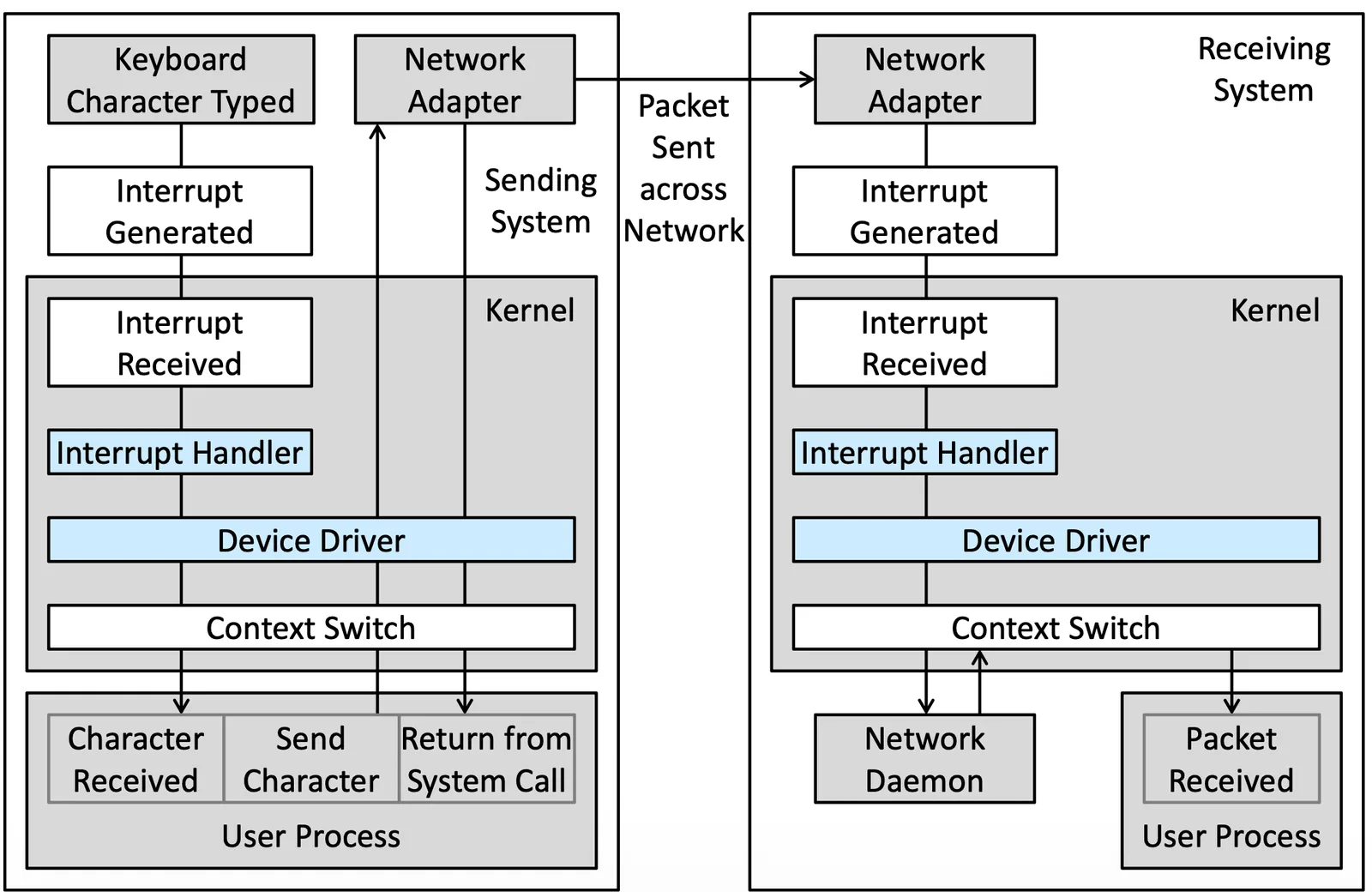
I/O 的設計其實對 system performance 來講是影響最大的一個部分,因為會產生大量的 Interrupt
以下這張圖是如何用網路來對電腦之間的傳輸做控制
Improving I/O Performance#
- 減少 context switches
- 減少 copied time
- 減少大量資料運輸的 interrupts 次數
- 用 DMA 增加 concurrency
- 提早把 processing primitives 移到 hardware
- Balance CPU, memory subsystem, bus, and I/O performance
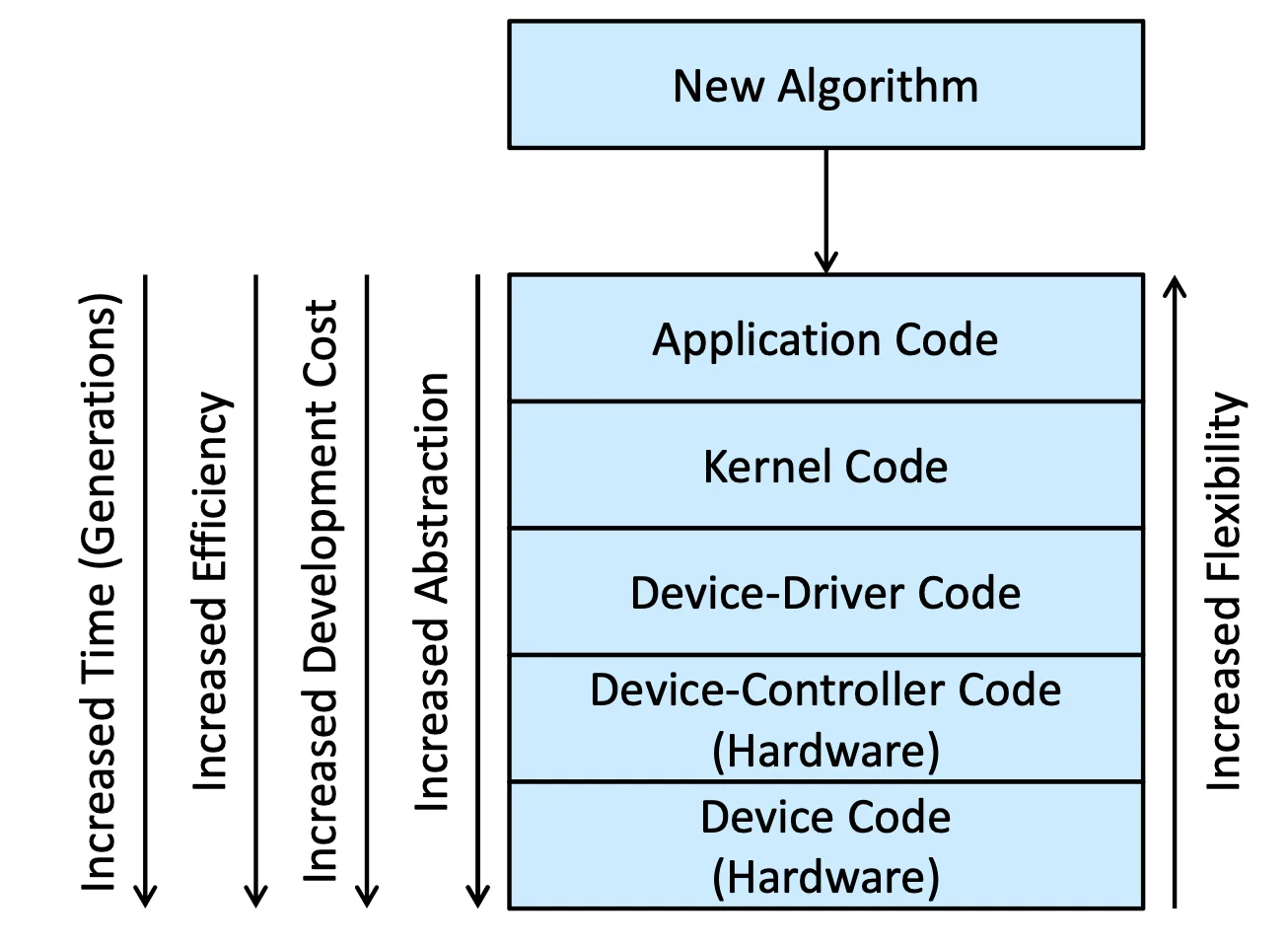
越上層越有 Flexibility,越下層越快,但功能越少